
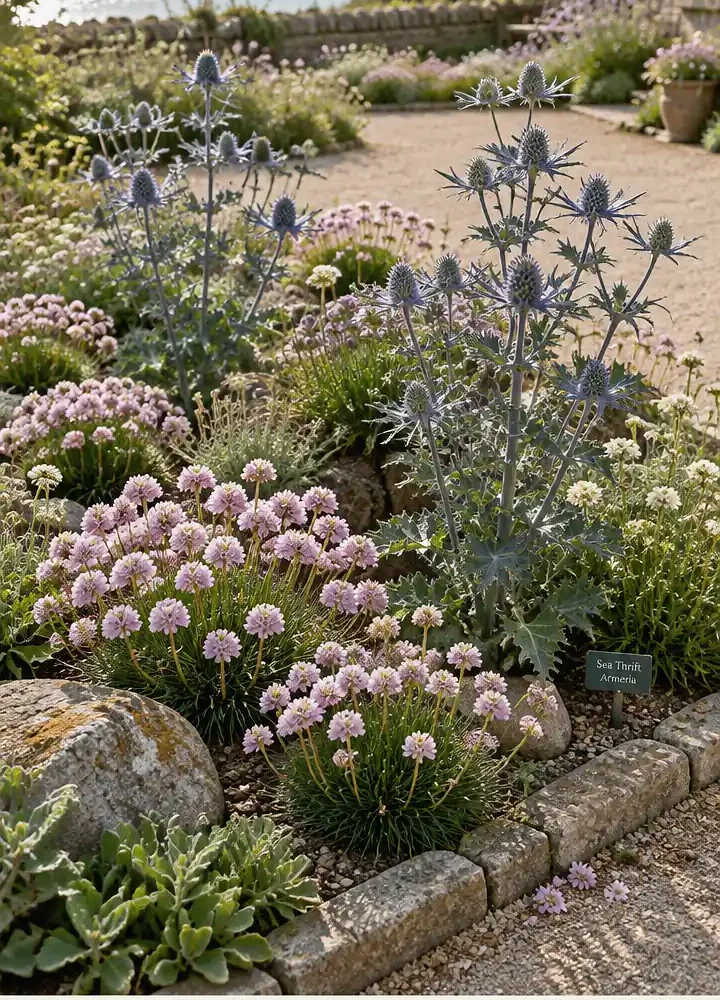
Cornwall’s gardens have a character that’s difficult to mistake. Weathered granite, winding stone pathways, colorful cottage flowers, and lush subtropical foliage come together against a backdrop of rolling countryside and dramatic coastline. There’s something wonderfully relaxed about these spaces, even when every plant has been carefully chosen.
The good news is that you don’t need a sprawling property overlooking the Atlantic to capture that feeling. A sheltered courtyard, modest backyard, narrow side garden, or collection of containers can all become a beautiful Cornish-inspired retreat.
The secret is working with your surroundings. Coastal gardens need plants that tolerate wind and salty air, while sheltered corners can support hydrangeas, camellias, and surprisingly tropical greenery. Natural stone, informal planting, and thoughtful layering help everything feel connected.
These Cornwall garden ideas combine traditional English cottage charm with practical coastal landscaping. From colorful flower borders to contemporary slate courtyards, each design offers a manageable way to bring a little of Cornwall’s distinctive landscape into your own outdoor space.
Beautiful Cornwall Garden Ideas to Transform Your Outdoor Space
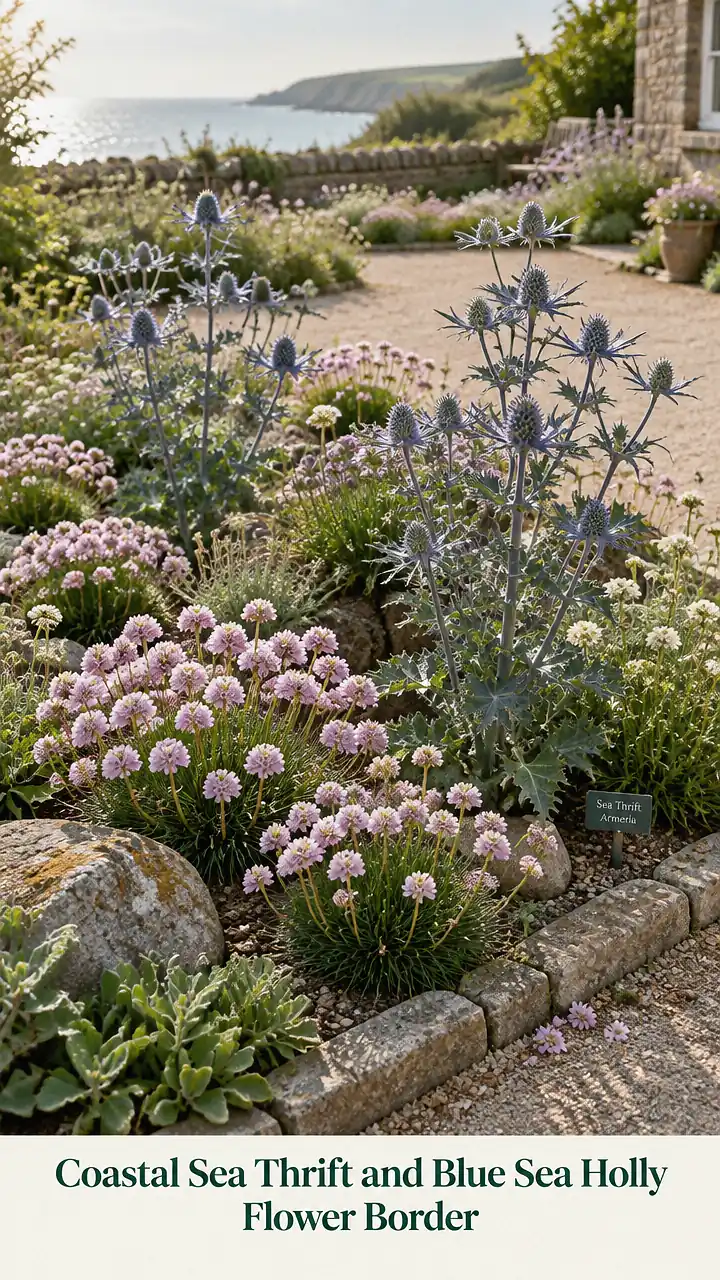
Coastal Sea Thrift and Blue Sea Holly Flower Border
Overview
Capture the atmosphere of Cornwall’s rugged coastline with a flower border filled with sea thrift, blue sea holly, and low-growing coastal plants. Soft pink blooms contrast beautifully with spiky blue flowers, silver-green foliage, and weathered stones. This natural-looking arrangement works especially well in sunny front gardens, exposed backyards, and narrow borders where stronger winds make traditional flowers difficult to grow.
Materials & Plants
- Sea thrift (Armeria maritima) for pink spring flowers.
- Sea holly (Eryngium) for architectural blue blooms.
- Sea kale (Crambe maritima) for bold foliage.
- Small granite rocks and washed gravel.
- Well-draining soil and basic planting tools.
How to Create It
- Choose a sunny position and remove weeds, stones, and unwanted vegetation.
- Check drainage and create slightly raised planting areas if the ground stays wet.
- Plant sea holly toward the back, leaving sufficient space for its mature spread.
- Arrange sea thrift in groups along the front, then position decorative granite rocks between plants.
- Water during establishment, remove spent flowers when needed, and avoid excessive fertilizer.
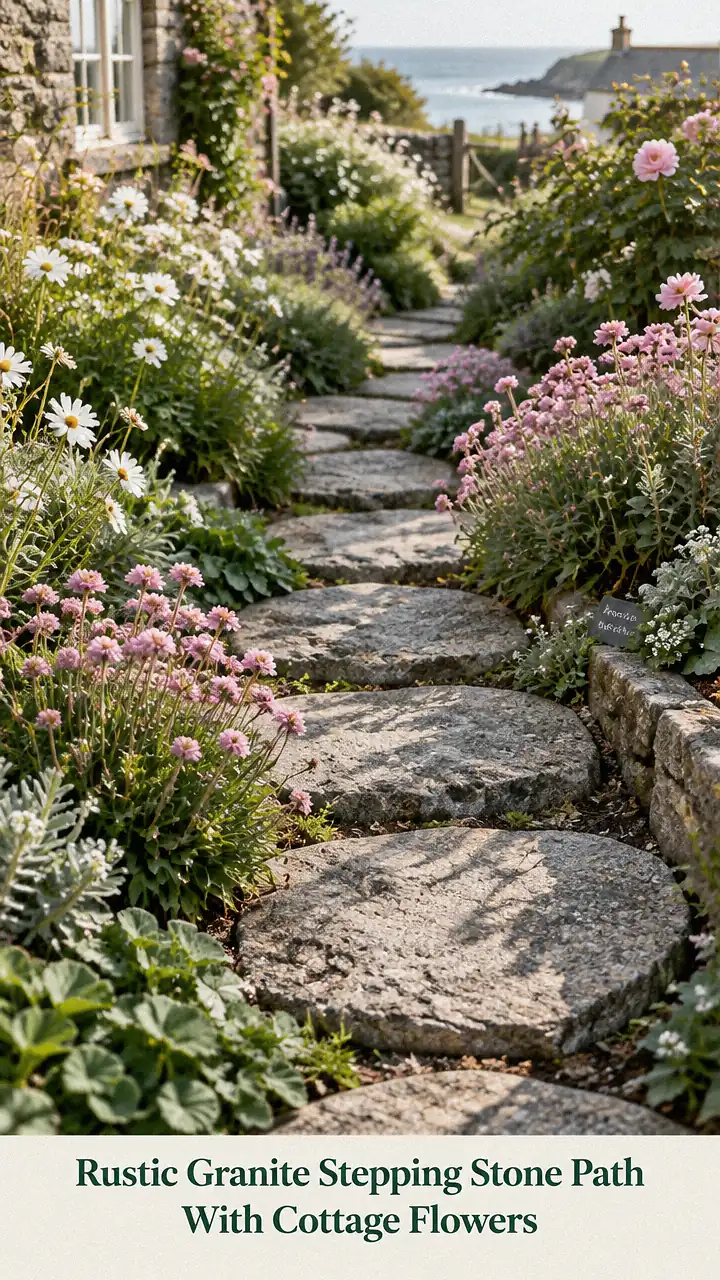
Rustic Granite Stepping Stone Path With Cottage Flowers
Overview
A winding granite pathway surrounded by cheerful cottage flowers instantly creates the feeling of an old Cornish country garden. Irregular stone slabs lead through soft clouds of purple, pink, yellow, and white blooms, while tiny flowers spill naturally over the edges. This design is ideal for connecting a patio to a lawn, vegetable patch, garden shed, or quiet seating corner.
Materials & Plants
- Reclaimed granite stepping stones or textured paving slabs.
- Hardy geraniums and lady’s mantle.
- Mexican fleabane (Erigeron karvinskianus) for sheltered crevices.
- Creeping thyme for sunny, well-drained edges.
- Crushed stone, sand, and a hand trowel.
How to Create It
- Mark a gently curved path using a garden hose, keeping the route comfortable for walking.
- Position the stones at natural walking intervals and set them securely on a compacted base.
- Prepare planting pockets alongside the path, improving heavy soil with suitable organic matter.
- Plant flowering perennials in loose clusters rather than perfectly straight rows.
- Trim plants when they obstruct the walkway and remove weeds between stones regularly.
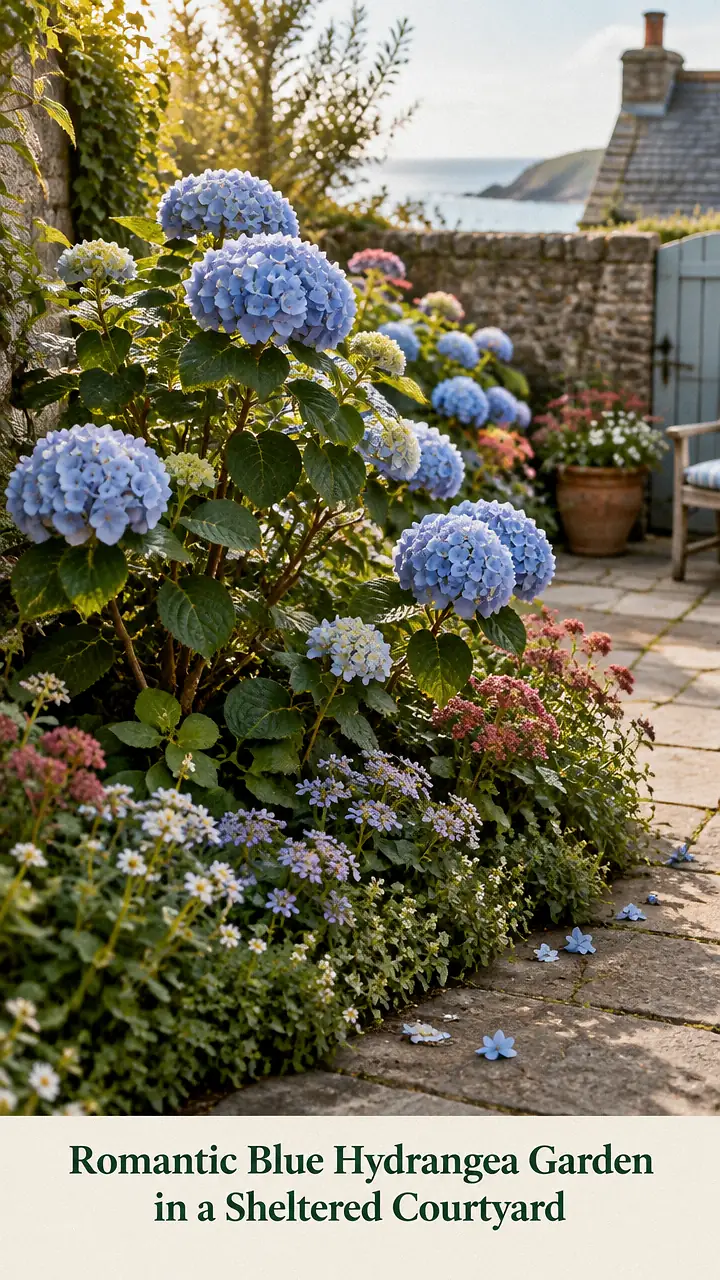
Romantic Blue Hydrangea Garden in a Sheltered Courtyard
Overview
Few flowers capture the softer side of Cornish gardening like generous clusters of hydrangeas. Create a romantic courtyard with blue and lavender flower heads, glossy green foliage, pale gravel, and simple wooden furniture. The combination feels peaceful and slightly old-fashioned. This design works best in a sheltered courtyard or partially shaded backyard with consistently moist, well-draining soil.
Materials & Plants
- Compact Hydrangea macrophylla varieties.
- Ferns and shade-tolerant hardy geraniums.
- Peat-free ericaceous compost for containers when appropriate.
- Terracotta containers or a raised planting bed.
- Pale gravel and a small wooden bench.
How to Create It
- Select a location receiving morning sunlight or gentle filtered light, away from strong coastal winds.
- Test the soil’s acidity if blue hydrangea flowers are essential to your design.
- Plant suitable hydrangeas with room for mature growth, or use large containers for greater control.
- Fill lower spaces with ferns and hardy geraniums, then add gravel and seating.
- Mulch in spring and water during dry periods to maintain healthy foliage and flowers.
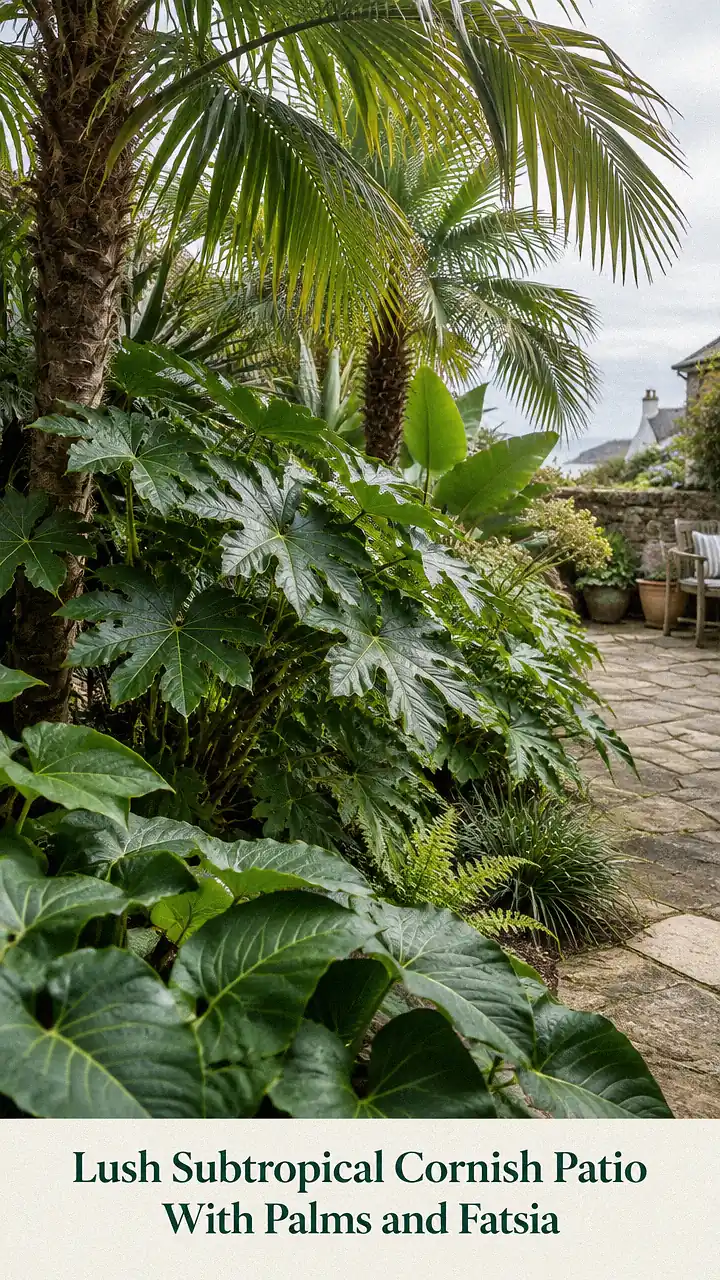
Lush Subtropical Cornish Patio With Palms and Fatsia
Overview
Cornwall’s sheltered gardens are famous for their lush, almost tropical appearance. Recreate this atmosphere with a hardy palm, broad-leaved fatsia, and layered greenery surrounding a compact patio. Large leaves bring dramatic texture, while natural stone paving and simple outdoor furniture keep the design grounded. This idea works particularly well in sheltered backyards protected from cold winds and severe frost.
Materials & Plants
- Trachycarpus fortunei, a relatively hardy palm.
- Fatsia japonica for broad, architectural foliage.
- Hardy ferns and compact hostas for shaded areas.
- Large frost-resistant containers.
- Natural stone paving and organic mulch.
How to Create It
- Identify a protected location with enough space for the palm’s mature height and spread.
- Position the palm as the main feature, keeping it clear of buildings and overhead wires.
- Group fatsia and ferns around the edges to create different foliage heights.
- Install stone paving and add one or two comfortable chairs among the greenery.
- Water new plants consistently and protect vulnerable container roots during hard freezes.
Colorful Cornish Fishing Cottage Doorstep Container Garden

Overview
Brightly painted fishing cottages are an unmistakable part of Cornwall’s coastal charm. Bring that cheerful atmosphere to your doorstep using mismatched terracotta pots, painted containers, and compact flowering plants. White, coral, pink, and purple blossoms look especially appealing beside a blue or cream front door. This affordable design suits tiny front gardens, apartment entrances, narrow patios, and sheltered balconies.
Materials & Plants
- Terracotta pots in three different sizes.
- Pelargoniums, violas, and compact bedding flowers.
- Hardy rosemary for sunny positions.
- Small decorative pebbles.
- Peat-free potting compost and drainage trays where needed.
How to Create It
- Choose a simple container color palette that complements your home’s exterior.
- Place the largest containers beside the entrance, leaving the doorway and walking route unobstructed.
- Fill pots with suitable compost and arrange upright plants behind lower trailing flowers.
- Add a few decorative stones or a small weather-resistant lantern.
- Water according to weather conditions, feed flowering containers, and refresh seasonal plants when necessary.
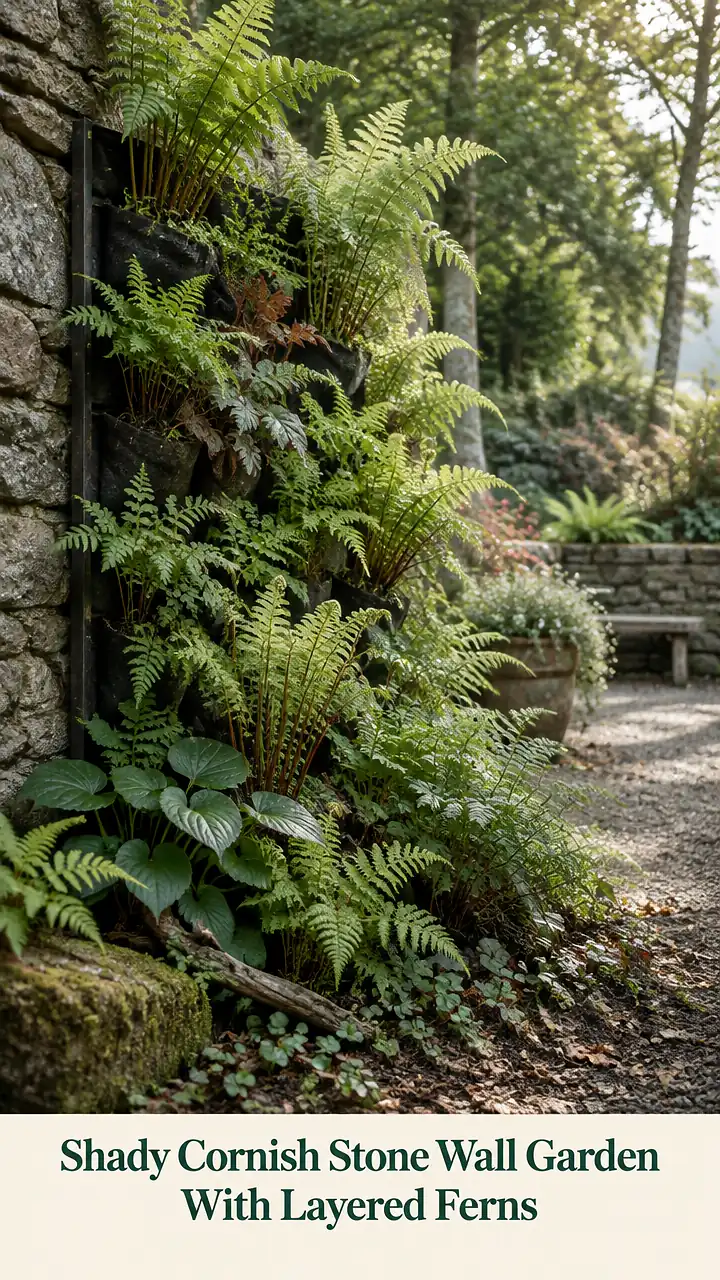
Shady Cornish Stone Wall Garden With Layered Ferns
Overview
An old stone wall can become the perfect backdrop for a lush woodland-style garden. Different fern varieties soften the rough granite texture, while mossy stones, delicate ground covers, and narrow gravel paths create a cool, tranquil atmosphere. This garden is particularly suitable for north-facing yards, shaded side passages, and damp corners where many sun-loving flowers struggle.
Materials & Plants
- Hart’s tongue fern (Asplenium scolopendrium).
- Male fern (Dryopteris filix-mas).
- Epimedium and compact shade-loving ground covers.
- Reclaimed granite stones for ground-level edging.
- Leaf mold, compost, and bark mulch.
How to Create It
- Examine the wall and repair loose masonry before landscaping nearby.
- Prepare a planting strip at ground level without disturbing the wall’s foundations.
- Place larger ferns toward the back and smaller varieties near the pathway.
- Add epimedium beneath taller foliage, then mulch exposed soil with leaf mold or bark.
- Keep young plants watered, remove dead fronds seasonally, and avoid digging into established masonry.
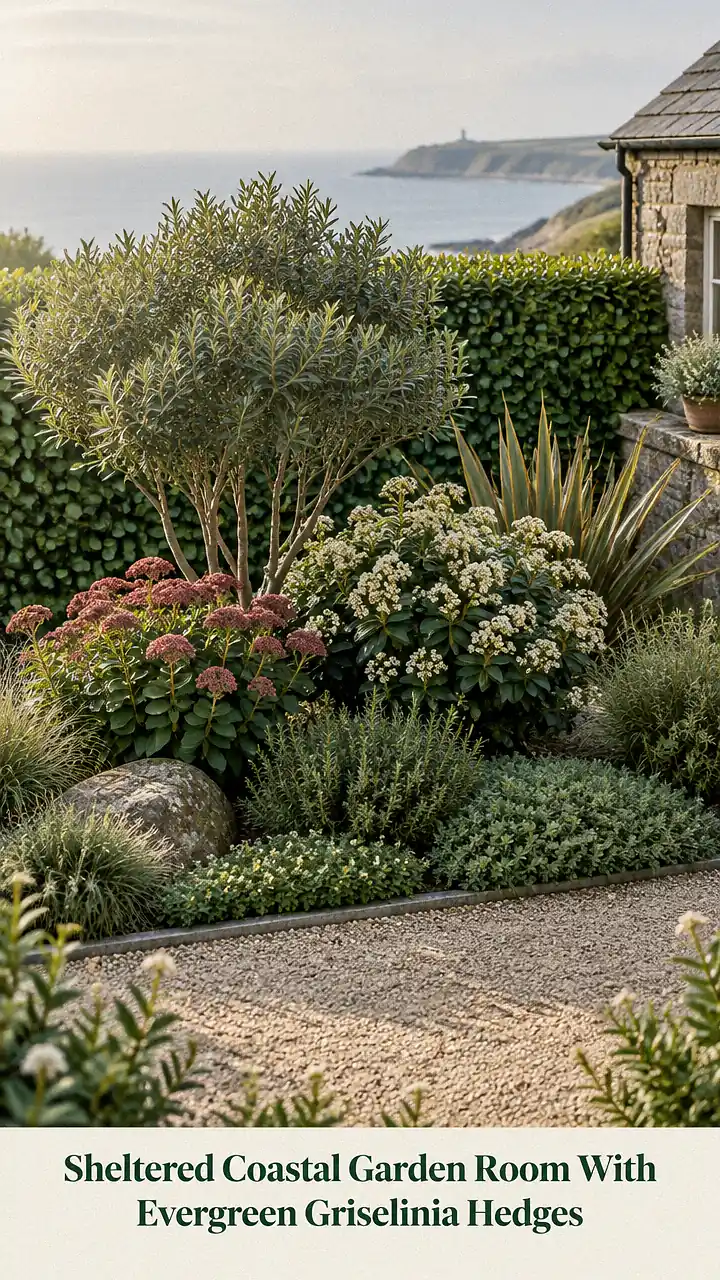
Sheltered Coastal Garden Room With Evergreen Griselinia Hedges
Overview
A living windbreak can turn an exposed outdoor area into a comfortable Cornish garden room. Soft green Griselinia hedges create a leafy enclosure around a gravel seating space, while flowering shrubs and low perennials introduce color. Unlike a solid barrier, the foliage helps filter moving air. This arrangement is practical for coastal backyards where privacy and wind protection are equally important.
Materials & Plants
- Griselinia littoralis hedge plants.
- Hardy geraniums or compact escallonia varieties.
- Permeable gravel and sturdy edging.
- Wooden garden chairs or a weather-resistant bench.
- Compost, mulch, and pruning shears.
How to Create It
- Observe prevailing wind direction before choosing where the hedge should grow.
- Space Griselinia plants according to their nursery labels, allowing for an eventual continuous hedge.
- Establish the hedge first, watering regularly until roots have developed.
- Create a gravel seating area on the more sheltered side and add flowering plants around its edges.
- Trim lightly as needed, avoiding major disturbance during active bird-nesting periods.
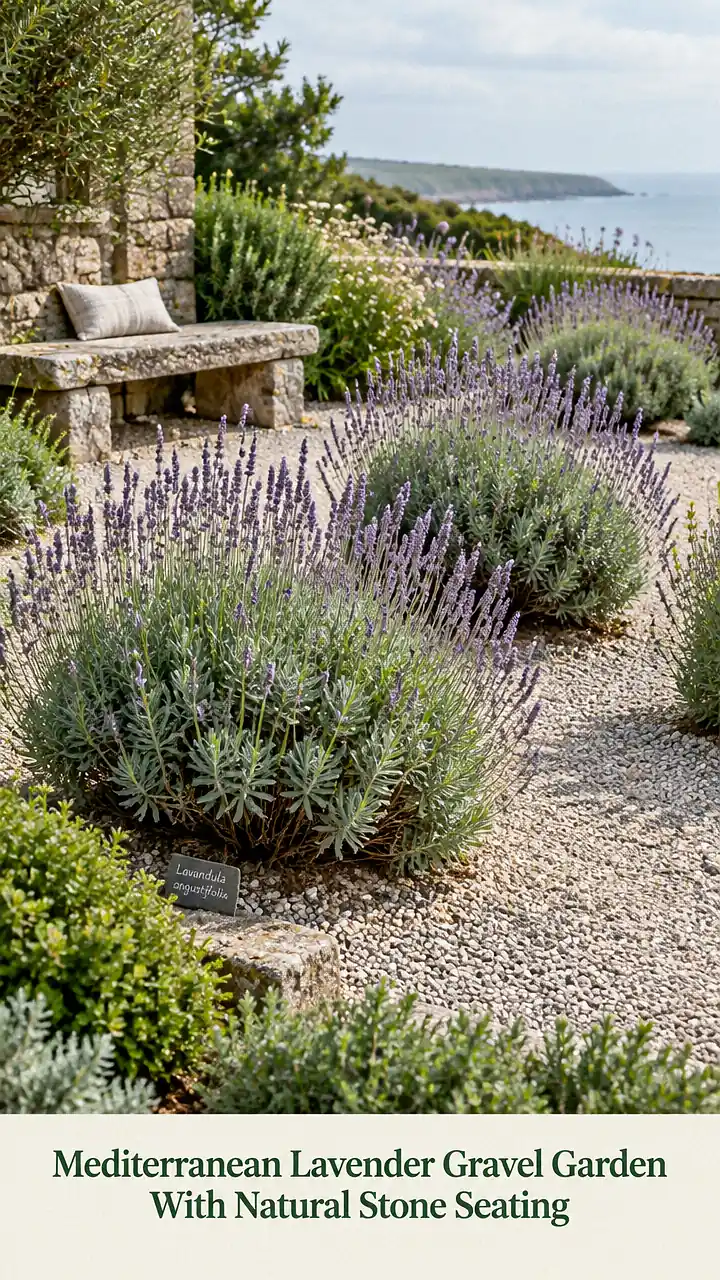
Mediterranean Lavender Gravel Garden With Natural Stone Seating
Overview
For a sunny, sheltered Cornish courtyard, a Mediterranean-inspired gravel garden offers color, fragrance, and relatively simple maintenance. Lavender mounds, silvery foliage, ornamental grasses, and warm stone surfaces create a welcoming place to relax. The purple and gray-green planting palette feels especially beautiful beside pale stone walls. This design works best in sunny locations with free-draining soil rather than damp, heavy ground.
Materials & Plants
- English lavender varieties.
- Santolina and blue fescue grass.
- Decorative gravel or crushed granite.
- Large natural stone slabs for seating.
- Metal or stone edging.
How to Create It
- Choose a sunny site and check that rainfall drains away freely.
- Remove perennial weeds and prepare a stable gravel base for walking surfaces.
- Arrange lavender in repeating groups, with grasses and santolina between them.
- Incorporate a simple stone bench or a pair of chairs.
- Prune lavender appropriately after flowering, weed occasionally, and avoid keeping drought-tolerant plants constantly wet.
Terracotta Agapanthus Display Along Traditional Garden Steps

Overview
Blue agapanthus flowers rising above terracotta pots make a striking feature beside granite or slate steps. Their round flower heads and arching green leaves introduce elegant structure without looking overly formal. Grouping containers at different heights creates a beautiful cascading effect, especially against whitewashed walls. This arrangement suits sunny courtyard stairways, raised terraces, and sheltered garden entrances.
Materials & Plants
- Compact blue or white agapanthus varieties.
- Frost-resistant terracotta or terracotta-look pots.
- Peat-free potting compost with suitable drainage.
- Small pot feet.
- Decorative gravel for nearby ground surfaces.
How to Create It
- Select a sunny staircase or terrace with enough room to keep the walking area completely clear.
- Choose stable pots appropriate to each plant’s root system and mature size.
- Arrange containers in staggered groups, placing taller flowering plants toward the back.
- Elevate pots slightly on feet to help excess water escape.
- Feed and water during active growth, deadhead flowers, and protect vulnerable varieties during freezing weather.
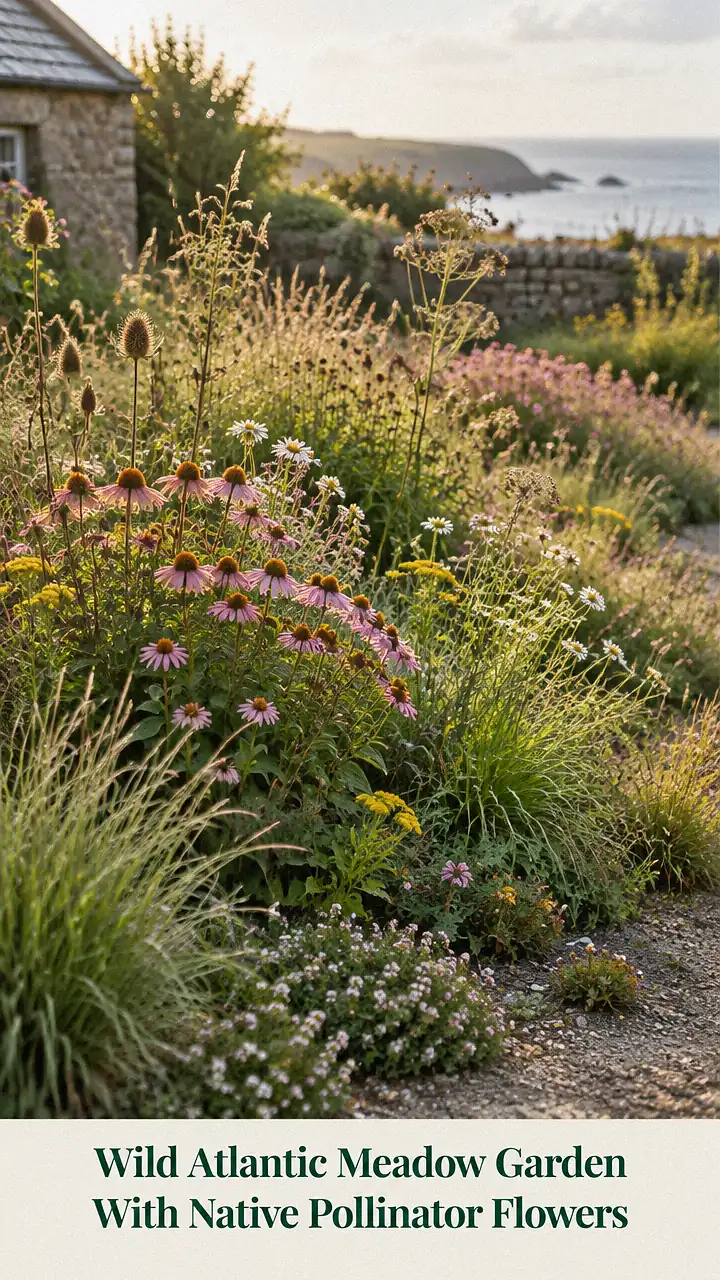
Wild Atlantic Meadow Garden With Native Pollinator Flowers
Overview
Inspired by Cornwall’s open countryside, a small wildflower meadow brings a relaxed, wildlife-friendly character to an ordinary lawn. Delicate grasses sway between white daisies, yellow flowers, and occasional purple blooms, creating a naturally layered appearance. A narrow mown path gives the planting a purposeful shape. This idea works particularly well in sunny backyard corners and larger front gardens.
Materials & Plants
- Locally appropriate native wildflower seed mix.
- Oxeye daisy and common knapweed where suitable.
- Native meadow grasses.
- Yellow rattle seed for suitable existing grassland.
- Garden rake and tools for removing cut vegetation.
How to Create It
- Choose a sunny patch with relatively low-fertility soil and remove vigorous perennial weeds.
- Reduce existing grass competition before sowing, following the seed supplier’s preparation instructions.
- Sow suitable native seed at the recommended seasonal time and rate.
- Maintain a neatly cut edge or winding path to frame the natural planting.
- Cut the meadow at the appropriate time, remove the clippings, and monitor aggressive weeds.
Raised Cornish Kitchen Garden With Slate Edging and Herbs

Overview
A traditional Cornish kitchen garden combines useful plants with rustic materials and tidy planting beds. Low raised beds edged in slate or timber hold leafy vegetables, herbs, and edible flowers, while gravel pathways make harvesting easy in wet weather. The result feels productive without sacrificing beauty. This practical layout works in sunny backyards, cottage gardens, and modest suburban spaces.
Materials & Plants
- Slate-effect edging or untreated, durable timber.
- Kale, Swiss chard, lettuce, and seasonal vegetables.
- Chives, parsley, and thyme.
- Compost-rich garden soil.
- Gravel paths and a watering can.
How to Create It
- Choose a location receiving at least six hours of sunlight for most vegetable crops.
- Build beds approximately 3–4 feet wide so you can reach plants without stepping on the soil.
- Fill the beds with suitable soil and mature compost, keeping walking surfaces separate.
- Group vegetables according to their seasonal needs and reserve edges for compact herbs.
- Water consistently, harvest frequently, and replenish organic matter between growing seasons.
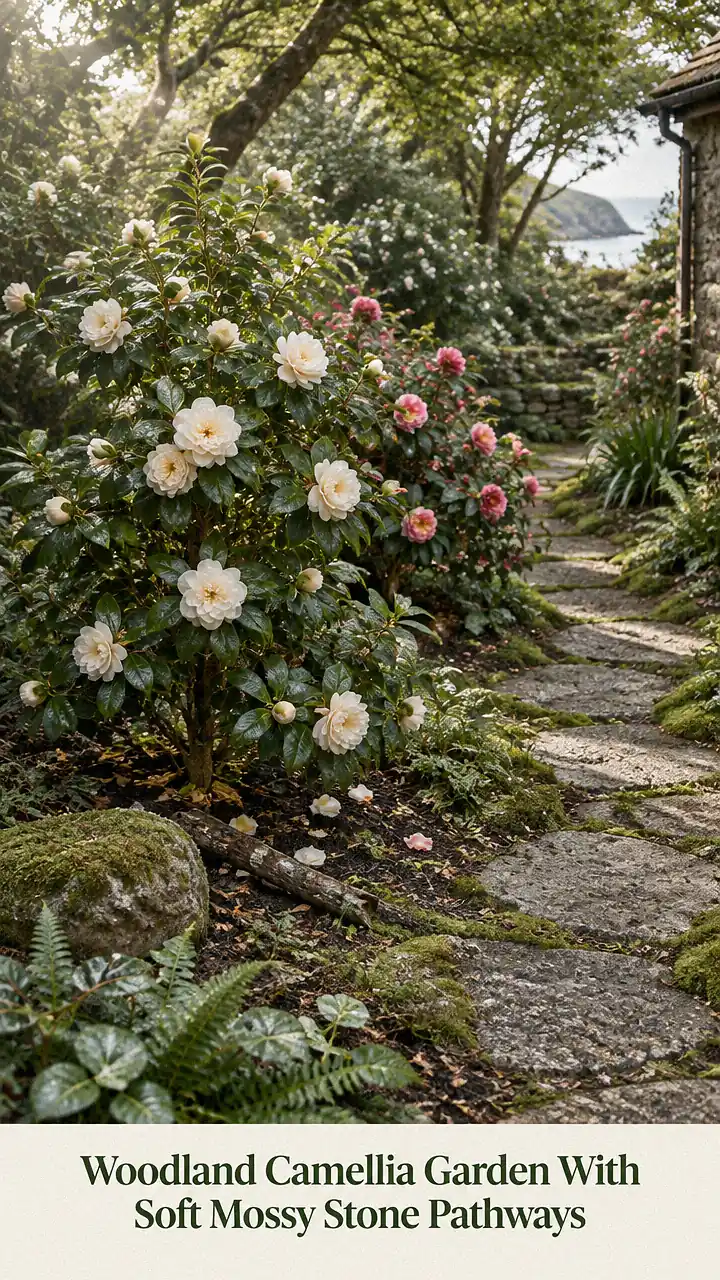
Woodland Camellia Garden With Soft Mossy Stone Pathways
Overview
Create the atmosphere of a sheltered Cornish woodland garden with glossy camellias, delicate woodland plants, and an informal stone path. Early-season pink and white flowers brighten the deep green foliage, while a layer of bark mulch adds softness to the ground. This elegant design works best in partially shaded areas with acidic, well-draining soil and protection from harsh winds.
Materials & Plants
- Camellia japonica or suitable compact cultivars.
- Pieris japonica and epimedium.
- Woodland ferns for textural contrast.
- Natural stepping stones and bark mulch.
- Soil pH testing kit.
How to Create It
- Test your soil’s acidity and identify an area with light or dappled shade.
- Arrange camellias with enough room for their mature size, keeping them away from exposed windy positions.
- Add smaller shade-tolerant plants in front to create a natural woodland layering effect.
- Position stepping stones through the planting and mulch the surrounding soil.
- Maintain moisture during summer bud formation, preferably using rainwater where tap water is very hard.
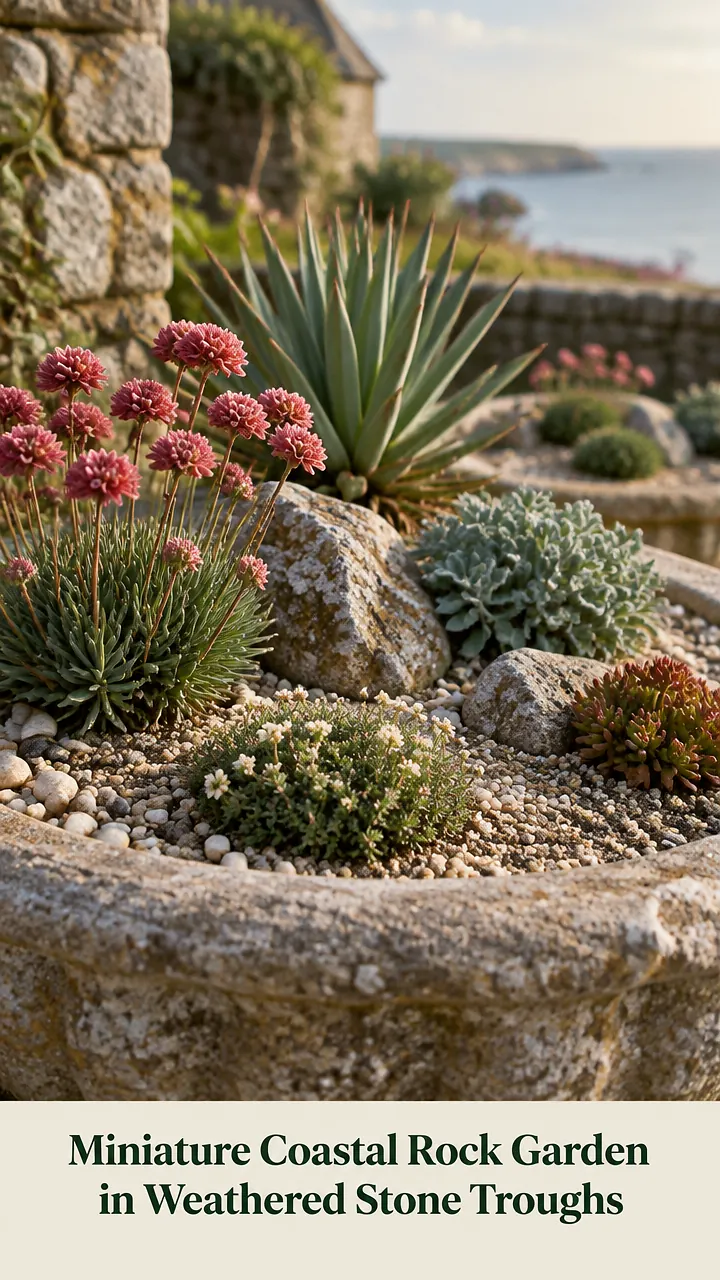
Miniature Coastal Rock Garden in Weathered Stone Troughs
Overview
A collection of stone troughs filled with miniature alpine plants offers a compact interpretation of Cornwall’s rocky coastline. Rosette-shaped houseleeks, low-growing sedums, and tiny flowering plants create a miniature landscape among pale gravel and rough stones. The arrangement is attractive throughout the year and requires little space. It’s particularly suited to sunny patios, balcony corners, and small courtyard tables.
Materials & Plants
- Weathered stone or lightweight stone-effect troughs.
- Houseleeks (Sempervivum).
- Hardy low-growing sedums.
- Gritty, free-draining growing medium.
- Small decorative granite stones.
How to Create It
- Choose containers with proper drainage holes and sufficient depth for the plants.
- Fill the troughs with a suitable gritty growing mix.
- Position larger stones first, then arrange houseleeks and sedums around them in natural clusters.
- Top-dress exposed soil with fine gravel, keeping plant crowns uncovered.
- Place containers in bright sunlight and water sparingly once established, especially during cool, wet weather.
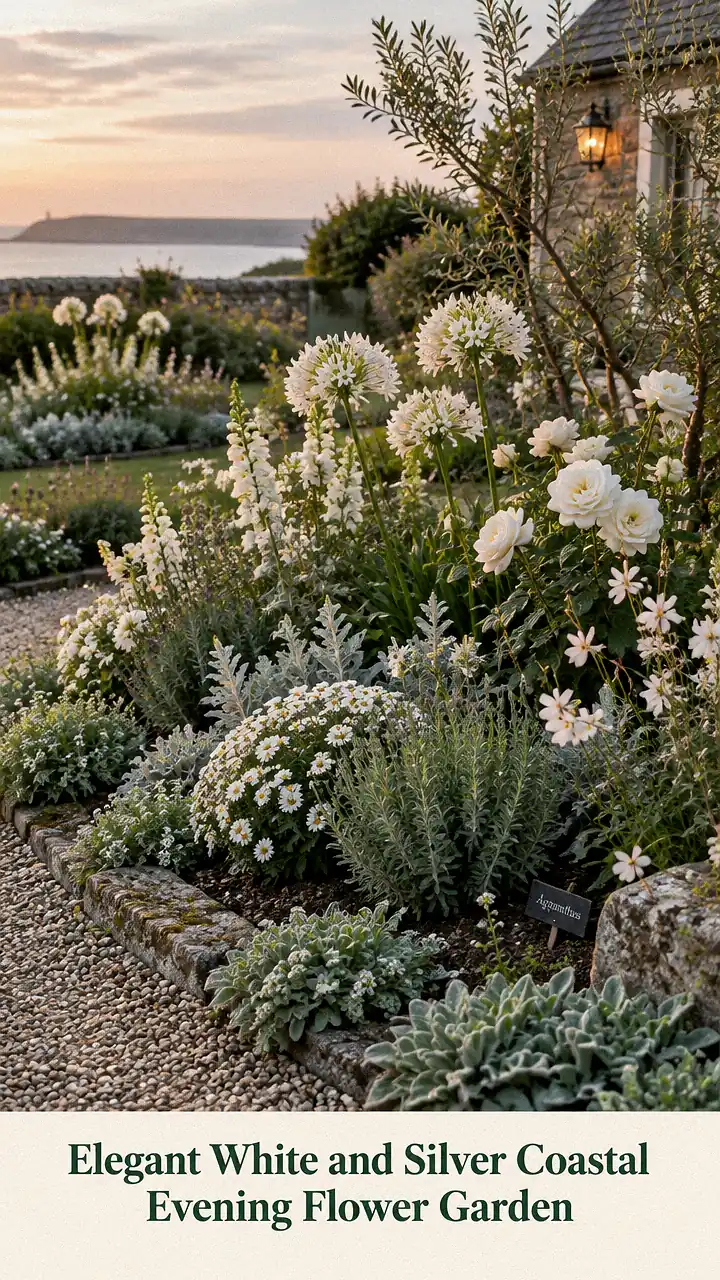
Elegant White and Silver Coastal Evening Flower Garden
Overview
A white and silver garden feels wonderfully peaceful as evening light begins to fade. Silvery foliage reflects the remaining daylight, while pale flowers stand out against dark stone walls and green hedges. Combine soft rounded plants with a few upright accents for contrast. This design works beautifully near sheltered patios, outdoor dining areas, and sunny garden borders where an understated color palette is preferred.
Materials & Plants
- White-flowering sea thrift.
- Lamb’s ear (Stachys byzantina).
- White-flowering hardy geraniums.
- Pale gravel and simple stone edging.
- Low-glare, outdoor-rated garden lighting.
How to Create It
- Select a bright, well-drained site and establish a simple planting shape.
- Plant silver-leaved varieties in repeating drifts, leaving enough space for air circulation.
- Add white flowers at different heights to break up the foliage.
- Install subtle path lighting without directing strong beams into neighboring windows or wildlife habitats.
- Remove faded growth and prevent moisture-loving plants from being mixed into excessively dry soil.
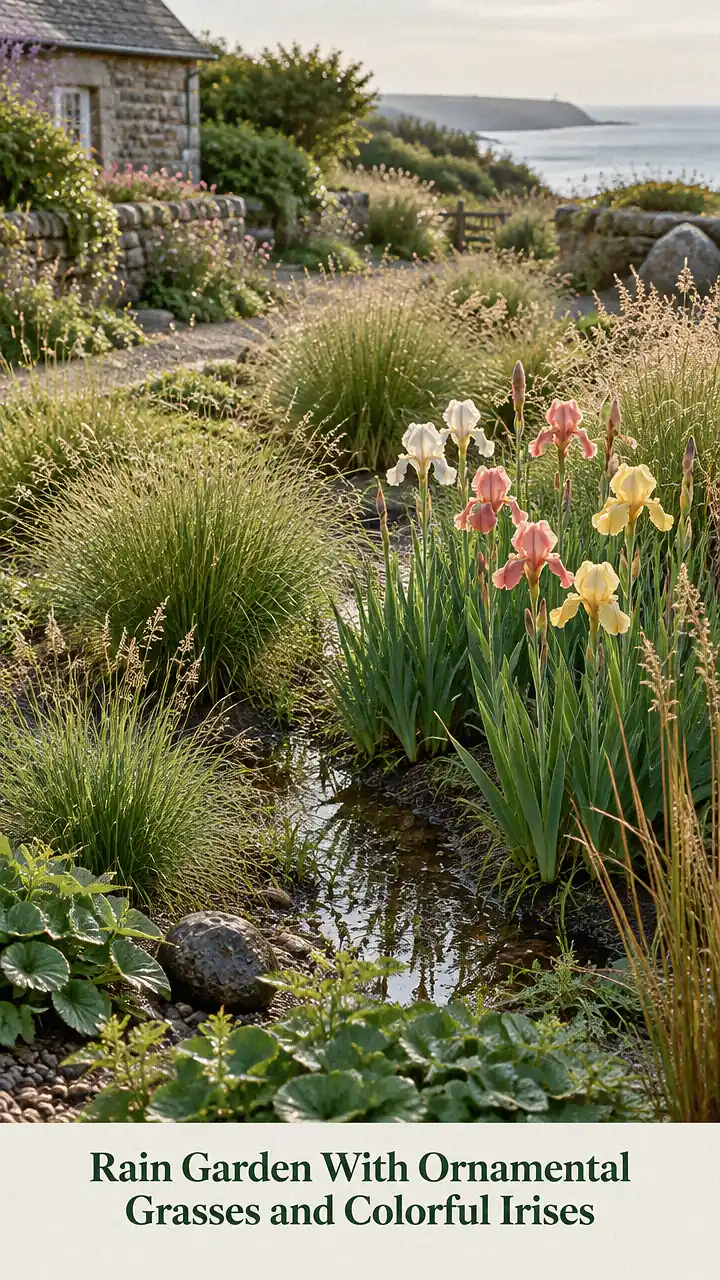
Rain Garden With Ornamental Grasses and Colorful Irises
Overview
Cornwall’s rainy weather can become a design opportunity rather than a frustration. A shallow rain garden collects runoff temporarily and allows it to soak into suitable ground, surrounded by upright grasses and colorful moisture-tolerant flowers. Smooth pebbles emphasize the natural shape of the basin. This attractive feature suits backyards with permeable soil and a safe route for directing roof or patio runoff.
Materials & Plants
- Siberian iris (Iris sibirica).
- Tufted hair grass (Deschampsia cespitosa).
- Suitable native sedges.
- Rounded stones and gravel for the inlet.
- Spade, rake, and compost.
How to Create It
- Test soil drainage and choose a location safely away from building foundations and underground services.
- Create a shallow basin with gently sloping sides and a safe overflow route.
- Direct runoff through a small gravel-lined channel, following local drainage requirements.
- Plant moisture-tolerant grasses and irises in groups across the basin and its edges.
- Water during establishment and keep the inlet clear of accumulated leaves and debris.
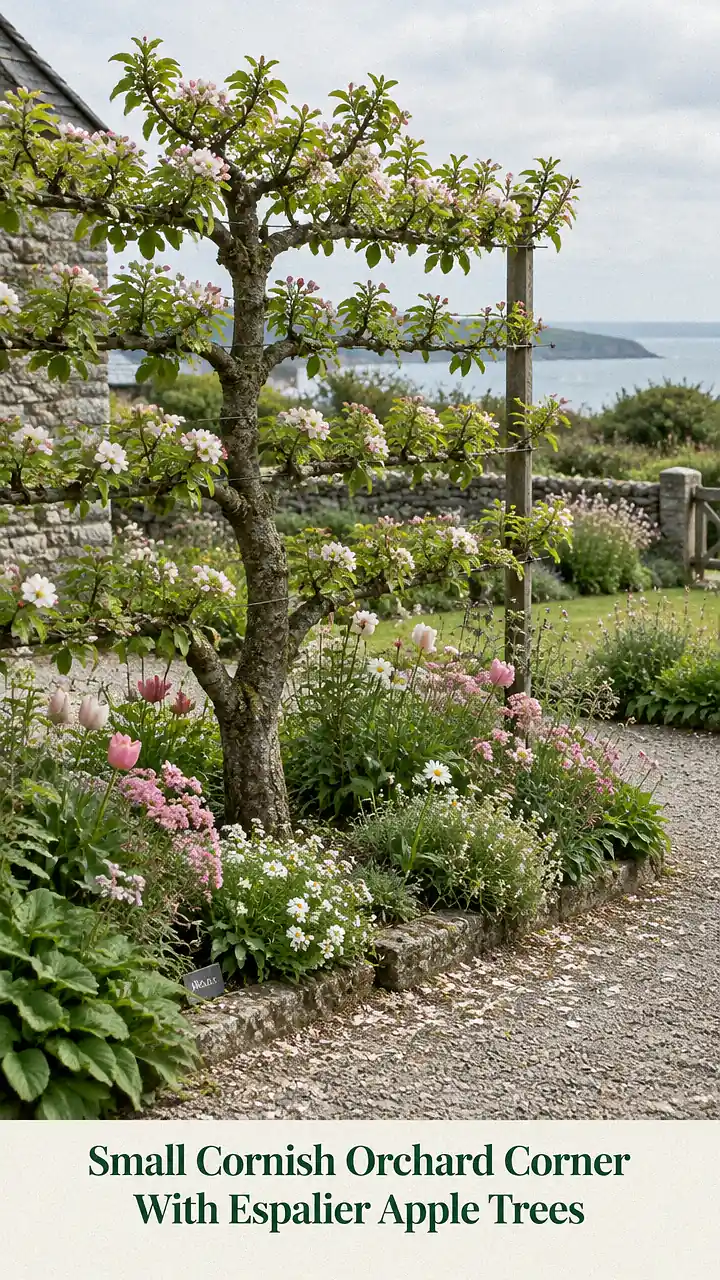
Small Cornish Orchard Corner With Espalier Apple Trees
Overview
A sheltered corner planted with espalier apple trees brings the charm of an old Cornish orchard into a surprisingly small garden. Horizontally trained branches create a living pattern against a wall or fence, while spring blossoms and autumn fruit provide seasonal interest. Underplanting with compact herbs or low flowers completes the cottage atmosphere. This design suits sunny backyards and narrow side gardens.
Materials & Plants
- One or two espalier-trained apple trees on suitable rootstocks.
- Wall-mounted supports and tensioned garden wire.
- Soft horticultural ties.
- Chives or compact spring-flowering bulbs.
- Compost and organic mulch.
How to Create It
- Choose a sunny wall or strong fence with enough space for the trained branches.
- Select apple varieties appropriate to your climate and confirm their pollination requirements.
- Install horizontal support wires before planting, leaving adequate clearance between the tree and wall.
- Secure the branches with soft ties and plant low-growing companions beneath.
- Follow espalier pruning guidance each season and water regularly during establishment and dry spells.
Romantic Cottage Rose Arch With Climbing Honeysuckle

Overview
A flower-covered arch provides a beautiful entrance to a Cornish-inspired cottage garden. Soft pink climbing roses create an informal canopy, while fragrant honeysuckle adds smaller blossoms and leafy texture. A gravel or stone pathway beneath completes the romantic atmosphere. This design is best placed in a sheltered sunny garden where strong winds will not constantly damage flowers or loosen the support.
Materials & Plants
- A repeat-flowering climbing rose suitable for the site.
- Native honeysuckle (Lonicera periclymenum).
- Sturdy metal or treated wooden garden arch.
- Soft plant ties and mulch.
- Stone or gravel pathway materials.
How to Create It
- Install a strong arch securely, checking that its width allows comfortable passage.
- Prepare generous planting holes on either side with suitable soil and organic matter.
- Plant the rose and honeysuckle with enough space to develop without overcrowding.
- Guide new shoots along the structure, tying them loosely to encourage balanced coverage.
- Prune each climber according to its growth habit and regularly check that the arch remains stable.
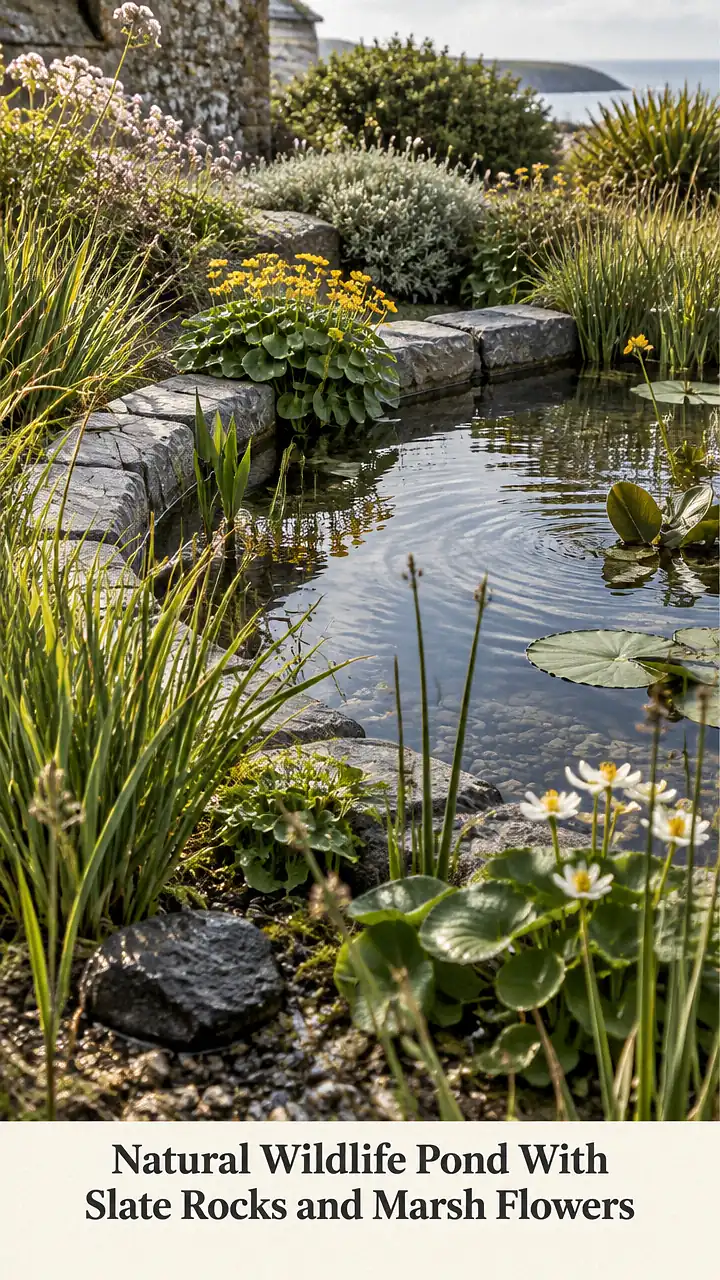
Natural Wildlife Pond With Slate Rocks and Marsh Flowers
Overview
A small wildlife pond brings movement, reflection, and a sense of tranquility to a Cornish cottage garden. Dark slate stones frame the water, while marsh marigolds and other moisture-loving plants soften the edges. A gently sloping entrance makes the pond accessible to visiting wildlife. This design is especially appealing in a quiet backyard corner away from heavy foot traffic.
Materials & Plants
- Flexible pond liner and protective underlay.
- Slate rocks and rounded pebbles.
- Marsh marigold (Caltha palustris).
- Native aquatic plants suited to the pond’s size.
- Aquatic planting baskets and appropriate compost.
How to Create It
- Choose a suitable location and check underground services before digging.
- Excavate a natural-shaped pond with planting shelves, a deeper section, and a gently sloping wildlife entrance.
- Install the protective underlay and liner, then conceal exposed edges with securely placed stones.
- Fill with rainwater where possible and introduce appropriate aquatic plants.
- Remove excess fallen leaves, watch water levels, and provide suitable child-safety measures wherever necessary.
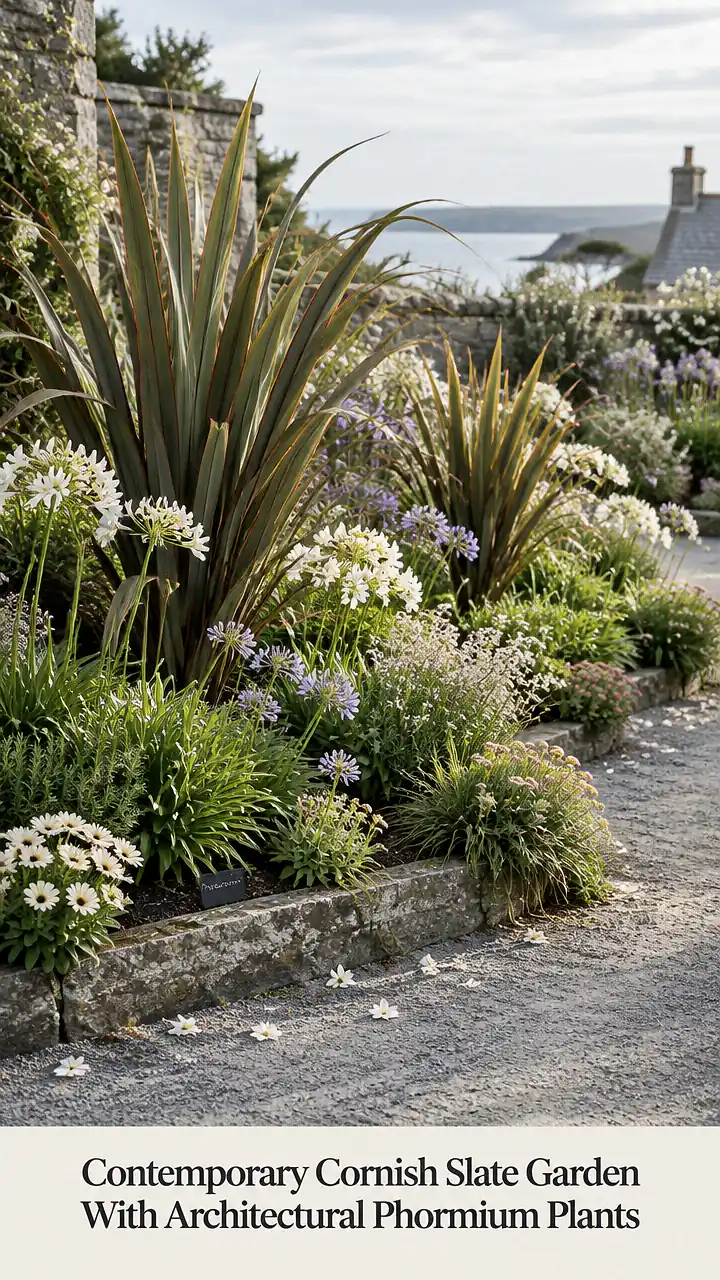
Contemporary Cornish Slate Garden With Architectural Phormium Plants
Overview
Cornwall’s traditional materials also work beautifully in modern landscaping. A contemporary slate garden combines dark gray paving, geometric raised beds, and bold architectural plants for a clean yet coastal appearance. Upright phormium leaves contrast with compact mounds of flowering plants and smooth gravel surfaces. This stylish design is particularly suitable for modern homes, low-maintenance front gardens, and compact urban courtyards.
Materials & Plants
- Compact Phormium cultivars.
- Sea thrift and blue fescue.
- Dark slate pavers or slate-effect porcelain.
- Raised planters made from stone or weather-resistant metal.
- Decorative gravel and discreet outdoor lighting.
How to Create It
- Draw a simple layout with clearly defined paving and planting sections.
- Prepare a stable, properly draining foundation for the paving.
- Install raised beds and position phormium plants as strong focal points, allowing space for mature growth.
- Add low sea thrift and fescue around the architectural foliage to soften the geometric layout.
- Remove damaged leaves, weed gravel surfaces, and protect less-hardy phormium cultivars during severe cold.
Create Your Own Beautiful Cornish Garden Retreat
The most appealing Cornwall garden ideas share something important: they feel connected to the landscape around them. Natural stone, relaxed planting, rich foliage, and carefully chosen coastal flowers create beauty without demanding a perfectly formal layout.
Start by considering what your own outdoor space offers. A windy, sunny garden might be ideal for sea thrift, hardy shrubs, and gravel planting. A sheltered courtyard could become a lush retreat with hydrangeas, camellias, or subtropical greenery. Even a tiny balcony can capture Cornish cottage charm through terracotta pots and colorful seasonal flowers.
You don’t have to complete everything at once. Begin with a stone pathway, a collection of coastal containers, or one attractive flower border. Build the design gradually, choosing plants that suit your sunlight, soil, rainfall, available space, and maintenance budget.
With a few thoughtful details and the right combination of plants and materials, you can create a garden that feels charming, welcoming, and unmistakably inspired by Cornwall.