

A wooden house already has something special: warmth, character, and a natural connection to the outdoors. Add the right garden, and that inviting atmosphere becomes even more beautiful. From colorful cottage flowers to simple gravel pathways, thoughtful landscaping can make a wooden home feel like a peaceful countryside retreat.
The best wooden house garden ideas work with the home’s natural materials rather than competing with them. Weathered timber looks beautiful beside soft greenery, while darker wooden siding creates a striking backdrop for bright flowers, ornamental grasses, and natural stone.
You don’t need a large property or an expensive landscaping project to achieve this look. A few raised planters, a carefully arranged flower bed, or a cozy garden corner can completely change how your outdoor space feels.
These 18 ideas include practical designs for sunny front yards, shaded backyards, small porches, and compact gardens. Each one combines natural beauty with manageable planting and maintenance.
Beautiful Wooden House Garden Ideas For Every Outdoor Space
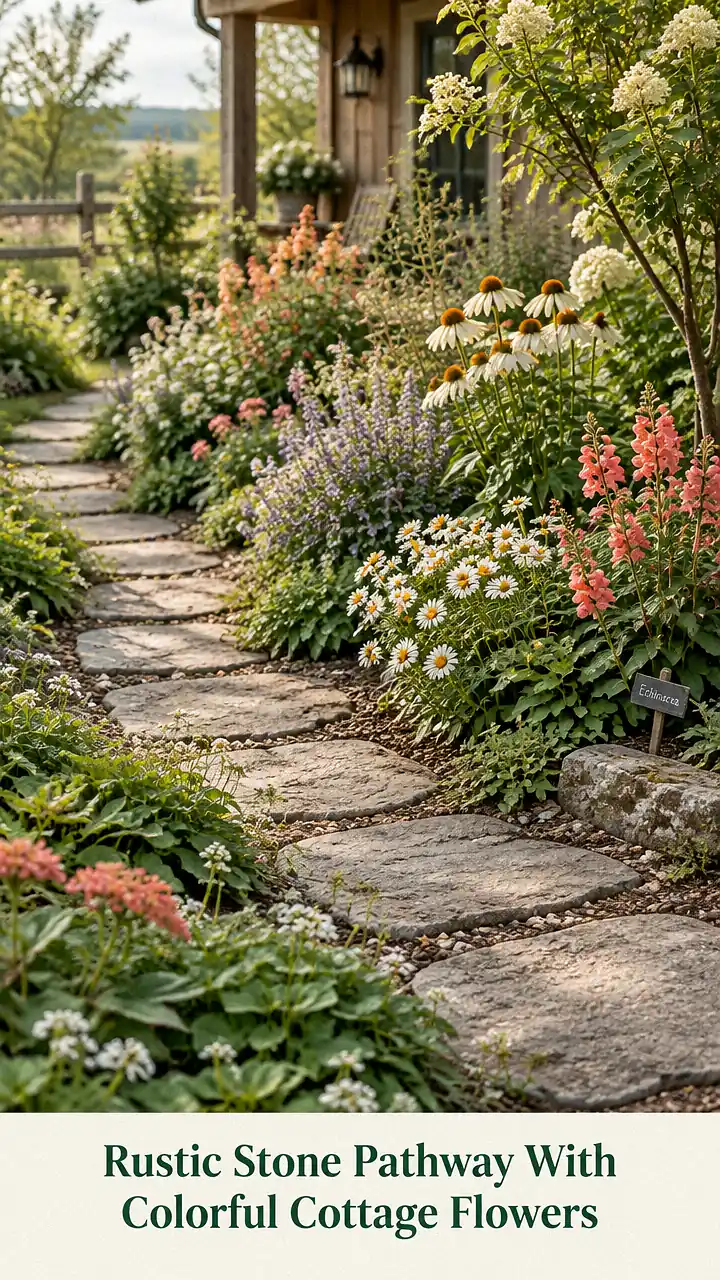
Rustic Stone Pathway With Colorful Cottage Flowers
Overview
A winding stone pathway surrounded by cheerful flowers creates a welcoming entrance to a wooden house. Irregular flagstones blend naturally with timber siding, while lavender, daisies, and colorful flowering perennials soften the edges. This design works especially well in a sunny front yard, where the pathway can lead visitors from the gate toward a rustic wooden porch.
Materials & Plants
- Irregular flagstones or stepping stones
- Crushed gravel or compacted stone base
- Lavender for sunny, well-drained sites
- Shasta daisies and perennial salvias
- Low-growing creeping thyme
- Compost and garden edging
- Hand trowel and garden rake
How to Create It
- Mark a gently curved pathway approximately 3 feet wide, allowing comfortable space for walking.
- Remove grass and level the ground before installing a compacted stone base and setting the flagstones securely.
- Plant taller flowers behind smaller edging plants, allowing enough space for each variety to mature.
- Add low-growing thyme between suitable stones or along the edges, then water new plants until established.
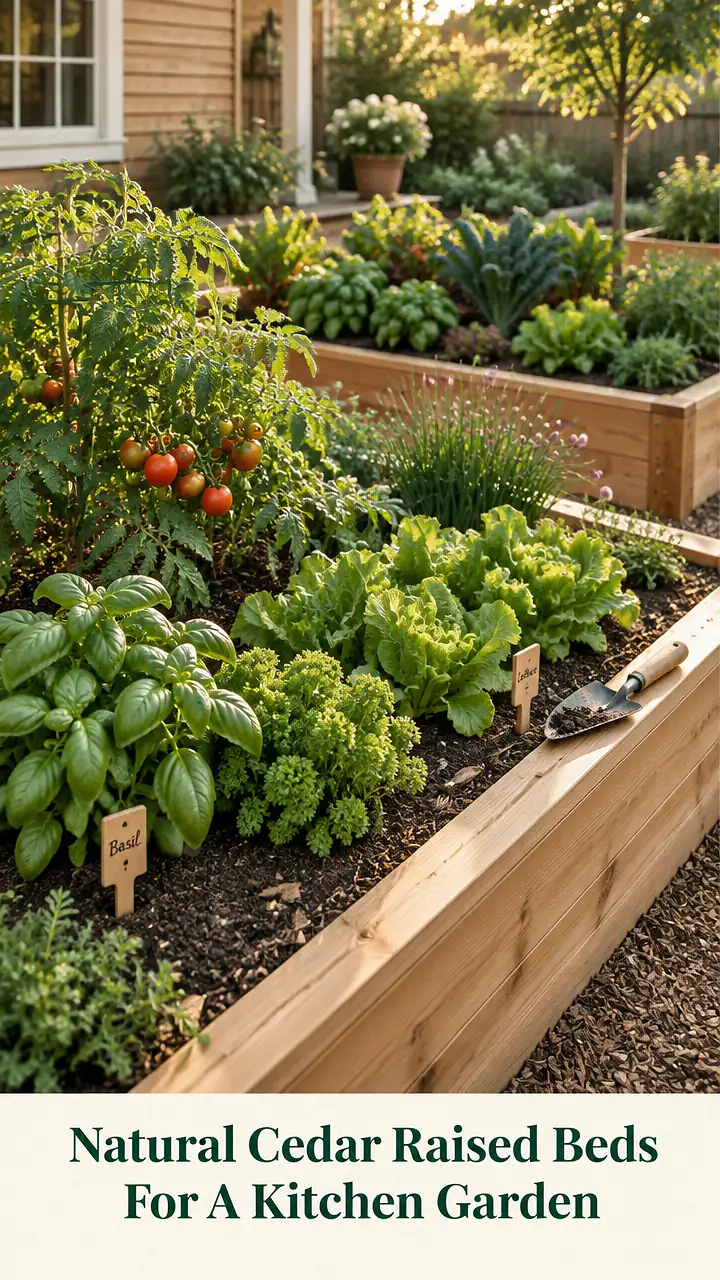
Natural Cedar Raised Beds For A Kitchen Garden
Overview
A collection of rectangular cedar raised beds transforms an ordinary backyard into a productive kitchen garden. Warm wooden frames coordinate beautifully with a timber home, while leafy vegetables create a lush contrast against the earthy structure. Gravel or wood-chip paths keep the layout organized and accessible. This design is ideal for a sunny backyard near the kitchen.
Materials & Plants
- Untreated cedar boards
- Exterior-grade screws
- Raised-bed soil and finished compost
- Lettuce, kale, and Swiss chard
- Bush beans and compact tomatoes
- Straw or shredded leaf mulch
- Watering wand or drip irrigation kit
How to Create It
- Choose an area receiving at least six hours of direct sunlight, preferably more for tomatoes.
- Assemble beds approximately 3–4 feet wide so you can reach the center without stepping into the soil.
- Fill the frames with suitable raised-bed soil mixed with finished compost.
- Arrange vegetables according to mature size, keeping taller crops from shading shorter ones unnecessarily.
- Water consistently, mulch exposed soil, and replant seasonal crops after harvesting.
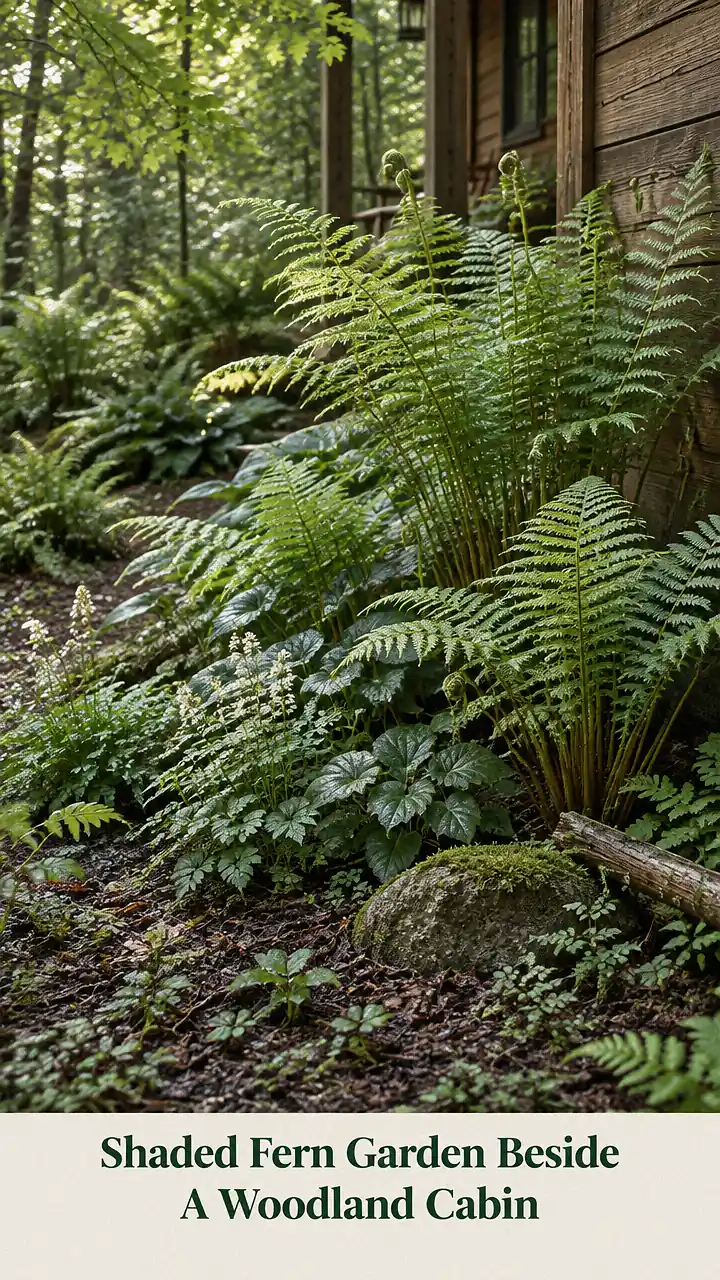
Shaded Fern Garden Beside A Woodland Cabin
Overview
A shaded fern garden brings a cool, peaceful woodland atmosphere to the side of a wooden cabin. Layers of delicate fern fronds, broad hosta leaves, and low-growing foliage create beautiful contrasts in texture. Mossy-looking stones and a small natural path complete the scene. This design suits north-facing yards or sheltered areas beneath established trees in temperate climates.
Materials & Plants
- Native or regionally suitable woodland ferns
- Hostas for shaded conditions
- Heuchera and woodland sedges
- Flat natural stepping stones
- Leaf compost or shredded leaf mulch
- Small weather-resistant garden bench
- Soaker hose
How to Create It
- Observe the area’s sunlight and soil moisture before selecting shade-loving plants.
- Arrange larger ferns toward the back, with hostas and smaller foliage plants in the foreground.
- Set stepping stones into the ground, keeping the path stable and easy to maintain.
- Apply organic mulch around plants without piling it against wooden siding or plant crowns.
- Maintain consistent moisture during establishment while avoiding waterlogged soil.
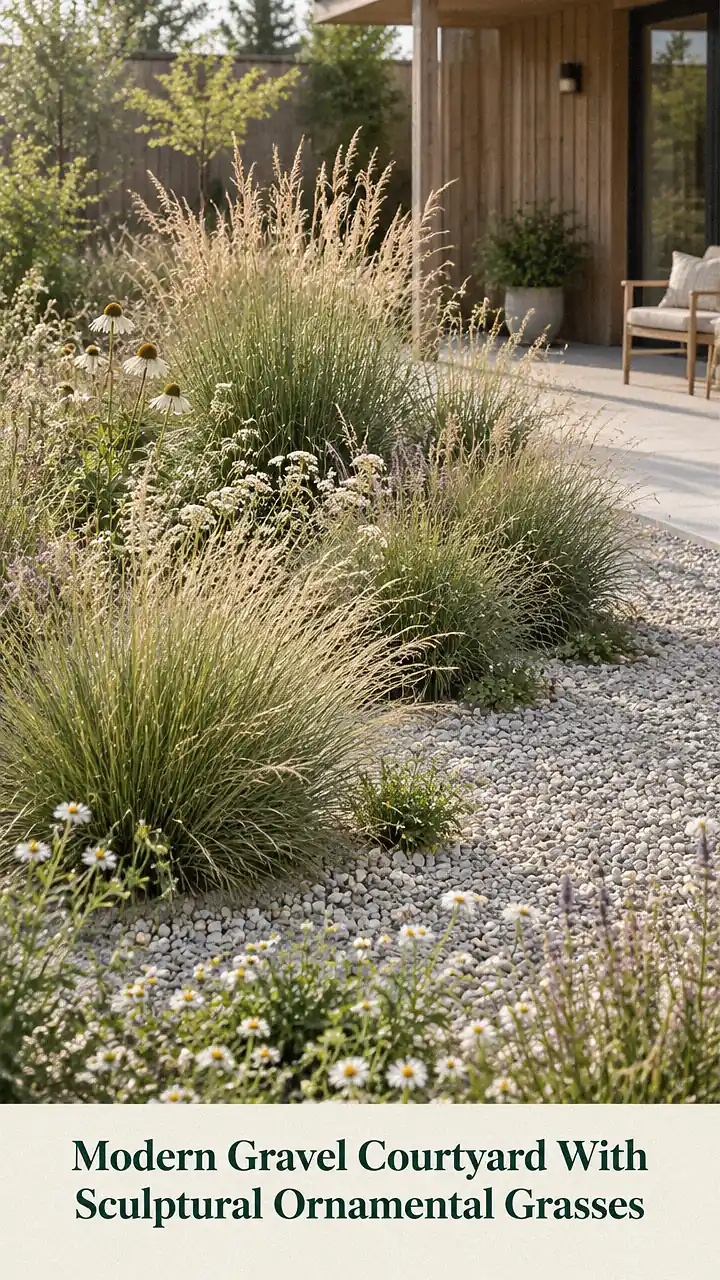
Modern Gravel Courtyard With Sculptural Ornamental Grasses
Overview
For a contemporary wooden house, a minimalist gravel courtyard offers a beautiful balance of clean lines and natural texture. Pale gravel contrasts with dark timber siding, while ornamental grasses add gentle movement and a relaxed atmosphere. Large rectangular stepping stones introduce structure without making the garden feel rigid. This low-maintenance design works well in smaller side yards or sunny courtyards.
Materials & Plants
- Pale decorative gravel
- Crushed stone base
- Large concrete or natural stone pavers
- Blue fescue or compact switchgrass
- Dwarf juniper for suitable climates
- Steel or recycled plastic edging
- Landscape rake
How to Create It
- Clear the courtyard and establish a slight surface slope that directs water away from the house.
- Install a compacted base and position large stepping stones along the preferred walking route.
- Create defined planting pockets for grasses and small shrubs, allowing room for mature growth.
- Spread decorative gravel around the planting areas while keeping siding and drainage openings clear.
- Remove weeds regularly and cut back deciduous ornamental grasses at the appropriate seasonal time.
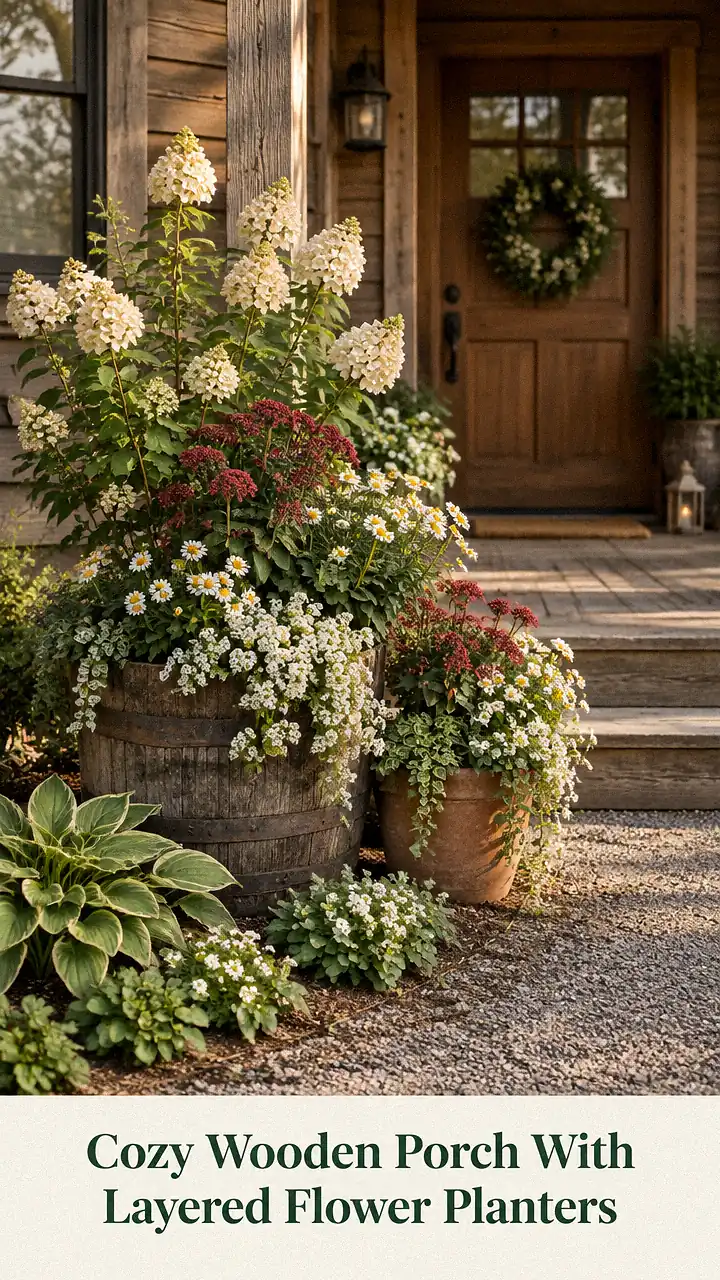
Cozy Wooden Porch With Layered Flower Planters
Overview
A wooden porch becomes instantly more inviting when surrounded by layered flower containers. Tall flowering plants, medium-sized foliage, and trailing blooms create a lush arrangement without requiring permanent garden beds. Terracotta pots and weathered wooden planters complement rustic siding beautifully. This flexible design is especially practical for small homes, rental properties, and porches where planting space is limited.
Materials & Plants
- Terracotta or lightweight resin pots
- Wooden planter boxes with liners
- Geraniums and calibrachoa for sun
- Begonias and coleus for partial shade
- Trailing bacopa or suitable ivy alternatives
- Quality container potting mix
- Pot feet and watering can
How to Create It
- Determine how much sunlight the porch receives and select flowers that match those conditions.
- Arrange the largest containers near corners, leaving doorways and walkways unobstructed.
- Combine upright plants, rounded foliage, and trailing varieties for varied heights and textures.
- Use drainage trays where appropriate, empty excess water, and protect wooden decking from trapped moisture.
- Feed flowering containers as directed and remove faded blooms to encourage a tidy display.
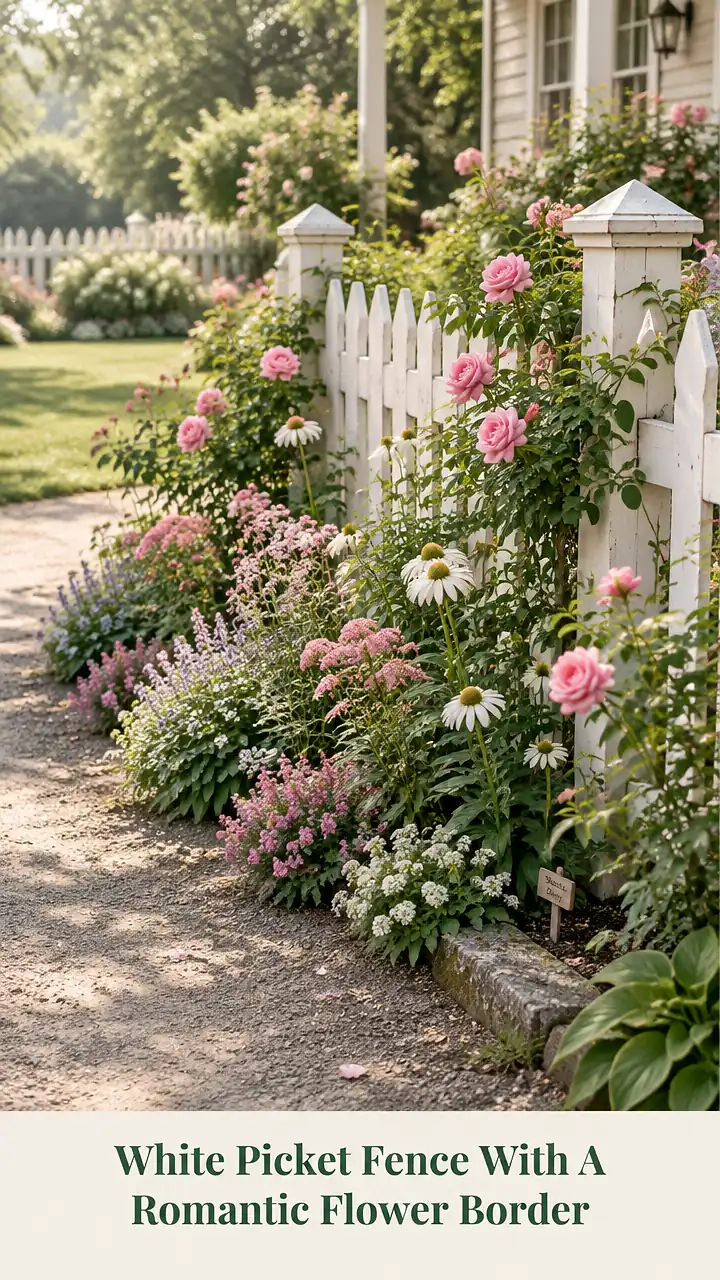
White Picket Fence With A Romantic Flower Border
Overview
A short white picket fence and a generous flower border create a classic cottage garden beside a wooden home. Soft pink roses, purple salvia, and cheerful daisies form a colorful display against the crisp fence. The slightly informal planting feels comfortable and welcoming rather than overly landscaped. This garden works particularly well along a sunny front boundary or garden entrance.
Materials & Plants
- White wooden or vinyl picket fencing
- Compact shrub roses
- Perennial salvia
- Coreopsis and Shasta daisies
- Spring-flowering daffodil bulbs
- Compost and shredded bark mulch
- Pruning shears
How to Create It
- Install a low fence along the garden boundary, checking property lines before beginning.
- Prepare a planting strip approximately 3–5 feet deep, depending on available space.
- Position compact roses as focal points and arrange smaller perennials in repeating groups.
- Add spring bulbs between established plants for color before the summer flowering season.
- Water deeply during establishment and prune each plant according to its specific needs.
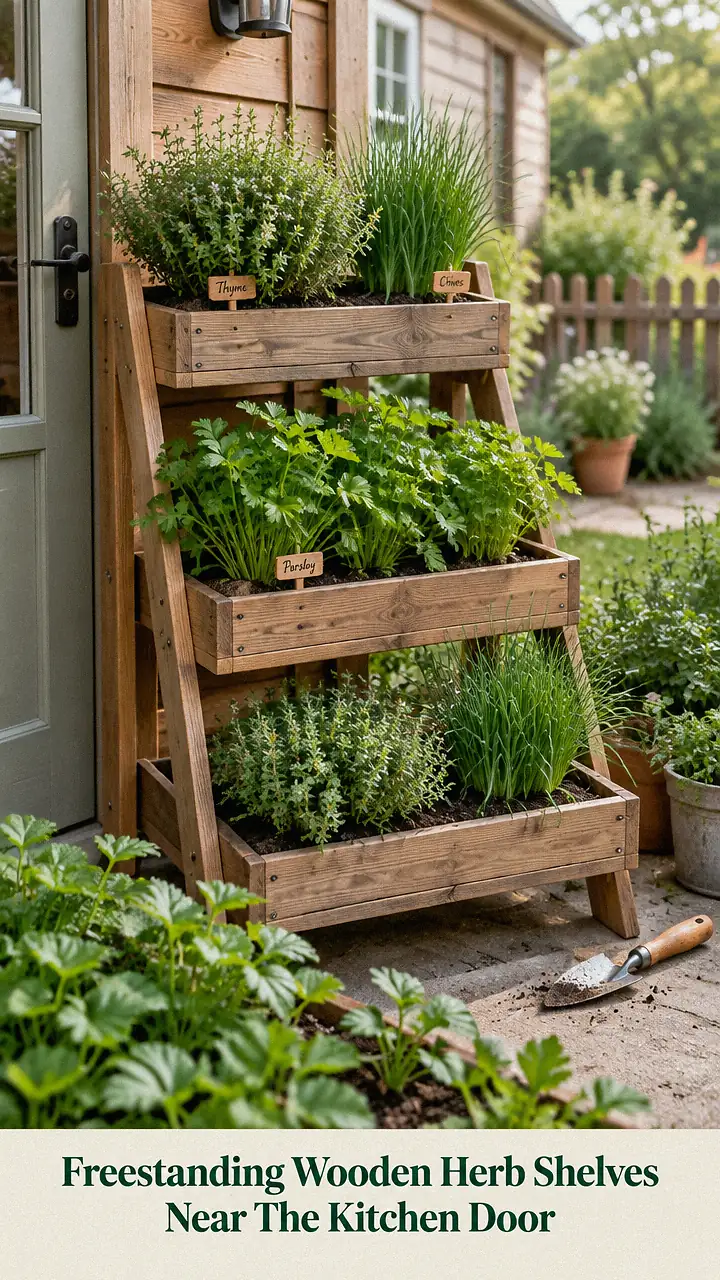
Freestanding Wooden Herb Shelves Near The Kitchen Door
Overview
A narrow wooden shelving unit filled with herbs makes a charming and useful addition beside a wooden house. Small terracotta pots create a rustic look, while the different shapes and colors of aromatic leaves provide natural decoration. This vertical garden occupies very little floor space and works beautifully on a sunny patio, near a kitchen entrance, or against a sheltered garden fence.
Materials & Plants
- Weather-resistant freestanding wooden shelves
- Terracotta pots with drainage holes
- Basil and parsley
- Thyme, oregano, and rosemary
- Lightweight container potting mix
- Waterproof plant labels
- Shelf anchors or anti-tip hardware
How to Create It
- Position the shelving unit where sun-loving herbs receive approximately six hours of direct light.
- Secure the unit against tipping, placing heavier containers on the lowest shelves.
- Pot herbs individually so plants with different watering requirements can be managed separately.
- Leave space between containers for air circulation and easy harvesting.
- Rotate pots as needed, harvest regularly, and replace short-lived seasonal herbs when necessary.
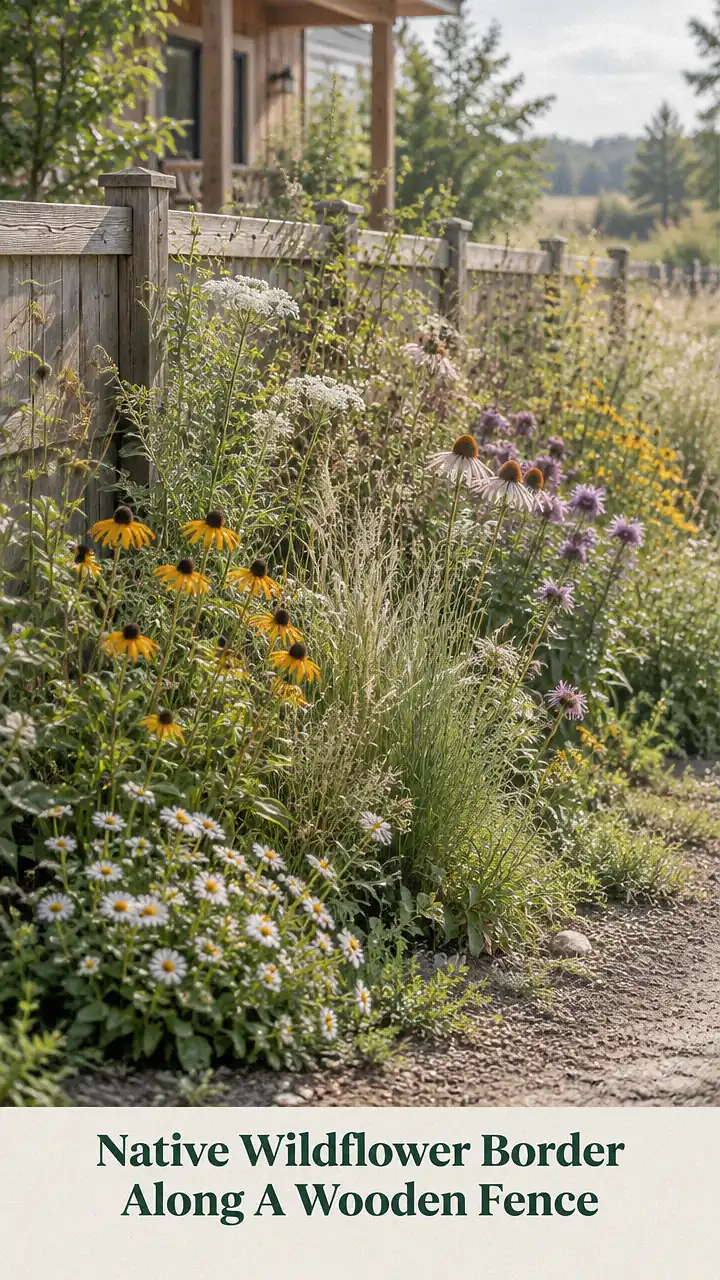
Native Wildflower Border Along A Wooden Fence
Overview
A softly layered wildflower border adds movement and seasonal color along a simple wooden fence. Purple, yellow, and pink blooms rise above natural-looking foliage, creating a relaxed landscape that blends with rustic architecture. The garden also provides valuable flowers for local pollinators when appropriate native species are selected. This design works best in a sunny backyard with room for plants to spread naturally.
Materials & Plants
- Regionally native flowering perennials
- Suitable native asters
- Native goldenrod varieties
- Milkweed species appropriate to the region
- Little bluestem or another native grass
- Compost if soil improvement is needed
- Plant markers and organic mulch
How to Create It
- Select locally native plants suited to your soil, climate, and available sunlight.
- Remove existing weeds and turf before preparing the planting area.
- Arrange taller plants near the fence, with shorter flowers toward the front.
- Plant repeated groups of each species and include varieties that bloom at different times.
- Water during establishment and leave some healthy seed heads and stems for seasonal wildlife habitat.
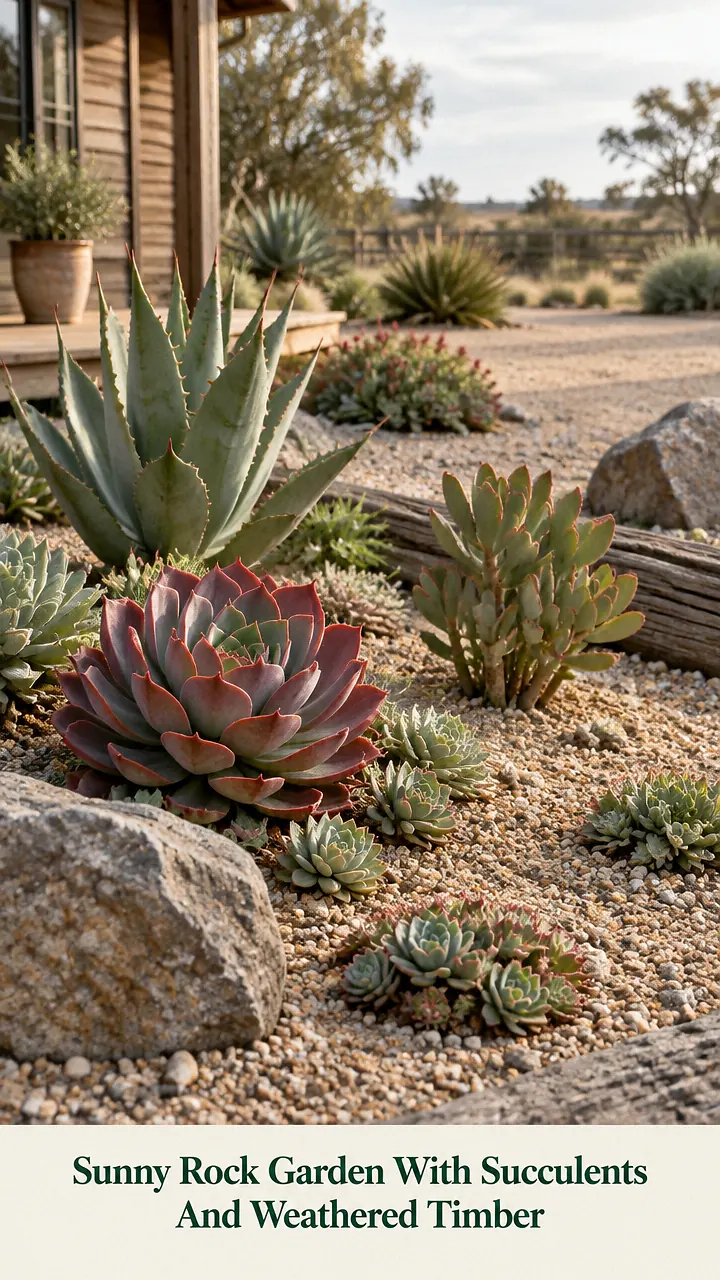
Sunny Rock Garden With Succulents And Weathered Timber
Overview
A small rock garden creates an attractive, drought-conscious landscape beside a wooden home. Rough stones, gravel, and compact succulent rosettes introduce earthy colors and sculptural forms. Reclaimed-looking timber accents give the arrangement rustic character without overwhelming the planting. This design suits a sunny, well-drained front garden, especially in dry climates where water-efficient landscaping is desirable.
Materials & Plants
- Natural rocks in several sizes
- Decorative gravel and mineral mulch
- Hardy sedums
- Cold-hardy sempervivums
- Suitable drought-tolerant thyme
- Free-draining planting soil
- Short untreated log accents
How to Create It
- Choose a sunny location with excellent drainage and avoid areas where roof runoff collects.
- Position the largest rocks first, partially setting them into the soil for a natural appearance.
- Plant hardy succulents in pockets between stones, following their mature spacing requirements.
- Spread a thin layer of mineral mulch around the plants and add small timber accents away from the foundation.
- Water new plants appropriately, then reduce irrigation as the drought-tolerant varieties establish.
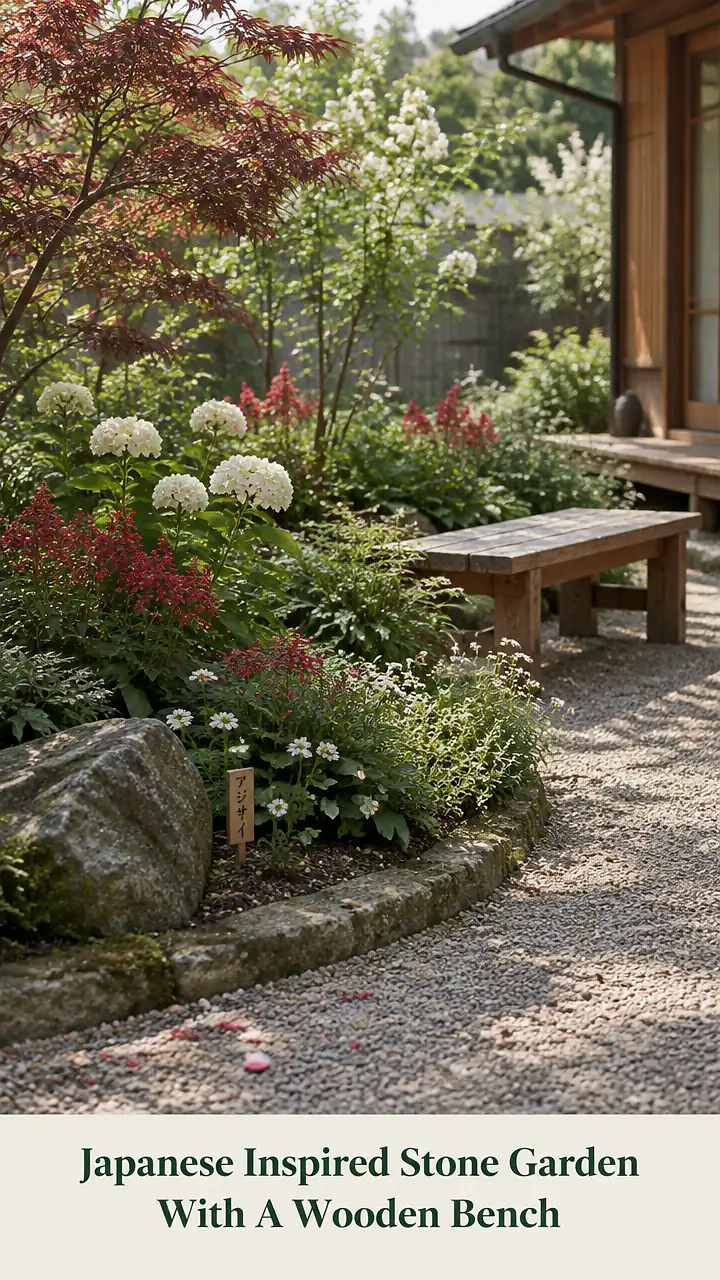
Japanese Inspired Stone Garden With A Wooden Bench
Overview
A Japanese-inspired garden pairs beautifully with the simple beauty of a wooden house. Carefully placed stepping stones, rounded shrubs, and a modest timber bench create a peaceful composition. Fine gravel provides open space, while restrained greenery introduces depth and softness. This garden is particularly effective in a small courtyard or sheltered side yard where a calm, uncluttered atmosphere is desired.
Materials & Plants
- Smooth natural stepping stones
- Fine decorative gravel
- Compact Japanese maple for suitable climates
- Dwarf conifers or clipped evergreen shrubs
- Japanese forest grass for partial shade
- Simple wooden bench
- Steel garden edging
How to Create It
- Choose a quiet corner and establish a simple layout with one main focal point.
- Place stepping stones in an irregular but comfortable walking pattern.
- Position a small ornamental tree or evergreen shrub where it has adequate growing space.
- Add restrained groupings of grasses and low shrubs, leaving open gravel areas visible.
- Rake the gravel periodically and prune plants lightly to preserve their natural forms.
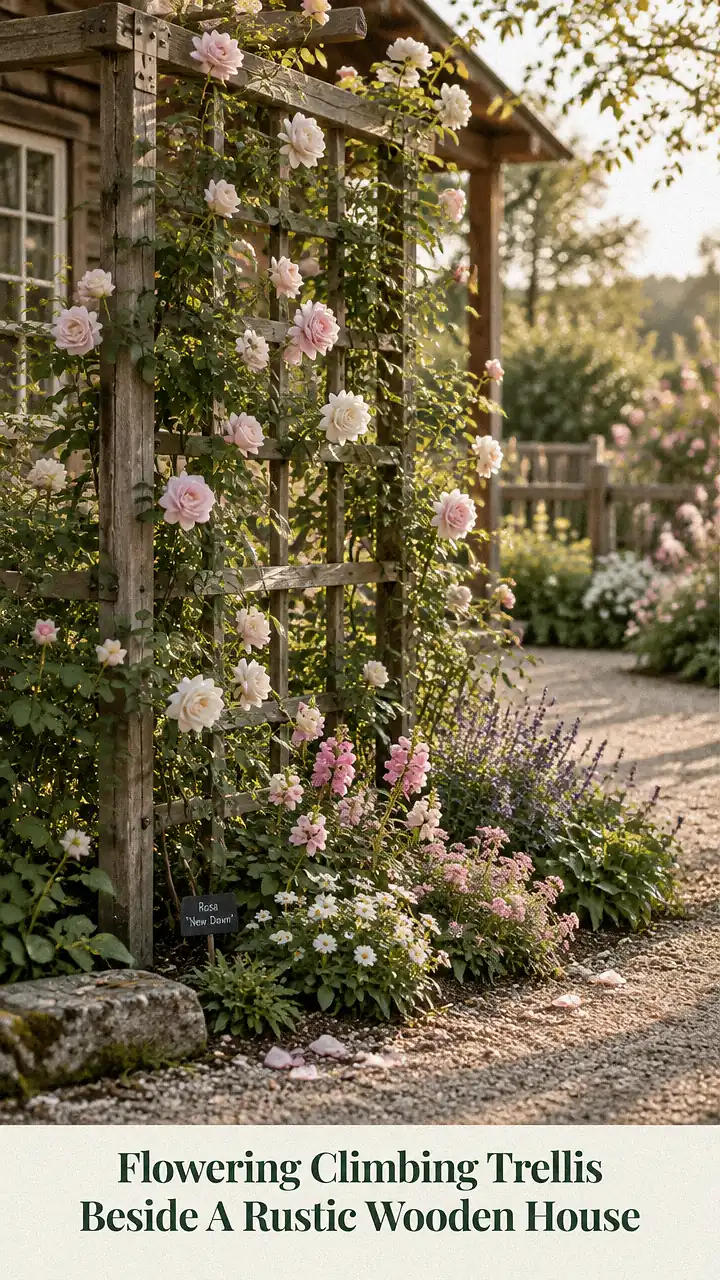
Flowering Climbing Trellis Beside A Rustic Wooden House
Overview
A freestanding flowering trellis creates vertical interest without covering the wooden house itself. Climbing roses or clematis bring beautiful seasonal flowers to a simple timber framework, while low perennials soften the base. The combination of natural wood and flowering vines feels romantic and timeless. This design works especially well beside a sunny walkway, patio entrance, or garden gate.
Materials & Plants
- Sturdy freestanding timber trellis
- Exterior-rated anchors and hardware
- Climbing roses or suitable clematis
- Catmint or low-growing salvia
- Well-draining garden soil
- Soft garden ties
- Mulch and pruning shears
How to Create It
- Install the trellis securely, allowing enough separation from wooden siding for airflow and maintenance.
- Prepare the planting area with compost where needed, without raising soil against the house.
- Plant the climbing variety at its recommended distance from the support.
- Gently tie young stems to the trellis, spreading growth evenly as the plant develops.
- Check ties regularly and prune according to the flowering habits of the selected vine.
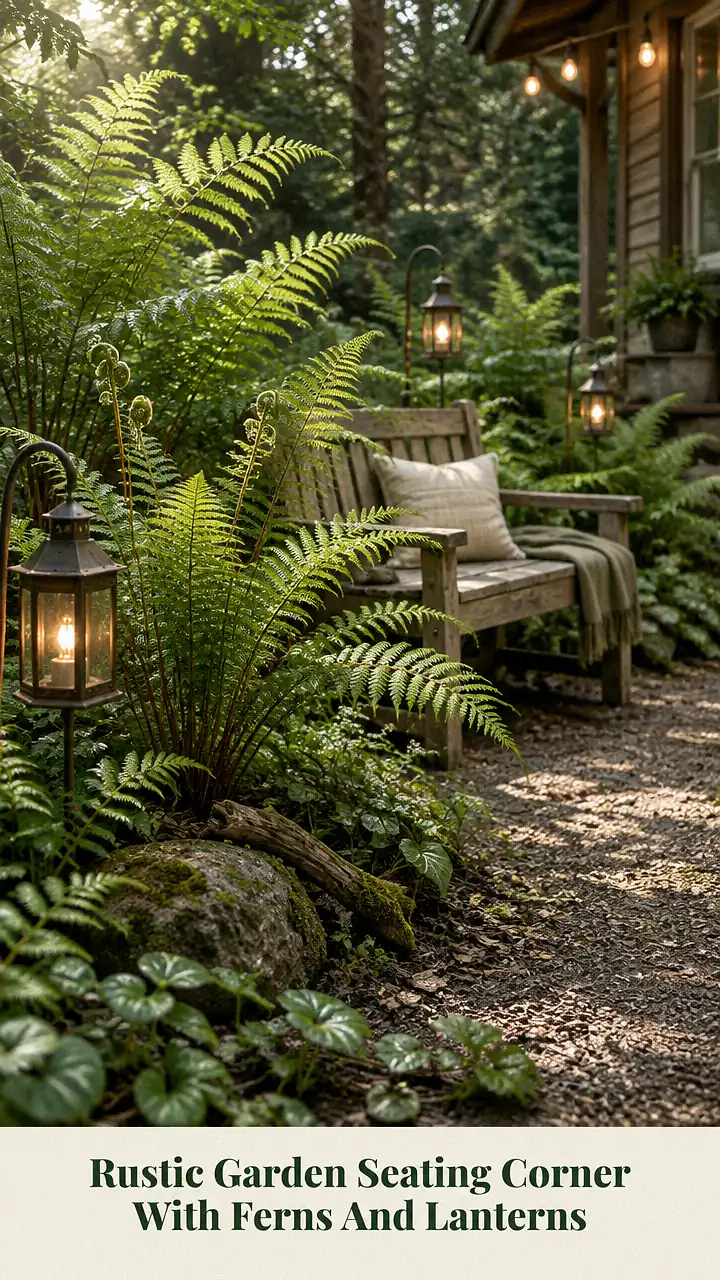
Rustic Garden Seating Corner With Ferns And Lanterns
Overview
A secluded seating corner can turn an unused part of the backyard into a relaxing garden retreat. A weather-resistant wooden bench, natural stone pavers, and clusters of leafy plants create a comfortable, woodland-inspired setting. Battery-powered lanterns add a cozy glow in the evening. This idea is especially attractive in partially shaded yards where a wooden house provides a natural rustic backdrop.
Materials & Plants
- Weather-resistant wooden garden bench
- Natural stone or concrete pavers
- Ferns and shade-tolerant sedges
- Heuchera for colorful foliage
- Large outdoor planters
- Battery-powered outdoor lanterns
- Crushed stone for the seating base
How to Create It
- Select a relatively level corner with comfortable shade and enough room around the bench.
- Prepare a stable paver surface that drains well after rain.
- Arrange foliage plants behind and beside the seating area without crowding access.
- Place lanterns on stable surfaces or secure hooks away from walking paths.
- Keep the seating surface clean and trim vegetation to maintain comfortable circulation.
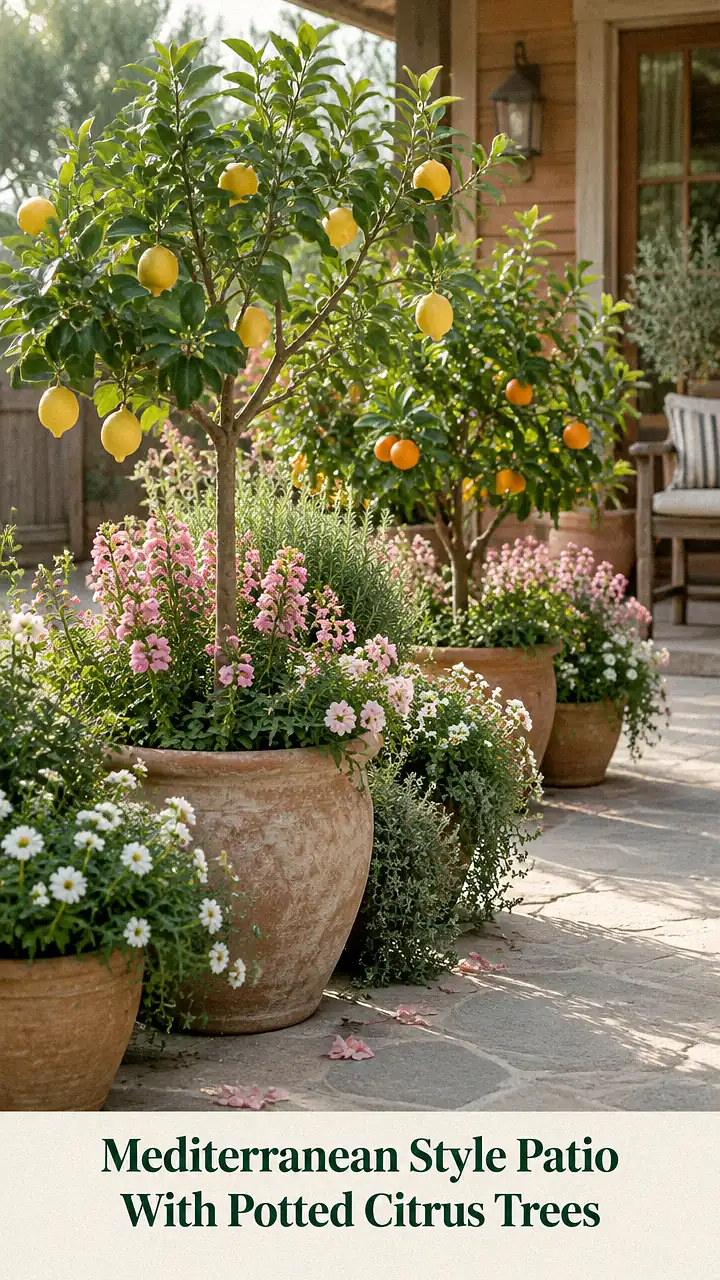
Mediterranean Style Patio With Potted Citrus Trees
Overview
A sunny patio beside a wooden house can take on a Mediterranean character with potted citrus trees, terracotta containers, and aromatic herbs. Glossy green leaves and warm clay colors contrast beautifully with natural timber. A simple gravel or stone surface reinforces the relaxed outdoor atmosphere. This garden works best in warm climates or where citrus containers can receive winter protection.
Materials & Plants
- Dwarf citrus varieties suited to containers
- Large pots with drainage holes
- Citrus-specific potting mix
- Rosemary and oregano
- Terracotta herb containers
- Light-colored gravel or stone pavers
- Balanced citrus fertilizer
How to Create It
- Choose a patio receiving at least six hours of direct sunlight during the growing season.
- Plant dwarf citrus in appropriately sized containers with free-draining potting mix.
- Group smaller herb pots nearby, leaving adequate space for airflow and movement.
- Water citrus when the upper potting mix begins to dry and feed according to product directions.
- Move tender trees into suitable bright, frost-free protection before damaging winter temperatures arrive.
Charming Berry Patch With Wooden Garden Borders

Overview
A compact berry garden combines attractive planting with a practical harvest. Low strawberry plants along the front, neat blueberry containers, and a simple wooden border create an organized yet relaxed cottage atmosphere. The contrast between green foliage, ripening fruit, and natural timber looks especially appealing beside a wooden house. This idea works best in a sunny backyard with accessible watering.
Materials & Plants
- Strawberry plants
- Two compatible blueberry cultivars
- Large blueberry containers
- Acidic potting mix suitable for blueberries
- Untreated wooden bed edging
- Clean straw mulch
- Bird netting on a supportive frame
How to Create It
- Choose a sunny location and build a shallow wooden border for the strawberry planting area.
- Plant strawberries at approximately 12–18-inch spacing, depending on their variety.
- Grow blueberries separately in large pots filled with acidic growing mix.
- Mulch strawberries with clean straw to reduce fruit contact with bare soil.
- Monitor moisture, harvest ripe berries promptly, and use properly secured wildlife-safe netting if needed.
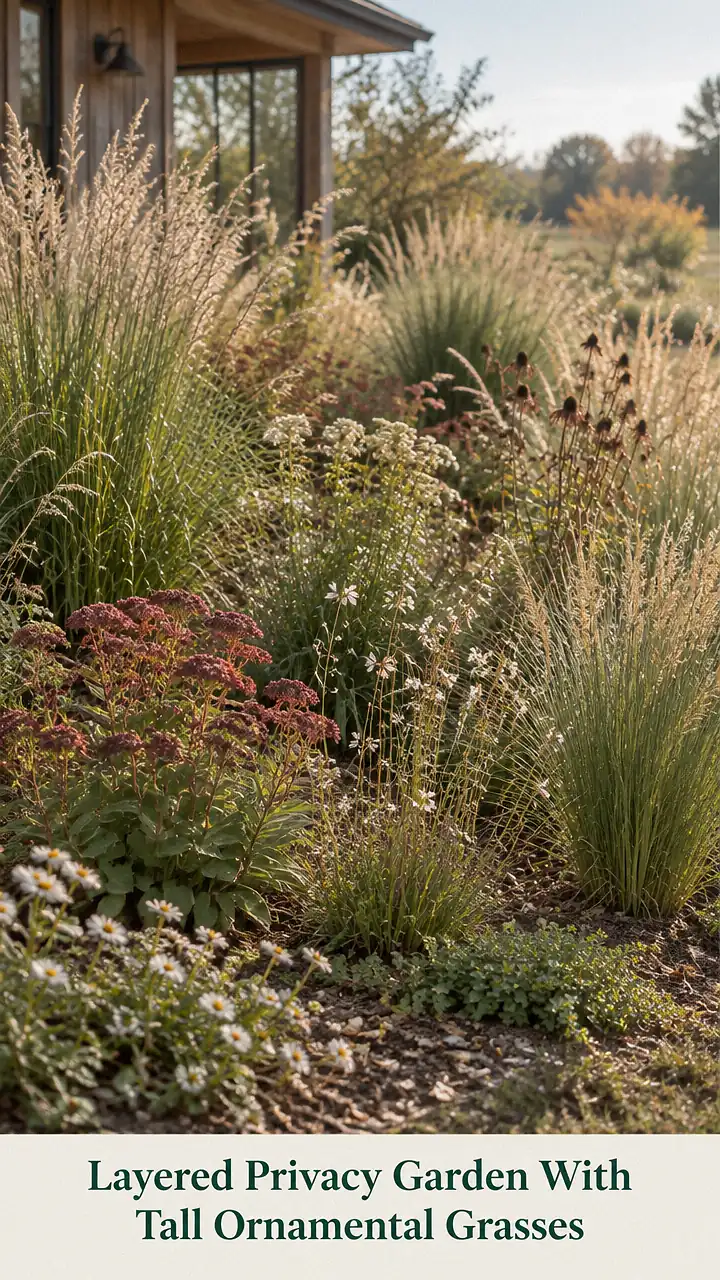
Layered Privacy Garden With Tall Ornamental Grasses
Overview
Tall ornamental grasses and compact shrubs can create a soft privacy screen without making a wooden house feel enclosed. Feathery seed heads, upright foliage, and mixed green tones give the planting natural movement. A narrow mulched bed keeps the arrangement neat while avoiding the solid appearance of a fence. This design is especially useful along backyard boundaries and neighboring patios.
Materials & Plants
- Clumping switchgrass or feather reed grass
- Compact evergreen shrubs
- Dwarf panicle hydrangeas for suitable climates
- Shredded bark mulch
- Steel or plastic garden edging
- Drip irrigation tubing
- Measuring tape and garden spade
How to Create It
- Measure the boundary and choose plants according to their mature height and width.
- Position taller grasses in staggered groups rather than a single crowded row.
- Place compact shrubs between selected grass clusters to add density and winter structure.
- Maintain recommended spacing and keep plants clear of siding, vents, and access points.
- Water until established and cut back deciduous grasses before fresh seasonal growth begins.
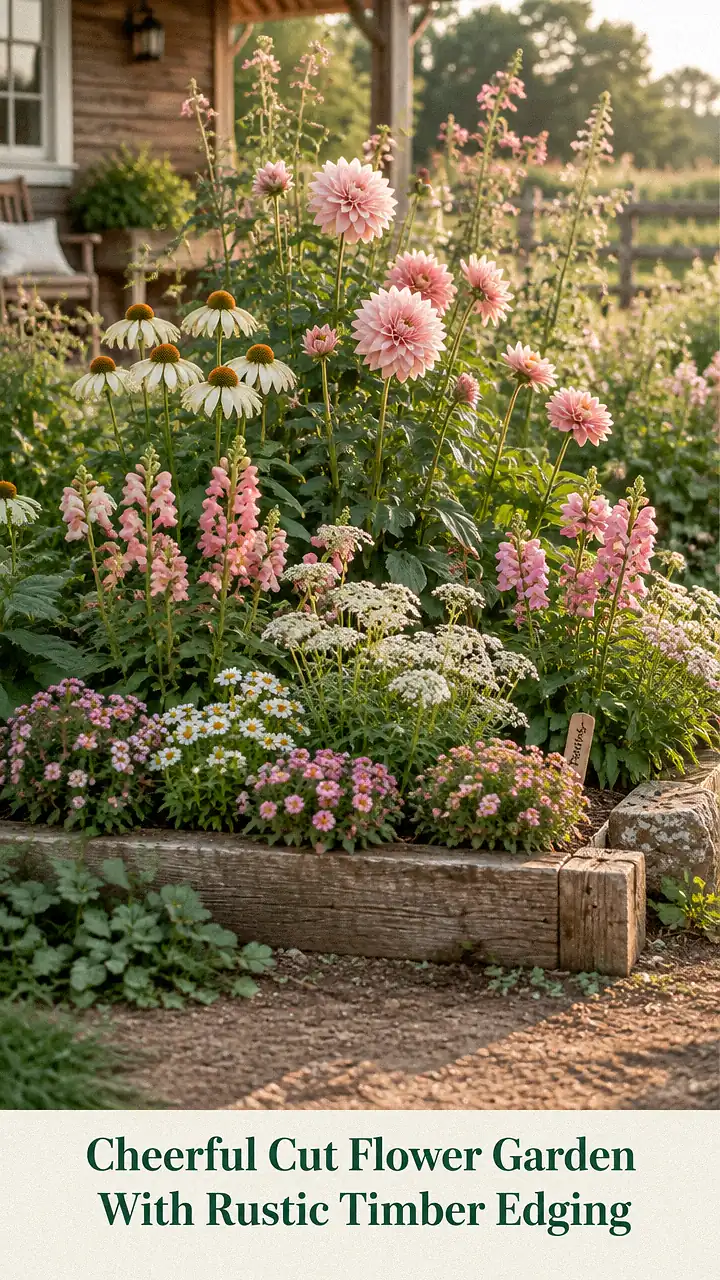
Cheerful Cut Flower Garden With Rustic Timber Edging
Overview
A cut flower garden filled with bright annual blooms adds personality and color to a wooden house backyard. Zinnias, cosmos, snapdragons, and other flowering favorites create an informal cottage-style display that can also supply fresh bouquets. Simple timber edging defines the planting bed, while a narrow path makes harvesting convenient. This design is ideal for an open, sunny garden.
Materials & Plants
- Zinnia seeds or transplants
- Cosmos and snapdragons
- Sunflowers in compact varieties
- Rudbeckia for suitable climates
- Untreated timber garden edging
- Compost and organic mulch
- Flower snips and plant supports
How to Create It
- Choose a location with six or more hours of sunlight and convenient access to water.
- Create a rectangular or gently curved planting bed with a reachable harvesting edge.
- Group flowers by mature height, positioning taller plants where they will not shade shorter varieties.
- Sow seeds or install transplants according to local frost dates and package instructions.
- Harvest flowers regularly, remove spent blooms, and support taller stems when needed.
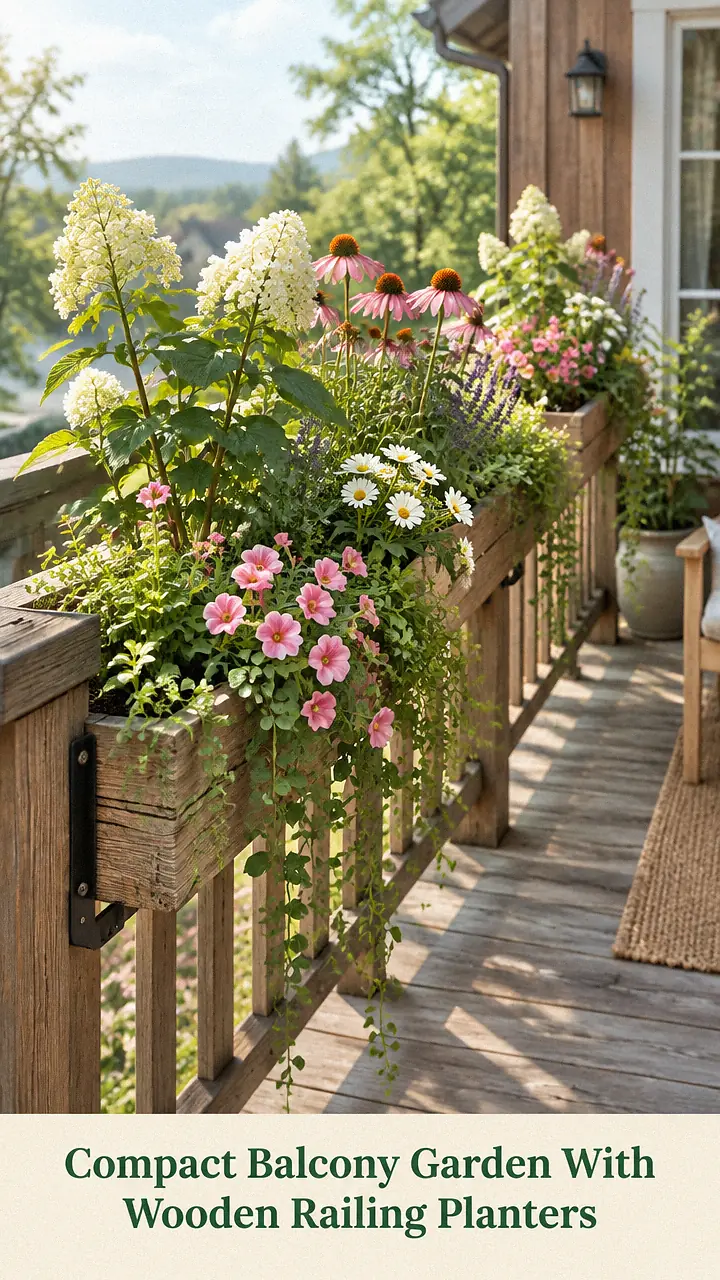
Compact Balcony Garden With Wooden Railing Planters
Overview
Even a small balcony on a wooden house can become a miniature garden filled with flowers and foliage. Secure railing planters, compact containers, and a slender plant stand provide several planting levels without cluttering the floor. Bright seasonal blooms create an inviting contrast with timber railings. This design is perfect for homes with limited outdoor space and no traditional backyard garden.
Materials & Plants
- Lightweight railing planters with secure brackets
- Compact resin or plastic pots
- Petunias for sunny balconies
- Begonias for partially shaded conditions
- Dwarf ornamental grasses
- Lightweight outdoor potting mix
- Small watering can
How to Create It
- Check balcony weight limits and select containers that can be safely supported when fully watered.
- Secure railing planters with manufacturer-approved brackets rather than balancing them loosely.
- Choose compact plants based on sunlight, wind exposure, and seasonal temperatures.
- Place larger pots near supported areas while preserving a clear walking route.
- Water as needed and prevent drainage from damaging wooden surfaces or dripping onto neighboring spaces.
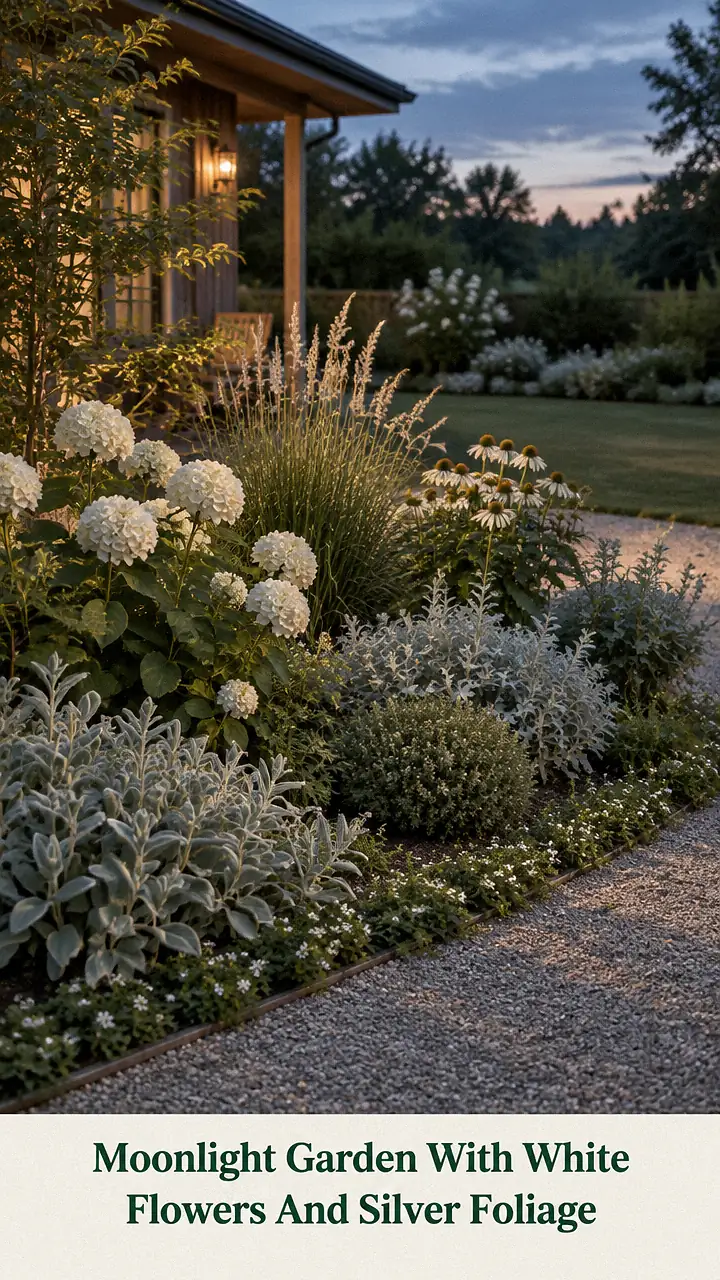
Moonlight Garden With White Flowers And Silver Foliage
Overview
A moonlight garden creates a peaceful evening atmosphere beside a wooden house using pale flowers and silvery foliage. White blossoms become especially noticeable at dusk, while light-colored leaves and gravel add soft contrast. A curved stepping-stone path and understated solar lighting complete the design. This idea is ideal near a backyard deck or seating area enjoyed after sunset.
Materials & Plants
- White Shasta daisies
- White-flowering phlox for suitable climates
- White sweet alyssum
- Silver-leaved lamb’s ear
- Pale decorative gravel
- Natural stepping stones
- Low-glare solar garden lights
How to Create It
- Choose a garden area visible from the deck or windows during the evening.
- Prepare a well-drained planting bed and group flowers according to sunlight and moisture needs.
- Mix white-flowering plants with silver foliage to maintain visual interest between blooming periods.
- Install stepping stones and position solar lights where they provide safe, subtle illumination.
- Remove spent blossoms, maintain mulch, and refresh seasonal flowers as necessary.
Create A Beautiful Garden That Complements Your Wooden Home
The most inviting wooden house gardens feel like natural extensions of the home. They combine greenery, flowers, stone, and timber in ways that make the entire property look connected and welcoming.
Whether you prefer the romantic character of a cottage flower border, the simplicity of a modern gravel courtyard, or the usefulness of an herb garden, there’s an approach for almost every outdoor space.
Begin by considering your available space, sunlight, local climate, soil conditions, and maintenance preferences. Choose plants suited to those conditions, and remember to keep planting beds, irrigation, and mulch from trapping moisture against wooden siding.
You can also start small. A few containers beside the front door, a narrow flower border, or a simple wooden raised bed can make a noticeable difference without requiring a complete landscape renovation.
With thoughtful plant choices and practical materials, these wooden house garden ideas can help you create an outdoor space that feels comfortable, distinctive, and beautiful throughout the changing seasons.