

Creating a beautiful garden becomes a little more challenging when deer regularly wander through your yard. One morning, your flowers are blooming beautifully, and the next, your favorite plants have been nibbled down to short stems. Fortunately, protecting your landscape doesn’t mean sacrificing the natural beauty that makes gardening so rewarding.
The best deerproof garden ideas combine thoughtful plant selection, attractive landscaping, and practical protective features. Fragrant herbs, textured foliage, ornamental grasses, and carefully designed fencing can all help reduce deer damage while creating an inviting outdoor space.
It’s important to remember that no plant is completely deerproof. Hungry deer may sample almost anything, especially during winter or periods of limited food. Physical barriers offer the most dependable protection, while deer-resistant plants help make unprotected areas less appealing.
Whether you’re working with a spacious backyard, a compact front garden, or a sunny patio, these creative designs offer realistic ways to enjoy colorful flowers, healthy greenery, and a landscape that stands up better to visiting wildlife.
Beautiful Deerproof Garden Ideas for Every Outdoor Space
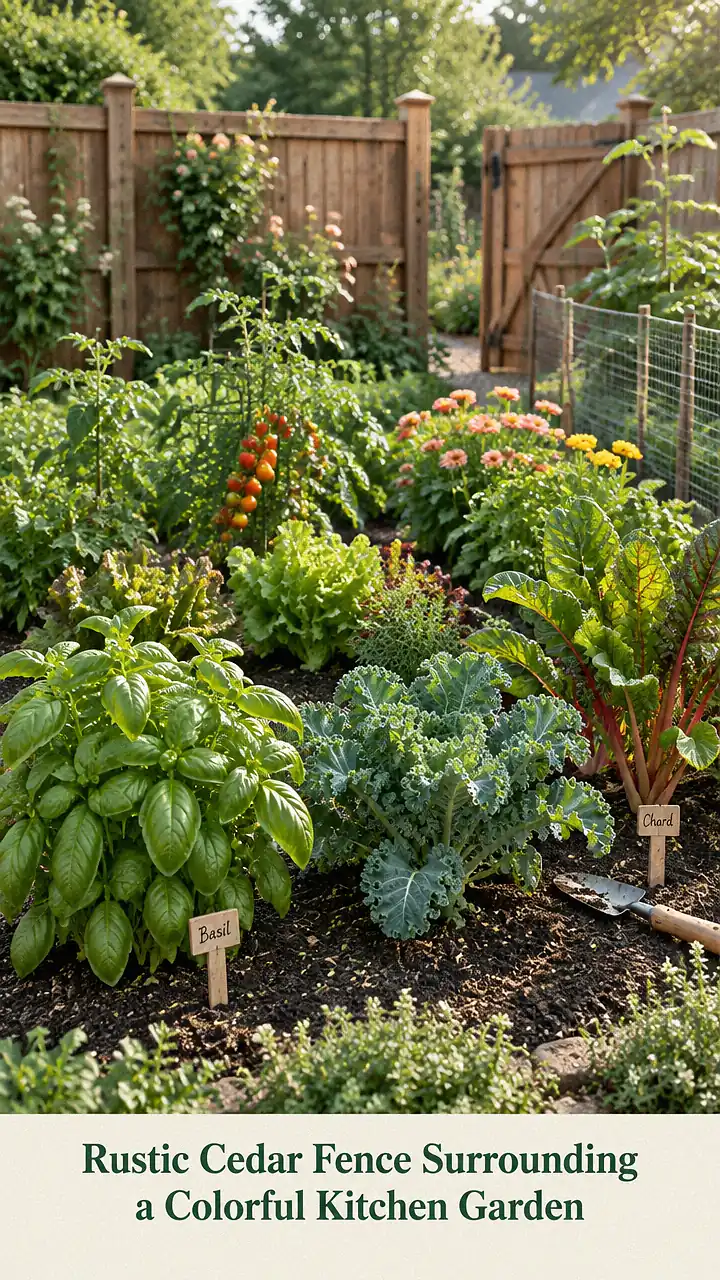
Rustic Cedar Fence Surrounding a Colorful Kitchen Garden
Overview
A charming vegetable garden surrounded by natural cedar fencing creates a peaceful countryside atmosphere while protecting valuable crops. Inside the enclosure, neat wooden raised beds overflow with leafy vegetables, culinary herbs, and seasonal flowers. A simple cedar gate provides an inviting entrance, while gravel pathways keep everything organized. This design works especially well in spacious backyards where deer frequently visit.
Materials & Plants
- Cedar posts, wooden gate, and sturdy deer fencing
- Lumber or ready-made raised garden beds
- Lettuce, kale, tomatoes, peppers, and parsley
- Gravel, cardboard, and organic mulch
- Compost, drip irrigation supplies, and basic gardening tools
How to Create It
- Choose a sunny backyard location receiving at least six hours of direct sunlight daily.
- Install a sturdy fence approximately eight feet tall, with secure mesh and a properly closing gate.
- Arrange raised beds with pathways at least 24–30 inches wide for comfortable access.
- Fill beds with suitable garden soil and compost before planting vegetables according to their spacing requirements.
- Add gravel pathways and check the fence regularly for gaps or damage.
Lavender and Catmint Border Along a Stone Walkway

Overview
Soft purple flowers frame a gently curved stone pathway, creating a welcoming garden filled with fragrance and texture. Silver-green lavender foliage contrasts beautifully with billowing catmint flowers, while pale gravel brightens the planting area. Both plants are commonly avoided by deer because of their aromatic foliage. This combination is particularly attractive in sunny front yards, cottage gardens, and entrance landscapes.
Materials & Plants
- English lavender suited to your climate
- Compact catmint varieties
- Creeping thyme for sunny pathway edges
- Natural stone pavers or stepping stones
- Gravel mulch and compost where needed
How to Create It
- Mark a gently curving pathway using a garden hose or landscape marking paint.
- Install flat stepping stones on a stable, compacted base.
- Plant lavender approximately 18–30 inches apart, depending on the mature variety.
- Fill remaining spaces with catmint and creeping thyme, allowing room for spreading.
- Water during establishment, then maintain good drainage and trim plants after flowering as appropriate.
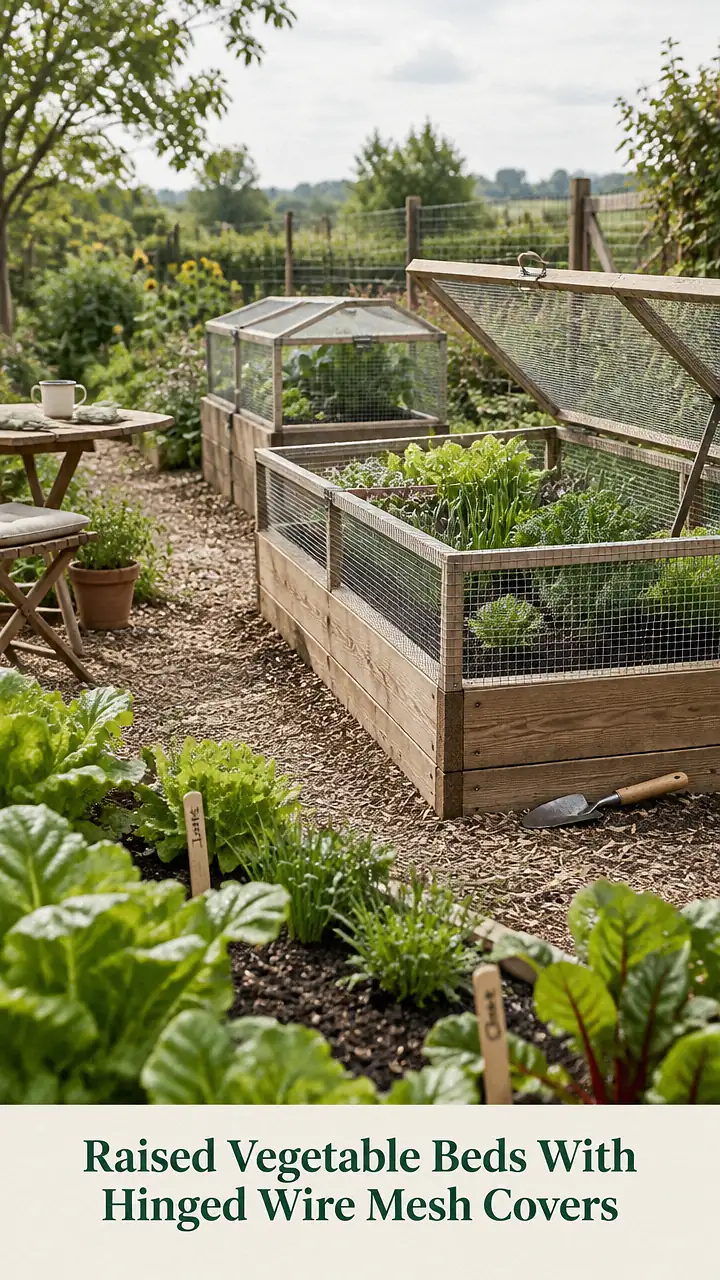
Raised Vegetable Beds With Hinged Wire Mesh Covers
Overview
Compact wooden raised beds topped with hinged wire mesh covers provide a tidy, productive growing area. The protective frames create a structured appearance without hiding the vegetables inside. Bright lettuce, colorful Swiss chard, and fresh herbs look beautiful against warm wooden boards and dark metal hinges. This practical setup is ideal for small backyards where a full perimeter fence isn’t possible.
Materials & Plants
- Cedar or untreated, naturally durable lumber
- Galvanized hardware cloth or sturdy welded wire mesh
- Hinges, screws, and secure latches
- Lettuce, spinach, radishes, and compact herbs
- Raised-bed soil and organic compost
How to Create It
- Build or position raised beds approximately three to four feet wide for easy harvesting.
- Construct lightweight wooden frames fitted with strong wire mesh across the sides and top.
- Attach hinges so the covers open conveniently for watering, weeding, and harvesting.
- Plant crops with enough growing clearance beneath the protective covers.
- Secure every cover after gardening and inspect for bent mesh or loose fasteners.
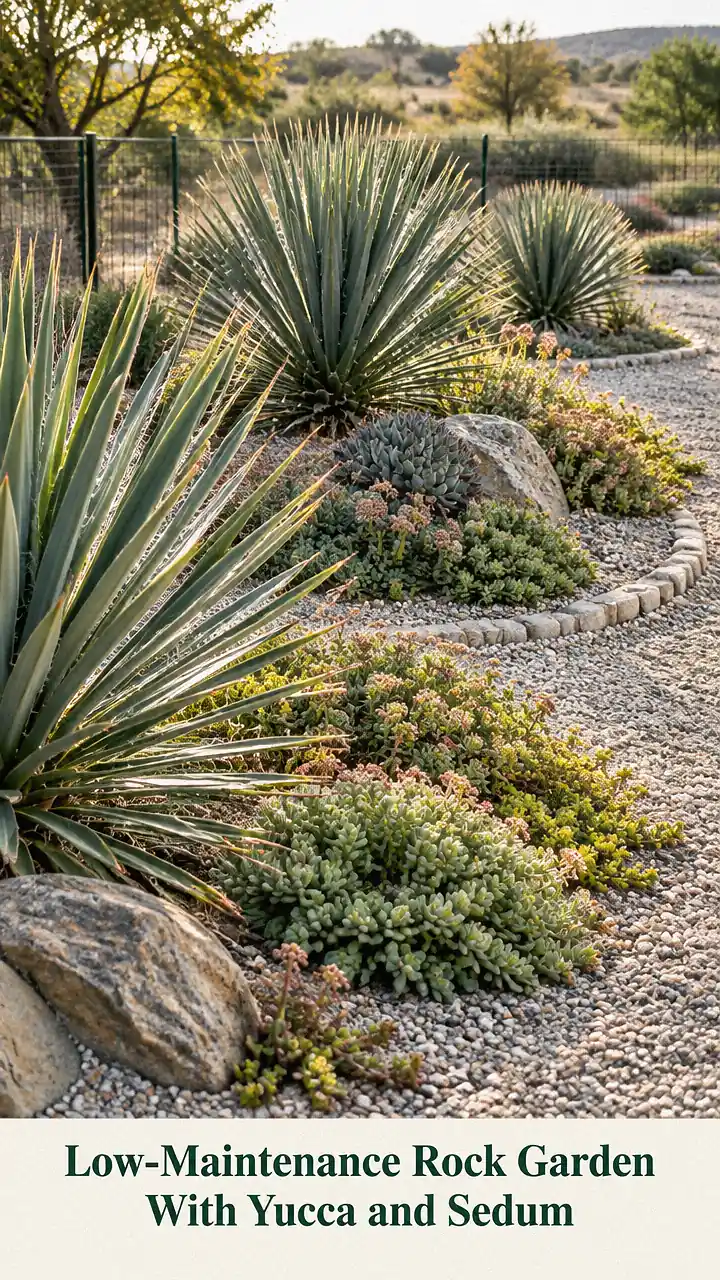
Low-Maintenance Rock Garden With Yucca and Sedum
Overview
A sun-loving rock garden offers striking shapes, sculptural foliage, and a naturally rugged appearance. Upright yucca leaves rise between smooth boulders, while low-growing sedum and clusters of hens-and-chicks soften the edges. Decorative gravel connects the different textures and gives the landscape a clean finish. This design suits dry front yards, sloping ground, and areas where frequent watering is difficult.
Materials & Plants
- Cold-hardy yucca varieties appropriate to your region
- Low-growing sedum and hens-and-chicks
- Large natural stones and smaller accent rocks
- Crushed granite or decorative gravel
- Well-draining soil amendments if needed
How to Create It
- Select a sunny area with well-draining soil, avoiding locations where water regularly collects.
- Position large stones first, partially burying them for a natural appearance.
- Arrange yucca as focal points with smaller succulents planted around the rocks.
- Spread a thin layer of gravel mulch without burying plant crowns.
- Water newly planted specimens until established and remove weeds before they spread.
Shaded Woodland Garden With Ferns and Hellebores

Overview
A woodland-inspired garden transforms a shady corner into a lush retreat filled with layered green foliage. Evergreen Christmas ferns create feathery texture, while hellebores provide early-season flowers in muted pink, cream, or burgundy. Epimedium spreads beneath taller plants, forming a delicate groundcover. Mossy stones and natural leaf mulch complete the setting, making this design ideal beneath deciduous trees.
Materials & Plants
- Christmas ferns
- Hellebores in climate-appropriate varieties
- Epimedium groundcover
- Natural woodland stones or small logs
- Shredded leaves and organic mulch
How to Create It
- Choose a location with partial to full shade and soil that drains reasonably well.
- Remove invasive weeds while avoiding damage to established tree roots.
- Arrange ferns toward the back and hellebores in visible foreground groupings.
- Plant epimedium between larger perennials, spacing according to mature growth.
- Apply leaf mulch, water during establishment, and leave natural foliage where practical.
Mediterranean Herb Patio With Terracotta Container Groupings

Overview
Terracotta pots overflowing with fragrant herbs create a warm Mediterranean atmosphere that feels both decorative and useful. Upright rosemary, silvery sage, and cascading thyme provide contrasting heights, colors, and textures. A weathered wooden table and pale stone flooring complete the relaxed setting. This arrangement works beautifully on sunny patios, small courtyards, and sheltered outdoor cooking areas.
Materials & Plants
- Rosemary, culinary sage, oregano, and thyme
- Terracotta containers in several sizes
- Well-draining potting mix
- Pot feet or risers for drainage
- Wooden plant stand or compact outdoor table
How to Create It
- Choose a patio receiving six or more hours of sunlight.
- Fill drainage-equipped containers with a suitable free-draining potting mix.
- Place taller rosemary toward the back and trailing thyme near container edges.
- Group pots at different heights without blocking airflow.
- Water according to individual herb needs and protect tender rosemary from freezing temperatures where necessary.
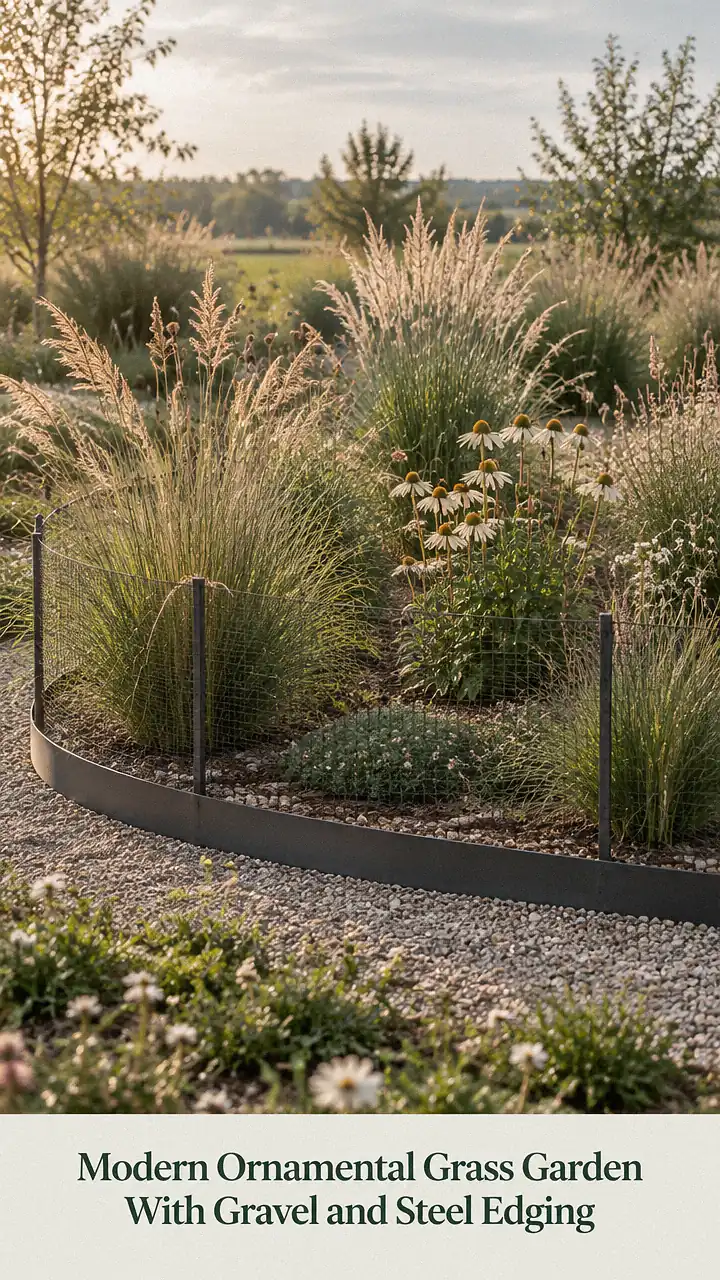
Modern Ornamental Grass Garden With Gravel and Steel Edging
Overview
A contemporary landscape featuring ornamental grasses provides movement, texture, and year-round architectural interest. Blue fescue forms tidy rounded mounds, while taller switchgrass and little bluestem create airy vertical accents. Dark steel edging separates planting areas from pale gravel pathways, producing a sophisticated contrast. This low-maintenance design suits modern homes, open front yards, and minimalist backyard landscapes.
Materials & Plants
- Little bluestem and compact switchgrass cultivars
- Blue fescue for suitable cooler climates
- Steel or aluminum landscape edging
- Decorative gravel and natural stone accents
- Compost or soil amendments based on site conditions
How to Create It
- Sketch an asymmetrical planting bed with simple curves or straight geometric lines.
- Install metal edging to separate gravel paths from planting areas.
- Position taller grasses behind smaller varieties, leaving adequate space for mature clumps.
- Mulch exposed soil and water thoroughly after planting.
- Cut back deciduous grasses at the appropriate time before spring growth begins.
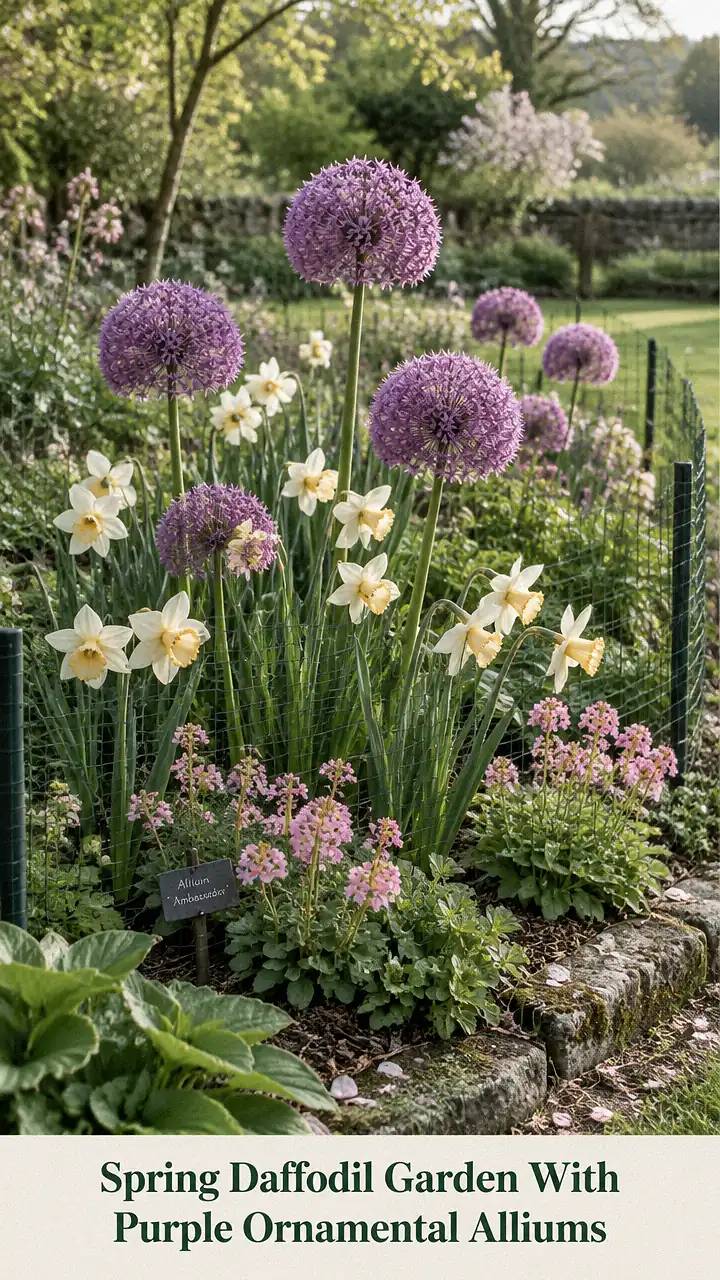
Spring Daffodil Garden With Purple Ornamental Alliums
Overview
Bright daffodils and spherical purple allium flowers bring cheerful seasonal color to a deer-resistant spring garden. Golden and creamy blooms emerge first, followed by dramatic ornamental onion flower heads rising above fresh green foliage. A loose border of catmint extends the display into warmer months. This design works beautifully around pathways, beneath open-canopy trees, or in sunny perennial borders.
Materials & Plants
- Daffodil bulbs in mixed yellow and white varieties
- Ornamental allium bulbs
- Catmint for later-season flowers
- Bulb planter or narrow garden trowel
- Compost and shredded bark mulch
How to Create It
- Select a well-drained planting site with sufficient sunlight during spring.
- Plant daffodil and allium bulbs in fall at depths recommended for each variety.
- Arrange bulbs in irregular groups rather than rigid rows for a natural appearance.
- Add catmint between bulb groupings to provide foliage as spring flowers fade.
- Allow bulb leaves to yellow naturally before removing them.
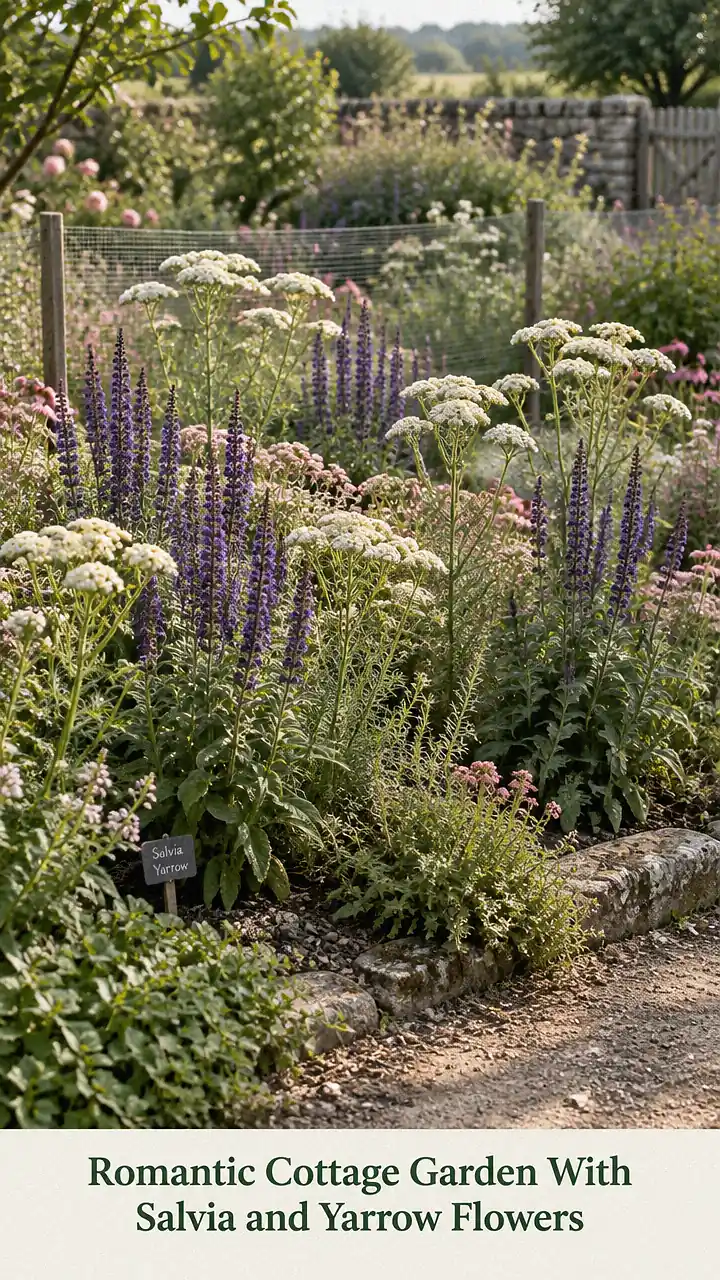
Romantic Cottage Garden With Salvia and Yarrow Flowers
Overview
A romantic cottage garden combines soft flower colors, informal planting patterns, and charming rustic details. Spikes of violet salvia rise above flat clusters of pink, yellow, and cream yarrow, while silvery lamb’s ear softens the bed edges. A weathered wooden bench or simple stone ornament adds character. This combination suits sunny cottage-style front yards and relaxed backyard flower borders.
Materials & Plants
- Perennial salvia varieties suited to your growing zone
- Yarrow in coordinated colors
- Lamb’s ear for silvery foliage
- Rustic wooden bench or small garden ornament
- Organic mulch and garden compost
How to Create It
- Prepare a sunny flower bed with well-draining soil.
- Arrange taller salvia plants toward the back or center of the planting.
- Plant yarrow in generous groups, allowing airflow between mature clumps.
- Edge the bed with lamb’s ear to create a soft transition toward pathways.
- Remove faded flowers when useful and divide overcrowded perennials as needed.
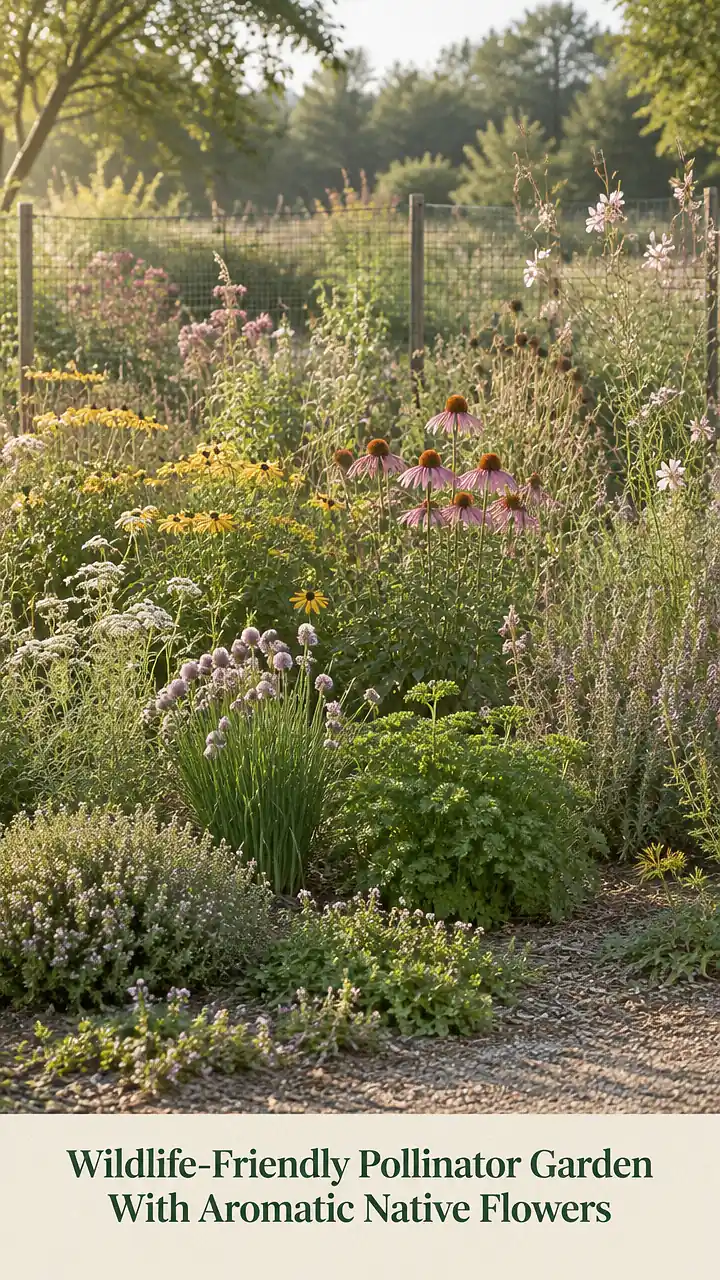
Wildlife-Friendly Pollinator Garden With Aromatic Native Flowers
Overview
A lively pollinator garden combines flowers commonly passed over by browsing deer with plants that support bees and butterflies. Purple anise hyssop, pink wild bergamot, and pale mountain mint create a colorful, naturalistic display. Their varied flower forms bring movement and seasonal interest. This idea is particularly effective in sunny backyard corners where a slightly wild appearance feels appropriate.
Materials & Plants
- Anise hyssop
- Wild bergamot or another regionally native bee balm
- Clustered mountain mint where native and appropriate
- Native grasses for additional structure
- Shredded leaf mulch and simple stone edging
How to Create It
- Choose native or locally adapted plants suitable for your soil and climate.
- Create broad planting groups rather than scattering single specimens throughout the bed.
- Place taller bergamot and hyssop toward the center or rear.
- Allow sufficient spacing to encourage airflow, particularly around bee balm.
- Leave some seed heads standing through winter and manage spreading plants each spring.
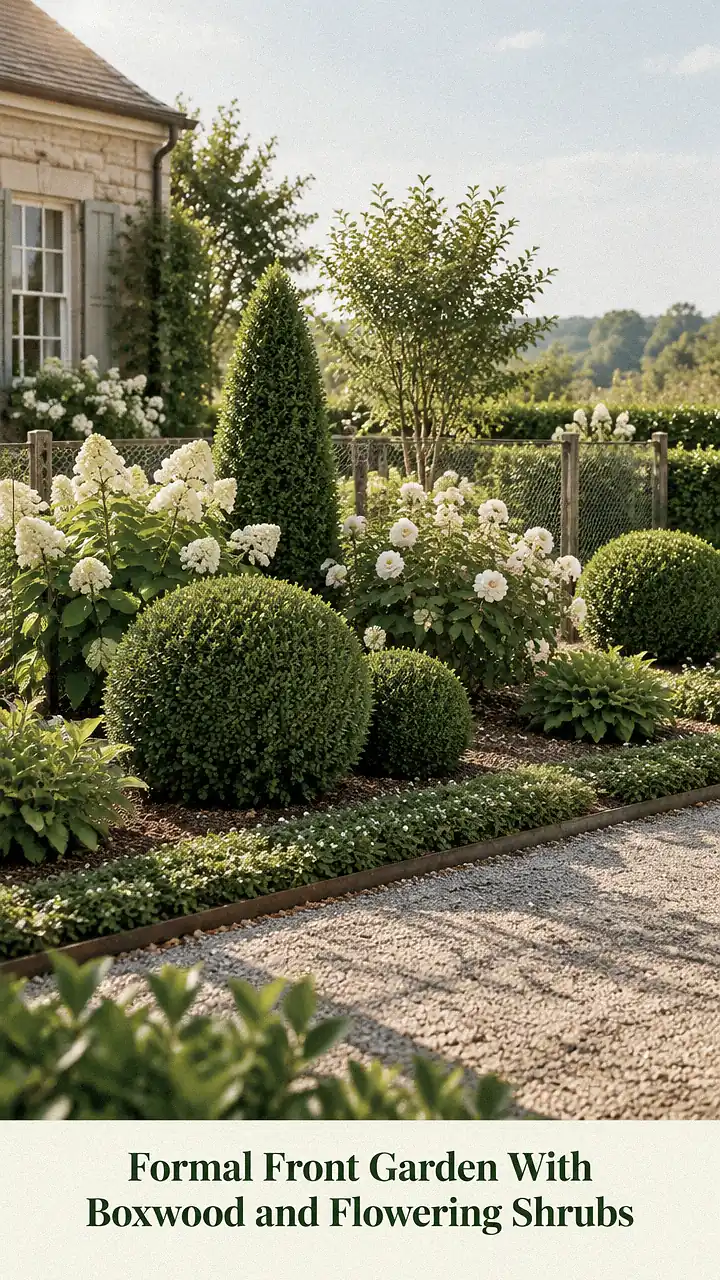
Formal Front Garden With Boxwood and Flowering Shrubs
Overview
A structured front garden combines evergreen shapes with soft flowering accents to create an elegant entrance. Rounded boxwood shrubs establish a neat framework, while compact bush cinquefoil adds cheerful yellow or white blossoms. Pale gravel, symmetrical planting beds, and simple stone edging reinforce the polished appearance. This style is well suited to traditional homes and tidy suburban front landscapes.
Materials & Plants
- Disease-resistant boxwood cultivars suited to your area
- Compact bush cinquefoil
- Stone or concrete landscape edging
- Decorative gravel or shredded mulch
- Pruning shears and watering supplies
How to Create It
- Measure the entrance beds and create a balanced planting plan.
- Position boxwoods where they receive appropriate light and have good airflow.
- Add flowering cinquefoil in sunnier spaces, allowing room for mature growth.
- Install consistent edging and mulch to create a clean visual finish.
- Prune lightly when needed and monitor boxwoods for pest or disease problems.
Enclosed Strawberry Patch With a Decorative Mesh Cage

Overview
A productive strawberry garden can become an attractive backyard feature with a simple protective cage. Bright red berries peek through green leaves beneath a lightweight wooden or metal framework covered in mesh. A hinged access panel makes harvesting easy, while the enclosed design helps prevent deer from reaching the plants. This compact idea suits small vegetable gardens and sunny backyard corners.
Materials & Plants
- Strawberry plants suited to local growing conditions
- Raised-bed frame or prepared ground-level bed
- Sturdy wire mesh and support posts
- Hinges, latches, and weather-resistant fasteners
- Clean straw mulch and drip irrigation supplies
How to Create It
- Choose a sunny location with fertile, well-drained soil.
- Plant strawberries at the recommended spacing, keeping their crowns level with the soil surface.
- Build a rigid mesh enclosure with a covered top and a convenient access opening.
- Secure the edges to prevent deer from pushing underneath.
- Apply clean straw beneath developing berries and harvest fruit regularly.
Young Fruit Tree Garden With Attractive Protective Wire Circles

Overview
Young fruit trees bring seasonal blossoms, fresh greenery, and eventual harvests to a backyard, but their tender branches and trunks often attract deer. Circular wire guards provide protection without hiding the trees completely. Mulched planting rings and small stone borders make the arrangement look intentional. This practical design is especially useful for new apple, pear, or plum trees in open residential landscapes.
Materials & Plants
- Fruit trees suitable for the local climate and pollination needs
- Welded wire fencing approximately four to five feet tall
- Sturdy metal or wooden support stakes
- Shredded bark mulch
- Tree ties and hand pruners
How to Create It
- Plant each tree in a sunny, well-drained location with enough room for its mature canopy.
- Install a wide circular wire cage around the young tree, anchored securely with stakes.
- Keep the cage far enough from branches to limit browsing through the mesh.
- Apply mulch in a broad ring while leaving space around the trunk.
- Expand or replace the cage as the tree grows, and consider taller enclosure fencing where deer pressure is severe.
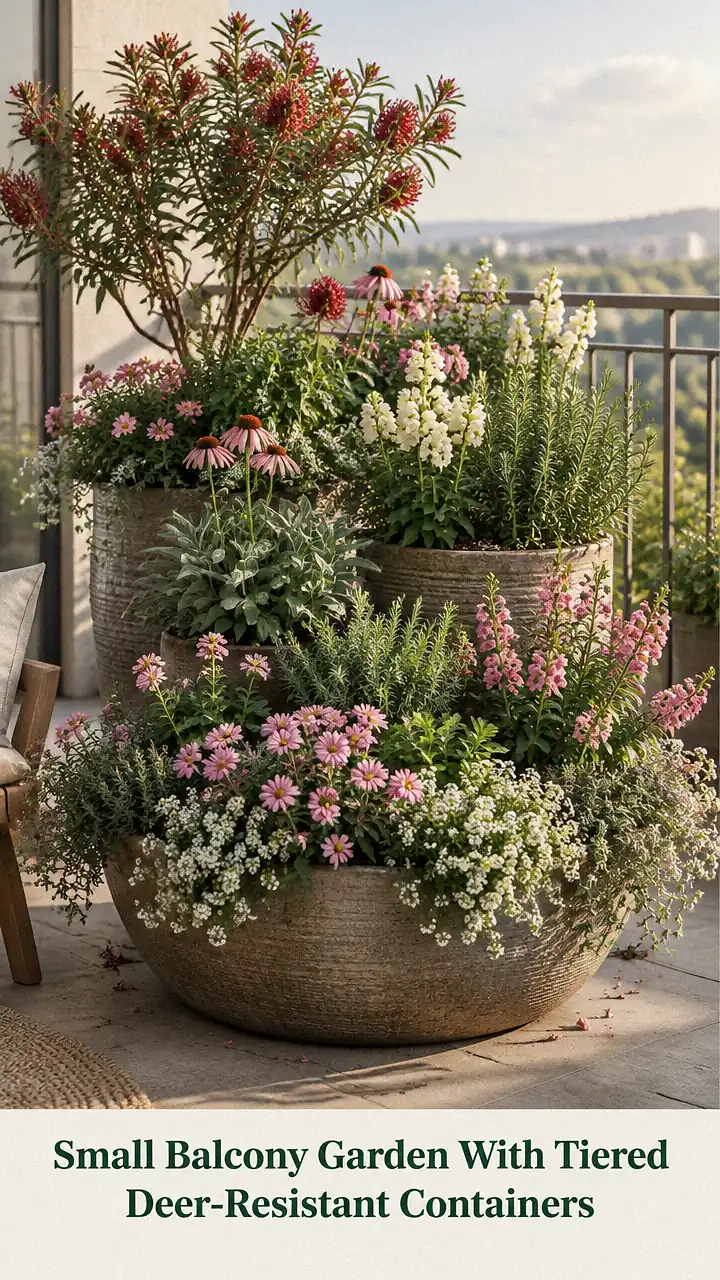
Small Balcony Garden With Tiered Deer-Resistant Containers
Overview
An elevated balcony can provide a welcoming garden escape while keeping many plants beyond the reach of ground-level deer. Tiered shelves hold fragrant herbs, compact flowering perennials, and textured ornamental foliage. Coordinated ceramic pots make the arrangement feel stylish rather than crowded. This design is particularly effective on upper-floor balconies and enclosed terraces with sufficient sunlight and safe weight capacity.
Materials & Plants
- Compact salvia, thyme, and oregano
- Small ornamental grasses suited to containers
- Lightweight pots with drainage holes
- Weather-resistant plant shelves
- Container potting mix and a watering can
How to Create It
- Confirm the balcony’s weight limits and determine how much direct sunlight it receives.
- Select lightweight containers with drainage trays where necessary.
- Position taller pots on stable lower shelves and smaller herbs where they are easy to reach.
- Keep containers away from railings where they could fall or be reached by deer.
- Water consistently and refresh potting mix or nutrients as needed.
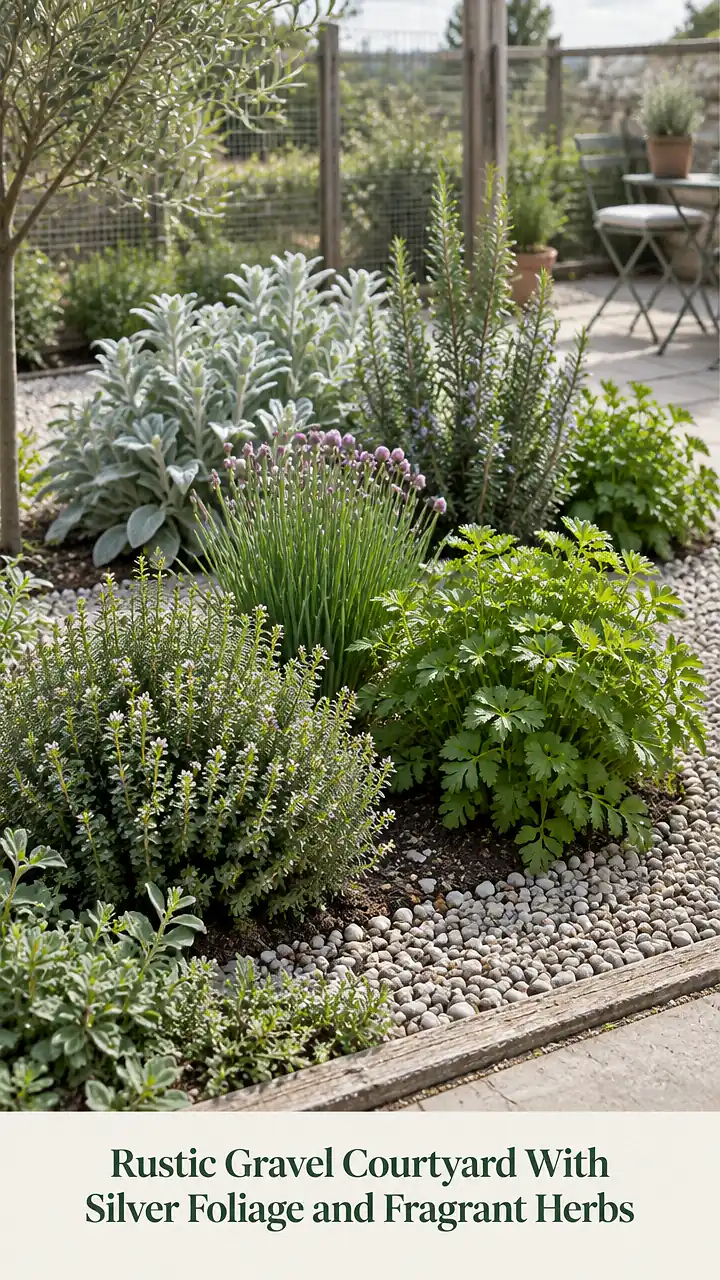
Rustic Gravel Courtyard With Silver Foliage and Fragrant Herbs
Overview
A rustic gravel courtyard feels peaceful and timeless with its muted greenery, weathered wood, and natural stone accents. Silver santolina forms rounded mounds beside aromatic lavender and upright culinary sage. A reclaimed wooden bench creates an inviting place to sit, while irregular stone pavers break up the gravel surface. This design works well in sunny side yards and compact backyard retreats.
Materials & Plants
- Santolina or lavender cotton
- Culinary sage and lavender
- Crushed gravel and natural stepping stones
- Reclaimed wooden bench or rustic seating
- Landscape edging and basic installation tools
How to Create It
- Clear and level the courtyard, planning for proper surface drainage.
- Install a compacted gravel base and position stepping stones along the walking route.
- Leave generous planting pockets filled with free-draining soil.
- Arrange santolina in rounded groups, mixing in sage and lavender for varied textures.
- Trim plants lightly to maintain shape and rake gravel occasionally to keep the courtyard tidy.
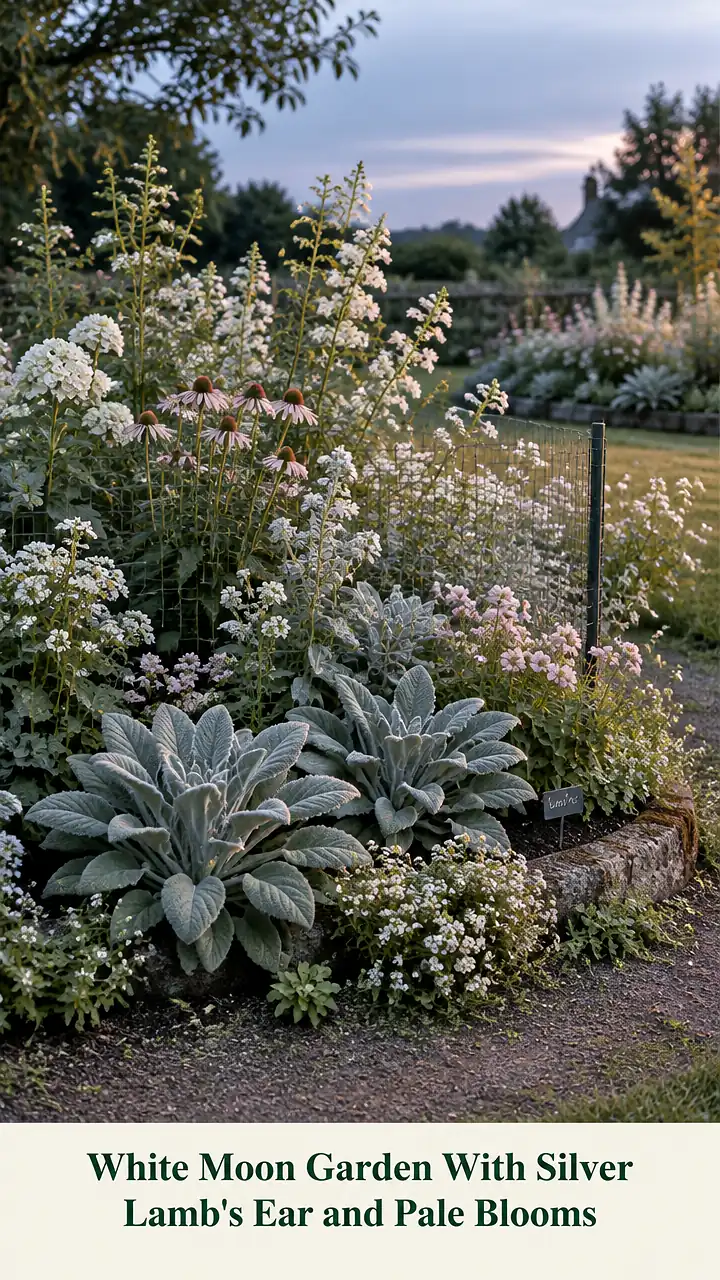
White Moon Garden With Silver Lamb’s Ear and Pale Blooms
Overview
A white-themed garden creates a calm atmosphere with pale flowers that remain visually appealing in evening light. Velvety silver lamb’s ear forms a soft foreground, while white yarrow and white-flowering salvia add airy seasonal blooms. White daffodils can provide spring interest before the perennials mature. This elegant arrangement works especially well beside patios, garden seating areas, and light-colored exterior walls.
Materials & Plants
- Lamb’s ear
- White-flowering yarrow and perennial salvia
- White daffodil bulbs for spring
- Pale stepping stones or light gravel
- Simple solar pathway lights
How to Create It
- Choose a sunny planting bed visible from an evening seating area.
- Plant lamb’s ear along the front, leaving enough space for its spreading foliage.
- Arrange yarrow and salvia in overlapping groups farther back.
- Add daffodil bulbs in fall for early-season flowers.
- Install low pathway lighting and maintain airflow to keep foliage healthy.
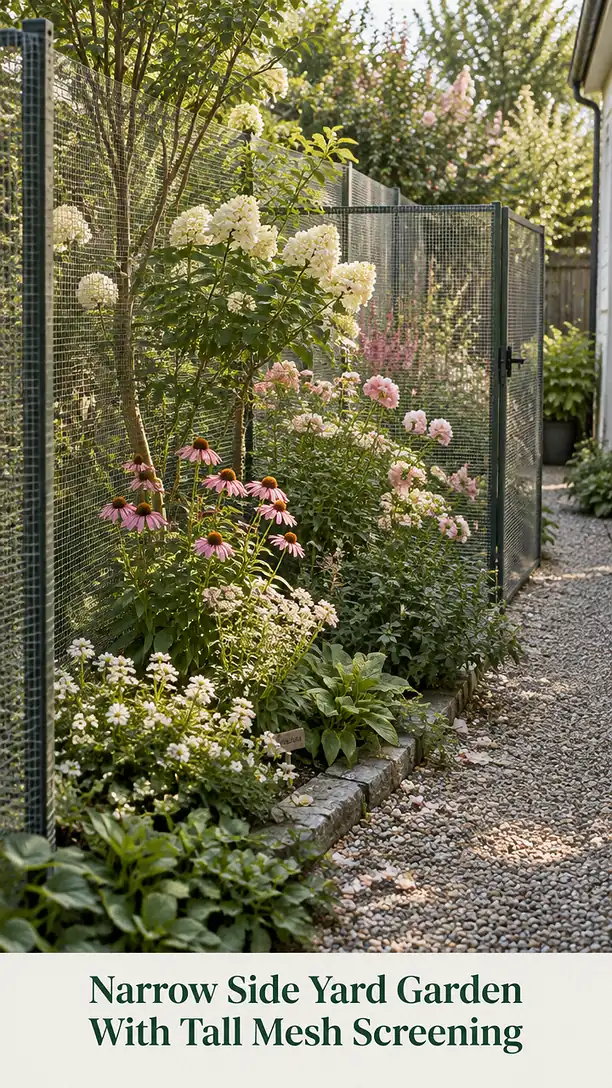
Narrow Side Yard Garden With Tall Mesh Screening
Overview
A narrow side yard can become a surprisingly attractive protected garden with discreet tall mesh screening. Along the pathway, layered ferns, woodland groundcovers, and textured stepping stones create a cool, green corridor. Slim dark posts keep the barrier visually subtle, while a simple gate closes the entrance. This design works especially well in shaded residential side yards exposed to regular deer traffic.
Materials & Plants
- Deer fencing mesh rated for outdoor use
- Posts tall enough for an approximately eight-foot enclosure
- Christmas ferns and locally appropriate sedges
- Native wild ginger or epimedium groundcover
- Stepping stones, mulch, and secure gate hardware
How to Create It
- Measure the side yard and check local fence-height rules before installation.
- Install secure support posts and stretch deer mesh tightly between them.
- Fit a closing gate and secure the bottom edge to prevent access.
- Create a narrow stepping-stone path with shade-tolerant plants along both sides.
- Keep pathways clear and inspect the mesh after storms or strong winds.
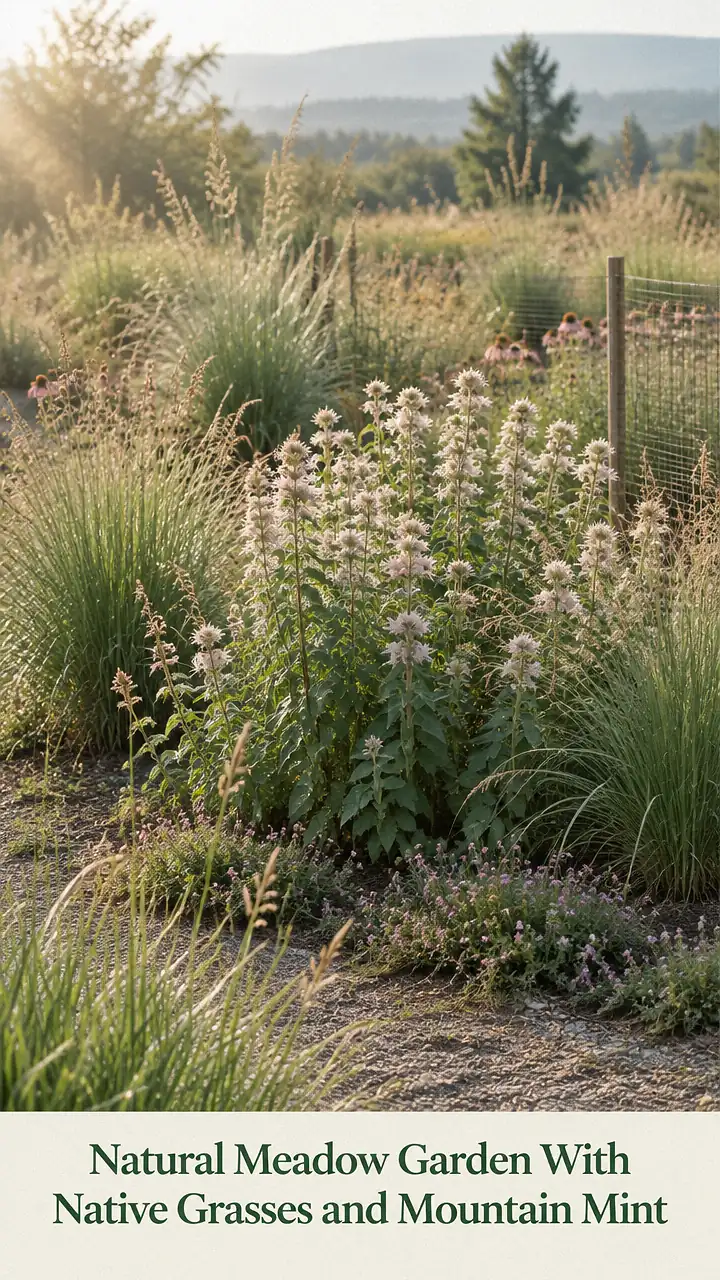
Natural Meadow Garden With Native Grasses and Mountain Mint
Overview
A natural meadow garden offers a relaxed alternative to conventional lawns while providing beautiful movement and seasonal texture. Little bluestem turns coppery in autumn, while airy switchgrass adds height and mountain mint contributes silvery-green flowers. Small groups of locally suitable wildflowers create colorful accents. This design is particularly effective in sunny backyard borders, larger front yards, and gently sloping landscapes.
Materials & Plants
- Little bluestem and locally appropriate switchgrass
- Clustered mountain mint
- Gray goldenrod or other suitable native wildflowers
- Natural stone edging or a mowed border
- Mulch and hand-weeding tools
How to Create It
- Choose a sunny site and remove existing turf and persistent weeds thoroughly.
- Select native plants adapted to local rainfall, soil conditions, and mature space requirements.
- Plant grasses in informal drifts with flowering perennials woven between them.
- Keep the area weeded and watered during the establishment period.
- Cut back old growth before the new growing season, leaving some winter structure when possible.
Create a Beautiful Garden That Deer Are Less Likely to Damage
A deer-resistant garden doesn’t have to look like a fortress. With careful design, you can create an outdoor space that feels colorful, natural, and welcoming while reducing the risk of browsing damage.
Start by considering your available space, budget, sunlight, soil conditions, and local climate. Fragrant flower borders and ornamental grass gardens are excellent choices when you want attractive, relatively low-maintenance landscaping. For vegetables, berries, and young fruit trees, properly constructed fencing and protective cages provide much more reliable results.
You can also combine several approaches. A protected vegetable garden surrounded by lavender, a shaded fern border beside a tall fence, or a modern gravel garden filled with textured foliage can create a cohesive landscape with multiple layers of protection.
The most successful deerproof garden ideas balance beauty with realistic expectations. Choose plants thoughtfully, protect vulnerable favorites, and adapt your design to local deer activity. With a little planning and ongoing care, your garden can remain a peaceful, thriving space that you enjoy throughout the seasons.