
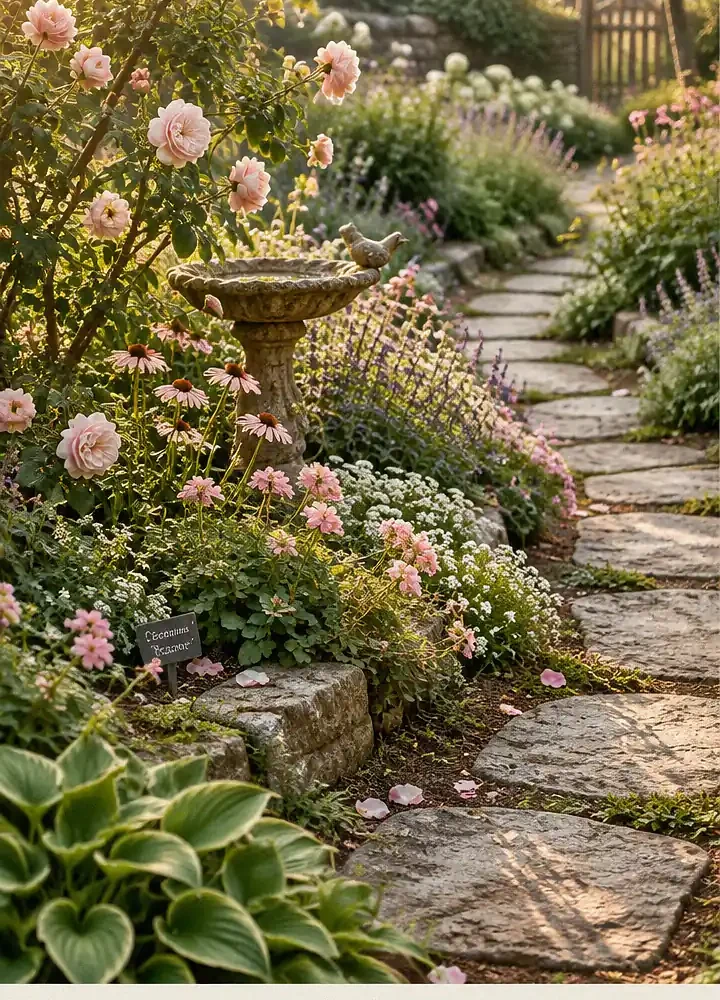
A garden can be much more than a collection of beautiful flowers. It can be a place where every corner reveals something unexpected, every plant invites a closer look, and ordinary outdoor spaces become little worlds waiting to be explored.
That’s the charm of curiosity garden ideas. Instead of focusing only on neat flower beds and traditional landscaping, these gardens introduce unusual textures, winding pathways, fascinating plants, interactive features, and playful decorations. They encourage you to notice the small details that make nature so interesting.
You don’t need a large backyard or an expensive landscaping project to create this atmosphere. A few interesting containers, a miniature woodland scene, or a thoughtfully arranged collection of colorful plants can transform even a modest patio.
The secret is combining visual beauty with opportunities for discovery. Some gardens invite you to explore with your senses, while others introduce surprising plant varieties or provide opportunities to observe butterflies, birds, and insects.
Whether you prefer rustic woodland charm, modern botanical displays, or imaginative family-friendly projects, these 18 curiosity garden ideas offer practical inspiration for creating an outdoor space that feels wonderfully alive.
Creative Curiosity Garden Ideas For An Outdoor Space Full Of Wonder
Overview
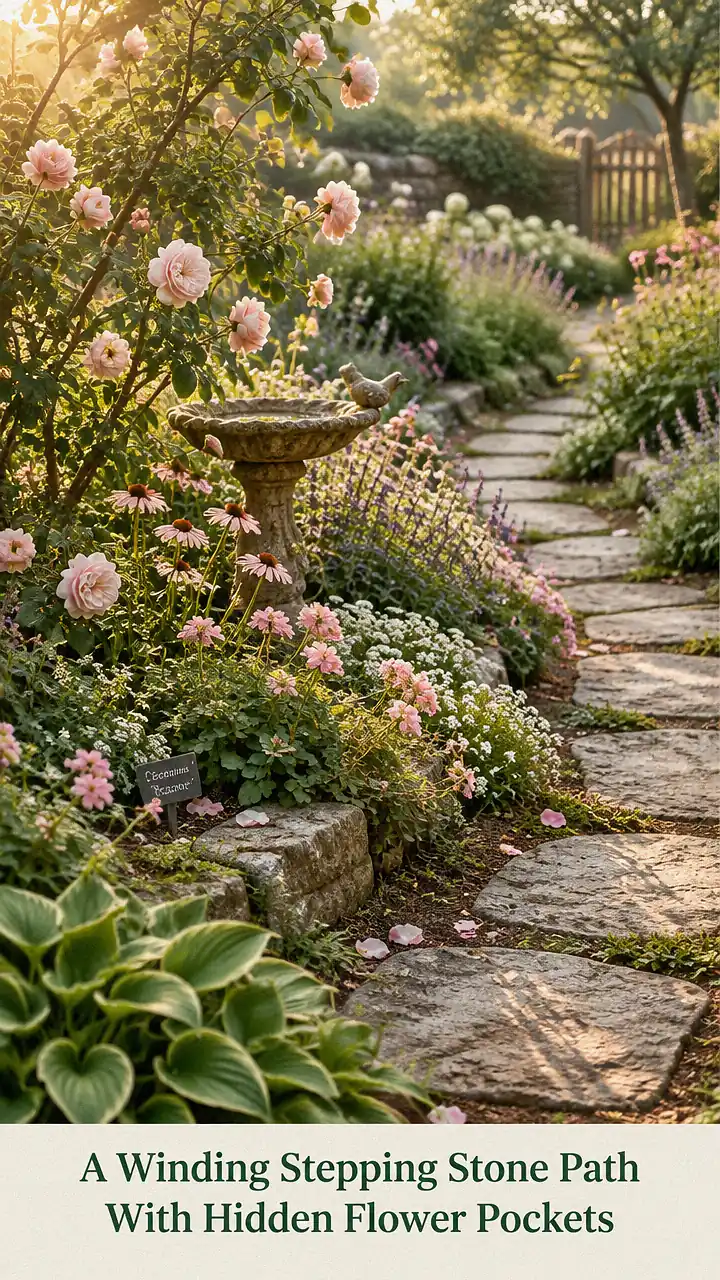
A gently curving stepping stone pathway creates a sense of mystery as it winds between colorful flowers and soft greenery. Natural stone pavers sit among creeping groundcovers, while small clusters of daisies, lavender, and ornamental grasses soften the edges. This design works beautifully in a medium-sized backyard, especially when the pathway leads toward a hidden bench or decorative feature.
Materials & Plants
- Natural stepping stones or affordable concrete pavers
- Creeping thyme for sunny, well-drained edges
- Daisies, lavender, and compact ornamental grasses
- Landscape sand, gravel, and a garden spade
- Small ceramic ornaments or weatherproof garden markers
How to Create It
- Mark a gently winding pathway approximately 30–36 inches wide using a garden hose or rope.
- Excavate shallow spaces for each stone and position the pavers on a compacted, level base.
- Plant low-growing flowers and groundcovers along the edges, allowing room for mature growth.
- Add one unexpected decorative element around a curve and maintain clear walking surfaces as plants spread.
A Vertical Botanical Wall Filled With Unusual Leaf Textures
Overview
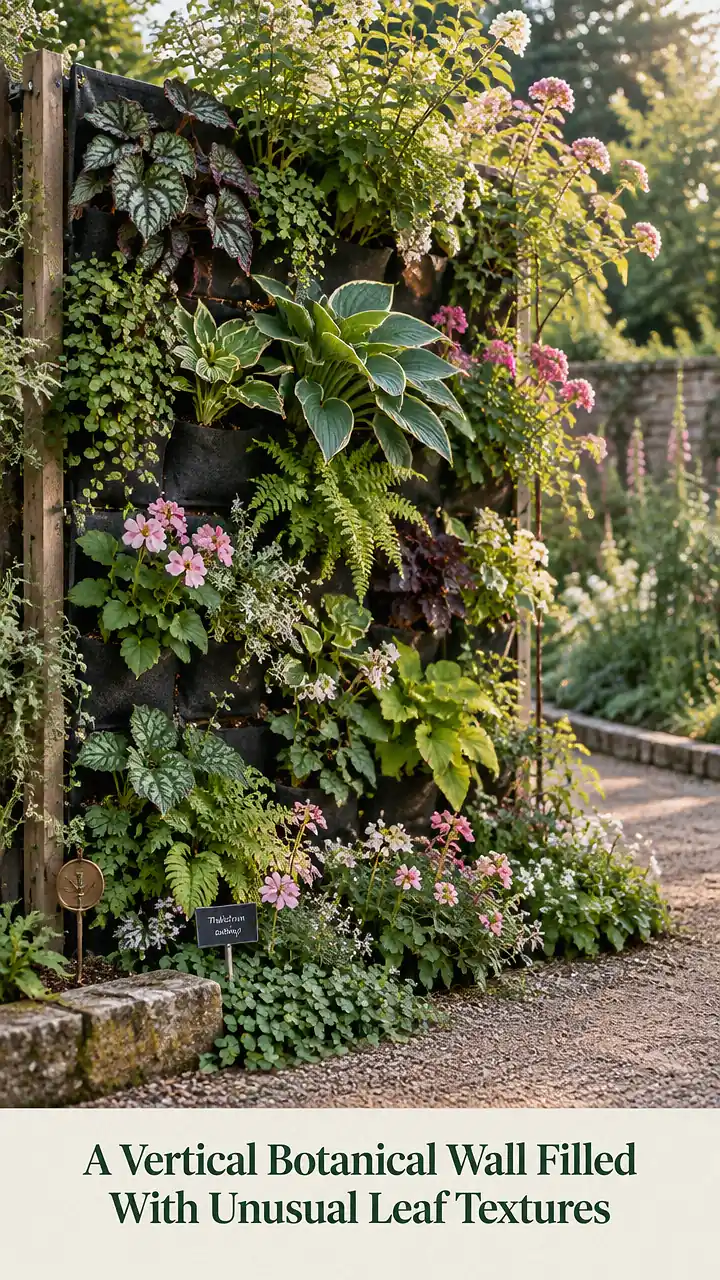
Turn a plain fence or sheltered patio wall into a living display of fascinating foliage. Combine broad, rounded leaves with delicate ferns, colorful coleus, and trailing greenery to create a layered tapestry of shapes. Deep greens, burgundy accents, and lime-colored leaves provide beautiful contrast. This vertical garden is particularly effective in compact courtyards and balconies with bright, indirect light.
Materials & Plants
- Sturdy wall-mounted planters or vertical planting pockets
- Coleus, compact ferns, and small heuchera varieties
- Trailing creeping Jenny or suitable shade-loving alternatives
- Lightweight container potting mix
- Mounting hardware and a watering can
How to Create It
- Choose a sturdy wall with bright shade and enough space for plants to grow outward.
- Attach planters securely, following weight limits and protecting the wall from moisture.
- Arrange larger foliage plants toward the center and trailing plants around the lower sections.
- Water according to individual plant needs, checking upper pockets frequently because they may dry faster.
A Rainbow Flower Garden With Curving Colorful Planting Bands
Overview
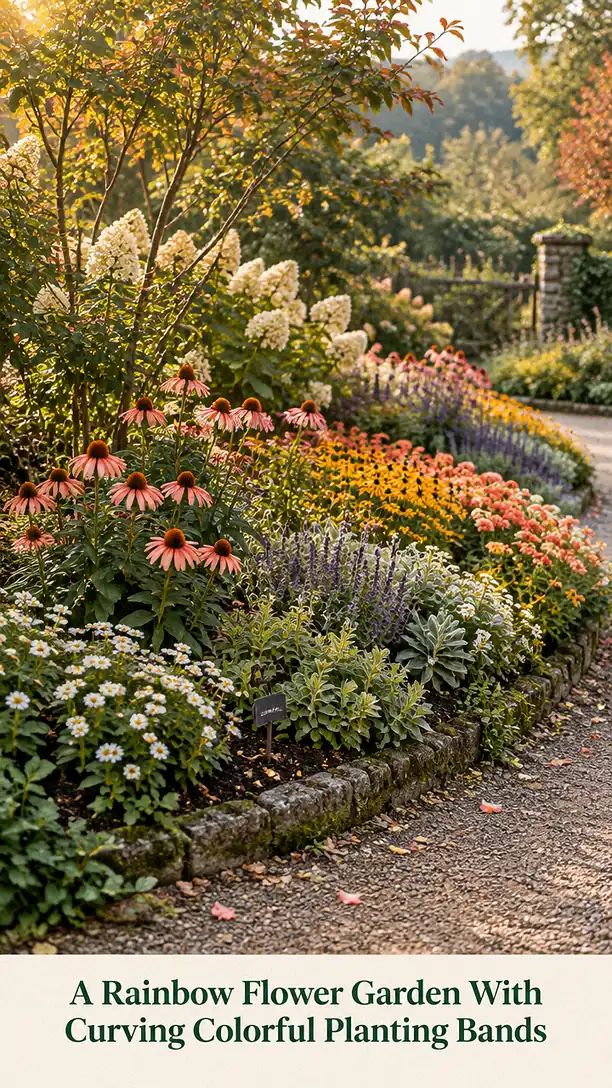
A rainbow-inspired flower garden turns an ordinary sunny border into a vibrant display of color. Curving bands of red, orange, yellow, pink, and purple flowers create a flowing effect across the planting area. Low-growing blooms sit near the front, while taller varieties form a cheerful backdrop. This cheerful design suits front yards, family gardens, and open backyard flower beds.
Materials & Plants
- Red and pink zinnias
- Orange and yellow marigolds
- Purple salvia or annual verbena
- Compost, mulch, and garden edging
- Garden stakes and a hand trowel
How to Create It
- Select a sunny area receiving at least six hours of direct sunlight daily.
- Sketch curved planting bands, leaving enough space for each flower variety to reach its mature size.
- Improve the soil with compost and group flowers according to their colors and heights.
- Mulch between plants, water during establishment, and remove spent flowers to encourage continued blooming.
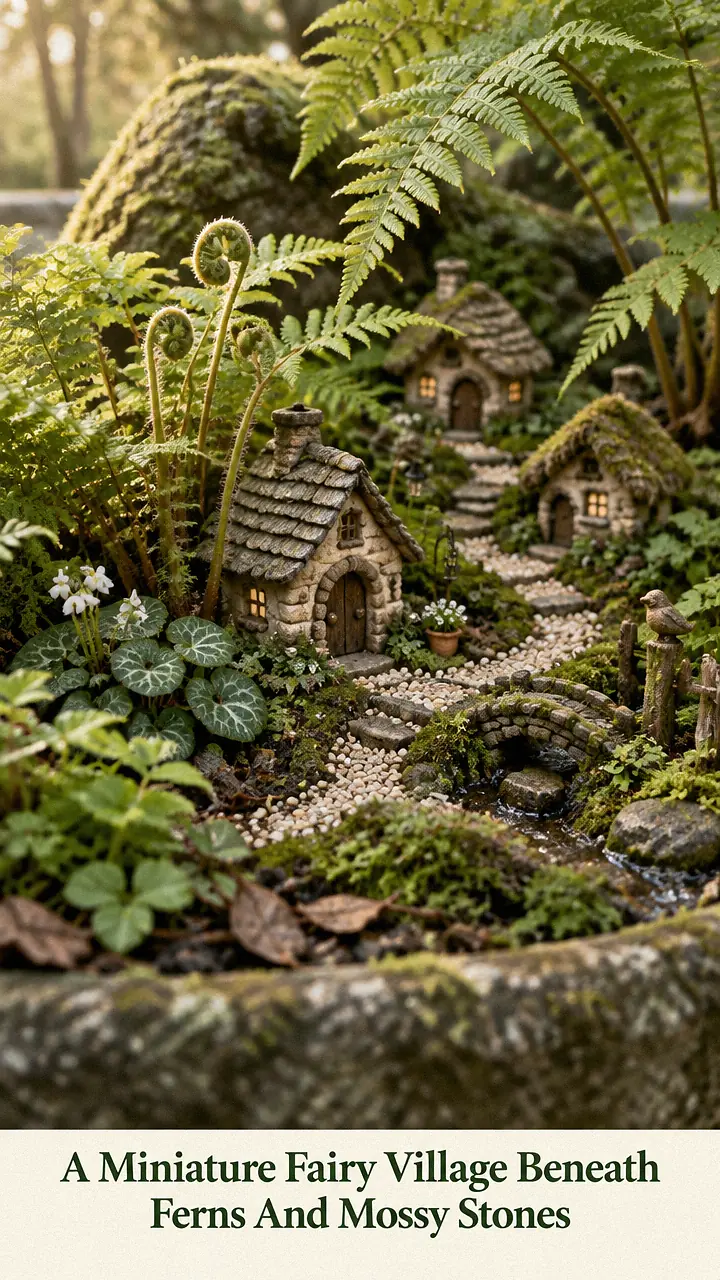
A Miniature Fairy Village Beneath Ferns And Mossy Stones
Overview
Create a tiny enchanted village beneath a leafy shrub or in a partially shaded garden corner. Miniature cottages, pebble pathways, and small wooden bridges sit among delicate ferns and lush groundcovers. Weathered stones and natural bark add woodland character, making the scene feel like a hidden settlement. This imaginative garden works wonderfully beside a patio, tree border, or sheltered backyard nook.
Materials & Plants
- Miniature weatherproof fairy houses
- Small ferns, baby tears in suitable climates, or dwarf sedges
- Smooth pebbles and pieces of untreated bark
- Flat stones and miniature wooden accessories
- Moisture-retentive garden soil or potting mix
How to Create It
- Choose a shaded location with suitable moisture and good drainage.
- Arrange small stones and miniature houses before planting to establish the village layout.
- Add compact greenery around the structures, keeping foliage from covering important details.
- Create narrow pebble paths and occasionally rearrange decorations to introduce new discoveries.
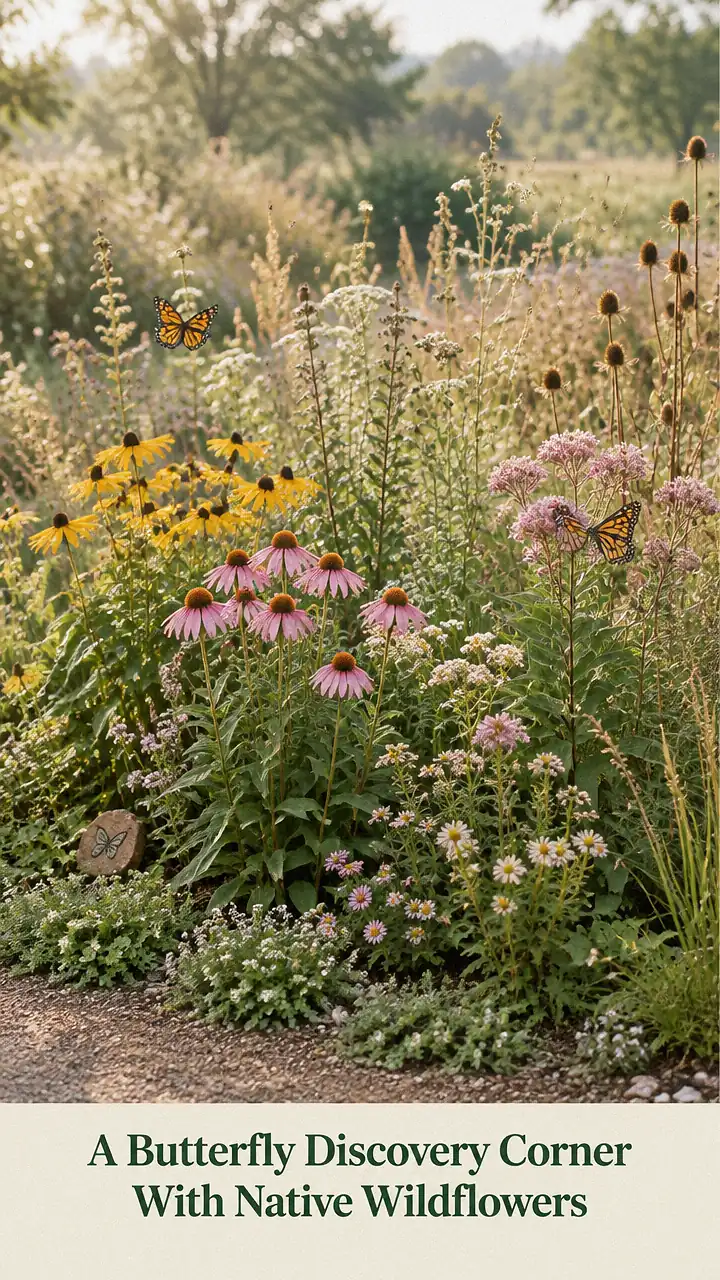
A Butterfly Discovery Corner With Native Wildflowers
Overview
A butterfly discovery corner brings movement and seasonal surprises into a sunny garden. Bright clusters of purple, yellow, and orange flowers surround a small observation seat or decorative log. Butterflies and other pollinators may visit throughout the growing season, creating opportunities to watch their behavior. This naturalistic design works especially well along backyard fences or sunny side-yard borders.
Materials & Plants
- Regionally native coneflowers, asters, and coreopsis
- Locally appropriate butterfly host plants
- A shallow dish with stones for safe insect access to water
- Natural wood edging or a small garden bench
- Compost and organic mulch
How to Create It
- Choose a sunny, sheltered location away from frequent foot traffic.
- Plant groups of three or more of each flower species, using varieties with different bloom periods.
- Include suitable host plants that support local butterfly caterpillars.
- Avoid broad-spectrum pesticides and allow some stems and leaf litter to remain for beneficial wildlife.
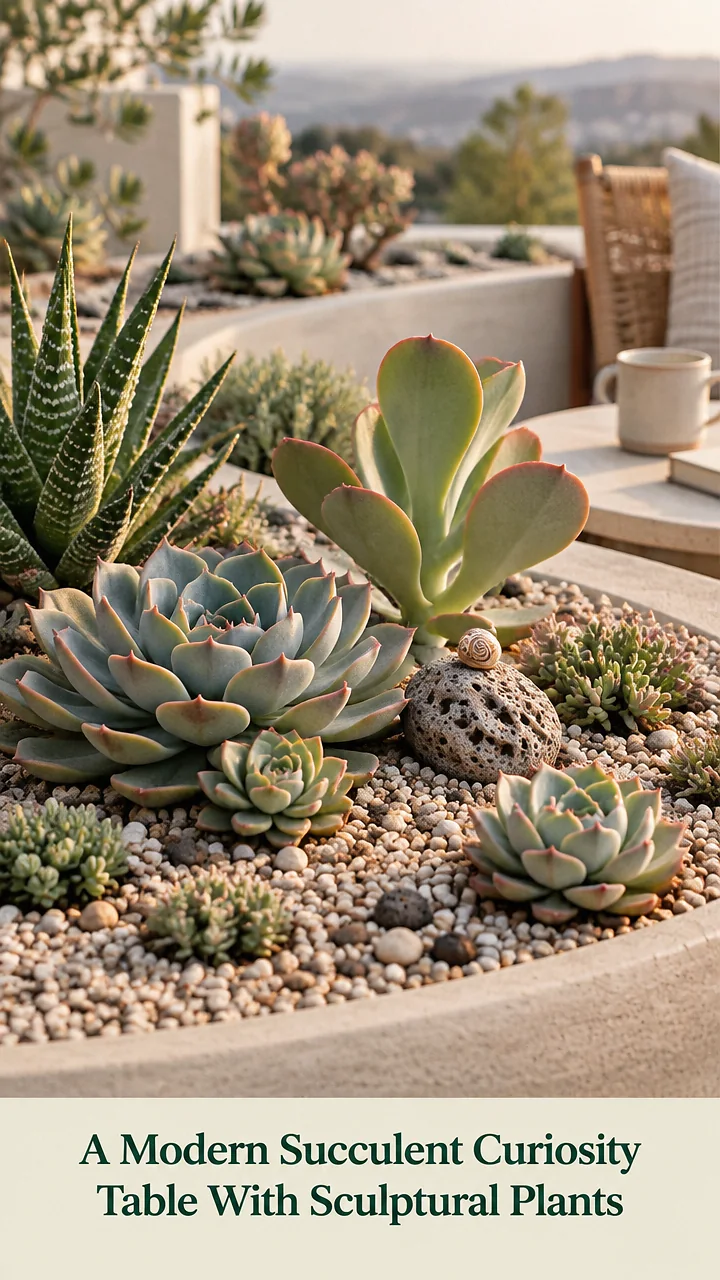
A Modern Succulent Curiosity Table With Sculptural Plants
Overview
A low outdoor display table filled with sculptural succulents creates an eye-catching botanical collection. Rosette-shaped echeverias, upright haworthias, and trailing sedums offer fascinating contrasts in form. Terracotta bowls, pale gravel, and dark metal accents give the arrangement a modern gallery-like appearance. This compact garden is ideal for sunny patios, balconies, and small outdoor seating areas.
Materials & Plants
- Echeveria, haworthia, and trailing sedum
- Shallow containers with drainage holes
- Commercial cactus and succulent potting mix
- Decorative horticultural gravel
- Weather-resistant table or plant stand
How to Create It
- Place a stable display table where the selected succulents receive appropriate light.
- Plant each succulent in a well-draining container, grouping only varieties with similar growing requirements.
- Arrange containers at different heights and add a thin layer of decorative gravel.
- Water only when the growing mix has dried appropriately and protect frost-sensitive plants during cold weather.
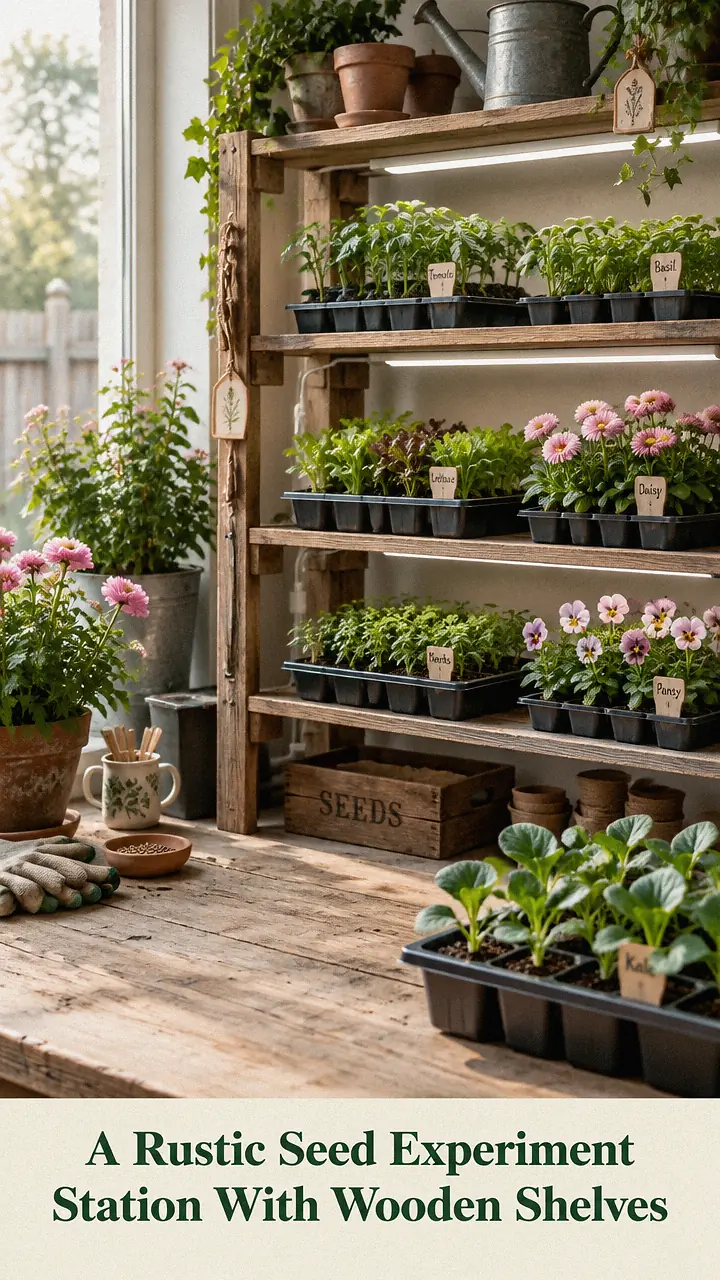
A Rustic Seed Experiment Station With Wooden Shelves
Overview
A rustic seed-growing station transforms a backyard corner into a charming miniature gardening workshop. Wooden shelves hold rows of seedlings, labeled pots, seed packets, and simple observation notebooks. Clay containers and galvanized watering cans create a warm farmhouse atmosphere. This practical design is perfect beside a shed, under a covered patio, or near a vegetable garden where experiments are easy to monitor.
Materials & Plants
- Reclaimed wooden shelves or a secondhand potting bench
- Clean seed trays and small nursery pots
- Radish, lettuce, sunflower, and bean seeds
- Seed-starting mix and waterproof plant labels
- Small watering can and gardening notebook
How to Create It
- Position the station on a stable surface with convenient access to water.
- Arrange pots and trays on shelves, placing actively growing seedlings where they receive adequate light.
- Sow different seeds in labeled containers and record planting dates and germination progress.
- Transplant seedlings when ready, cleaning trays between planting experiments to reduce disease problems.
A Living Bean Teepee Surrounded By Tall Sunflowers

Overview
A living garden teepee creates an inviting green hideaway in a sunny backyard. Tall bamboo poles form a cone-shaped support covered with climbing beans, while cheerful sunflowers stand around the outer edge. The leafy structure provides a playful sense of enclosure, with glimpses of blue sky between the vines. This design is especially appealing in family gardens with enough open space.
Materials & Plants
- Six to eight sturdy bamboo poles
- Pole bean seeds suited to your growing season
- Dwarf or medium-height sunflower seeds
- Natural garden twine
- Compost and soft mulch
How to Create It
- Choose a sunny, level site and arrange the poles in a circle approximately five feet across.
- Secure the pole tops tightly, leaving an opening wide enough for comfortable entry.
- Plant pole beans near the supports and sunflowers outside the teepee, allowing sufficient spacing.
- Guide young vines upward, water consistently, and inspect the structure regularly for stability.
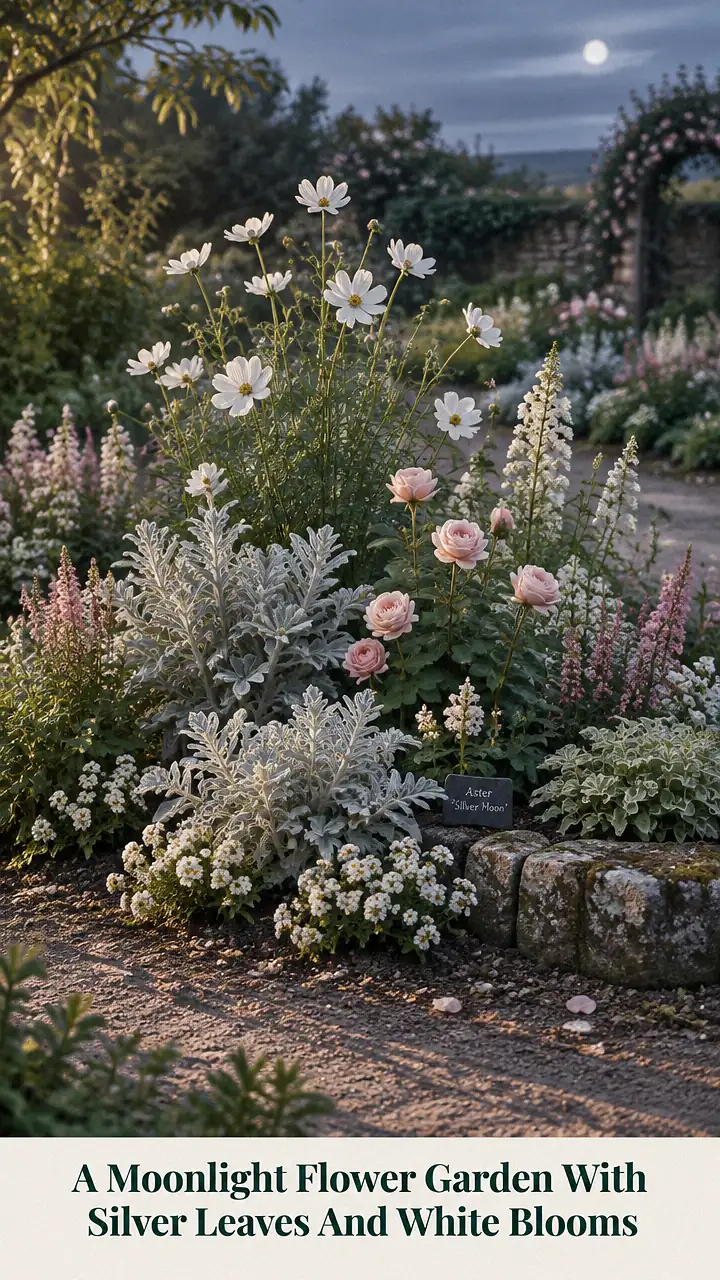
A Moonlight Flower Garden With Silver Leaves And White Blooms
Overview
A moonlight garden creates a soft, mysterious atmosphere after sunset. White flowers glow against dark green foliage, while silvery leaves reflect the fading evening light. A simple gravel path, pale ceramic pots, and subtle warm lighting complete the peaceful scene. This elegant design works beautifully beside a patio, bedroom-facing window, or backyard seating area where it can be enjoyed at dusk.
Materials & Plants
- White petunias, white cosmos, and sweet alyssum
- Silver-leaved dusty miller
- Pale gravel or light-colored stepping stones
- Warm, low-glare solar garden lights
- White or charcoal-colored planters
How to Create It
- Select a site with enough daytime sunlight for the flowering plants.
- Arrange white flowers in generous clusters, alternating them with silver foliage for contrast.
- Add a pale pathway or decorative stones to make the planting more visible after sunset.
- Position small lights downward to illuminate the path without creating excessive nighttime glare.
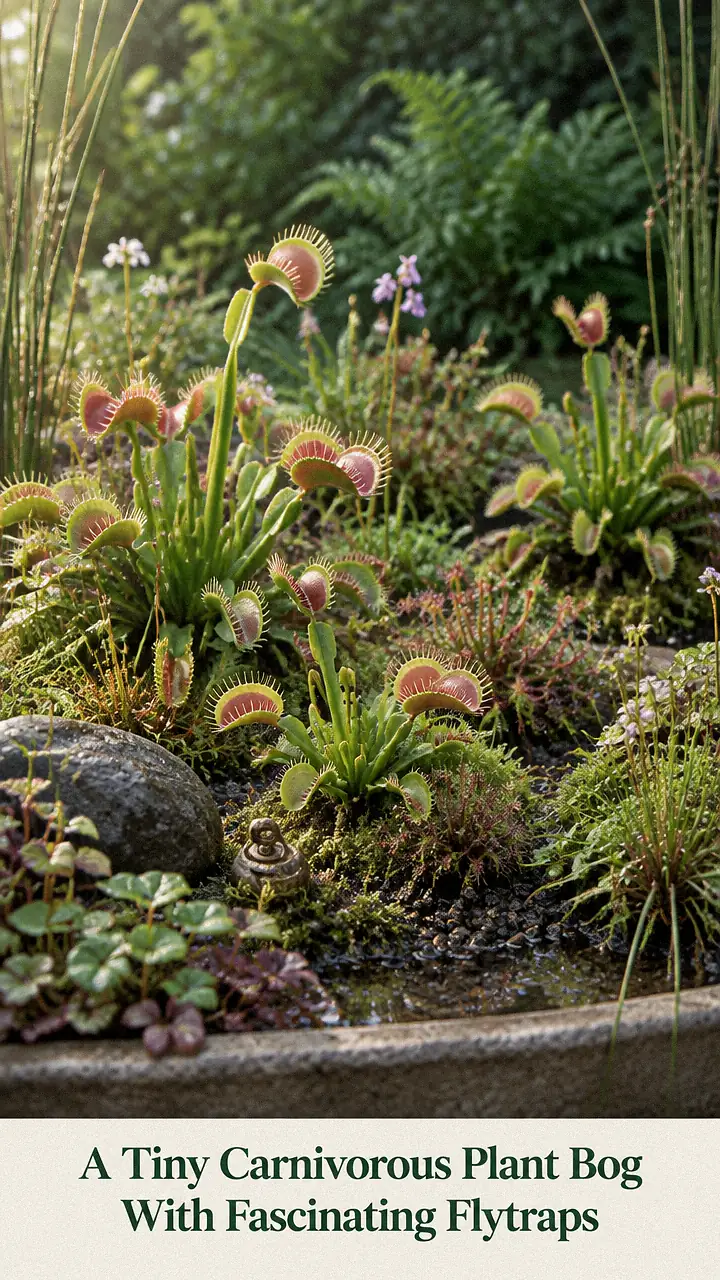
A Tiny Carnivorous Plant Bog With Fascinating Flytraps
Overview
A small carnivorous plant display introduces one of nature’s most unusual adaptations into the garden. Bright green Venus flytraps and delicate sundews grow in a shallow, moist bog-style planter, creating an intriguing miniature habitat. Their specialized leaves provide a fascinating botanical display without elaborate decoration. This unusual garden suits a sunny patio in an appropriate climate or a movable container collection.
Materials & Plants
- Nursery-grown Venus flytraps and suitable sundew species
- Plastic or glazed containers with appropriate drainage
- Mineral-poor carnivorous plant growing medium
- Distilled water or clean, low-mineral rainwater
- Shallow waterproof watering trays
How to Create It
- Research the light, temperature, and winter dormancy requirements of each selected species.
- Fill separate containers with suitable nutrient-poor growing media rather than ordinary potting soil.
- Place containers in trays and maintain appropriate moisture using low-mineral water.
- Avoid fertilizer and unnecessary trap triggering, moving plants to suitable winter conditions when required.
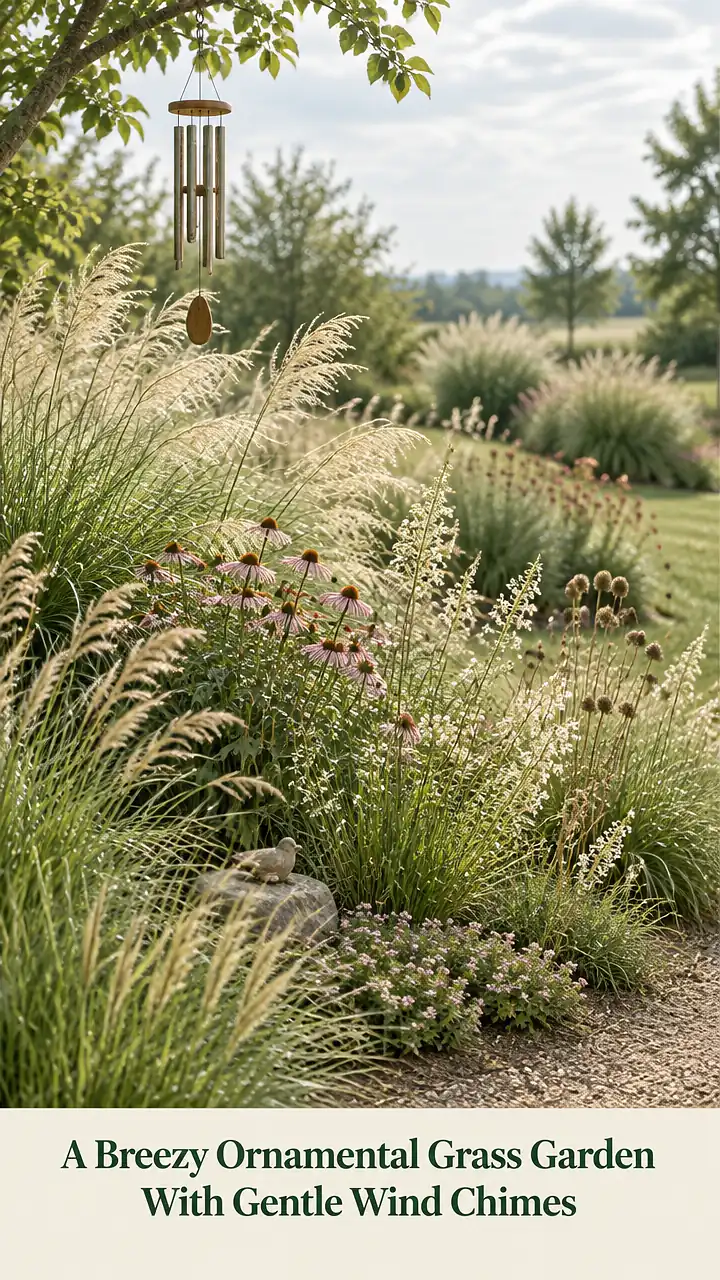
A Breezy Ornamental Grass Garden With Gentle Wind Chimes
Overview
Turn a quiet garden corner into a relaxing display of swaying grasses and delicate sound. Fine-textured ornamental grasses rise from a curved planting bed, accompanied by rounded stones and one understated wind chime. Soft greens, golden seed heads, and changing shadows create visual interest through the seasons. This low-maintenance design suits sunny front yards, modern courtyards, and open patio borders.
Materials & Plants
- Prairie dropseed or other regionally appropriate ornamental grasses
- Blue fescue for suitable cool, well-drained sites
- Natural river stones or gravel
- Small bamboo or metal wind chime
- Mulch and basic planting tools
How to Create It
- Choose ornamental grass varieties suited to your climate, available sunlight, and soil drainage.
- Arrange taller grasses toward the back and compact varieties near the front.
- Add smooth stones between planting groups, leaving space for mature plant growth.
- Hang one gentle wind chime nearby and trim grasses at the appropriate season for each species.
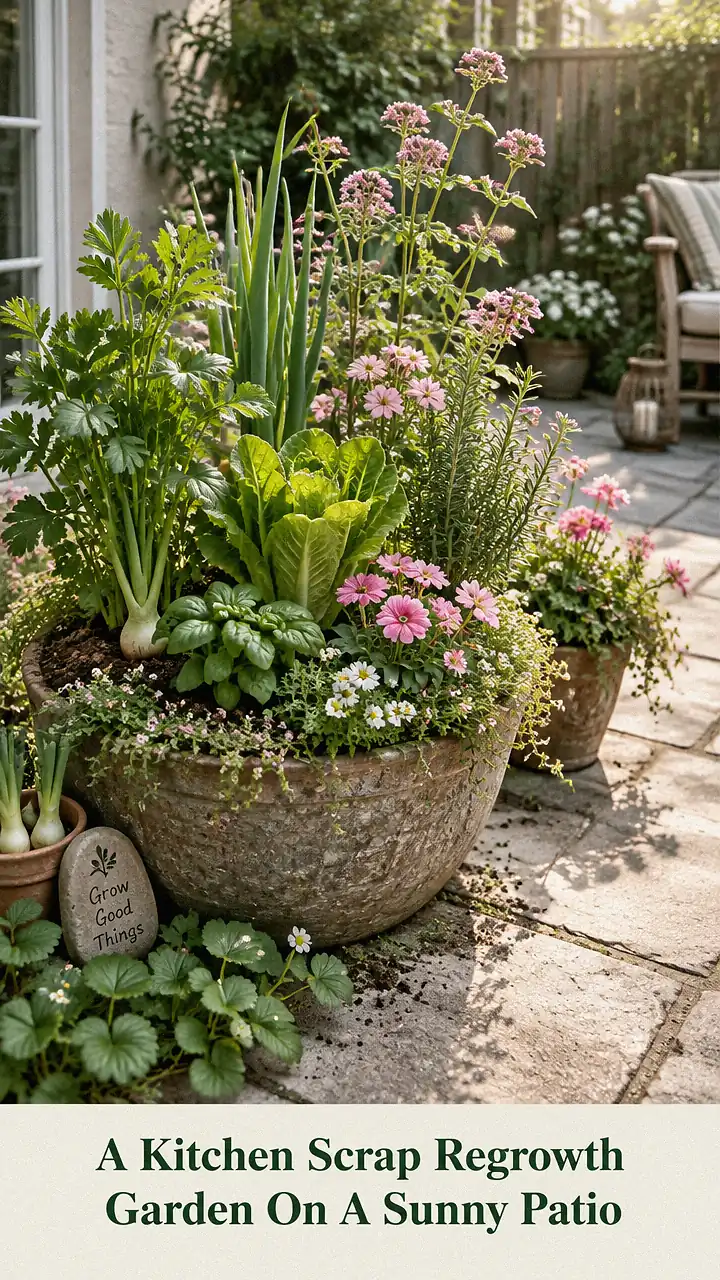
A Kitchen Scrap Regrowth Garden On A Sunny Patio
Overview
A kitchen scrap regrowth station turns everyday vegetable leftovers into a fun growing experiment. Small glass jars holding green onion bases sit alongside pots of leafy herbs and young celery plants. A simple wooden shelf keeps everything organized, while handwritten labels add a homegrown touch. This inexpensive project works particularly well on sunny patios, apartment balconies, and outdoor kitchen counters.
Materials & Plants
- Green onion bases with intact roots
- Celery bases and healthy basil cuttings
- Clear jars and small pots with drainage holes
- Fresh potting mix
- Waterproof labels and a narrow wooden shelf
How to Create It
- Save healthy vegetable bases and place their root ends in shallow, clean water.
- Set jars in bright light, changing the water regularly to prevent unpleasant odors.
- Transfer successfully rooted plants to potting mix for more sustained growth.
- Harvest green onion leaves as they regrow and replace unproductive specimens with fresh experiments.
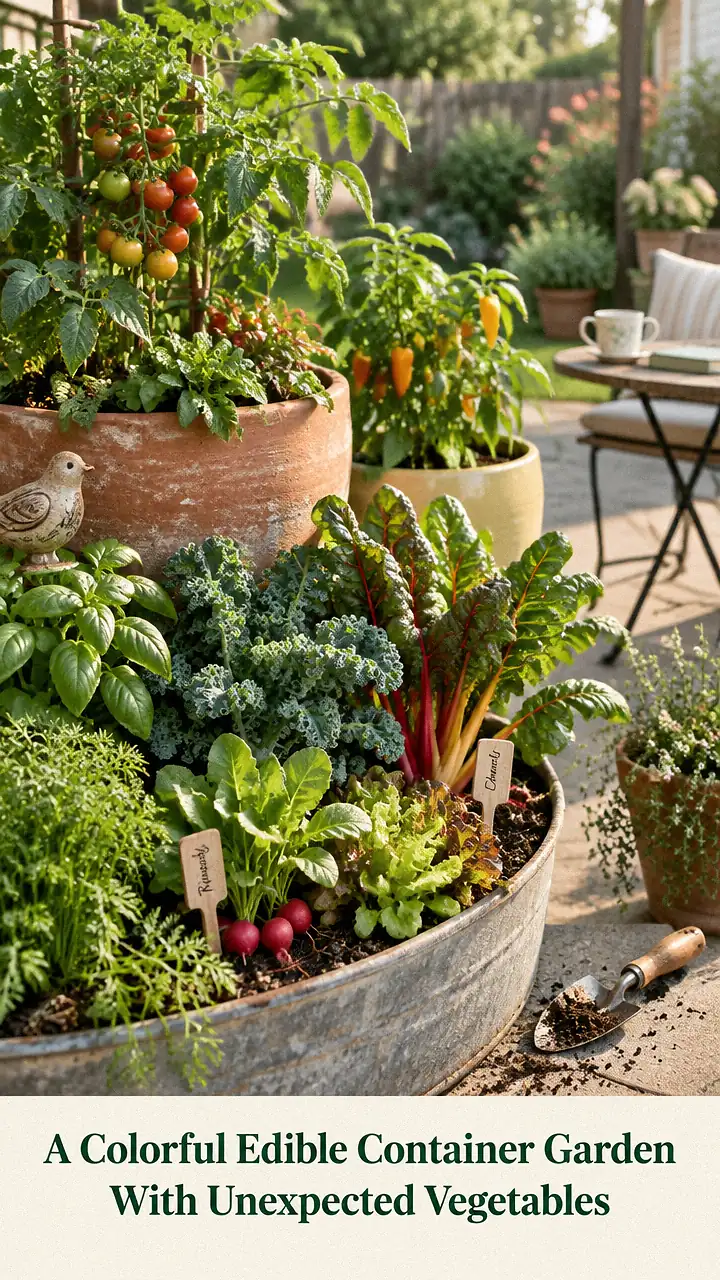
A Colorful Edible Container Garden With Unexpected Vegetables
Overview
An edible container garden featuring unusual colors makes an ordinary patio feel like a small botanical exhibition. Purple basil, rainbow Swiss chard, compact peppers, and cheerful nasturtiums create a lively mixture of edible leaves and flowers. Containers in terracotta, mustard yellow, and deep blue enhance the visual appeal. This design is ideal for gardeners who enjoy experimenting with attractive, useful plants.
Materials & Plants
- Purple basil and rainbow Swiss chard
- Compact sweet pepper varieties
- Nasturtiums grown from edible-garden seed
- Containers approximately 12–18 inches wide, depending on crop
- Vegetable potting mix and slow-release fertilizer
How to Create It
- Choose a location with six to eight hours of sunlight for most edible crops.
- Fill drainage-equipped containers with fresh vegetable potting mix.
- Group plants according to their mature sizes, allowing peppers sufficient root space.
- Water consistently, feed as directed, and harvest only plants positively identified as edible and grown without unsuitable chemicals.
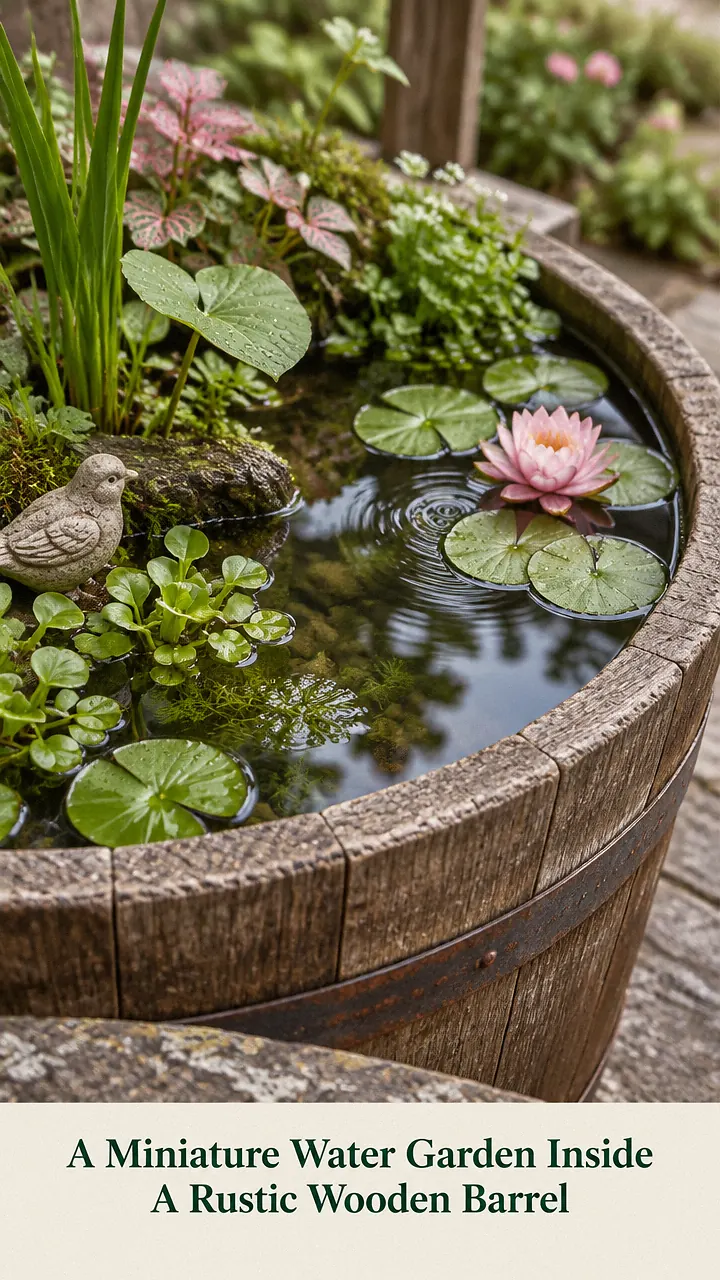
A Miniature Water Garden Inside A Rustic Wooden Barrel
Overview
A wooden half-barrel filled with aquatic plants creates a peaceful little water feature without requiring a full-sized pond. Floating leaves, upright water plants, and smooth stones provide a beautiful combination of textures. The reflective water surface introduces movement and changing light patterns. This compact design works beautifully in a sheltered courtyard or patio garden where the container can be easily maintained.
Materials & Plants
- Watertight wooden half-barrel or barrel-style pond liner
- Dwarf water lily suitable for container ponds
- Small aquatic plants suited to local conditions
- Aquatic planting baskets and specialized aquatic substrate
- Smooth stones and a small solar-powered water circulator
How to Create It
- Position the barrel on a strong, level surface before filling it with water.
- Place aquatic plants in suitable baskets at the recommended depths.
- Add stones and a small circulator if appropriate for the chosen plants.
- Monitor water quality and mosquitoes, and use a secure cover or barrier wherever young children might gain access.
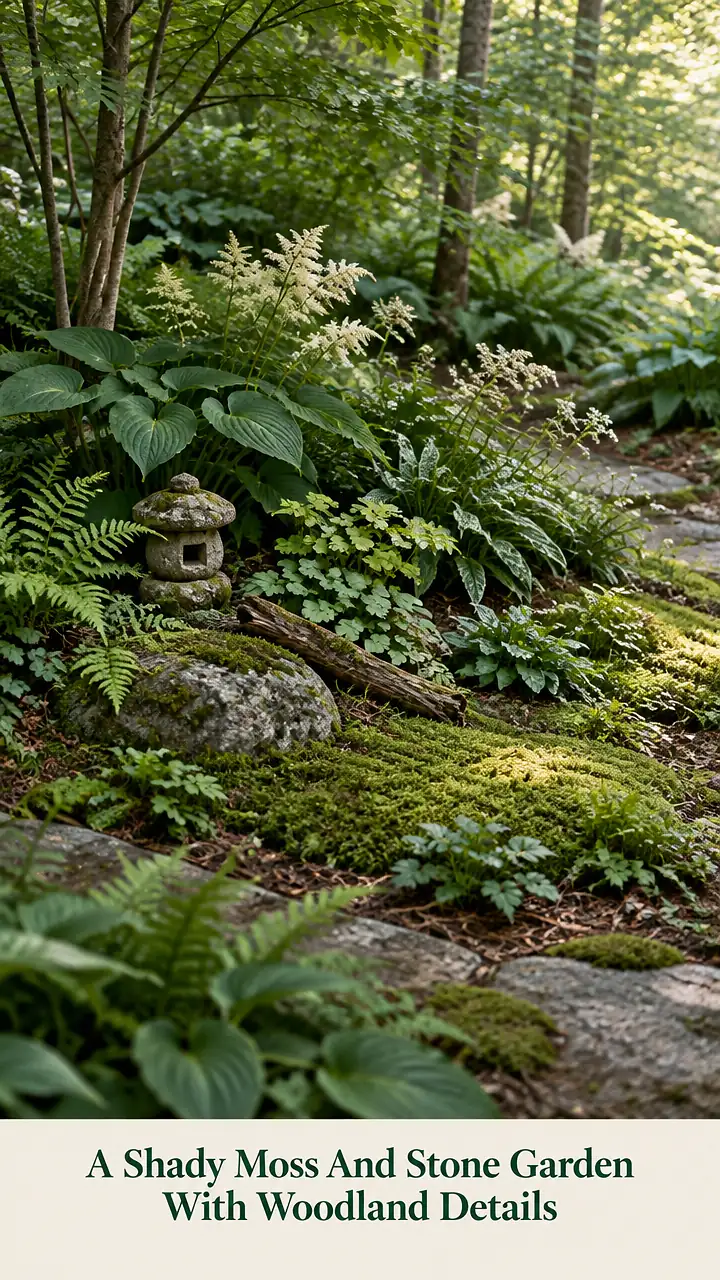
A Shady Moss And Stone Garden With Woodland Details
Overview
A moss-inspired woodland garden turns a damp, shaded corner into a miniature landscape of rich green textures. Irregular stones nestle among soft moss, small ferns, and low-growing woodland plants. A narrow stepping stone trail gives the design an inviting sense of exploration. This peaceful arrangement works best beneath established trees or beside north-facing walls in climates where moss naturally thrives.
Materials & Plants
- Nursery-grown moss suited to local conditions
- Small woodland ferns and native sedges
- Flat stepping stones and weathered rocks
- Leaf mold or well-rotted compost
- Watering can with a gentle rose attachment
How to Create It
- Choose a consistently shaded location with appropriate soil moisture and drainage.
- Remove weeds carefully, avoiding damage to nearby tree roots.
- Position stones first, then tuck ferns, sedges, and moss into suitable planting spaces.
- Keep the moss evenly moist during establishment and remove fallen debris when it becomes too thick.
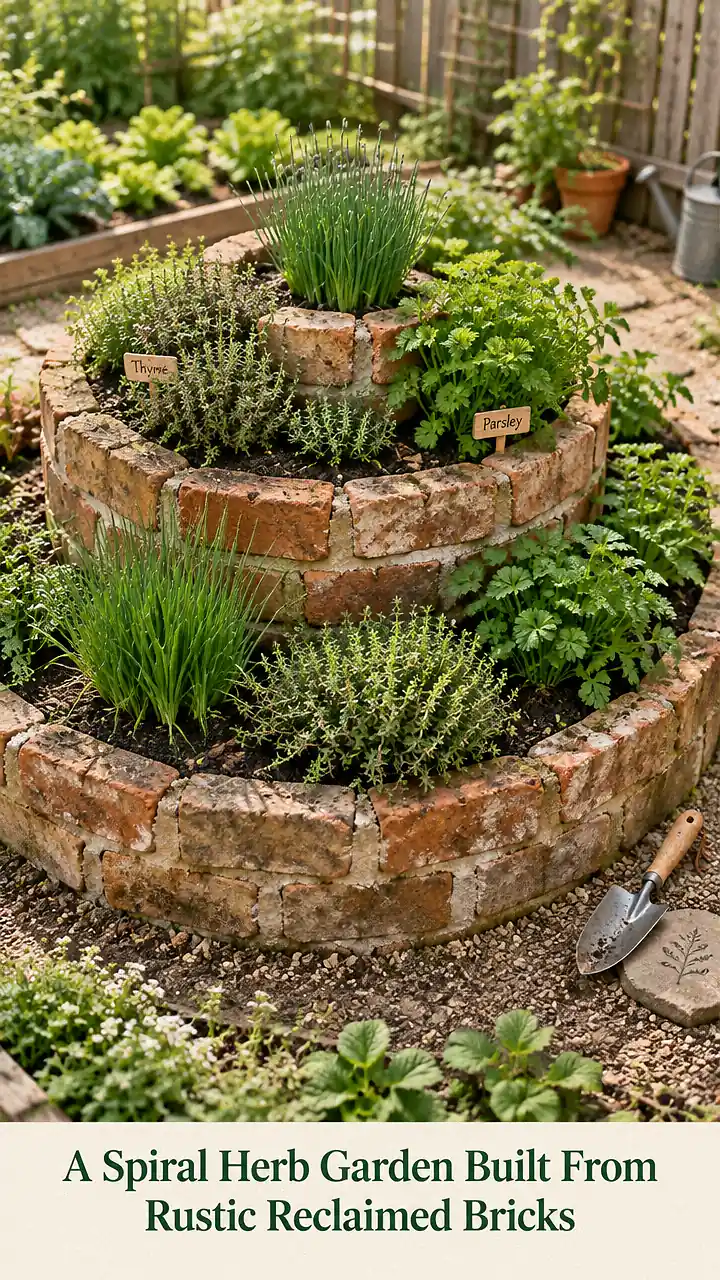
A Spiral Herb Garden Built From Rustic Reclaimed Bricks
Overview
A spiral herb garden creates a striking sculptural feature while organizing culinary plants into a compact footprint. Reclaimed bricks rise in a gentle spiral, forming planting pockets at several heights. Upright rosemary, soft thyme, and bright green parsley provide contrasting textures and fragrances. This space-saving design works especially well near an outdoor kitchen or along a sunny backyard pathway.
Materials & Plants
- Clean reclaimed bricks or natural landscaping stones
- Rosemary, thyme, oregano, parsley, and chives
- Well-draining soil and mature compost
- Coarse mineral material for drainage when needed
- Garden shovel, level, and watering can
How to Create It
- Mark a circle approximately three to four feet across in a sunny location.
- Stack stable, overlapping bricks into a low spiral, keeping the tallest section modest and secure.
- Fill with suitable soil, placing drought-tolerant Mediterranean herbs higher and moisture-loving parsley lower.
- Water according to each plant’s needs and trim regularly to maintain a tidy spiral shape.
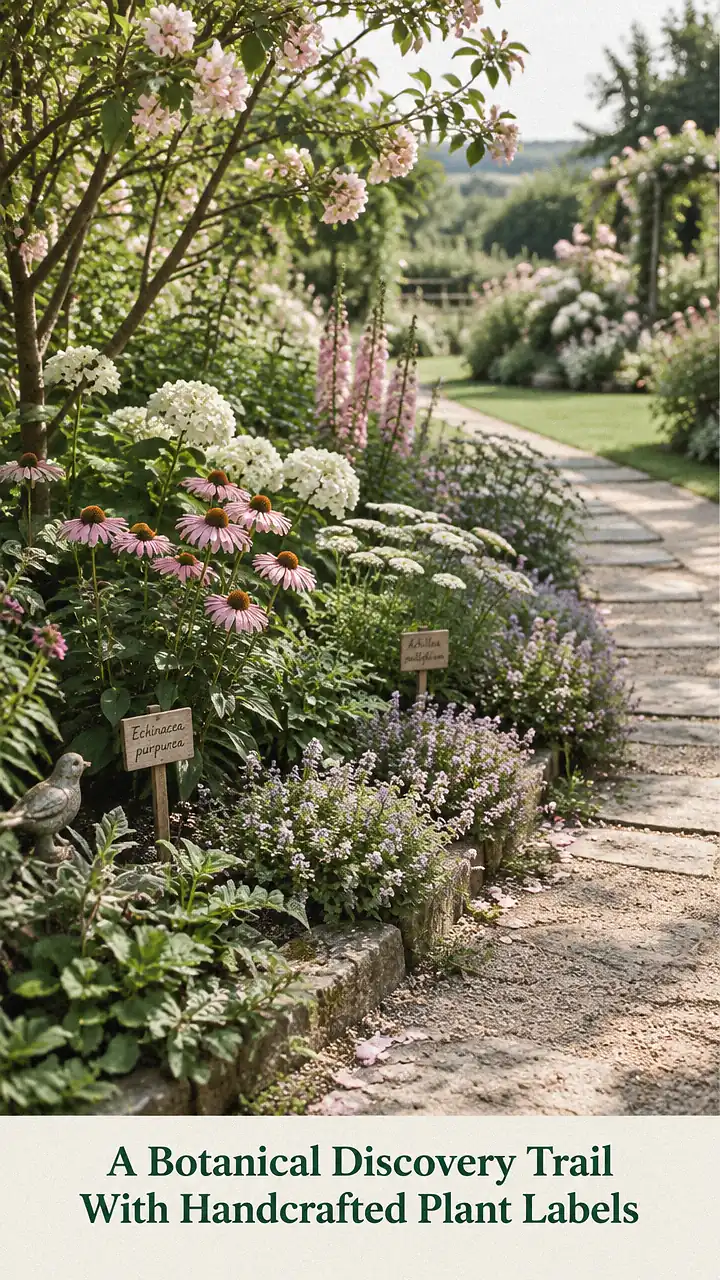
A Botanical Discovery Trail With Handcrafted Plant Labels
Overview
A botanical discovery trail turns an existing garden border into an engaging outdoor learning experience. Small wooden labels identify plants with interesting leaf shapes, fragrances, or seasonal changes. A simple mulch pathway connects clusters of flowers, shrubs, and ornamental foliage. This design feels like a miniature nature museum and is especially practical for family backyards and established residential gardens.
Materials & Plants
- Weatherproof wooden or metal plant labels
- Compact ferns, hostas, and flowering perennials
- Regionally appropriate native shrubs
- Wood-chip mulch or stepping stones
- Exterior paint pens and a small notebook
How to Create It
- Identify existing plants and select a short route with several visually distinctive specimens.
- Add a comfortable walking surface without disturbing established roots.
- Label each plant with its common name and one interesting, accurate observation.
- Update labels as plants change through the seasons and add new discoveries whenever the garden expands.
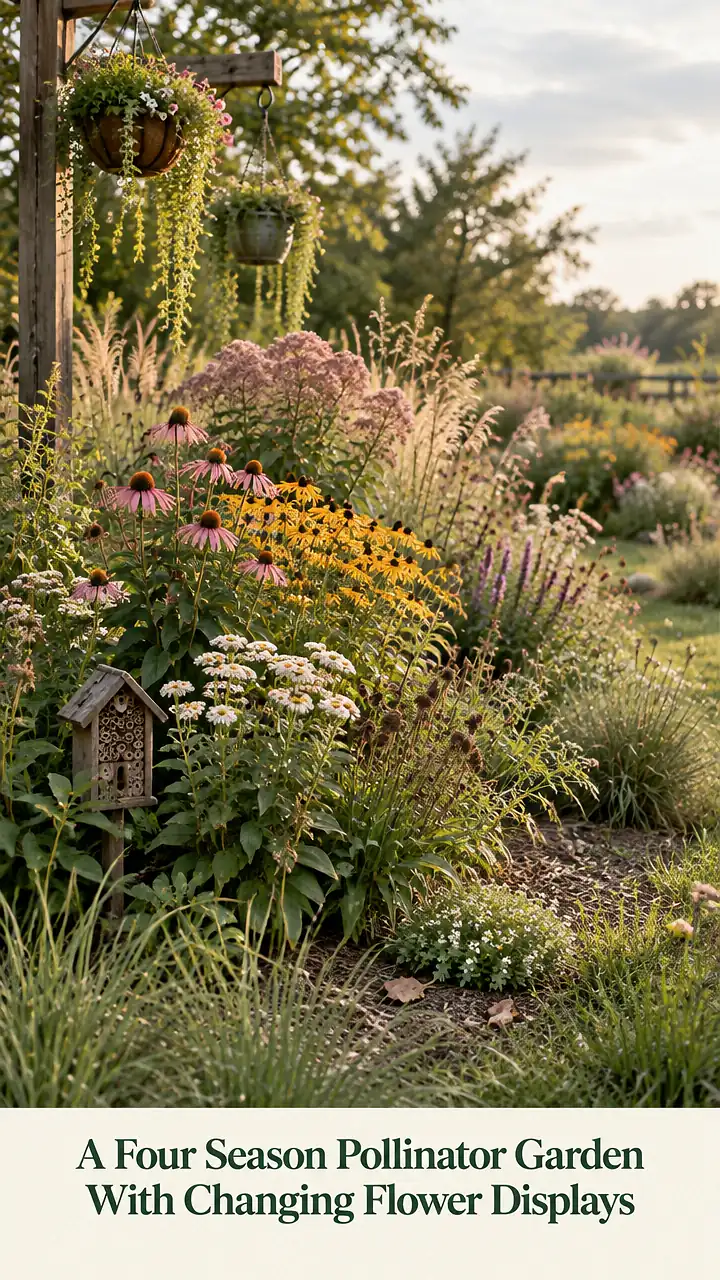
A Four Season Pollinator Garden With Changing Flower Displays
Overview
A four-season pollinator border creates an evolving garden that looks different as the year progresses. Early flowering perennials give way to summer blossoms, followed by richly colored autumn asters and goldenrod. Dried seed heads provide interesting winter structure and habitat. This naturalistic design is ideal for sunny backyard borders where gardeners can observe seasonal changes and visiting wildlife.
Materials & Plants
- Regionally native spring-blooming perennials
- Summer-flowering coreopsis and coneflowers
- Autumn-blooming asters and goldenrod
- Native grasses for winter structure
- Compost, natural mulch, and plant markers
How to Create It
- Choose a sunny bed approximately five by eight feet, adjusting the size to your available space.
- Select locally appropriate plants with overlapping bloom periods from spring through autumn.
- Position taller plants behind shorter varieties and group compatible species together.
- Leave suitable stems and seed heads through winter, then tidy selectively when spring growth resumes.
Bring Your Curiosity Garden To Life One Discovery At A Time
The most memorable gardens aren’t necessarily the largest or most expensive. They’re the ones that make you want to slow down, look closer, and discover something new.
These curiosity garden ideas show how ordinary outdoor spaces can become places filled with personality, imagination, and natural beauty. A winding stone path creates an inviting mystery, a collection of unusual plants introduces fascinating shapes, and a wildlife-friendly flower border offers constantly changing activity.
When choosing your favorite project, consider your available space, budget, sunlight, local climate, and the amount of maintenance you can comfortably manage. A container garden might be perfect for an apartment balcony, while a woodland discovery trail could be a beautiful addition to a larger backyard.
You can also combine several ideas to create your own distinctive landscape. A botanical wall might complement a small patio water feature, while a spiral herb garden could sit beside a colorful edible container collection.
Start with one manageable feature and allow your curiosity to guide future additions. Over time, your garden can become a personal collection of beautiful plants, creative details, and unexpected discoveries that make spending time outdoors even more rewarding.