
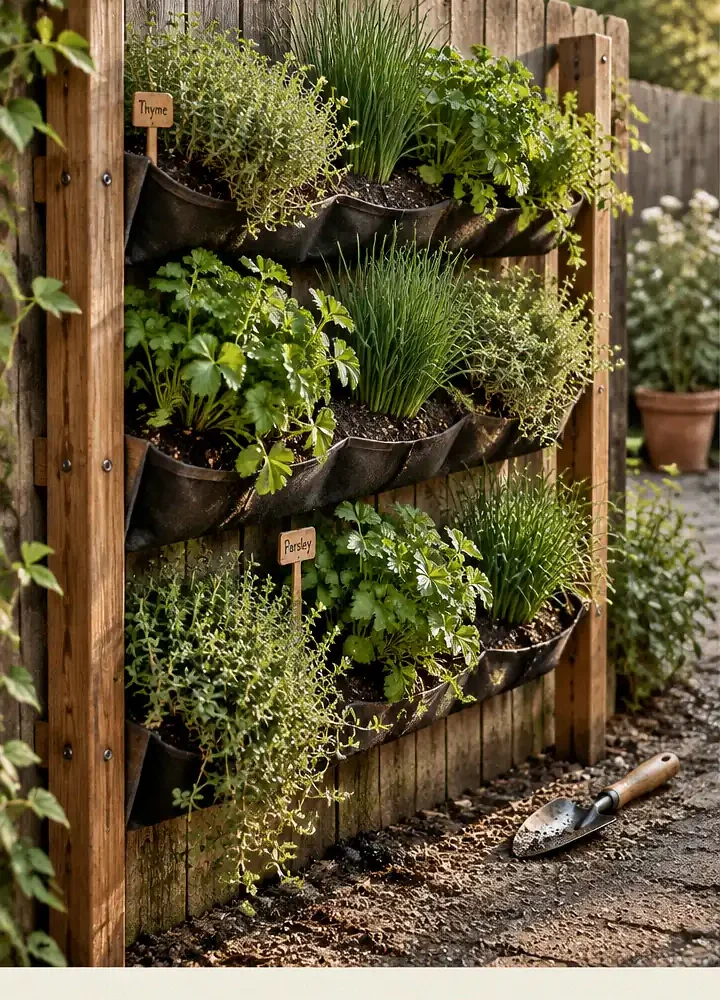
A beautiful garden doesn’t have to be enormous, expensive, or difficult to maintain. Sometimes, the smartest designs come from making better use of what you already have. An empty fence, a forgotten corner, a narrow pathway, or a collection of old containers can become something surprisingly beautiful with a little creativity.
These clever garden ideas combine practical growing techniques with attractive landscaping details. Some help you grow more vegetables in limited space, while others make watering easier, attract pollinators, or turn ordinary outdoor areas into inviting retreats.
Whether you’re working with a small backyard, a sunny patio, a balcony, or a larger garden, there’s plenty of inspiration here. Most of these projects use accessible materials, beginner-friendly methods, and plants that can be adjusted to suit your local climate.
The best part? You don’t need to transform your entire yard at once. Even one thoughtfully designed garden feature can make your outdoor space feel more organized, productive, and personal.
Clever Garden Ideas To Transform Your Outdoor Space
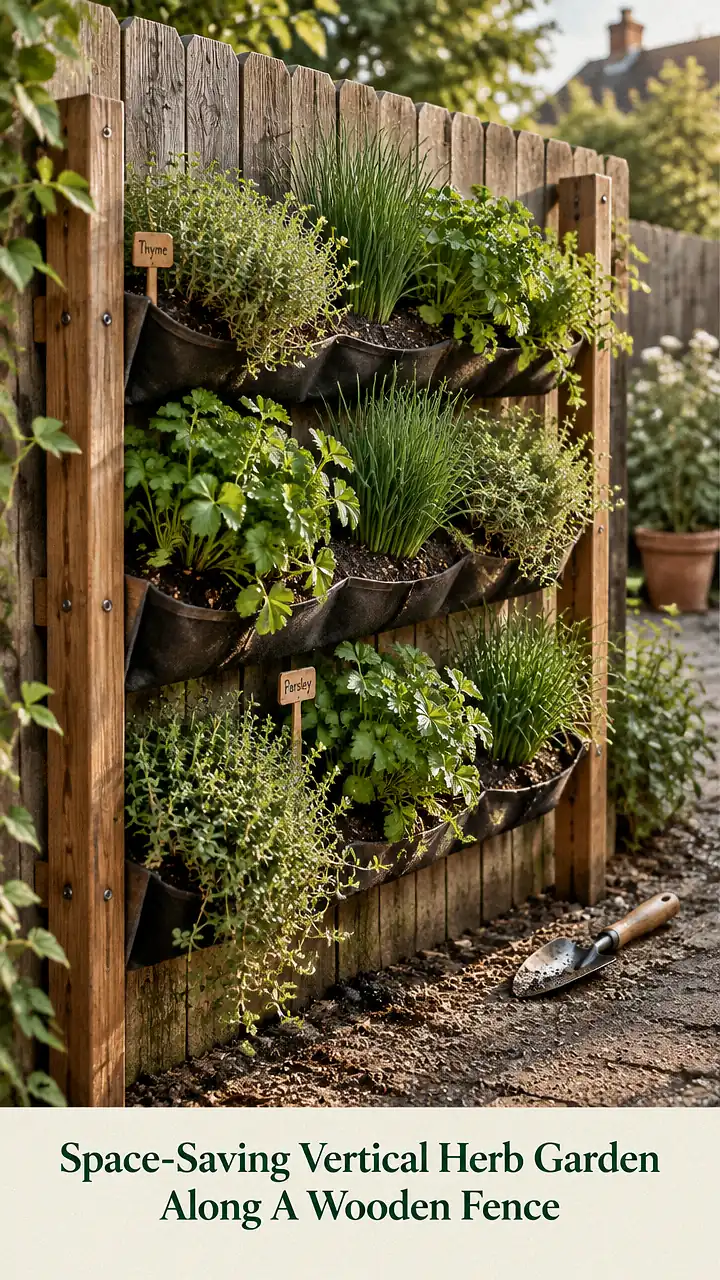
Space-Saving Vertical Herb Garden Along A Wooden Fence
Overview
A simple wooden fence becomes a productive green wall when fitted with rows of small herb planters. Picture warm cedar boards, charcoal-colored containers, and cascading thyme mixed with upright basil and parsley. The vertical arrangement creates a tidy, layered appearance without sacrificing valuable ground space. This design works especially well beside sunny patios, outdoor kitchens, and narrow backyard walkways.
Materials & Plants
- Sturdy wooden fence or freestanding support
- Metal planter rails or weather-resistant brackets
- Lightweight pots with drainage holes
- Basil, parsley, chives, oregano, and thyme
- Quality container potting mix
- Exterior screws and a drill
How to Create It
- Choose a sturdy fence that receives at least six hours of sunlight for most culinary herbs.
- Attach horizontal rails securely, leaving enough vertical space for each plant to mature.
- Fill lightweight containers with potting mix and arrange herbs according to their watering needs.
- Hang the planters, water thoroughly, and harvest herbs regularly to encourage fresh growth.
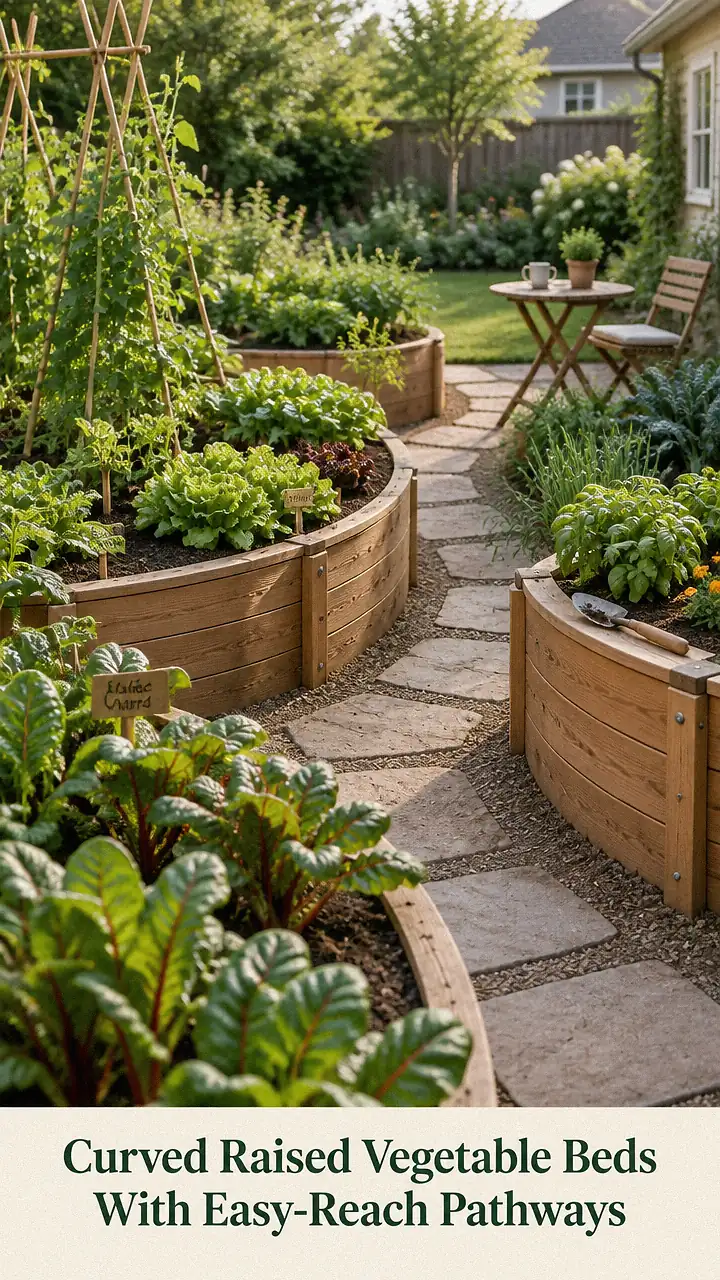
Curved Raised Vegetable Beds With Easy-Reach Pathways
Overview
Instead of traditional rectangular vegetable plots, create gently curved raised beds separated by compact gravel pathways. Warm timber edges frame neat rows of lettuce, carrots, kale, and colorful Swiss chard. The flowing layout softens the appearance of a productive kitchen garden while making harvesting comfortable. This clever arrangement works beautifully in medium-sized backyards where efficient access matters as much as appearance.
Materials & Plants
- Untreated cedar or other garden-safe lumber
- Raised-bed soil and finished compost
- Lettuce, kale, carrots, radishes, and chard
- Gravel or wood chips for pathways
- Cardboard for initial weed suppression
- Measuring tape, stakes, and garden tools
How to Create It
- Mark gently curved planting beds approximately three to four feet wide for easy access from both sides.
- Build low wooden borders and create pathways at least two feet wide.
- Fill the beds with suitable growing soil enriched with finished compost.
- Plant vegetables according to mature spacing, leaving room for succession planting.
- Mulch exposed soil and water consistently, particularly during seed germination.
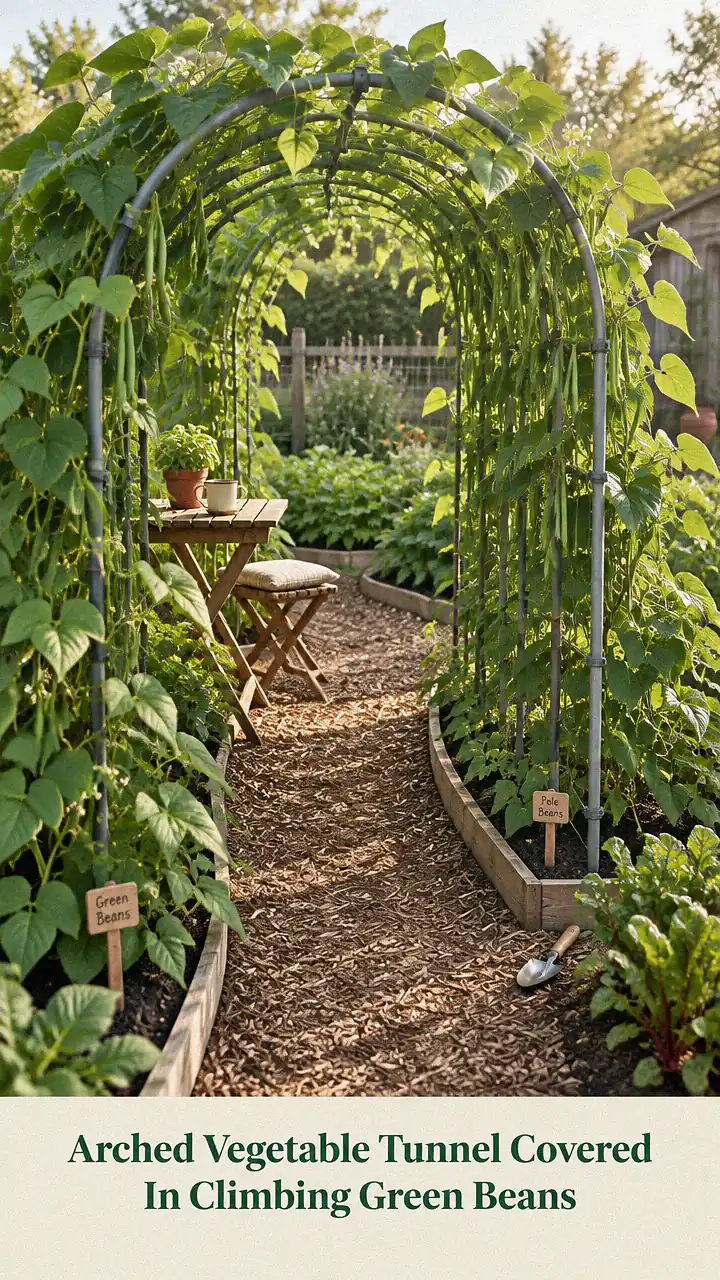
Arched Vegetable Tunnel Covered In Climbing Green Beans
Overview
A tunnel of climbing beans creates a lush garden passageway while using growing space overhead. Picture a sturdy metal arch covered in bright green leaves, dangling bean pods, and delicate flowers. Beneath it, a narrow mulch pathway provides access for picking vegetables. This design adds height and character to sunny backyard vegetable gardens, especially where horizontal planting space is limited.
Materials & Plants
- Sturdy cattle panels or prefabricated garden arches
- Strong metal posts and securing clips
- Pole bean seeds
- Compost and garden mulch
- Wooden edging or stepping stones
- Gardening gloves and wire cutters
How to Create It
- Select a sunny location with enough room for the arch and comfortable walking clearance.
- Anchor the structure firmly, protecting exposed metal edges and sharp wire ends.
- Improve the soil along both sides with finished compost.
- Sow pole beans at the recommended spacing and guide seedlings onto the support.
- Harvest pods frequently and inspect the structure throughout the growing season.
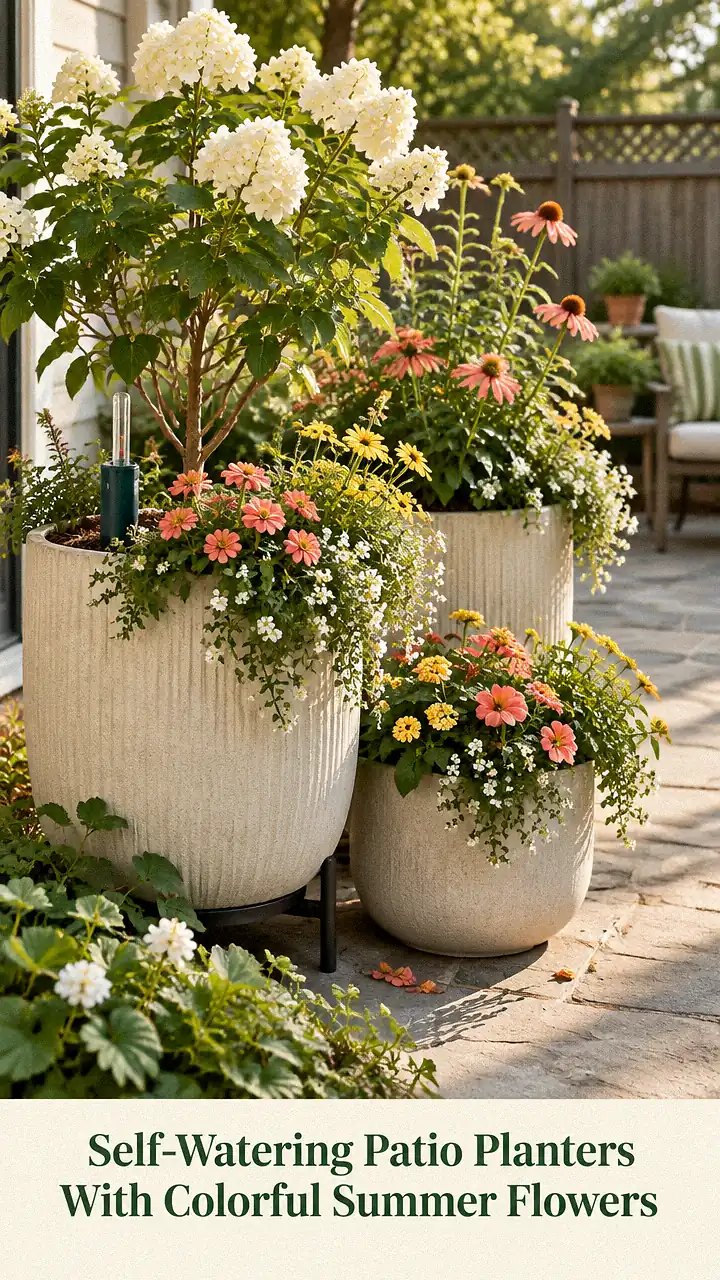
Self-Watering Patio Planters With Colorful Summer Flowers
Overview
Large self-watering containers offer a clever solution for busy gardeners who want generous flowers without constant attention. Imagine three sleek rectangular planters overflowing with pink petunias, purple calibrachoa, and trailing silver foliage. Their hidden water reservoirs help maintain more consistent moisture, while the coordinated containers create a polished appearance. This arrangement suits sunny patios, apartment terraces, and paved backyard seating areas.
Materials & Plants
- Self-watering planters with reservoirs and overflow outlets
- Lightweight container potting mix
- Petunias, calibrachoa, and silver dichondra
- Slow-release flower fertilizer
- Watering can with a narrow spout
- Matching planters in neutral colors
How to Create It
- Choose containers large enough for mature roots and equipped with functional overflow outlets.
- Position them where flowering plants receive adequate sunlight.
- Fill with suitable potting mix and arrange taller plants behind trailing varieties.
- Water from above initially, then use the reservoirs according to the manufacturer’s instructions.
- Check reservoir levels, remove faded flowers, and fertilize as directed.
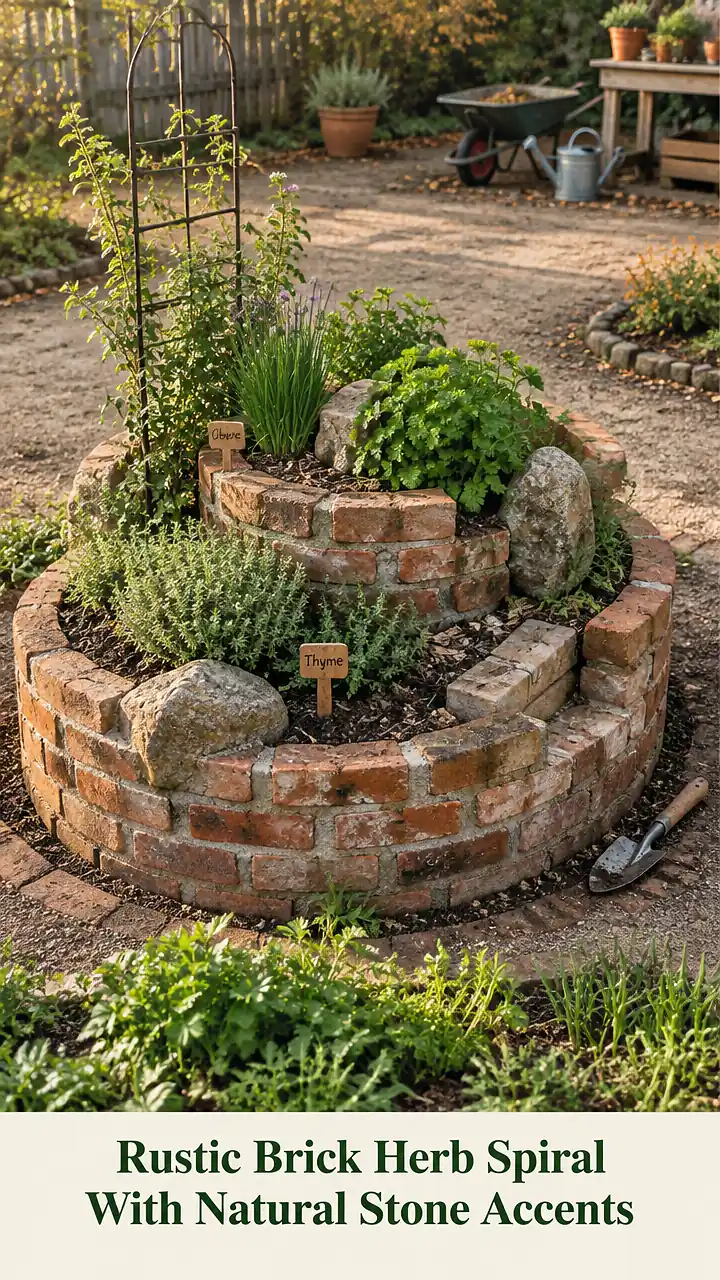
Rustic Brick Herb Spiral With Natural Stone Accents
Overview
A small herb spiral turns ordinary bricks into an eye-catching miniature landscape. The gently rising circular wall creates planting pockets at different heights, surrounded by aromatic greenery and contrasting textures. Rosemary or compact sage adds structure near the upper section, while parsley and chives soften the lower edge. Ideal for sunny courtyard gardens, this design combines rustic character with convenient herb harvesting.
Materials & Plants
- Reclaimed bricks or small landscape blocks
- Well-draining garden soil
- Finished compost and coarse mineral amendment if needed
- Thyme, sage, oregano, parsley, and chives
- Small decorative stones
- Hand trowel and spirit level
How to Create It
- Mark a circular footprint about four to five feet across on level ground.
- Stack stable, low brick courses in a spiral, gradually increasing the center height.
- Fill the structure with suitable soil, keeping the upper section especially well drained.
- Plant drought-tolerant herbs higher and moisture-loving varieties toward the lower edge.
- Water according to individual plant needs and trim herbs regularly.
Overview
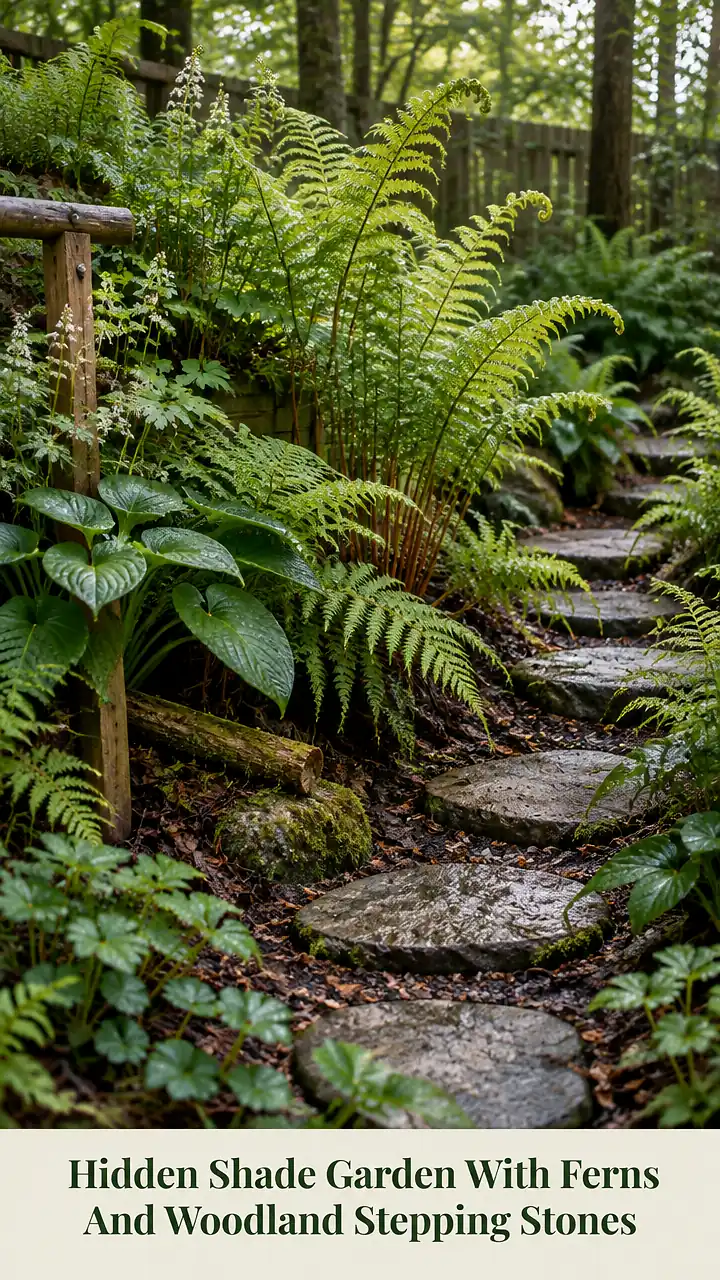
A neglected shady corner can become a peaceful woodland garden filled with layered foliage and natural textures. Imagine lush ferns, broad hosta leaves, and delicate woodland flowers surrounding irregular stone stepping pads. A blanket of shredded leaves creates a soft forest-floor appearance. This garden feels cool and secluded, making it particularly appealing beneath deciduous trees or along sheltered north-facing boundaries.
Materials & Plants
- Climate-appropriate ferns
- Hostas in areas without serious slug or deer pressure
- Heuchera and shade-tolerant woodland perennials
- Flat stepping stones
- Shredded leaves or fine bark mulch
- Compost for suitable soil conditions
How to Create It
- Observe the area’s shade pattern and identify large tree roots before digging.
- Position stepping stones along a gentle path, avoiding major roots.
- Plant ferns and hostas in naturally open soil pockets without burying existing tree roots.
- Add smaller woodland plants between the larger foliage groups.
- Spread a modest layer of leaf mulch and water during dry periods.
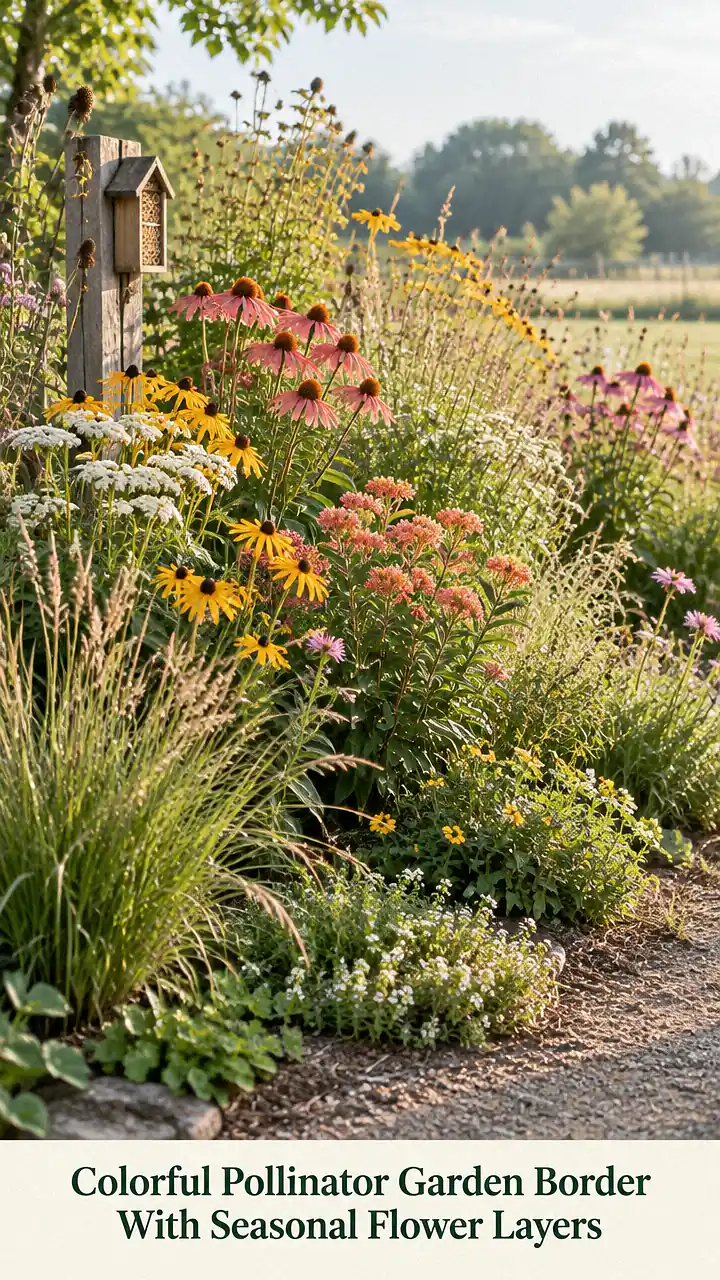
Colorful Pollinator Garden Border With Seasonal Flower Layers
Overview
A narrow ribbon of flowers can turn an ordinary lawn edge into a lively pollinator habitat. Picture purple coneflowers, golden black-eyed Susans, airy native grasses, and clusters of pink blooms moving gently in the breeze. Planting flowers in generous groups creates a strong visual rhythm while providing nectar and pollen. This idea works beautifully along sunny fences, driveways, and front-yard borders.
Materials & Plants
- Native flowering perennials suited to your region
- Coneflowers and rudbeckias where locally appropriate
- Native asters and spring-blooming flowers
- Compact native ornamental grasses
- Compost and shredded bark mulch
- Spade, garden rake, and watering hose
How to Create It
- Prepare a sunny planting strip and remove existing weeds.
- Choose locally appropriate species that flower at different times from spring through fall.
- Arrange taller plants toward the back and shorter flowers along the front.
- Plant several of each variety together, following mature spacing recommendations.
- Mulch lightly, water during establishment, and leave some healthy seedheads for wildlife.
Recycled Galvanized Trough Garden For Fresh Salad Greens
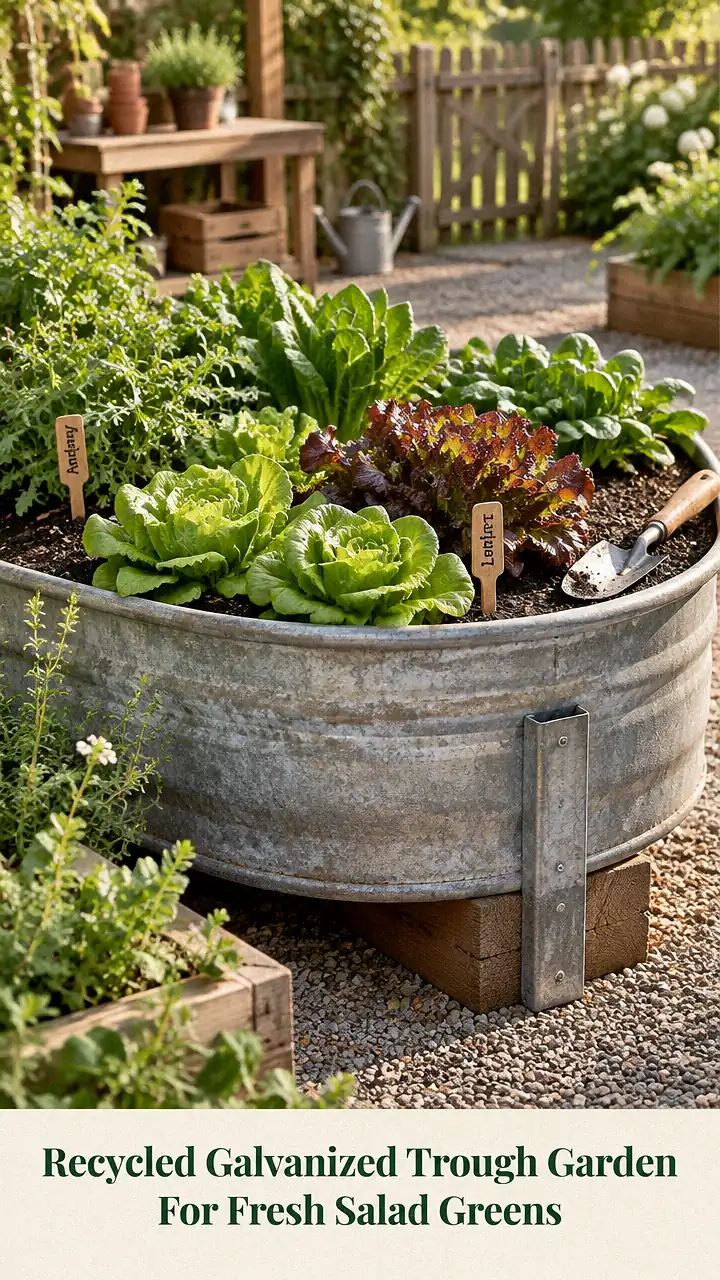
Overview
A galvanized livestock trough can become a striking raised planter overflowing with edible greens. Its silvery metal sides contrast beautifully with bright lettuce, deep red mustard leaves, and feathery dill. Positioned on a level gravel base, the trough gives a small vegetable garden a clean farmhouse appearance. This clever design is especially useful for patios, sunny side yards, and spaces with poor native soil.
Materials & Plants
- Clean galvanized steel trough
- Drill and metal-rated drill bits
- Lightweight raised-container growing mix
- Leaf lettuce, arugula, mustard greens, and dill
- Small supports for elevating the trough
- Organic mulch
How to Create It
- Choose a trough deep enough for leafy vegetables and locate it on a stable surface.
- Drill adequate drainage holes and elevate the base slightly for water movement.
- Fill with suitable growing mix, leaving space beneath the rim.
- Sow cool-season greens according to seed packet directions.
- Water consistently and provide afternoon shade during unusually hot weather.
Narrow Gravel Walkway With Fragrant Creeping Thyme Edges
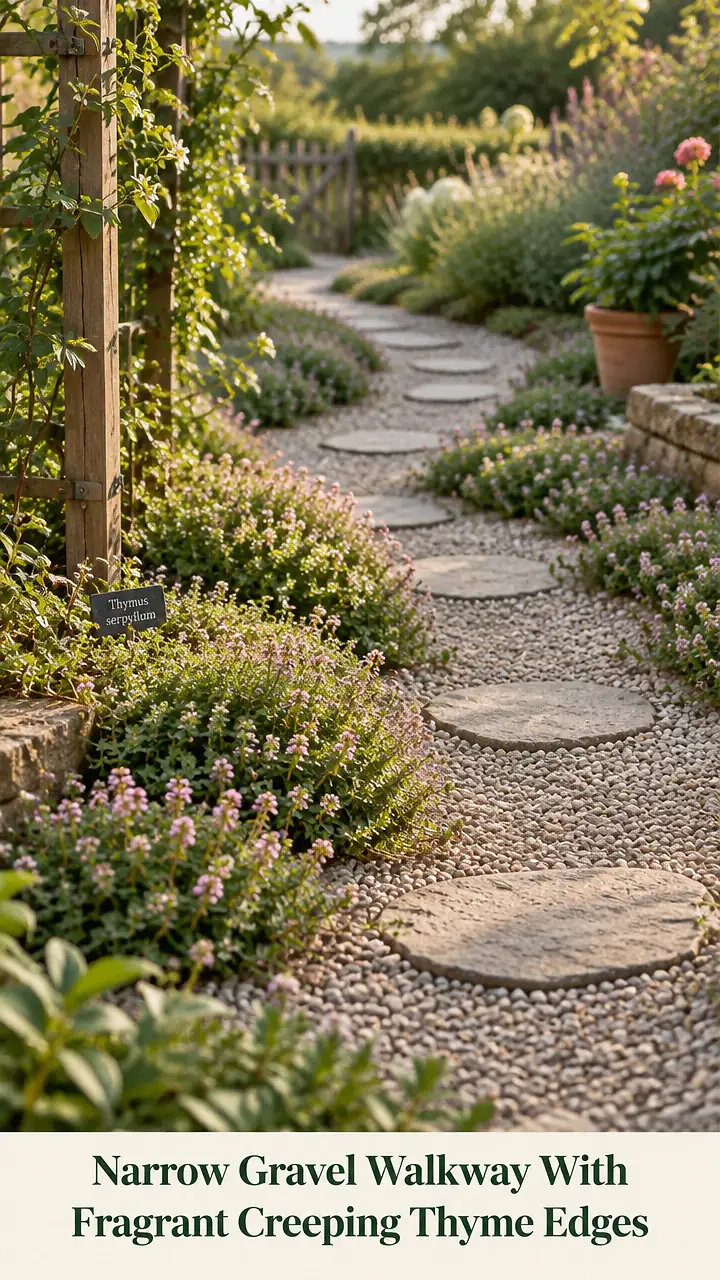
Overview
A plain garden passage becomes more appealing when bordered with low, fragrant plants. Picture pale gravel winding between flower beds, with tiny pink thyme blossoms spilling gently over the edges. Small natural stones provide definition without making the walkway feel formal. This design works well in sunny, well-drained gardens where a narrow connection is needed between a patio, vegetable patch, or seating area.
Materials & Plants
- Crushed gravel or compactable pathway aggregate
- Metal or stone landscape edging
- Creeping thyme for suitable climates
- Flat stepping stones if desired
- Permeable landscape fabric where appropriate
- Rake, tamper, and hand trowel
How to Create It
- Mark a walkway wide enough for comfortable access, preferably around three feet.
- Excavate shallowly and install a compacted, well-draining pathway base.
- Add edging to prevent gravel from spreading into planting areas.
- Plant creeping thyme along the borders, allowing room for mature growth.
- Water new plants until established and remove weeds before they spread.
Tiered Strawberry Planters For A Sunny Corner
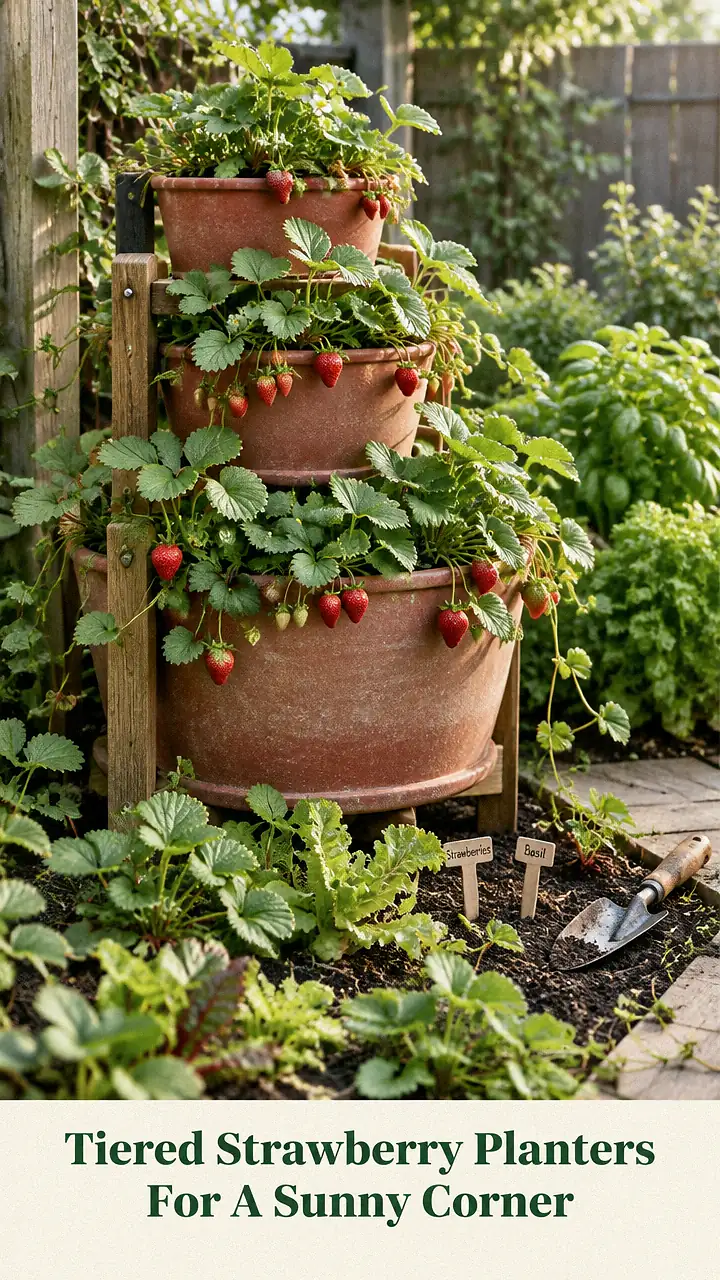
Overview
A tiered strawberry garden transforms a small patch of ground into a charming edible display. Imagine three progressively smaller wooden planting boxes stacked securely, each level overflowing with dark green leaves, white blossoms, and bright red strawberries. The compact structure creates vertical interest while making fruit easier to inspect. It works particularly well beside sunny patios and in small suburban backyards.
Materials & Plants
- Stackable wooden planter boxes
- Strawberry plants suited to your climate
- Fertile, well-draining container mix
- Straw or clean pine needles
- Landscape screws or structural connectors
- Small watering can or drip irrigation
How to Create It
- Build or purchase stable stackable planters with adequate drainage.
- Arrange tiers so every planting level receives sufficient sunlight.
- Fill each box with container mix and plant strawberries without burying their crowns.
- Add a light layer of clean straw around the plants.
- Water evenly and remove overgrown runners when necessary.
Modern Drought-Tolerant Garden With Grasses And Boulders
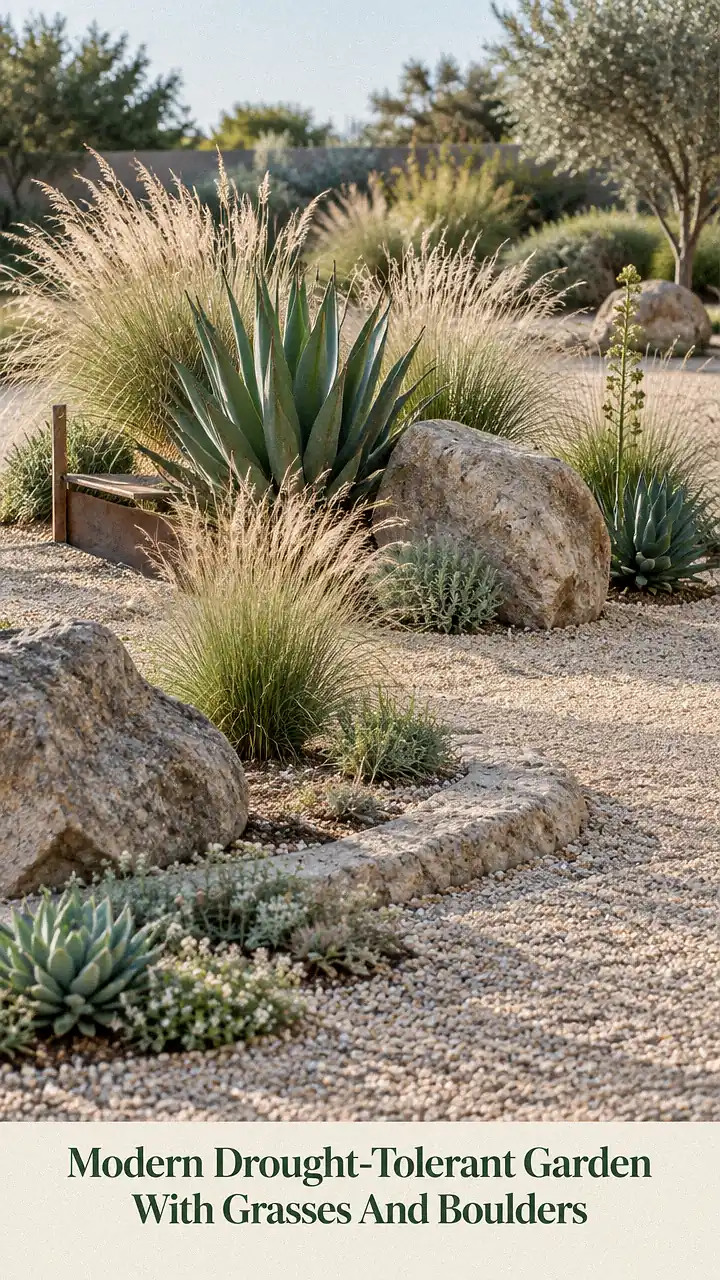
Overview
For a contemporary garden with a relaxed natural feel, combine sculptural grasses with carefully placed rocks and open gravel surfaces. Picture soft blue-green foliage, upright grass plumes, and rounded sandstone boulders against a simple wooden fence. The restrained plant palette creates a clean, architectural landscape without appearing empty. This approach suits sunny front yards and suburban gardens with well-drained soil.
Materials & Plants
- Noninvasive ornamental grasses appropriate to the region
- Drought-tolerant flowering perennials
- Decorative boulders and gravel
- Landscape edging
- Drip irrigation supplies
- Spade and wheelbarrow
How to Create It
- Select plants suited to local rainfall, winter temperatures, and soil drainage.
- Arrange several boulders in natural-looking groups before planting.
- Position ornamental grasses in repeating clusters, allowing mature spreading room.
- Fill smaller gaps with drought-tolerant perennials.
- Install efficient irrigation for establishment and remove dead foliage seasonally.
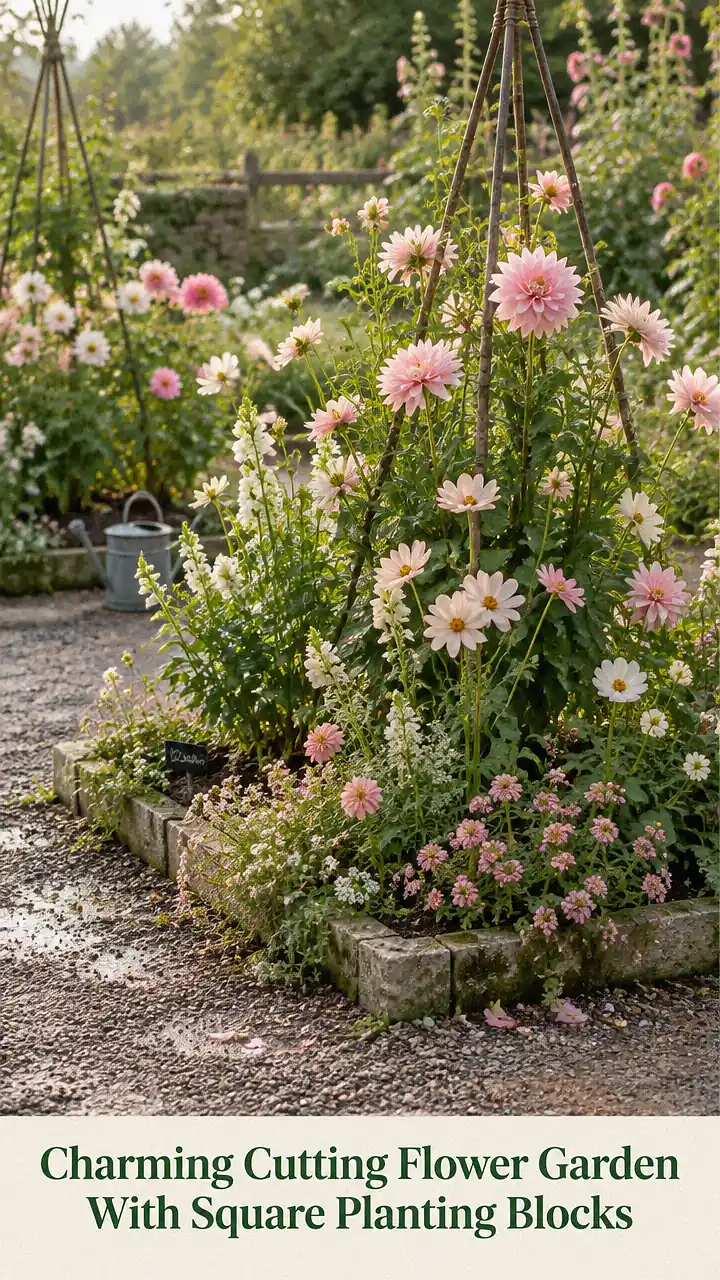
Charming Cutting Flower Garden With Square Planting Blocks
Overview
A cutting garden can be both practical and decorative when flowers are grown in clearly defined blocks. Imagine neat rectangular beds filled with coral zinnias, pastel snapdragons, white cosmos, and sunny yellow blooms. Narrow stepping paths separate the flower groups, giving the area the appearance of a miniature flower farm. This design fits sunny backyards and provides fresh stems for homemade arrangements.
Materials & Plants
- Zinnia, cosmos, and snapdragon seeds or transplants
- Seasonal cut flowers suited to local conditions
- Compost-enriched garden soil
- Wooden stakes and plant support netting
- Mulch for pathways
- Clean garden snips
How to Create It
- Divide a sunny planting area into accessible rectangular blocks.
- Improve the soil and arrange flowers by mature height and spacing.
- Sow or transplant varieties at their appropriate seasonal planting times.
- Support taller stems before they become heavy with flowers.
- Cut blooms regularly, water at soil level, and remove unhealthy foliage.
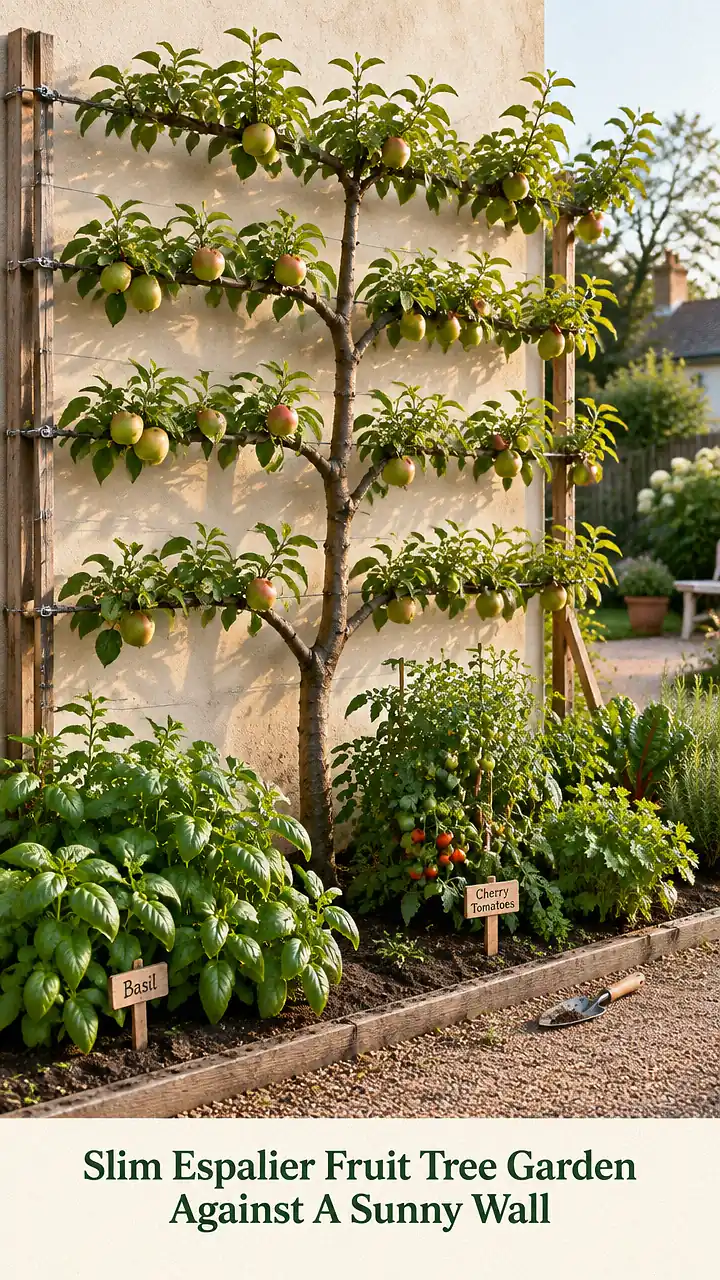
Slim Espalier Fruit Tree Garden Against A Sunny Wall
Overview
Training a fruit tree into a flat shape offers a clever way to enjoy homegrown fruit without a spreading canopy. Picture a carefully pruned apple tree with horizontal branches stretching along slender support wires against a warm brick wall. Spring blossoms and autumn fruit add seasonal beauty. This technique works best in sunny gardens with sufficient room for regular training and pruning.
Materials & Plants
- Young apple tree on a suitable dwarfing rootstock
- Wall-mounted support wires and spacers
- Soft plant ties
- Quality garden soil and compost
- Pruning shears
- Organic mulch
How to Create It
- Choose an apple variety compatible with your winter climate and local pollination conditions.
- Install sturdy support wires with enough clearance between the tree and wall.
- Plant the tree at its correct depth, keeping the graft union above the soil.
- Select and tie young branches into a horizontal training pattern.
- Prune at appropriate seasonal times and water regularly during establishment.
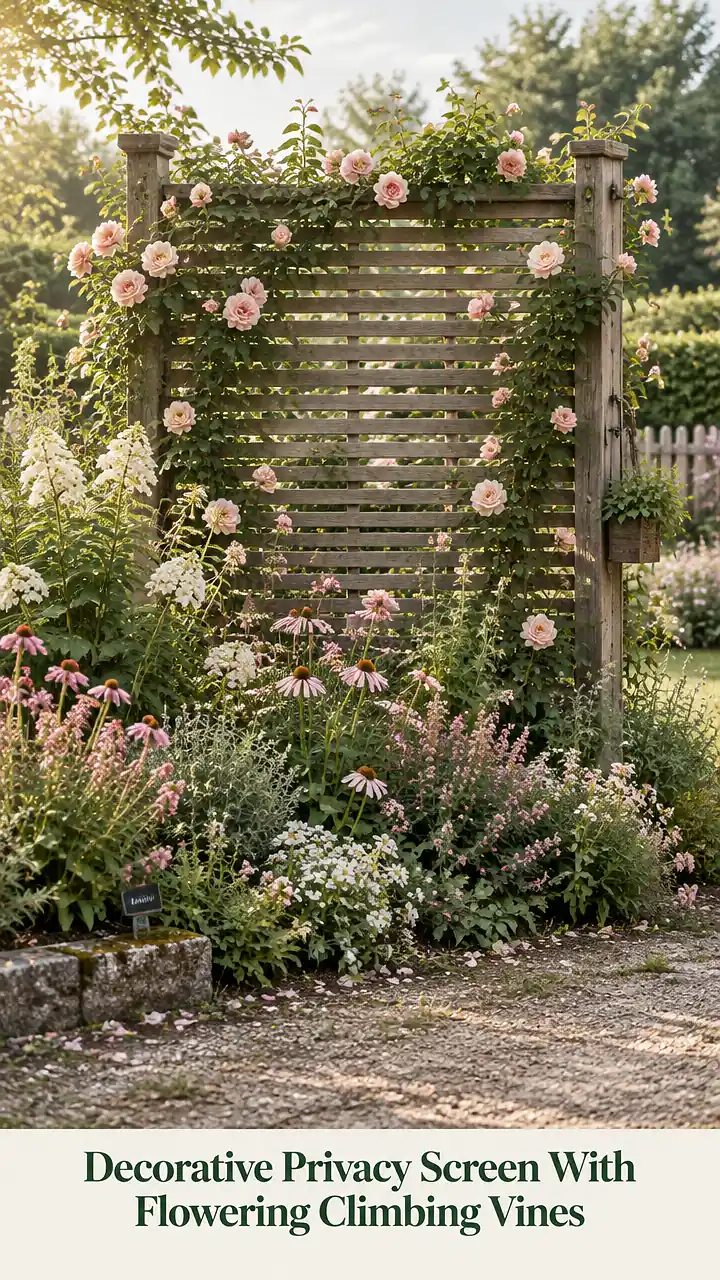
Decorative Privacy Screen With Flowering Climbing Vines
Overview
A flowering trellis offers privacy without the heavy appearance of a solid fence. Imagine a natural wooden lattice covered with flowering vines, framed by terracotta pots and a compact garden bench. The climbing greenery creates a gentle visual screen while keeping the space airy and welcoming. This design is perfect for small patios, townhouse gardens, and outdoor seating areas overlooked by neighbors.
Materials & Plants
- Freestanding wooden or metal trellis panels
- Clematis in suitable climates or annual climbing flowers
- Large planters with drainage
- Strong trellis anchors
- Well-draining potting mix
- Garden twine and pruning shears
How to Create It
- Choose a trellis location that provides screening without blocking essential access.
- Secure the structure against wind using appropriate ground or wall anchors.
- Plant compatible climbing varieties in spacious containers or prepared ground.
- Guide new vines through the lattice using soft ties.
- Prune according to species and keep growth away from nearby gutters.
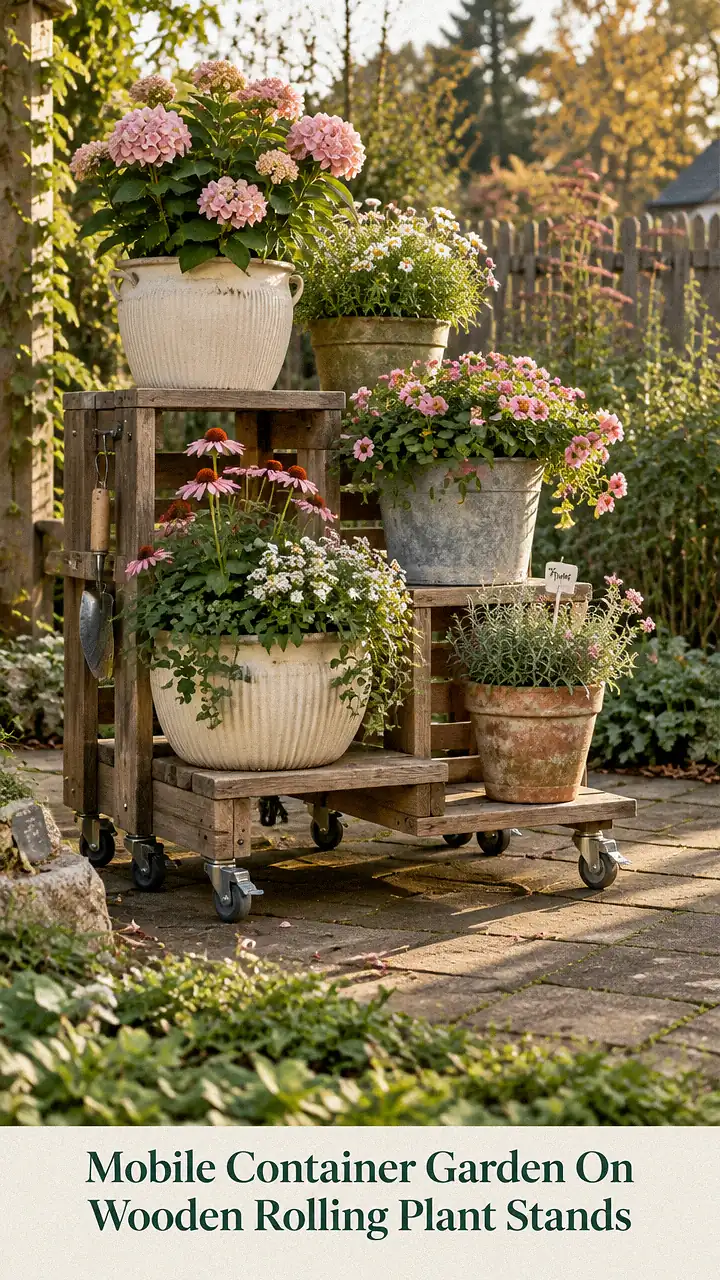
Mobile Container Garden On Wooden Rolling Plant Stands
Overview
A movable garden lets you rearrange plants as sunlight, weather, and entertaining needs change. Picture oversized clay-colored containers resting on low wooden rolling platforms, filled with compact peppers, rosemary, marigolds, and ornamental foliage. Their varied heights create an informal courtyard display that can be repositioned easily. This practical solution is ideal for paved patios and small urban gardens with changing light conditions.
Materials & Plants
- Weather-resistant rolling plant stands with locking wheels
- Lightweight resin or plastic planters
- Compact peppers, rosemary, and marigolds
- Quality potting mix
- Slow-release fertilizer
- Plant saucers where needed
How to Create It
- Select sturdy rolling stands rated for the full weight of watered containers.
- Fill drainage-equipped pots with lightweight potting mix.
- Plant varieties with similar light requirements together.
- Arrange containers in staggered heights and lock wheels after positioning.
- Move plants when necessary and check soil moisture regularly.
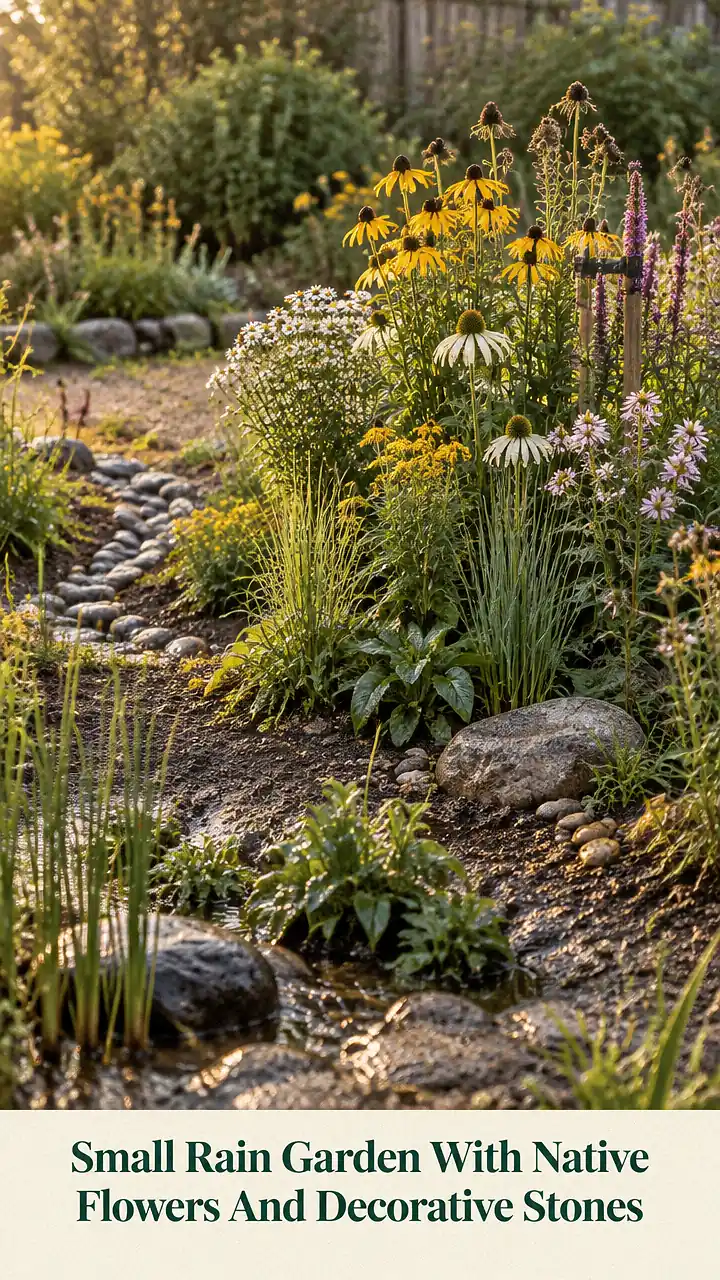
Small Rain Garden With Native Flowers And Decorative Stones
Overview
A shallow rain garden can transform a naturally damp area into a planted landscape feature. Imagine a gently depressed garden bed filled with native sedges, flowering perennials, and smooth river stones that mark the water’s entrance. During rainfall, runoff briefly collects before soaking into the ground. This design suits appropriate low areas of residential yards where soil infiltration is adequate.
Materials & Plants
- Native moisture-tolerant perennials and sedges
- Locally suitable rain garden soil amendments
- Rounded river stones
- Shovel and garden rake
- Mulch that resists floating
- Optional downspout extension
How to Create It
- Check infiltration and drainage conditions, and locate underground utilities before excavating.
- Choose a suitable site safely away from foundations and septic systems.
- Create a shallow, gently sloping basin with a safe overflow route.
- Plant species that tolerate both temporary wetness and dry periods.
- Mulch, water during establishment, and clear sediment from runoff entry points.
Cottage-Style Garden Corner With Reused Wooden Crates

Overview
Stacked wooden crates can create a charming cottage-style planting display without expensive landscaping. Imagine weathered timber boxes arranged at different heights, overflowing with lavender-colored flowers, compact daisies, and trailing greenery. A vintage watering can and small gravel base complete the rustic atmosphere. This garden feature fits a sunny porch, courtyard corner, or narrow strip beside a garden shed.
Materials & Plants
- Sturdy untreated wooden crates
- Container liners with drainage openings
- Compact daisies, alyssum, and trailing annuals
- Lightweight potting mix
- Exterior screws and supporting blocks
- Gravel and rustic garden accessories
How to Create It
- Inspect crates for rot, sharp edges, or questionable chemical treatments.
- Secure crates into a stable arrangement, avoiding excessively tall stacks.
- Line each planting space while preserving drainage.
- Fill with potting mix and arrange flowers by height and trailing habit.
- Water regularly and replace weather-damaged timber when necessary.
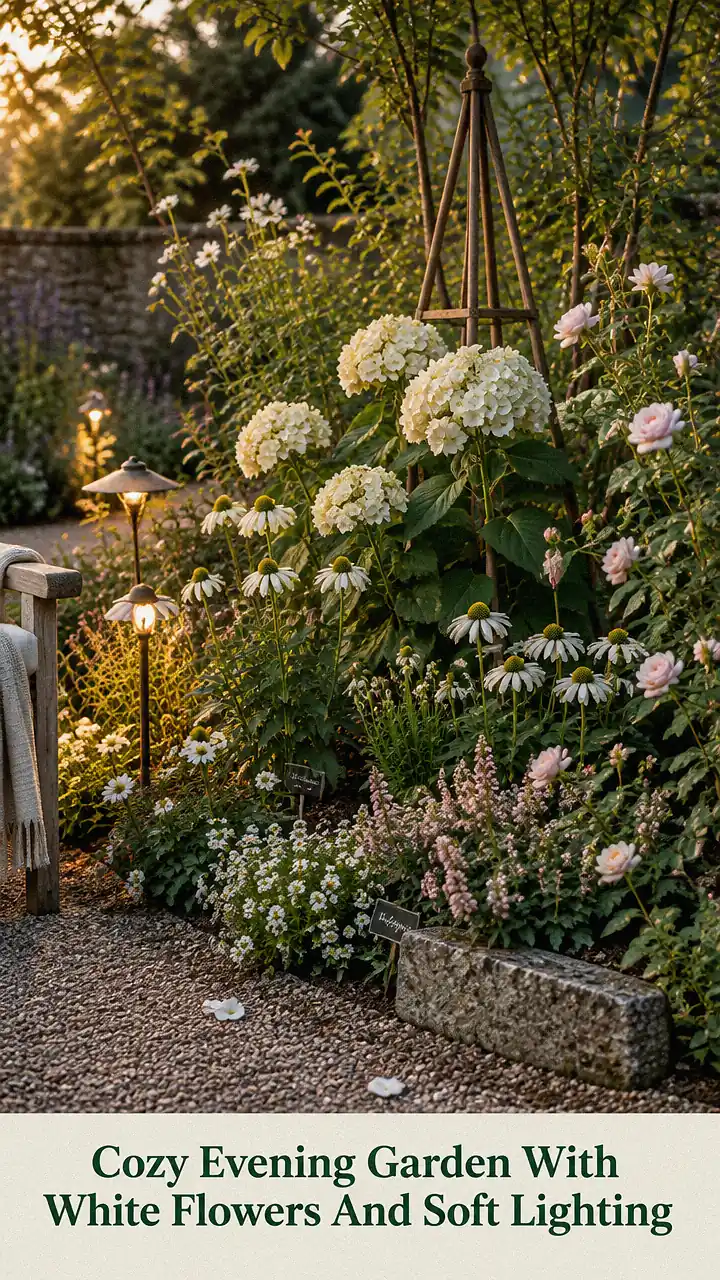
Cozy Evening Garden With White Flowers And Soft Lighting
Overview
A small evening garden feels especially inviting when pale flowers reflect the fading daylight. Picture white begonias, silvery foliage, fragrant flowering plants, and warm solar lanterns surrounding a comfortable wooden chair. Smooth stepping stones lead into the space, while carefully positioned planters create a sense of enclosure. This tranquil arrangement works beautifully on patios, sheltered balconies, and quiet backyard corners.
Materials & Plants
- White begonias for partial shade
- White alyssum or nicotiana where growing conditions suit
- Silver-leaved dusty miller
- Large drainage-equipped containers
- Outdoor-rated solar lanterns
- Weather-resistant chair and stepping stones
How to Create It
- Select a comfortable garden corner and assess the amount of available sunlight.
- Choose white-flowering plants appropriate to those conditions.
- Arrange containers around a chair, leaving safe walking clearance.
- Add subtle solar lighting without directing bright light into nearby homes.
- Remove spent flowers, maintain even moisture, and adjust seasonal plantings.
Conclusion: Make Your Garden Smarter, One Idea At A Time
The most successful gardens aren’t necessarily the biggest or most elaborate. They’re the ones that make thoughtful use of available space while reflecting how their owners actually live.
These clever garden ideas show how much potential exists in ordinary outdoor areas. A narrow fence can support fresh herbs, a simple arch can produce climbing vegetables, and a forgotten shady corner can become a peaceful woodland retreat. Even practical features like raised beds, self-watering planters, and rain gardens can contribute to an attractive landscape.
Start by considering your available sunlight, local climate, soil conditions, budget, and the amount of maintenance you can realistically manage. Choose one project that solves a problem or brings something new to your garden, then build from there.
With the right combination of useful features, healthy plants, and personal touches, your garden can become a beautiful outdoor space that works just as well as it looks.