
A beautiful garden doesn’t always need colorful flower beds or complicated landscaping. Sometimes, the most inviting outdoor spaces are filled with soft, flowing grasses, natural textures, and simple pathways that make everything feel peaceful and connected.
The best grassy garden ideas combine greenery with interesting shapes, movement, and carefully chosen materials. From neatly trimmed lawns to feathery ornamental grasses dancing in the breeze, these designs can transform an ordinary backyard into a relaxing retreat.
Grasses are also surprisingly versatile. Some varieties create dramatic vertical accents, while others form gentle mounds, spill over containers, or provide a soft backdrop for flowering perennials. With the right plant selections, many grassy landscapes become relatively easy to maintain once established.
Whether you’re decorating a tiny front yard, refreshing a backyard, or designing a modern patio, these 17 grassy garden ideas offer practical inspiration for creating an attractive outdoor space that suits your home, climate, and budget.
Beautiful Grassy Garden Ideas to Transform Your Outdoor Space
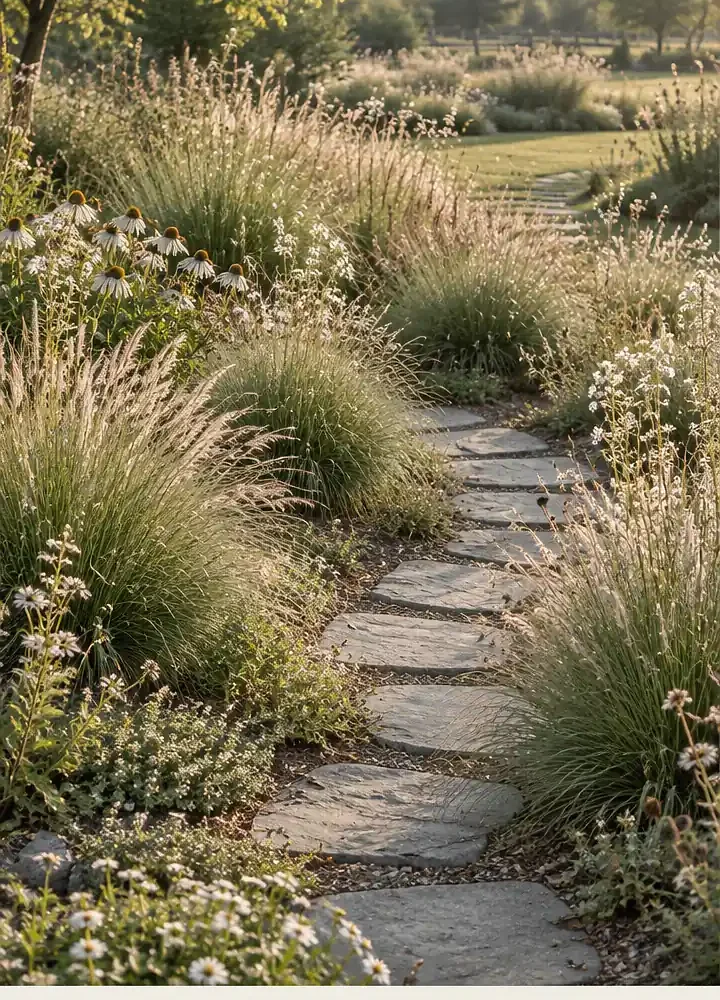
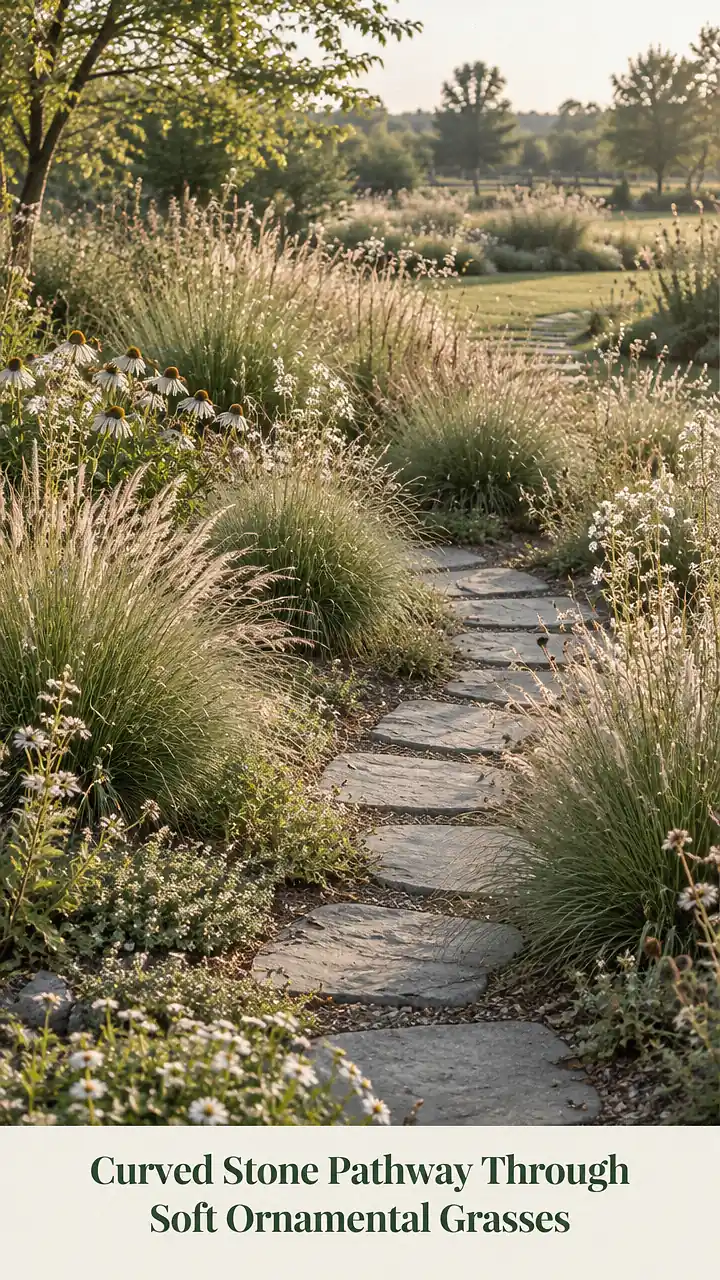
Curved Stone Pathway Through Soft Ornamental Grasses
Overview
A gently winding stone pathway surrounded by flowing ornamental grasses creates a natural, welcoming garden. Soft green foliage, golden seed heads, and scattered flowering perennials frame the walkway without making it feel crowded. Irregular stepping stones introduce rustic character, while the surrounding grasses create movement and texture. This design works especially well in sunny backyards and medium-sized front gardens.
Materials & Plants
- Natural flagstones or affordable concrete stepping stones
- Prairie dropseed and little bluestem
- Purple coneflowers or black-eyed Susans
- Crushed gravel or compacted stone base
- Compost, mulch, and a garden spade
How to Create It
- Mark a gently curved pathway using a garden hose, allowing approximately 30–36 inches for comfortable walking.
- Remove weeds and level the pathway area, adding a compacted base where needed to stabilize the stones.
- Position stepping stones with comfortable walking gaps, keeping their surfaces level and secure.
- Plant grasses in loose clusters along both sides, leaving enough room for their mature width.
- Add flowering perennials between the grasses, mulch exposed soil, and water regularly during establishment.
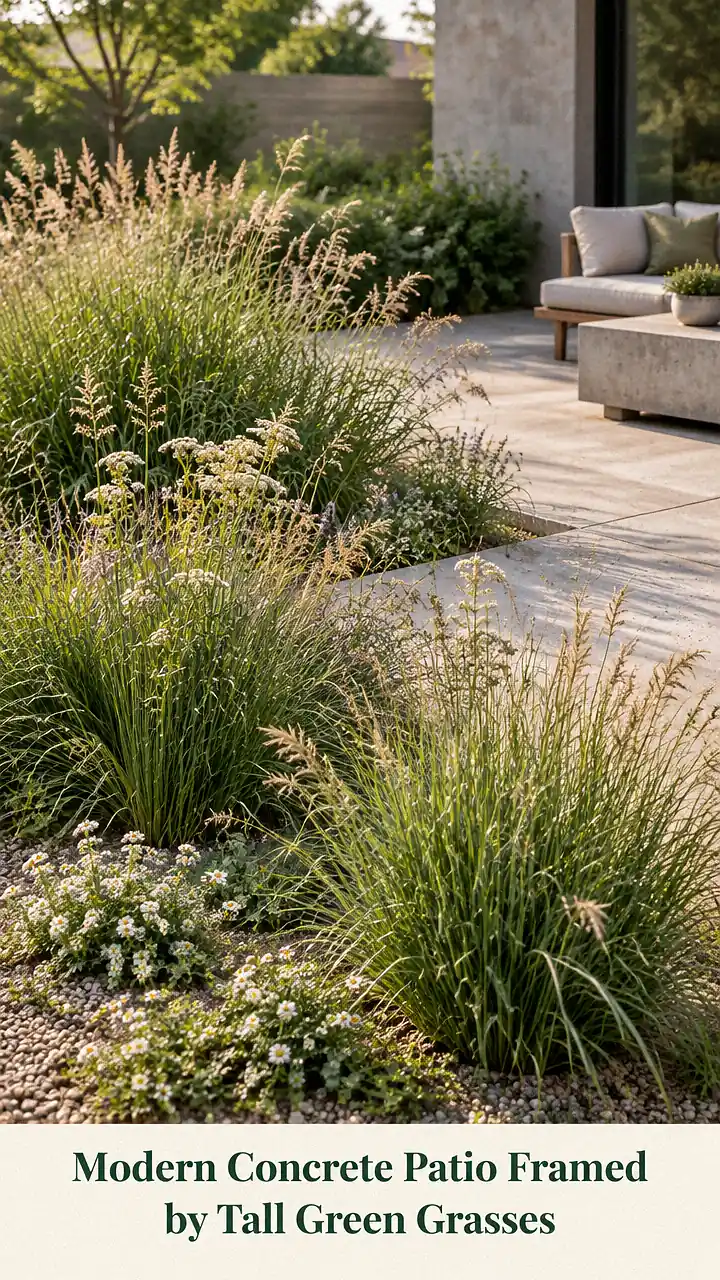
Modern Concrete Patio Framed by Tall Green Grasses
Overview
Tall, upright ornamental grasses bring softness to a contemporary patio without overwhelming its clean architectural lines. Large concrete pavers form a geometric seating area, while narrow planting beds filled with vertical green grasses create an attractive natural border. Their delicate flower heads contrast beautifully with smooth gray surfaces and minimalist furniture. This design is ideal for modern backyards and urban courtyards.
Materials & Plants
- Large concrete patio pavers
- Feather reed grass such as ‘Karl Foerster’
- Compact lavender or salvia for sunny borders
- Dark decorative gravel
- Steel or aluminum landscape edging
- Simple outdoor furniture
How to Create It
- Select a sunny location with enough space for a small seating area and planting beds.
- Install pavers over a properly compacted base, creating a level surface with suitable drainage.
- Arrange feather reed grasses approximately 24–30 inches apart, adjusting for their mature spread.
- Add compact flowering plants near the front and finish the beds with gravel mulch.
- Water new plantings consistently, then trim dormant grass stems in late winter or early spring.
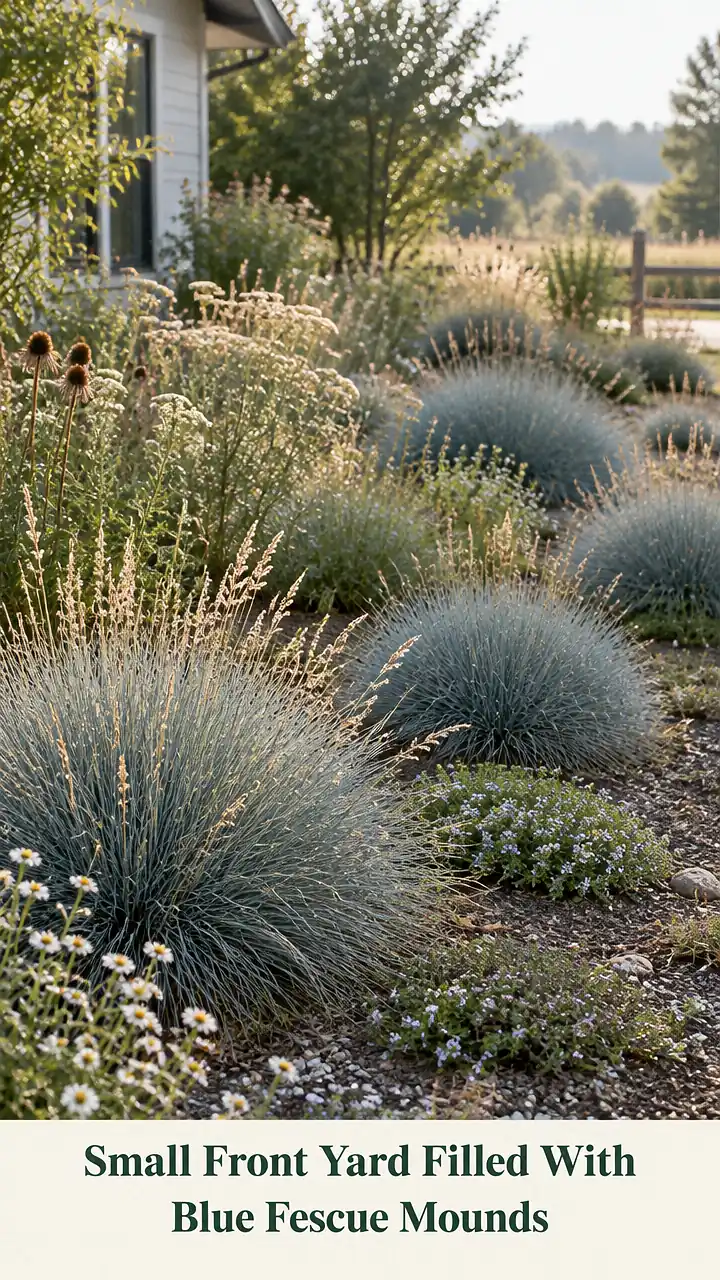
Small Front Yard Filled With Blue Fescue Mounds
Overview
Compact blue fescue grasses create a distinctive front garden with rounded shapes and cool, silvery-blue foliage. Their tidy mounds look especially attractive against pale gravel, natural stones, and simple borders. Repeated clusters establish an organized appearance without requiring elaborate landscaping. This approach suits small sunny front yards in cooler or moderate climates where blue fescue performs well.
Materials & Plants
- Blue fescue, such as ‘Elijah Blue’
- Pale gray gravel or small river stones
- Low-growing sedum
- Natural stone edging
- Compost and basic gardening tools
How to Create It
- Choose a location receiving plenty of sunlight with soil that drains quickly after rainfall.
- Remove existing weeds and loosen compacted soil, improving drainage where necessary.
- Arrange blue fescue plants in repeating groups, allowing roughly 12–18 inches between smaller varieties.
- Fill spaces with low-growing sedum and apply a thin gravel mulch without burying plant crowns.
- Remove dead foliage as needed and divide aging clumps when their centers become unattractive.
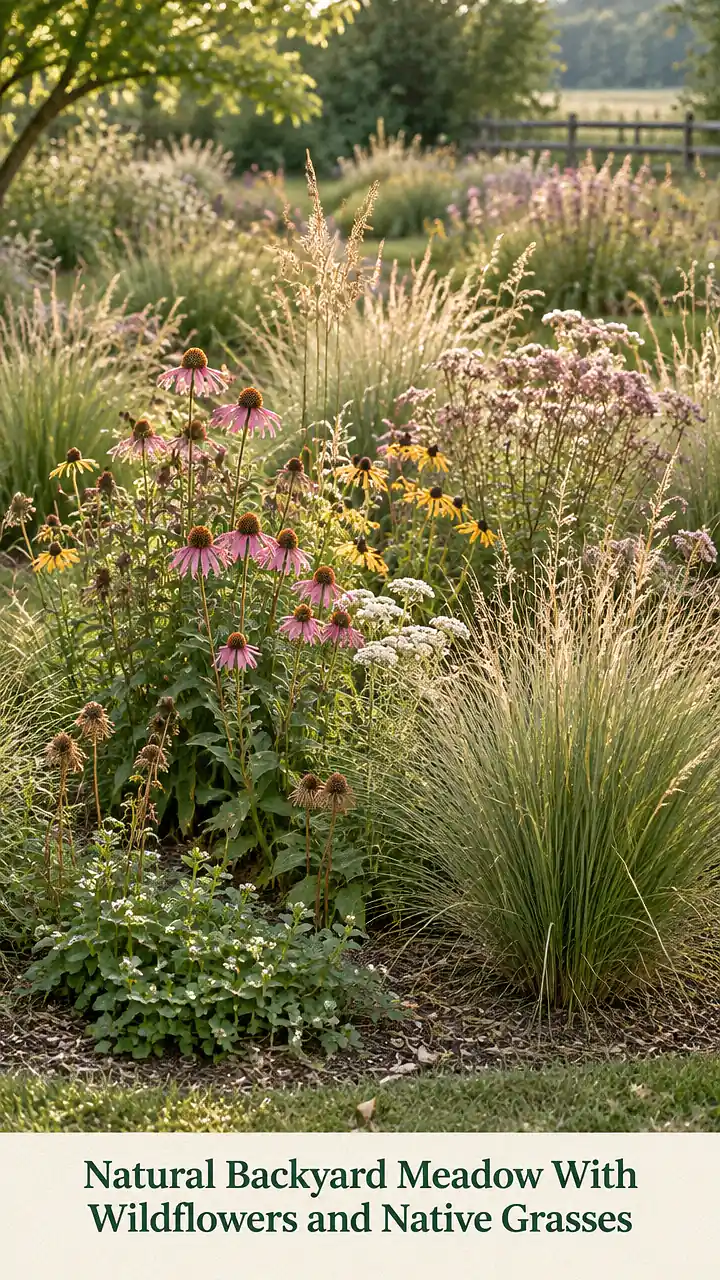
Natural Backyard Meadow With Wildflowers and Native Grasses
Overview
A miniature meadow brings an informal, countryside atmosphere to an ordinary backyard. Native grasses rise among colorful wildflowers, creating layers of green, copper, yellow, and purple throughout the growing season. A mowed path through the planting keeps the landscape accessible and intentional. This design is particularly appealing for sunny yards with space for a naturalistic garden.
Materials & Plants
- Regionally native little bluestem or sideoats grama
- Native coneflowers, coreopsis, or black-eyed Susans
- Locally appropriate wildflower seed or nursery plants
- Garden rake and hand weeder
- Simple pathway edging or a lawn mower
How to Create It
- Choose a sunny section of the yard and remove existing turf and persistent weeds thoroughly.
- Select native grasses and flowers suited to your region, soil, and available moisture.
- Sow seeds at locally recommended rates or arrange nursery plants in informal drifts.
- Establish a narrow mowed pathway through the meadow to create structure and easy access.
- Manage weeds during establishment and follow regional meadow-maintenance recommendations, including seasonal cutting when appropriate.
Shaded Garden Corner With Cascading Japanese Forest Grass

Overview
Japanese forest grass transforms a quiet, shaded corner into a lush garden retreat. Its arching leaves form soft, cascading mounds, particularly beautiful in golden or green-striped varieties. Ferns, hostas, and weathered stones add contrasting foliage and natural character. The resulting garden feels cool, peaceful, and layered, making it perfect beneath light tree canopies or beside shaded patios.
Materials & Plants
- Japanese forest grass, such as ‘Aureola’
- Shade-tolerant hostas and ferns
- Smooth river rocks or natural boulders
- Shredded bark mulch
- Compost or leaf mold
- Small garden bench, if space allows
How to Create It
- Select a partially shaded position protected from harsh afternoon sun, especially in warmer climates.
- Loosen the soil and incorporate organic matter to improve moisture retention and soil structure.
- Position Japanese forest grass in staggered groups, generally allowing 18–24 inches between plants.
- Add hostas and ferns behind or beside the grasses, then arrange stones between the foliage.
- Mulch lightly and keep the soil evenly moist while avoiding prolonged waterlogging.
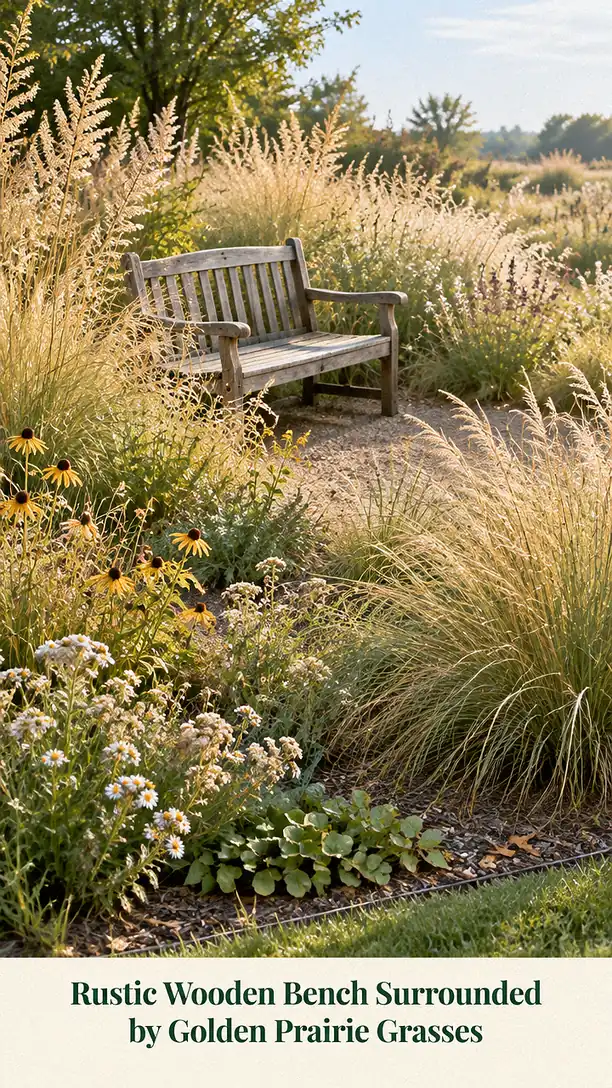
Rustic Wooden Bench Surrounded by Golden Prairie Grasses
Overview
A weathered wooden bench surrounded by golden prairie grasses creates an inviting place to enjoy the garden. Rounded clumps of prairie dropseed, seasonal seed heads, and scattered wildflowers bring a relaxed, natural appearance. A simple gravel foundation keeps the seating area usable after rain. This design works beautifully in sunny backyard corners and informal country-style gardens.
Materials & Plants
- Wooden outdoor bench
- Prairie dropseed grass
- Purple coneflowers and autumn-blooming asters
- Pea gravel or compacted crushed stone
- Landscape edging
- Organic mulch
How to Create It
- Choose a sunny, relatively level backyard corner with an appealing view.
- Prepare a small gravel seating area, approximately 5 by 7 feet or larger depending on the bench.
- Place prairie dropseed around the seating area, allowing approximately 2–3 feet for mature clumps.
- Add colorful perennials behind and between the grasses without blocking access to the bench.
- Mulch planting spaces, water during establishment, and leave attractive seed heads standing through winter if desired.
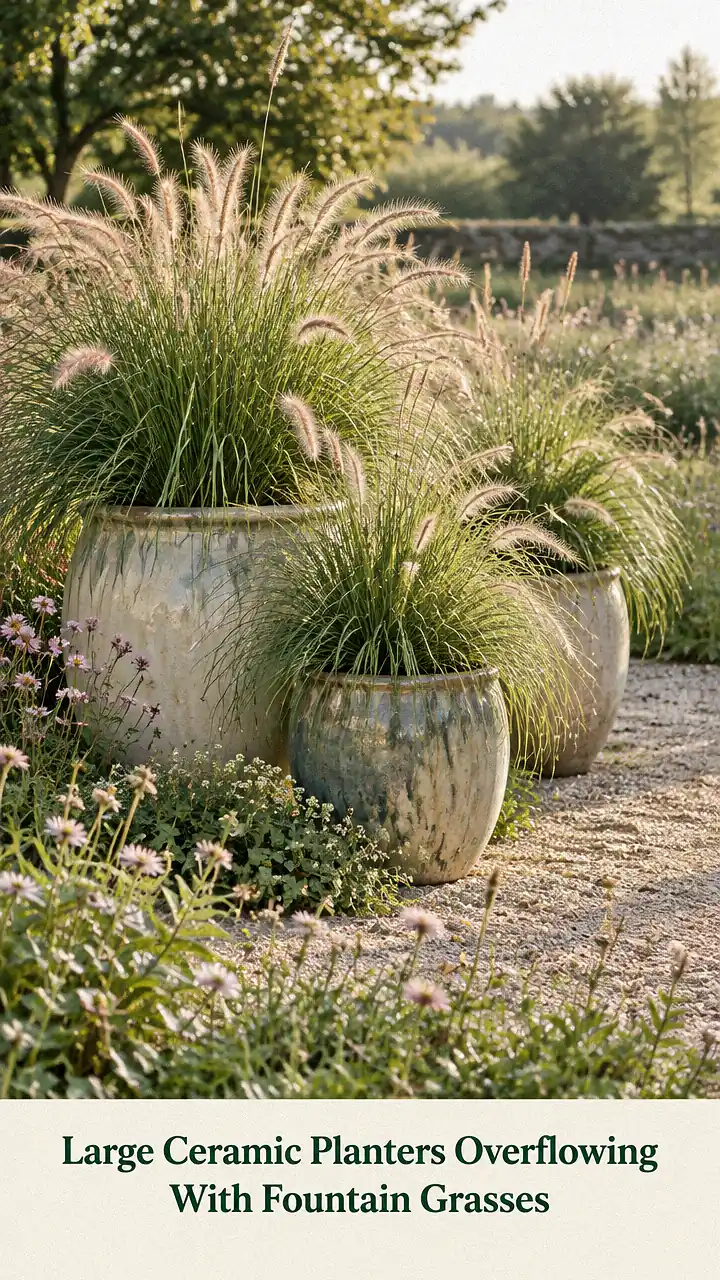
Large Ceramic Planters Overflowing With Fountain Grasses
Overview
A collection of oversized ceramic planters filled with arching fountain grasses adds instant elegance to an outdoor living area. Soft, cascading foliage and fluffy flower spikes spill gracefully over rounded containers. Combining cream, charcoal, and terracotta pots creates subtle visual variety. This container-based design is especially useful for patios, paved courtyards, balconies, and gardens without much planting space.
Materials & Plants
- Large ceramic or lightweight resin planters
- Compact, locally noninvasive fountain grass cultivars
- Quality outdoor potting mix
- Slow-release fertilizer, if needed
- Pot feet or planter stands
- Watering can
How to Create It
- Choose containers at least 16–20 inches wide for compact grasses, increasing the size for larger cultivars.
- Check that every container has drainage holes and choose grasses suitable for your climate.
- Fill planters with quality potting mix and position the grasses at their original growing depth.
- Arrange containers in groups of different heights beside seating areas, entrances, or patio corners.
- Check soil moisture frequently during hot weather and provide winter protection where container roots may freeze.
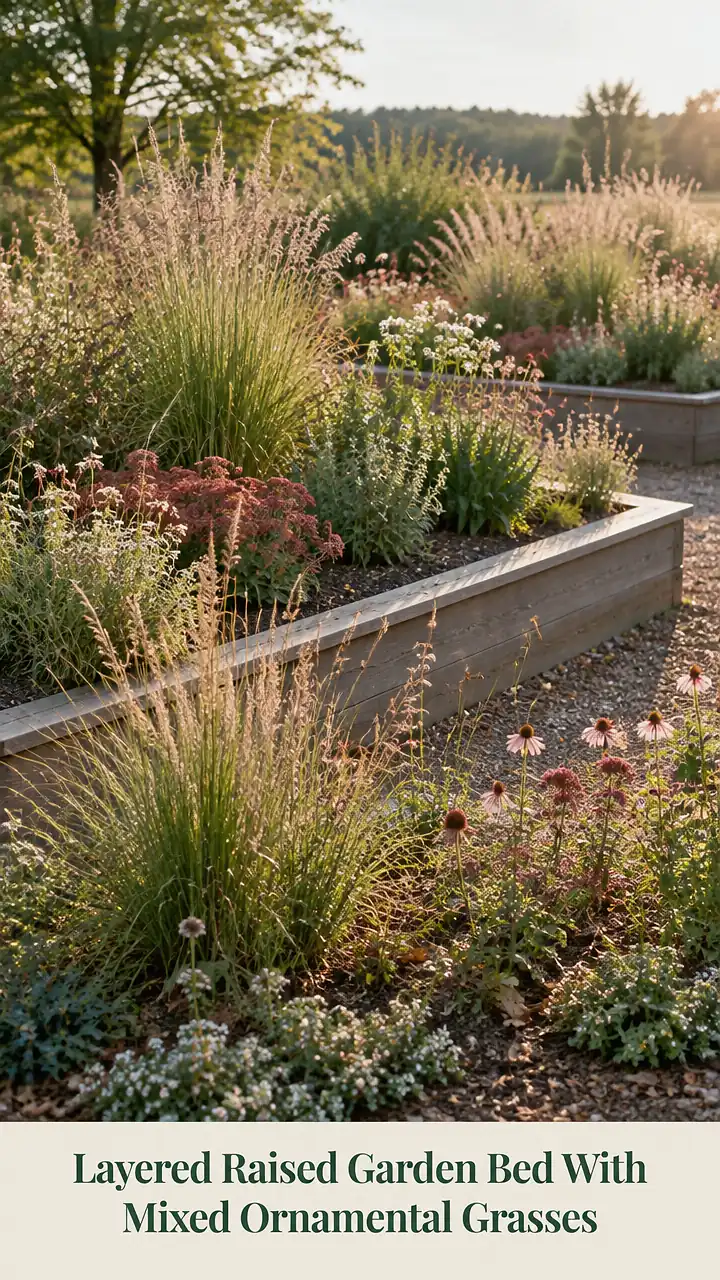
Layered Raised Garden Bed With Mixed Ornamental Grasses
Overview
A rectangular raised bed filled with ornamental grasses creates an eye-catching display of different heights and foliage textures. Upright green grasses form the backdrop, medium-sized clumps create the middle layer, and smaller grassy plants soften the edges. Timber construction adds warmth and definition. This idea is particularly effective in compact backyards or alongside patios where organized planting creates a polished appearance.
Materials & Plants
- Untreated, rot-resistant timber or raised-bed blocks
- Compact feather reed grass
- Prairie dropseed or dwarf switchgrass
- Low-growing sedges suited to the site
- Raised-bed soil mix
- Exterior wood screws and basic tools
How to Create It
- Build a raised bed approximately 3–4 feet wide, ensuring good drainage beneath the structure.
- Fill it with suitable garden soil amended with compost, avoiding overly rich growing conditions.
- Position taller grasses toward the back or center, depending on viewing direction.
- Place smaller clumping grasses near the front, giving each variety room to develop naturally.
- Add mulch and water thoroughly, then tidy dead foliage according to each grass’s seasonal growth cycle.
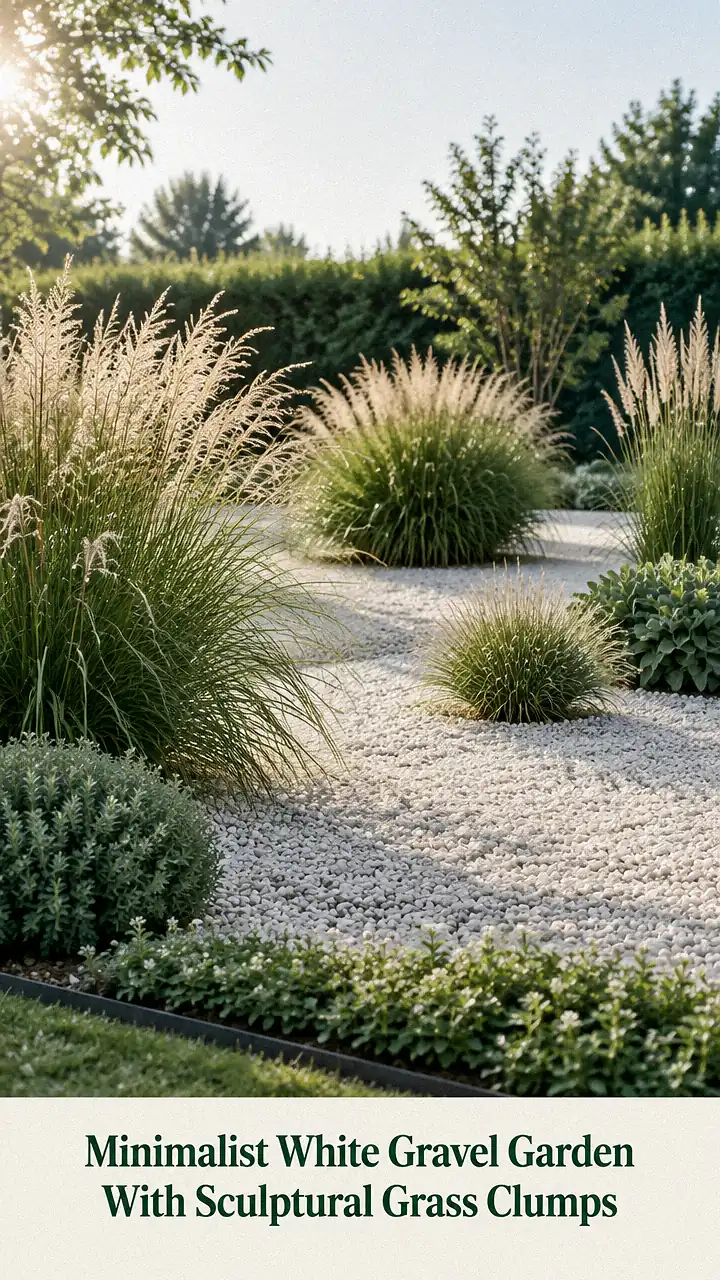
Minimalist White Gravel Garden With Sculptural Grass Clumps
Overview
A minimalist gravel garden combines simple materials with carefully positioned ornamental grasses. Pale gravel creates a clean background for sculptural green mounds, dark stones, and a few larger boulders. The design emphasizes open space rather than dense planting, producing a calm, contemporary atmosphere. It works particularly well in small sunny courtyards, narrow front gardens, and modern homes with geometric architecture.
Materials & Plants
- White or light gray decorative gravel
- Prairie dropseed or suitable compact moor grass
- Two or three natural landscape boulders
- Steel landscape edging
- Well-draining soil
- Garden rake and shovel
How to Create It
- Remove weeds and prepare a well-drained planting area, correcting any serious compaction.
- Position large stones asymmetrically, leaving generous open spaces between the main features.
- Plant ornamental grasses in small groups, choosing varieties suited to local sunlight and rainfall.
- Spread gravel over exposed soil while keeping it away from grass crowns.
- Rake the gravel occasionally, remove windblown debris, and monitor young plants during dry weather.
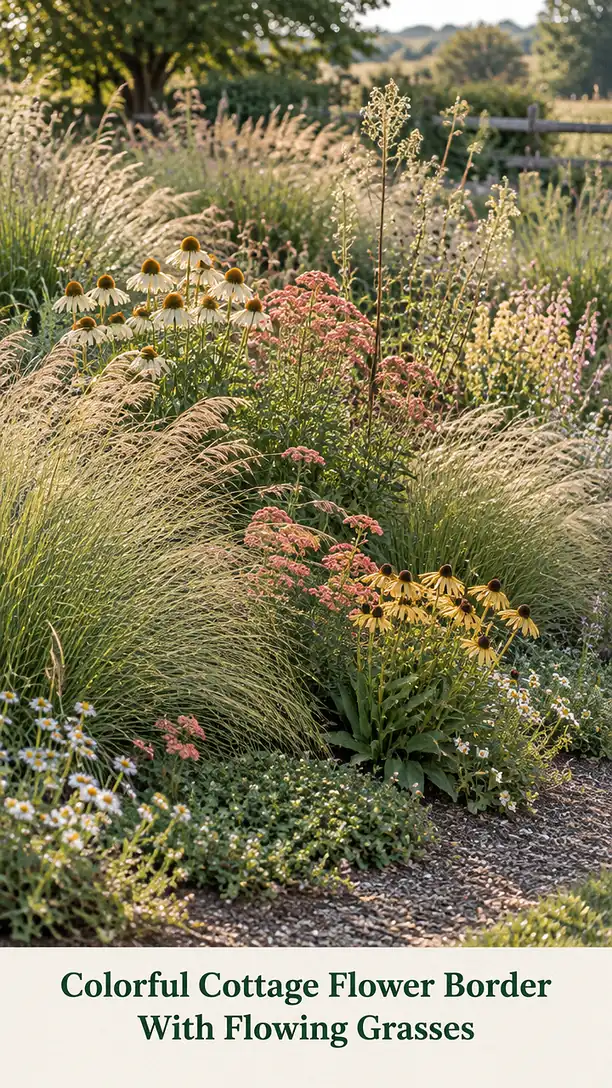
Colorful Cottage Flower Border With Flowing Grasses
Overview
A cottage-style flower border becomes even more charming when colorful blooms are mixed with airy ornamental grasses. Pink coneflowers, purple salvia, cheerful daisies, and soft green grass foliage create a relaxed combination of colors and textures. The grasses weave naturally between flowering plants instead of forming rigid rows. This design suits sunny front gardens, fence lines, and traditional backyards.
Materials & Plants
- Prairie dropseed or compact feather reed grass
- Purple coneflowers
- Black-eyed Susans
- Hardy salvia or other regionally adapted flowering perennials
- Compost and shredded bark mulch
- Garden trowel and pruning shears
How to Create It
- Prepare a sunny border approximately 3–5 feet deep, removing weeds and loosening the soil.
- Arrange the taller flowering plants and grasses toward the back while keeping shorter plants near the front.
- Repeat small clusters of grasses throughout the border to create a natural visual rhythm.
- Plant colorful perennials between the clumps, leaving adequate spacing for airflow and mature growth.
- Mulch the soil, water thoroughly, and remove spent flowers when appropriate to maintain a tidy appearance.
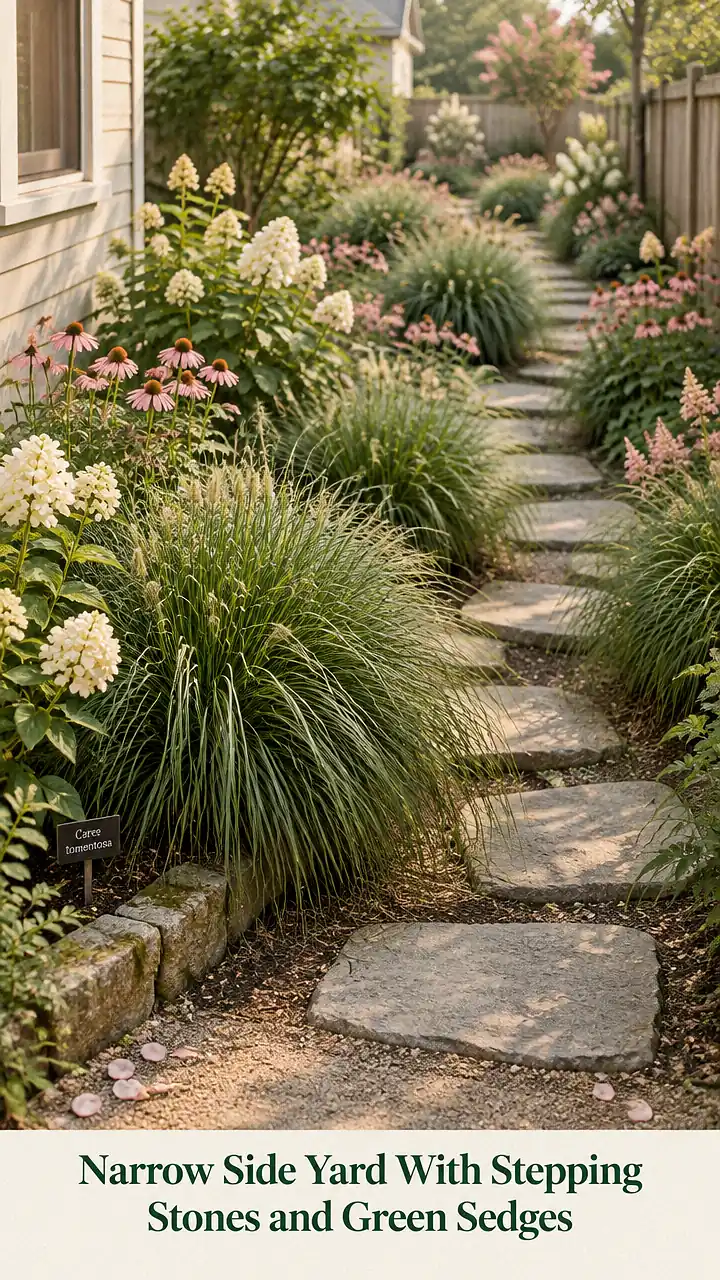
Narrow Side Yard With Stepping Stones and Green Sedges
Overview
A narrow side yard can become a beautiful garden passage with neat stepping stones and low-growing green sedges. Soft, arching foliage surrounds the pathway, creating a lush appearance without taking up too much space. The combination of green leaves, natural stones, and a simple fence creates an intimate garden atmosphere. It is particularly suitable for partially shaded spaces between houses.
Materials & Plants
- Shade-tolerant, clump-forming Carex species
- Rectangular or irregular stepping stones
- Fine gravel or compacted paver base
- Small shade-loving ferns
- Dark shredded bark mulch
- Garden edging
How to Create It
- Measure the side yard and plan a clear walkway, ideally at least 30 inches wide.
- Remove unwanted vegetation and install stable stepping stones over a properly prepared base.
- Select sedges suited to the site’s moisture conditions and plant them beside the walkway.
- Add small ferns in wider sections, keeping mature foliage clear of the walking surface.
- Apply mulch around the plants and maintain consistent moisture during establishment.
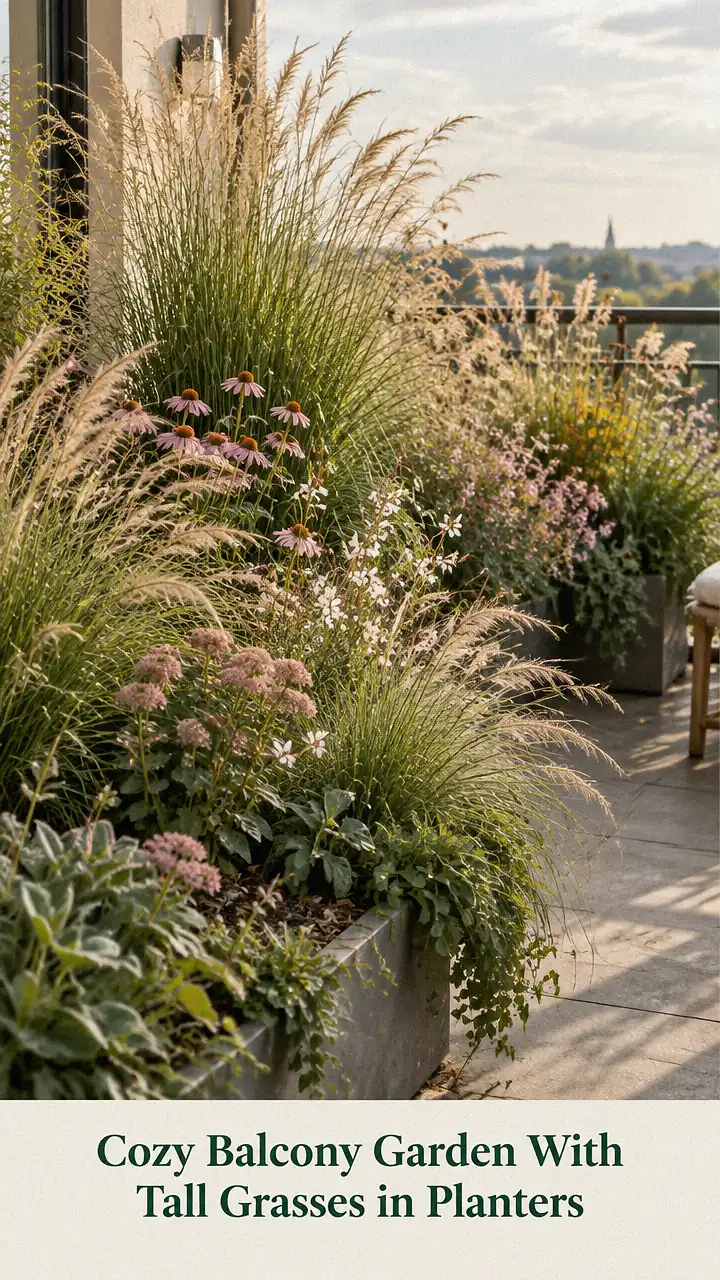
Cozy Balcony Garden With Tall Grasses in Planters
Overview
Tall grasses in attractive containers can turn a plain balcony into a leafy outdoor retreat. Slender foliage creates gentle movement, while carefully arranged planters introduce greenery at different heights. A small chair, outdoor rug, and warm neutral containers complete the inviting atmosphere. This design works best on balconies with sufficient light, safe weight capacity, and protection from excessive wind.
Materials & Plants
- Lightweight fiberglass or resin planters
- Compact upright ornamental grasses suited to the exposure
- Trailing thyme or other compatible container plants
- Outdoor potting mix
- Small bistro chair and table
- Waterproof plant saucers where appropriate
How to Create It
- Check the balcony’s permitted weight load, wind exposure, drainage requirements, and sunlight conditions.
- Select compact grasses that will remain manageable in containers rather than reaching excessive heights.
- Position larger planters along the balcony perimeter without blocking exits, railings, or required access.
- Add smaller pots and comfortable seating to create a layered arrangement.
- Water according to soil moisture, secure containers against wind, and divide or repot crowded grasses.
Neatly Trimmed Lawn Surrounded by Ornamental Grass Borders
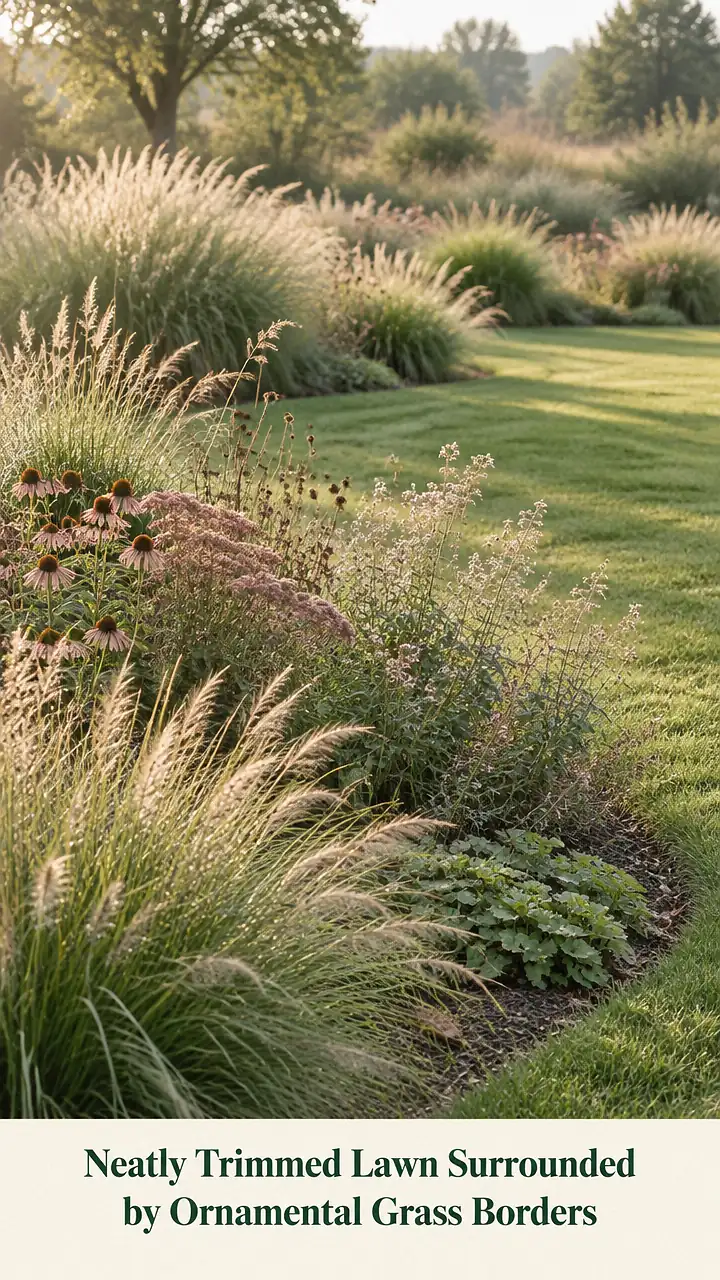
Overview
A fresh green lawn framed by ornamental grass borders combines a practical outdoor space with decorative planting. The short, even turf creates a clean central area for relaxing or playing, while taller grasses add softness around the perimeter. Flowering accents introduce seasonal color without interrupting the open lawn. This arrangement works especially well in family backyards with medium or large lawns.
Materials & Plants
- Climate-appropriate turfgrass seed or sod
- Compact switchgrass or feather reed grass
- Salvia or coneflowers
- Flexible lawn edging
- Compost and mulch
- Lawn mower and watering equipment
How to Create It
- Identify the area needed for lawn activities and reserve perimeter strips for ornamental planting.
- Prepare the soil and establish turf using grass species suited to your region and sunlight.
- Install lawn edging to keep planting beds separated from the turf.
- Plant ornamental grasses in repeated groups along the border, adding flowering perennials for contrast.
- Mow the lawn at the recommended height for its grass type and maintain the border plants seasonally.
Rain Garden With Moisture-Loving Sedges and Native Grasses
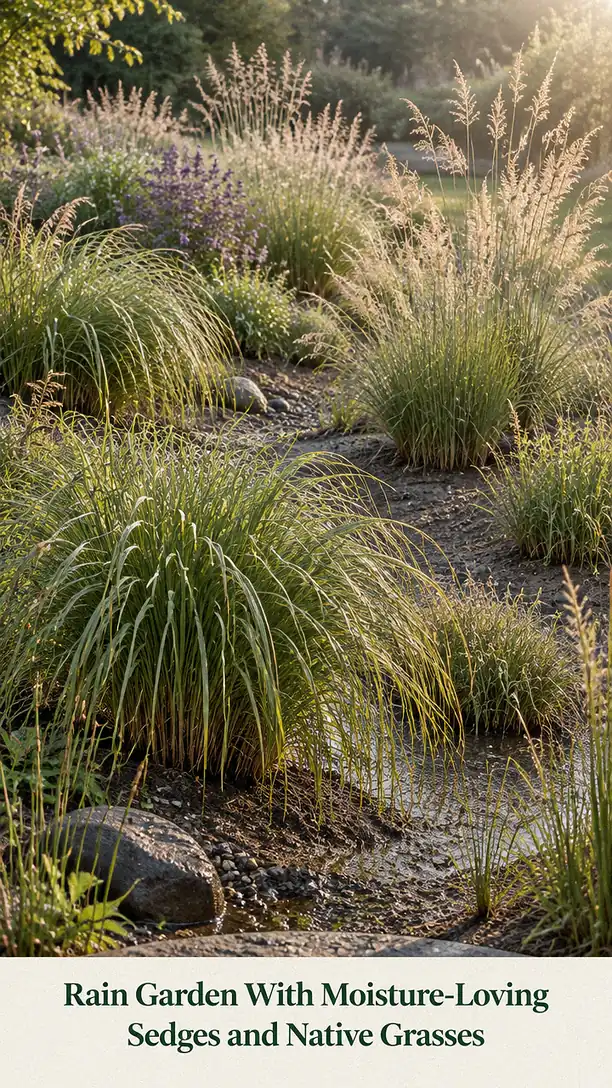
Overview
A rain garden transforms a naturally damp yard section into an attractive planting feature. Shallow slopes guide runoff toward an area filled with upright grasses, moisture-tolerant sedges, and colorful flowers. Natural stones help define the edges, while varied foliage creates a lush, layered appearance. This design works best where rainwater can collect temporarily and soak into the soil.
Materials & Plants
- Locally native moisture-tolerant sedges
- Switchgrass for suitable periodically moist areas
- Blue flag iris where regionally appropriate
- Native cardinal flower or other moisture-loving flowers
- River stones and compost
- Shovel, level, and measuring tape
How to Create It
- Select a location that receives runoff but is safely away from foundations, septic systems, and underground utilities.
- Test drainage and design a shallow depression where water can infiltrate, typically within 24–48 hours.
- Shape gently sloping edges and prepare the soil according to local rain-garden guidance.
- Place moisture-loving plants in the lowest sections and grasses tolerant of occasional saturation on the upper slopes.
- Mulch exposed soil, maintain clear water entry points, and inspect the garden after heavy rainfall.
Low-Mow Fescue Lawn With Natural Stone Pavers
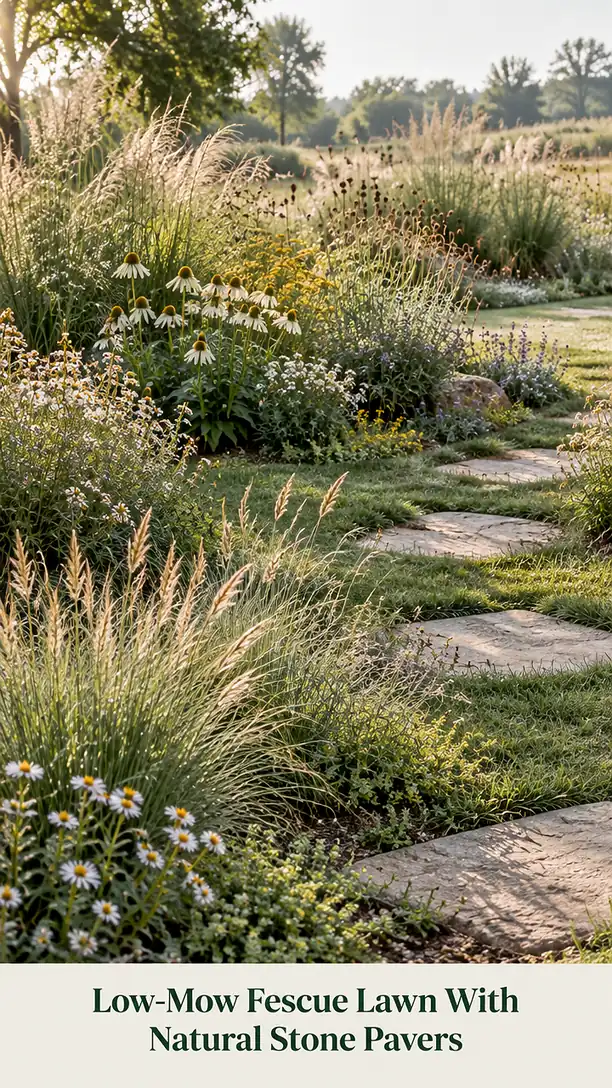
Overview
A relaxed lawn of fine fescue grass creates a softer alternative to traditional closely mowed turf. Its fine, flowing blades produce a natural carpet around widely spaced stone pavers. The garden feels informal but intentional, especially when surrounded by simple shrubs or flowering borders. This approach is well suited to lightly used yards in climates favorable to fine fescues.
Materials & Plants
- Regionally appropriate fine fescue seed blend
- Large flat stepping stones
- Low-growing border perennials
- Lawn rake
- Compost for soil improvement where needed
- Hose or sprinkler
How to Create It
- Choose an area with light foot traffic and growing conditions suitable for fine fescue.
- Remove existing weeds, grade the soil evenly, and incorporate amendments based on soil needs.
- Install stepping stones at comfortable walking intervals, keeping their tops level with the surrounding ground.
- Sow fine fescue at the recommended rate and keep the seedbed consistently moist during germination.
- Limit traffic while the lawn establishes and mow occasionally according to the chosen mix and desired appearance.
Drought-Tolerant Gravel Garden With Colorful Little Bluestem
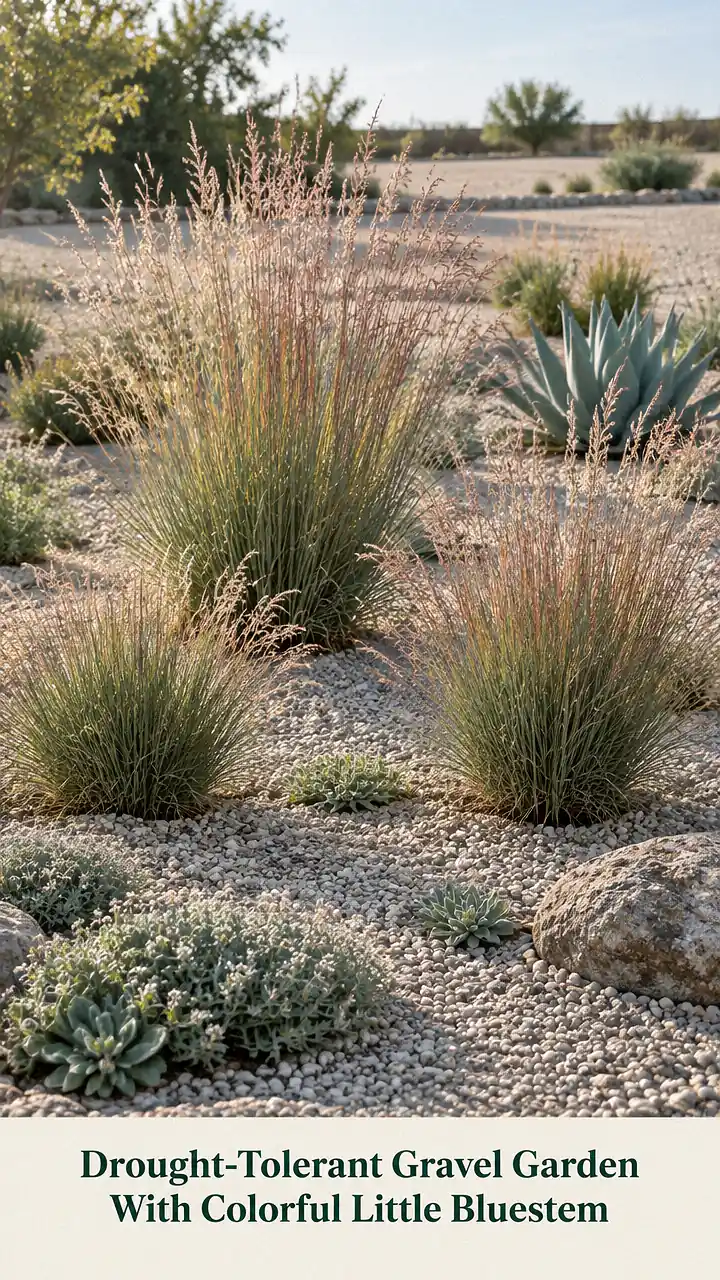
Overview
Little bluestem creates a striking display with blue-green summer foliage that often develops copper, orange, and reddish tones in fall. Planted among warm gravel, rugged stones, and drought-tolerant flowers, it gives the garden a natural prairie-inspired appearance. The combination feels open, sunny, and beautifully textured. This design suits well-drained front yards and dry garden borders in suitable climates.
Materials & Plants
- Little bluestem grass
- Yarrow and drought-tolerant native asters
- Decorative gravel or crushed stone
- Medium-sized natural rocks
- Metal landscape edging
- Shovel and garden gloves
How to Create It
- Choose a sunny area with well-draining soil and remove existing weeds.
- Arrange several natural stones to establish a simple, irregular landscape pattern.
- Plant little bluestem in repeating clusters, allowing approximately 18–24 inches or the cultivar’s recommended mature width.
- Add flowering perennials between the grass clumps and finish with gravel mulch.
- Water regularly until established, then reduce irrigation based on weather and plant needs.
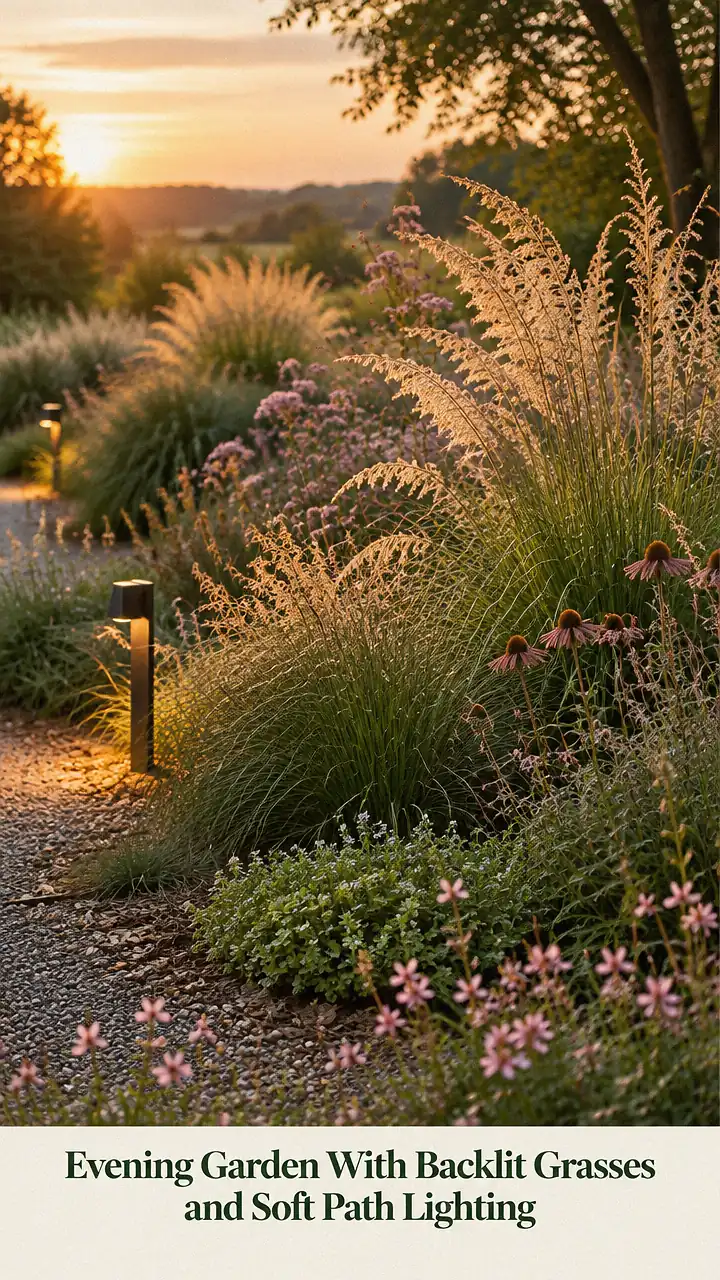
Evening Garden With Backlit Grasses and Soft Path Lighting
Overview
Ornamental grasses become especially beautiful in the evening when warm garden lighting illuminates their delicate leaves and seed heads. Tall plumes glow softly against darker foliage, while a simple stone path guides visitors through the planting. The resulting atmosphere is intimate, peaceful, and slightly dramatic. This design makes an excellent feature near backyard patios, garden entrances, or outdoor seating areas.
Materials & Plants
- Upright switchgrass cultivars or compact feather reed grass
- Low-growing prairie dropseed
- Natural stepping stones
- Outdoor-rated low-voltage landscape lights
- Gravel or organic mulch
- Weather-resistant outdoor seating
How to Create It
- Select a garden border near a patio or seating area where ornamental grasses can be viewed after sunset.
- Plant taller grasses toward the rear and shorter varieties along the path, maintaining adequate spacing.
- Install stepping stones to provide a defined walkway without disturbing established roots.
- Position low-voltage lights to illuminate foliage from below or behind, avoiding glare toward windows and neighbors.
- Keep light fixtures clear of plant debris and trim or tidy grasses seasonally to preserve their shape.
Create Your Own Beautiful Grassy Garden Retreat
The most successful grassy garden ideas are not necessarily the largest or most expensive. A few thoughtfully placed ornamental grasses, a simple pathway, or a collection of attractive planters can completely change how an outdoor space looks and feels.
Start by considering your garden’s sunlight, climate, drainage, and available space. Sun-loving prairie grasses suit bright, open locations, while shade-tolerant sedges and Japanese forest grass can bring greenery to sheltered corners. Small spaces often benefit from compact varieties and containers, while larger yards offer room for meadows, flowing borders, and inviting seating areas.
Choose materials that complement your home’s style, whether that means rustic wood, natural stone, pale gravel, or modern concrete. Most importantly, select plants that will thrive in your local conditions and give them enough room to reach their mature size.
With a little planning and some simple maintenance, you can create a grassy garden that feels fresh, comfortable, and naturally beautiful throughout the changing seasons.