
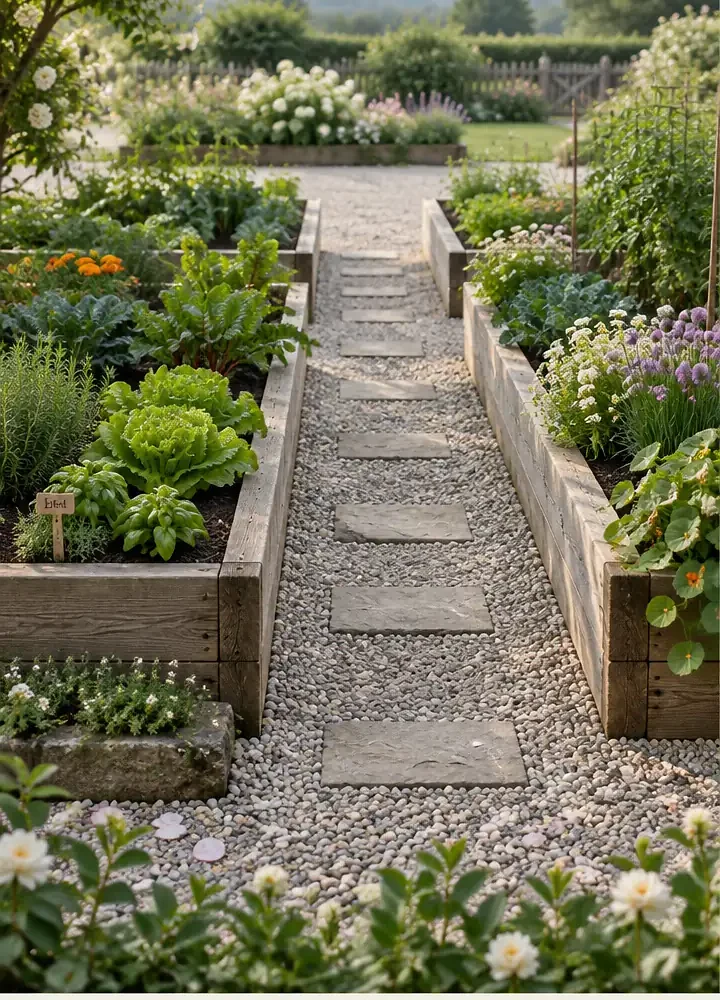
A beautiful garden doesn’t always need tall structures, towering plants, or complicated landscaping. Sometimes, the most inviting outdoor spaces are created by keeping things low, spreading greenery across the ground, and arranging plants in thoughtful horizontal patterns.
That’s what makes horizontal garden ideas so appealing. Instead of building upward, these designs emphasize long planting beds, flowing flower borders, rectangular containers, groundcover arrangements, and attractive pathways. They help create a sense of balance while making even narrow or awkward spaces feel intentional.
Horizontal gardens can also be surprisingly practical. Low planting arrangements often make maintenance easier, while organized beds provide convenient access for watering, pruning, and harvesting. Whether you have a spacious backyard, a modest patio, or a tiny balcony, there’s a horizontal layout that can work for you.
From modern geometric gardens to relaxed cottage-style borders, these 18 ideas offer inspiration for creating an outdoor space that feels beautiful, functional, and distinctly yours.
18 Creative Horizontal Garden Ideas to Transform Your Outdoor Space
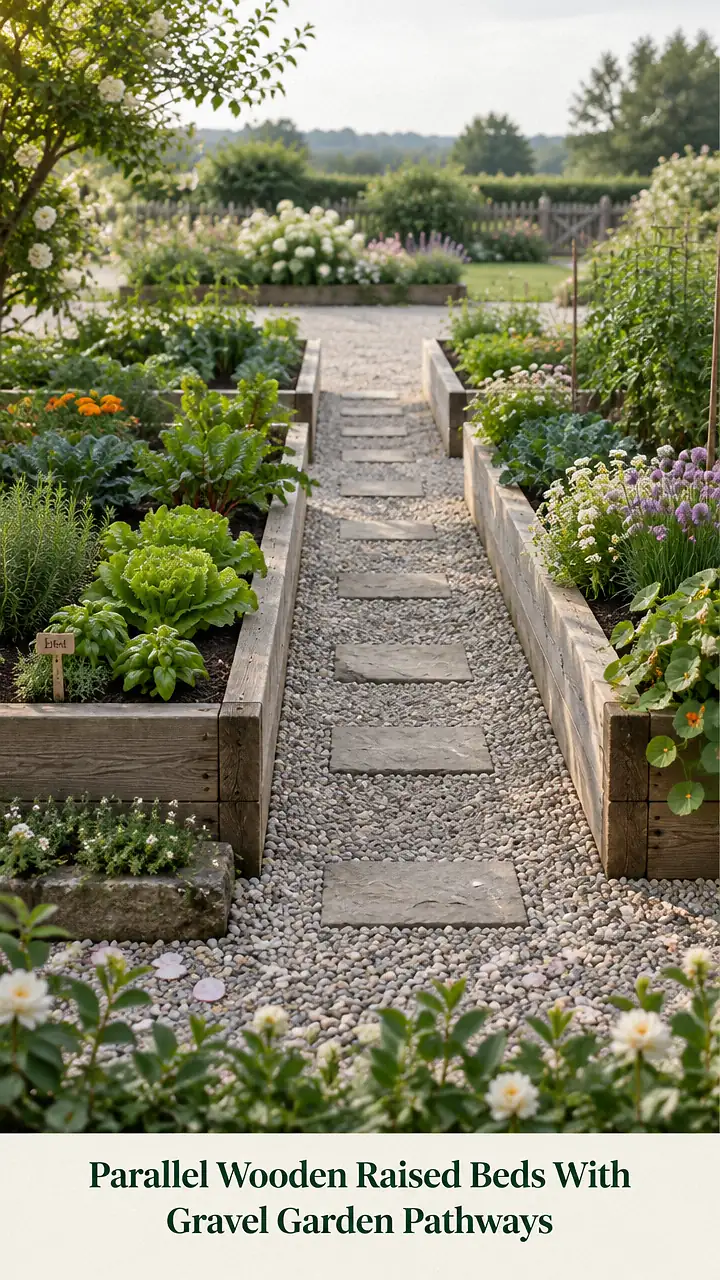
Parallel Wooden Raised Beds With Gravel Garden Pathways
Overview
Imagine three long cedar raised beds arranged neatly across a sunny backyard, separated by pale gravel pathways. Each rectangular planter holds a colorful combination of vegetables, herbs, and leafy greens. Warm wooden tones contrast beautifully with fresh foliage, creating an organized kitchen garden that feels both productive and welcoming. This design works particularly well in medium-sized backyards.
Materials & Plants
- Untreated cedar boards or prefabricated raised-bed kits
- Compost-enriched raised-bed soil
- Lettuce, kale, basil, peppers, and seasonal vegetables
- Crushed gravel and landscape edging
- Cardboard for suppressing grass beneath pathways
- Watering can or drip irrigation supplies
How to Create It
- Choose a sunny, relatively level location receiving at least six hours of direct sunlight daily.
- Assemble rectangular beds approximately 3–4 feet wide, leaving comfortable pathways between them.
- Fill the beds with suitable soil and compost, then arrange crops according to their mature spacing.
- Cover the pathways with gravel over a prepared, compacted base.
- Water consistently, replenish mulch, and rotate seasonal crops when appropriate.
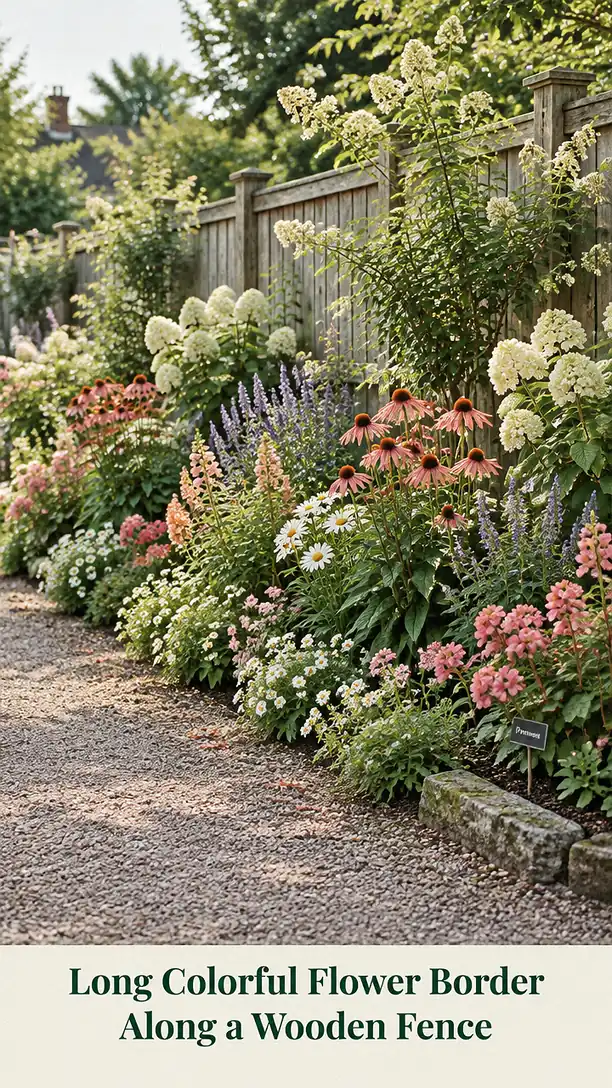
Long Colorful Flower Border Along a Wooden Fence
Overview
A narrow flower border stretching across a backyard fence creates a beautiful horizontal ribbon of color. Purple salvia, cheerful coneflowers, and golden black-eyed Susans fill the planting area with layered blooms. Taller flowers stand toward the fence, while compact varieties soften the front edge. The natural wooden backdrop makes the colors stand out, especially during warm afternoon sunlight.
Materials & Plants
- Salvia, coneflowers, black-eyed Susans, and coreopsis
- Compost and organic mulch
- Flexible metal or plastic garden edging
- Garden spade and hand trowel
- Soaker hose for convenient watering
How to Create It
- Mark a continuous border approximately 2–4 feet deep along the fence.
- Remove competing grass and improve the soil with compost where needed.
- Position taller flowers near the fence and shorter varieties toward the lawn.
- Repeat small groups of the same plants to establish a flowing horizontal pattern.
- Mulch around the plants and remove spent flowers when appropriate to encourage a tidy appearance.
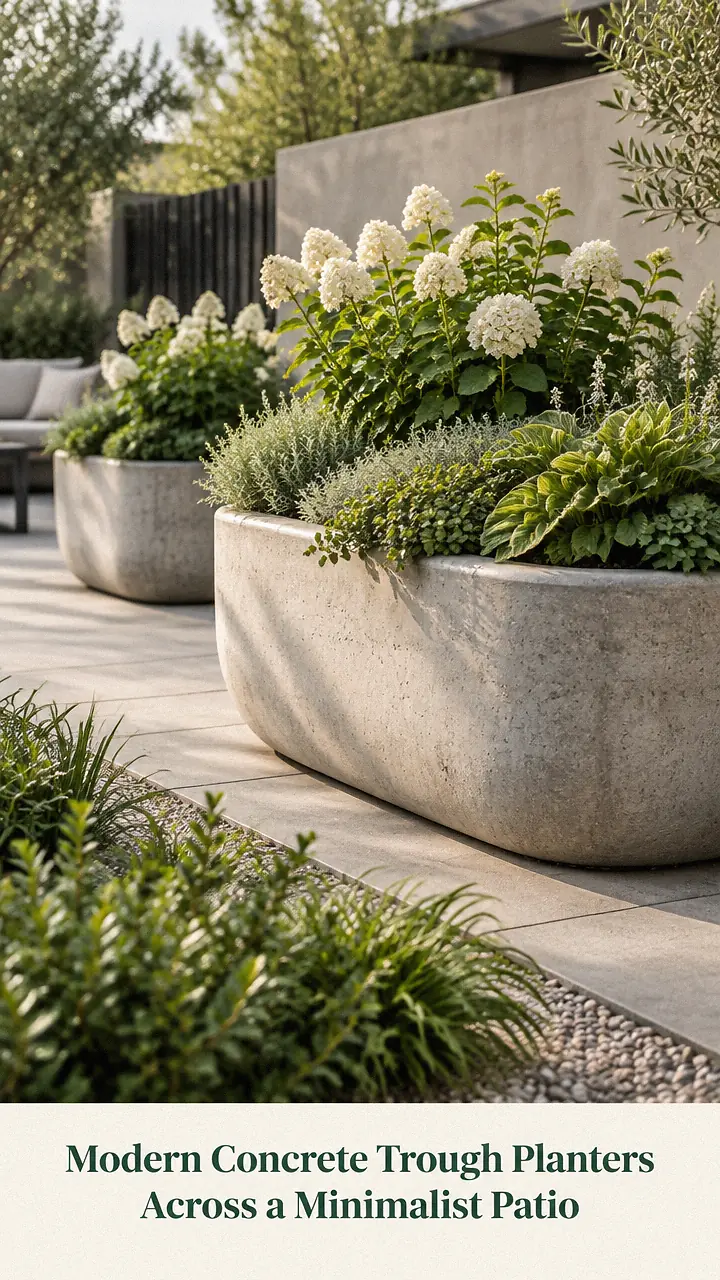
Modern Concrete Trough Planters Across a Minimalist Patio
Overview
Long rectangular concrete planters bring a contemporary atmosphere to patios and modern outdoor living spaces. Their clean gray surfaces look striking against dark decking, smooth pavers, or pale stone flooring. Compact ornamental grasses and sculptural foliage create gentle movement without overwhelming the surroundings. Arranging several matching troughs in a horizontal line establishes a stylish boundary around a seating area.
Materials & Plants
- Lightweight concrete-look or fiberstone trough planters
- Blue fescue, compact sedges, or suitable dwarf ornamental grasses
- Well-draining container potting mix
- Decorative gravel
- Planter feet and drainage-hole mesh
- Measuring tape
How to Create It
- Measure the patio and identify an area where planters won’t interrupt circulation.
- Arrange two or three rectangular troughs in a straight line, with small spaces between them.
- Confirm drainage holes are open before filling each planter with potting mix.
- Install grasses suited to the patio’s sunlight and local climate.
- Add decorative gravel and check soil moisture regularly, especially during hot weather.
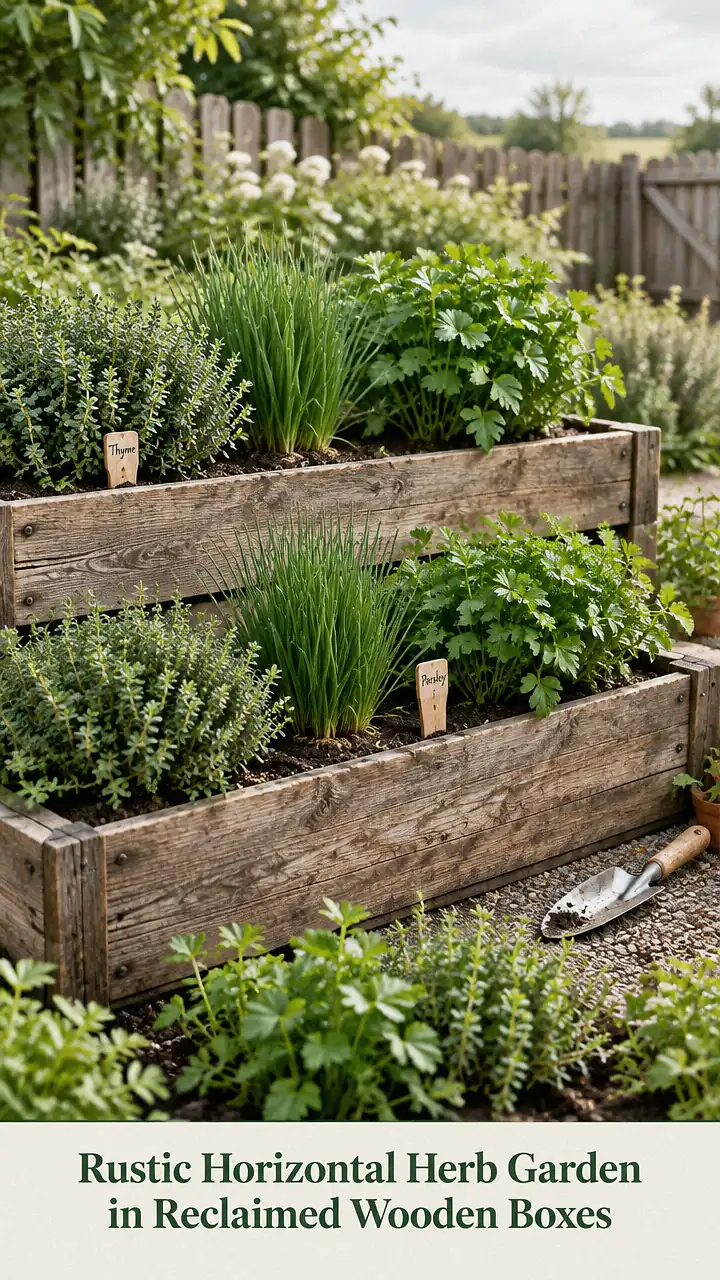
Rustic Horizontal Herb Garden in Reclaimed Wooden Boxes
Overview
A collection of weathered wooden planter boxes can turn an ordinary patio into a charming rustic herb garden. Long, low containers filled with fragrant culinary herbs sit side by side against a brick wall or wooden fence. The mixture of green textures, simple plant labels, and naturally aged timber creates a cozy farmhouse atmosphere. This layout keeps fresh ingredients conveniently within reach.
Materials & Plants
- Untreated, food-safe wooden boxes or planter troughs
- Parsley, chives, thyme, oregano, and basil
- Container potting mix
- Wooden plant markers
- Exterior screws and a drill
- Protective feet to lift containers above the ground
How to Create It
- Choose boxes at least 8–12 inches deep for most small culinary herbs.
- Drill drainage holes and place containers where the selected herbs receive appropriate sunlight.
- Fill with potting mix and group herbs with similar moisture requirements.
- Arrange the boxes horizontally, keeping frequently harvested herbs closest to the kitchen.
- Harvest regularly and trim vigorous plants before they crowd their neighbors.
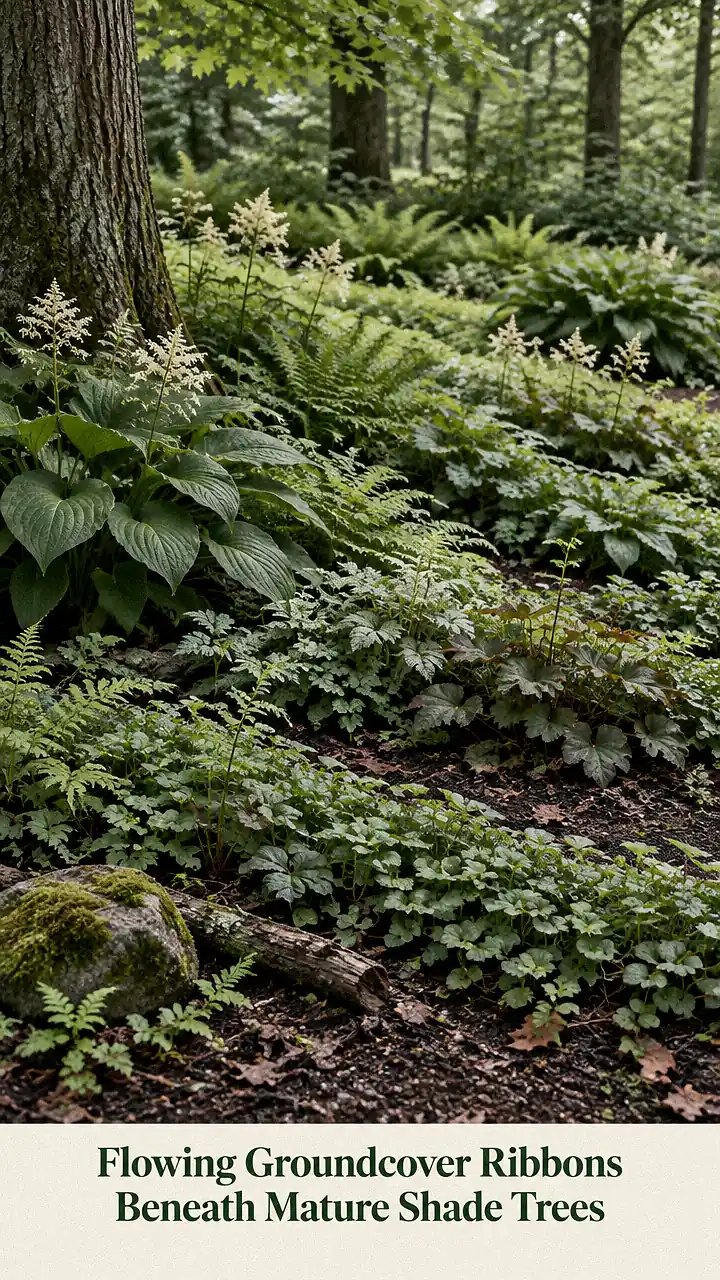
Flowing Groundcover Ribbons Beneath Mature Shade Trees
Overview
Shady areas beneath established trees can become attractive carpets of foliage rather than patches of struggling grass. Broad horizontal drifts of wild ginger, sedges, and woodland phlox create a natural woodland effect. The mixture of leaf shapes and subtle green shades looks especially beautiful beside a curved stone path. This approach works well in established backyards with filtered sunlight.
Materials & Plants
- Locally appropriate native sedges
- Wild ginger and woodland phlox where suitable
- Leaf compost
- Shredded leaf mulch
- Natural stepping stones
- Hand trowel for careful planting
How to Create It
- Observe shade levels and identify areas with enough space between major tree roots for planting.
- Select shade-tolerant species adapted to local soil and moisture conditions.
- Arrange plants in sweeping horizontal groups instead of isolated individual spots.
- Add a thin layer of leaf mulch while keeping the tree’s root flare uncovered.
- Water new plants during establishment and avoid disturbing large tree roots.
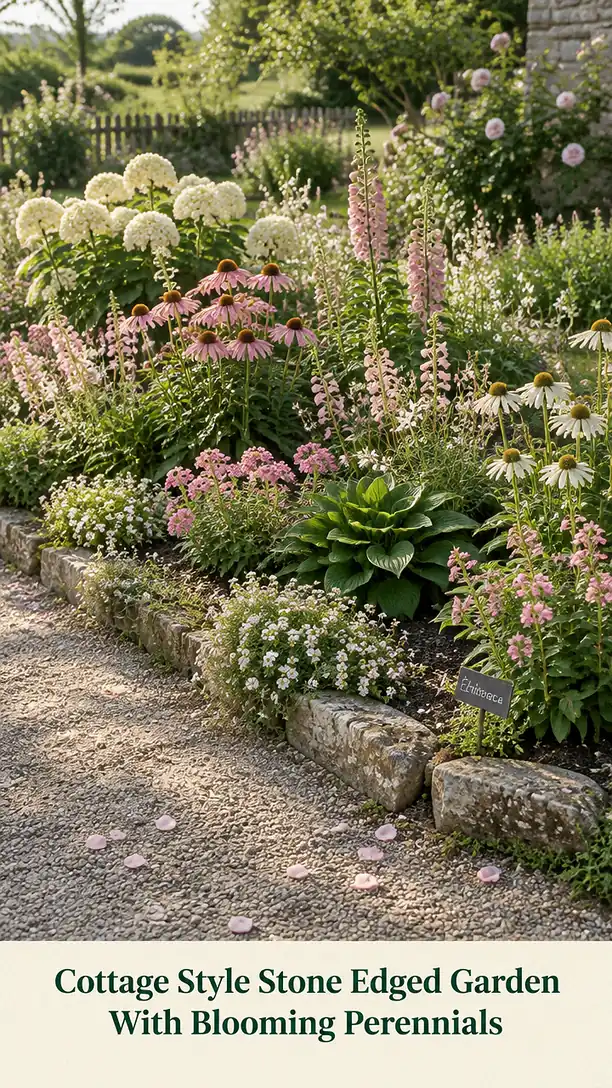
Cottage Style Stone Edged Garden With Blooming Perennials
Overview
An informal flower garden framed by irregular natural stones creates a romantic cottage atmosphere. Low mounds of catmint spill gently toward the border, while daisies, hardy geraniums, and seasonal flowers add changing colors. The stone edging gives the planting bed a clear horizontal outline without making it feel rigid. This charming arrangement suits front yards, garden walkways, and sunny backyard corners.
Materials & Plants
- Flat fieldstones or reclaimed landscape stones
- Catmint, Shasta daisies, and hardy geraniums
- Seasonal annual flowers for additional color
- Compost and shredded bark mulch
- Garden spade and edging tool
How to Create It
- Create a gently curving planting bed beside an existing walkway or lawn.
- Position flat stones along the front edge, setting them securely into shallow trenches.
- Plant compact flowering perennials in loose clusters, allowing space for mature growth.
- Fill seasonal gaps with annuals suited to the available sunlight.
- Weed regularly and divide crowded perennials when their growth begins to decline.
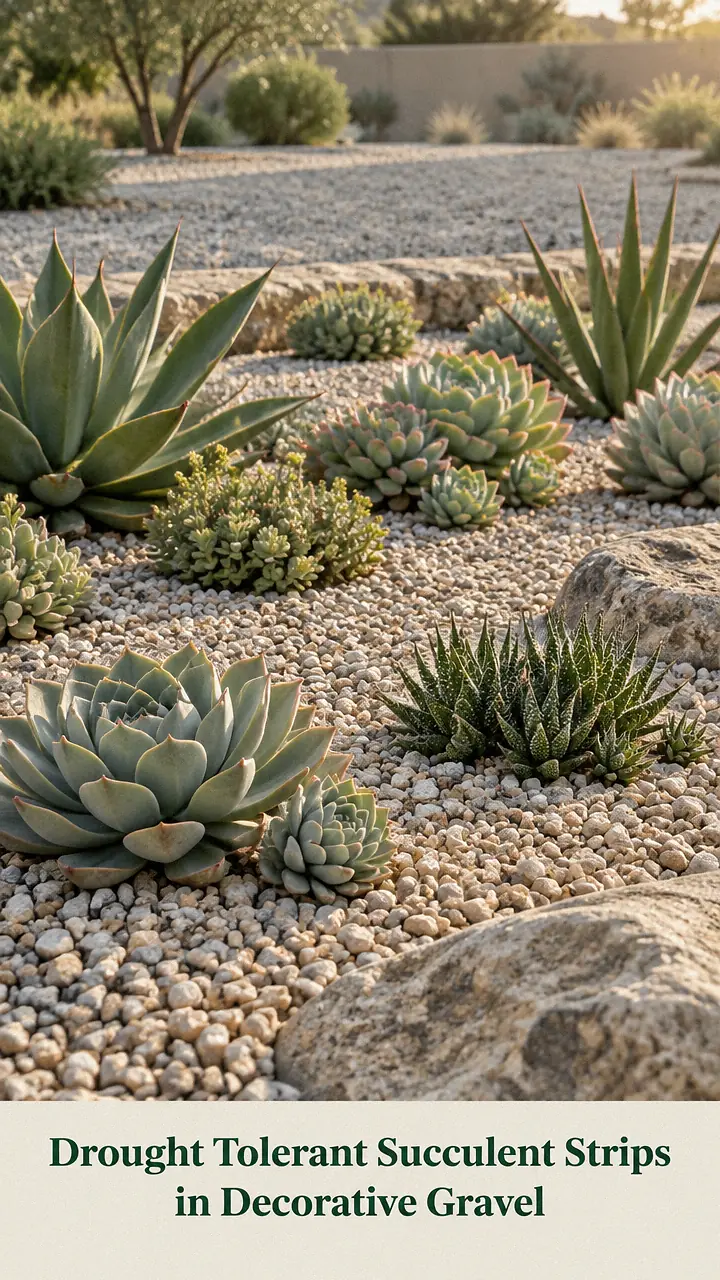
Drought Tolerant Succulent Strips in Decorative Gravel
Overview
For warm, dry locations, a horizontal succulent garden offers striking shapes with relatively little maintenance. Low-growing sedums, rosette-forming echeverias, and drought-tolerant stonecrop varieties create textured bands across pale gravel. Larger rocks provide sculptural accents without distracting from the plants. This design looks especially appealing beside a modern driveway, courtyard, or sunny patio where strong drainage can be provided.
Materials & Plants
- Cold-hardy sedums or climate-appropriate succulents
- Echeverias for frost-free locations or movable containers
- Angular gravel and decorative rocks
- Fast-draining mineral soil mix
- Steel or stone garden edging
- Small hand shovel
How to Create It
- Choose an area with abundant sunlight and drainage suitable for succulent roots.
- Remove weeds and improve heavy soil with an appropriate mineral planting mix.
- Arrange plants in elongated groups, leaving room for spreading varieties.
- Add gravel around the plants without burying their crowns.
- Water during establishment, then adjust irrigation to the species and seasonal rainfall.
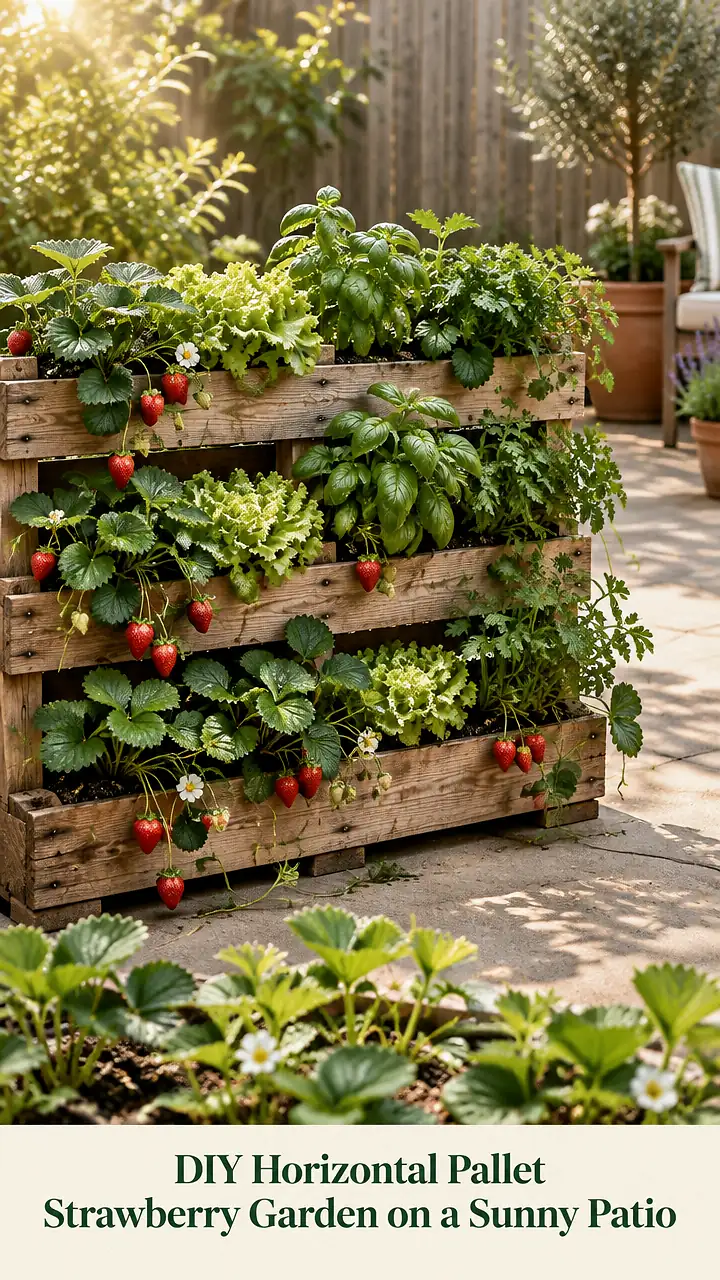
DIY Horizontal Pallet Strawberry Garden on a Sunny Patio
Overview
A repurposed wooden pallet can become a practical, low-profile strawberry planter when laid horizontally and properly reinforced. Rows of strawberry foliage emerge from separate planting compartments, while small white flowers and bright red berries add seasonal color. The weathered timber gives the garden a relaxed DIY personality. This inexpensive idea is particularly useful for sunny patios with limited planting space.
Materials & Plants
- Clean, untreated, food-safe wooden pallet
- Untreated boards for creating compartment sides
- Exterior screws and landscape fabric
- Strawberry plants suited to the region
- Quality container potting mix
- Drill and staple gun
How to Create It
- Inspect the pallet, rejecting wood with unknown chemical exposure, rot, or loose nails.
- Reinforce the structure and create adequately deep planting compartments with drainage openings.
- Place the planter on stable supports so excess water can drain freely.
- Fill the compartments with potting mix and position strawberry crowns at soil level.
- Water consistently, remove runners when needed, and protect ripe fruit from pests.
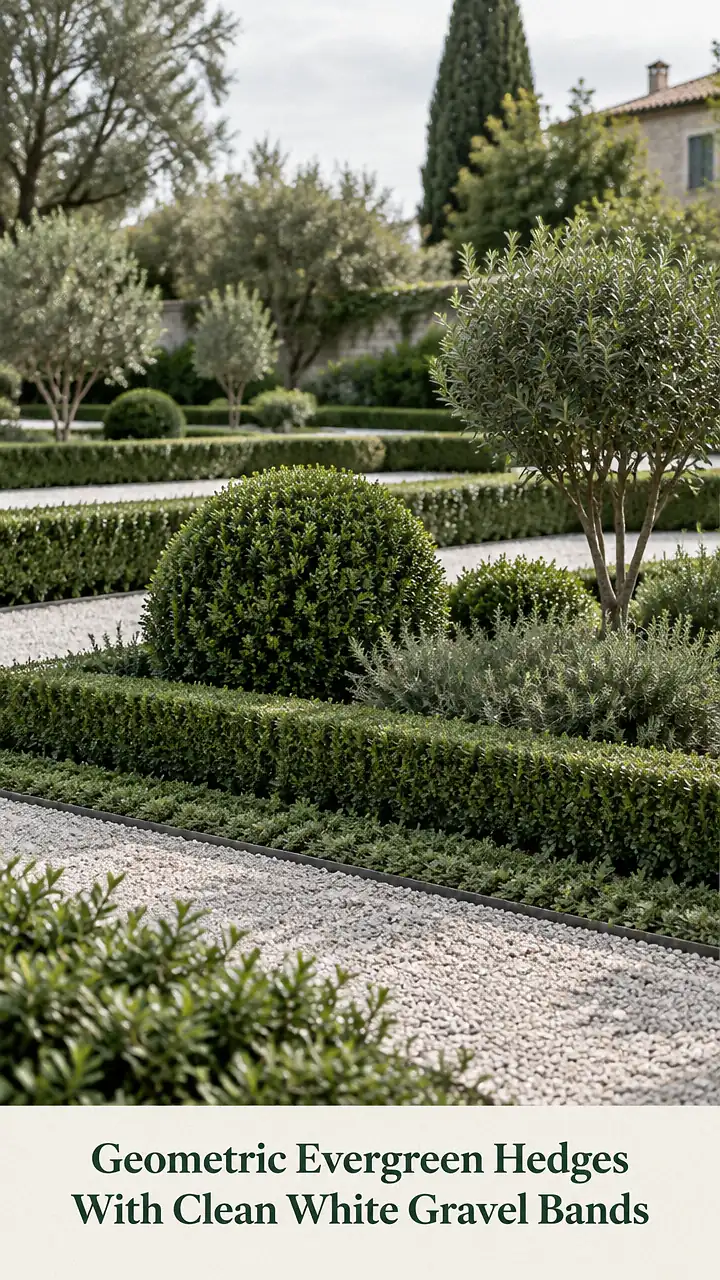
Geometric Evergreen Hedges With Clean White Gravel Bands
Overview
A formal horizontal garden uses crisp lines, repeated shapes, and restrained colors to create a polished landscape. Low evergreen hedges form rectangular outlines around white gravel sections, producing an elegant contrast between deep green foliage and bright stone. One or two ornamental grasses add movement without disrupting the geometric appearance. This design suits contemporary front yards and minimalist entrance gardens.
Materials & Plants
- Compact Japanese holly or other locally suitable evergreen shrubs
- White decorative gravel
- Metal landscape edging
- Compost where appropriate
- Measuring tape and garden string
- Hand pruners
How to Create It
- Sketch a simple rectangular layout that complements the home’s architectural lines.
- Mark planting strips using string and measure equal distances between major features.
- Install suitable compact evergreen shrubs according to their mature spread.
- Prepare the gravel bands with firm edging and a stable base.
- Trim shrubs selectively to maintain their shape without exposing bare interior branches.
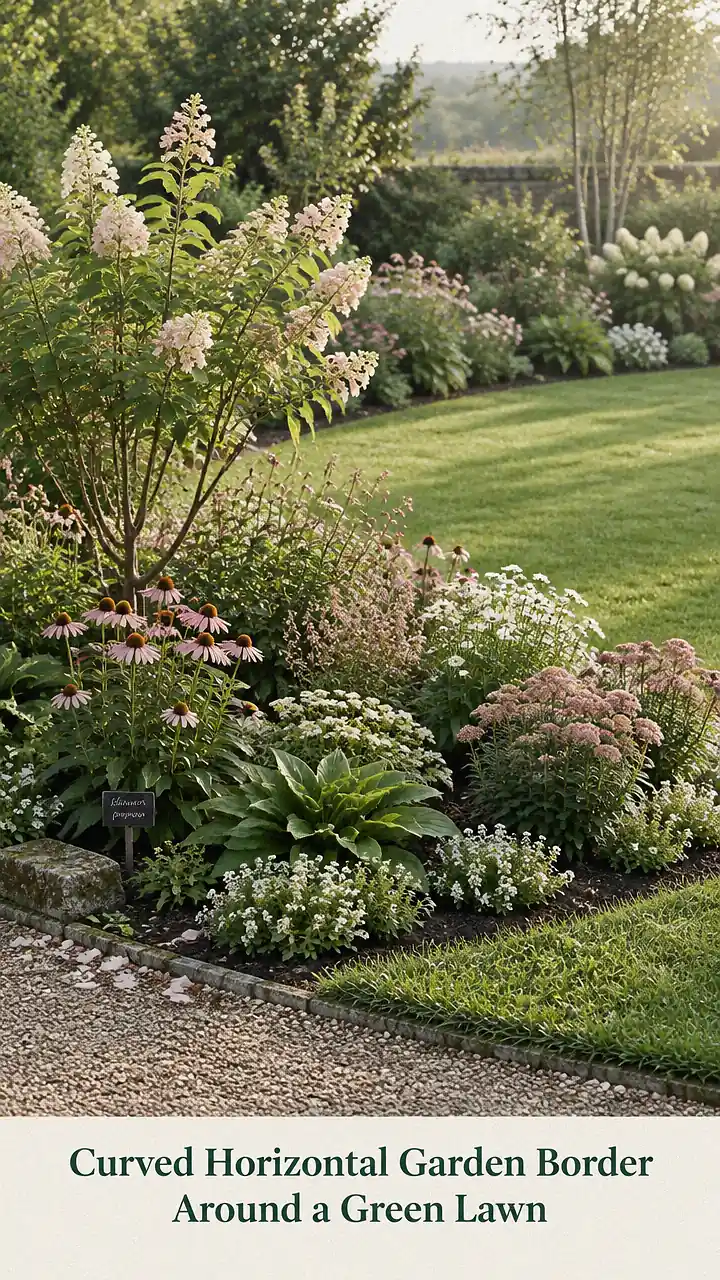
Curved Horizontal Garden Border Around a Green Lawn
Overview
A sweeping planted border can transform a plain rectangular lawn into a softer, more welcoming landscape. Repeating clusters of flowering perennials, compact grasses, and evergreen foliage follow the lawn’s edge in a gentle curve. The horizontal planting provides a colorful frame while preserving open grass for relaxation and outdoor activities. This design works beautifully in medium and large family backyards.
Materials & Plants
- Coreopsis, dwarf fountain grass, and compact salvias
- Low evergreen shrubs suited to the region
- Flexible landscape edging
- Compost and mulch
- Garden hose for marking curves
- Spade and rake
How to Create It
- Lay a garden hose along the lawn to experiment with a gentle border shape.
- Remove turf within the marked area and prepare the exposed soil.
- Position evergreen shrubs first, followed by ornamental grasses and flowering perennials.
- Repeat selected plant combinations to connect different sections visually.
- Install edging and mulch, then trim lawn grass carefully along the new border.
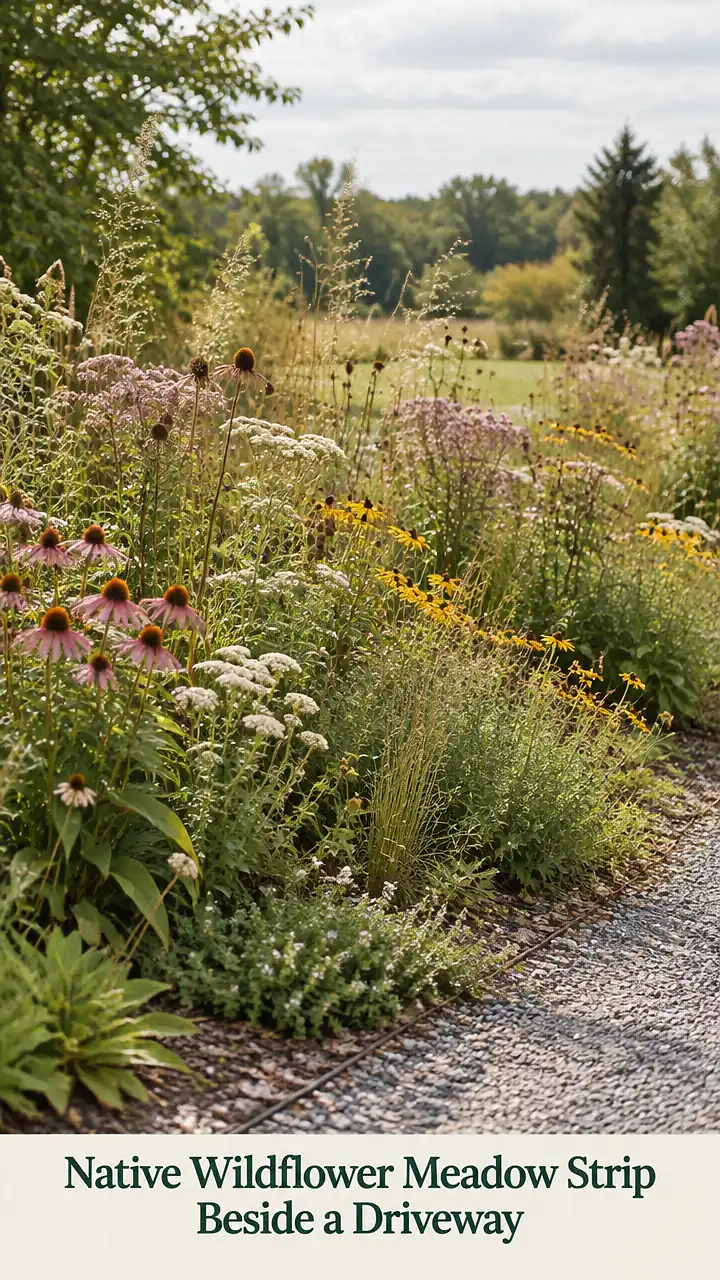
Native Wildflower Meadow Strip Beside a Driveway
Overview
A long ribbon of native wildflowers can bring natural beauty to an otherwise ordinary driveway edge. Seasonal blooms in yellow, purple, pink, and white mingle with fine-textured native grasses. Unlike a traditional clipped border, this design creates a relaxed meadow appearance while keeping the planting contained within a defined horizontal strip. It works best in sunny spaces away from important sightlines.
Materials & Plants
- Regionally native wildflowers adapted to site conditions
- Suitable native bunchgrasses
- Locally sourced seed mix or nursery-grown plugs
- Low landscape edging
- Rake and soil preparation tools
- Optional small educational garden sign
How to Create It
- Select a sunny strip that won’t obstruct driveway visibility or interfere with vehicle movement.
- Remove existing weeds thoroughly before planting.
- Choose native species with complementary bloom seasons and compatible growing requirements.
- Plant plugs in repeating clusters or sow a suitable seed mix as directed.
- Control weeds during establishment and cut back vegetation seasonally according to the chosen species.
Tiered Timber Garden Beds Across a Gentle Backyard Slope
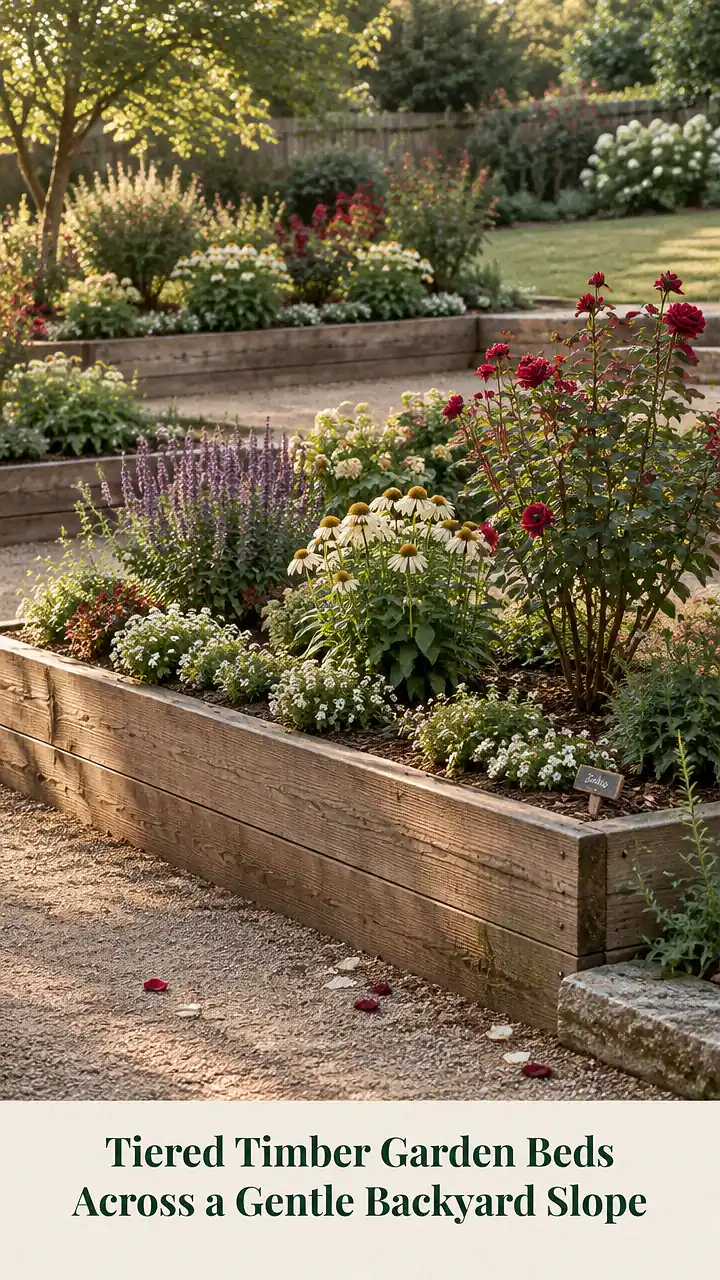
Overview
A gently sloping backyard becomes more usable when divided into shallow horizontal planting terraces. Low timber borders retain small sections of soil, creating parallel beds that step naturally down the landscape. Colorful flowers, leafy vegetables, or compact shrubs soften the wooden edges. This practical design brings structure to uneven ground while giving the garden a warm, handcrafted appearance.
Materials & Plants
- Ground-contact-rated, garden-safe landscape timbers
- Appropriate structural stakes and exterior fasteners
- Compost-enriched garden soil
- Compact perennials, herbs, or seasonal vegetables
- Mulch and drainage aggregate where required
- Level and measuring tape
How to Create It
- Assess the slope and choose a location suitable for small, shallow terraces.
- Mark level planting lines across the slope rather than running straight downhill.
- Install low timber borders securely, accounting for drainage and local construction requirements.
- Prepare soil behind each border and plant according to sunlight and access needs.
- Mulch exposed soil and check for erosion or shifting after heavy rainfall.
Rainbow Annual Flower Rows in a Sunny Front Garden
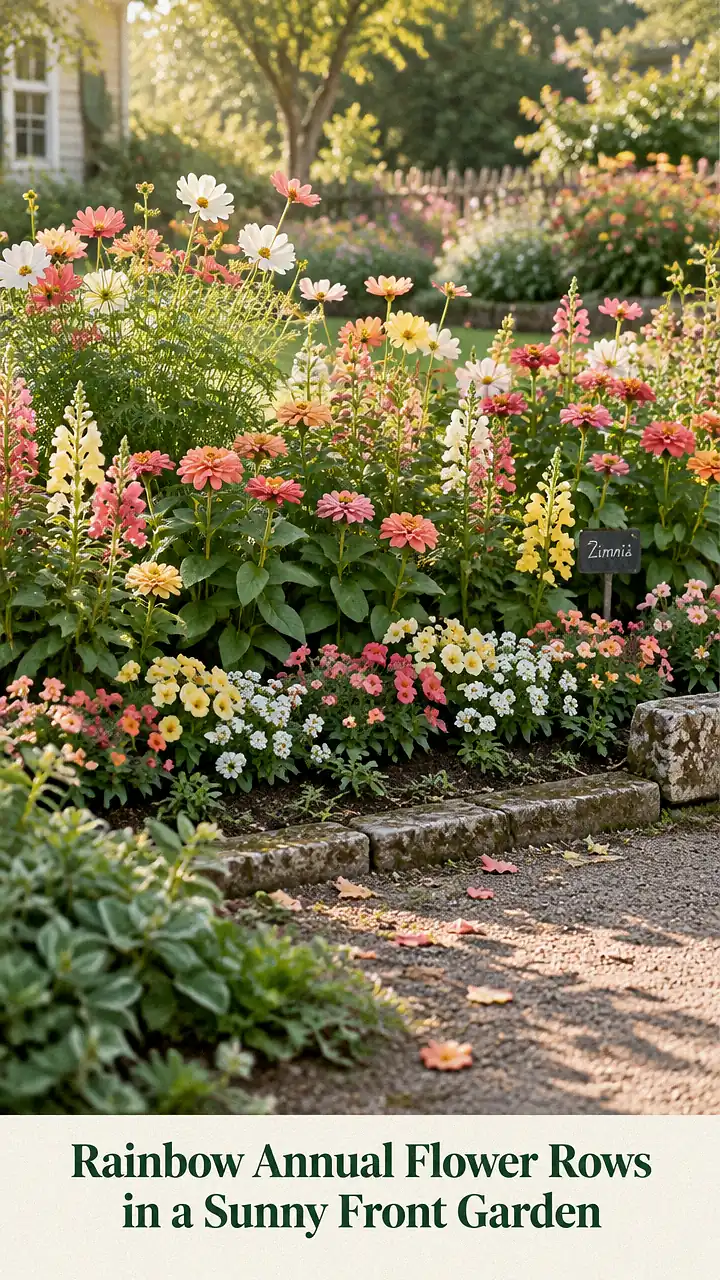
Overview
Long bands of annual flowers can create a cheerful, color-coordinated display across a sunny front yard. Imagine one row of golden marigolds, another of coral zinnias, and a third filled with violet ageratum. The repeated horizontal lines resemble colorful brushstrokes laid across the landscape. This playful garden is especially effective in open spaces where visitors can appreciate the arrangement from the street.
Materials & Plants
- Dwarf marigolds, zinnias, and ageratum
- Compost and balanced fertilizer if needed
- Garden string and wooden stakes
- Mulch
- Hand trowel and watering wand
- Plant labels
How to Create It
- Choose a sunny planting area and draw three or four parallel flower bands.
- Select annuals with similar light requirements and heights appropriate to the viewing angle.
- Prepare the soil and plant each variety in a clearly defined color section.
- Mulch between plants, leaving room around their stems.
- Deadhead where beneficial and replace declining annuals as the seasons change.
Long Rectangular Cutting Garden Filled With Seasonal Flowers
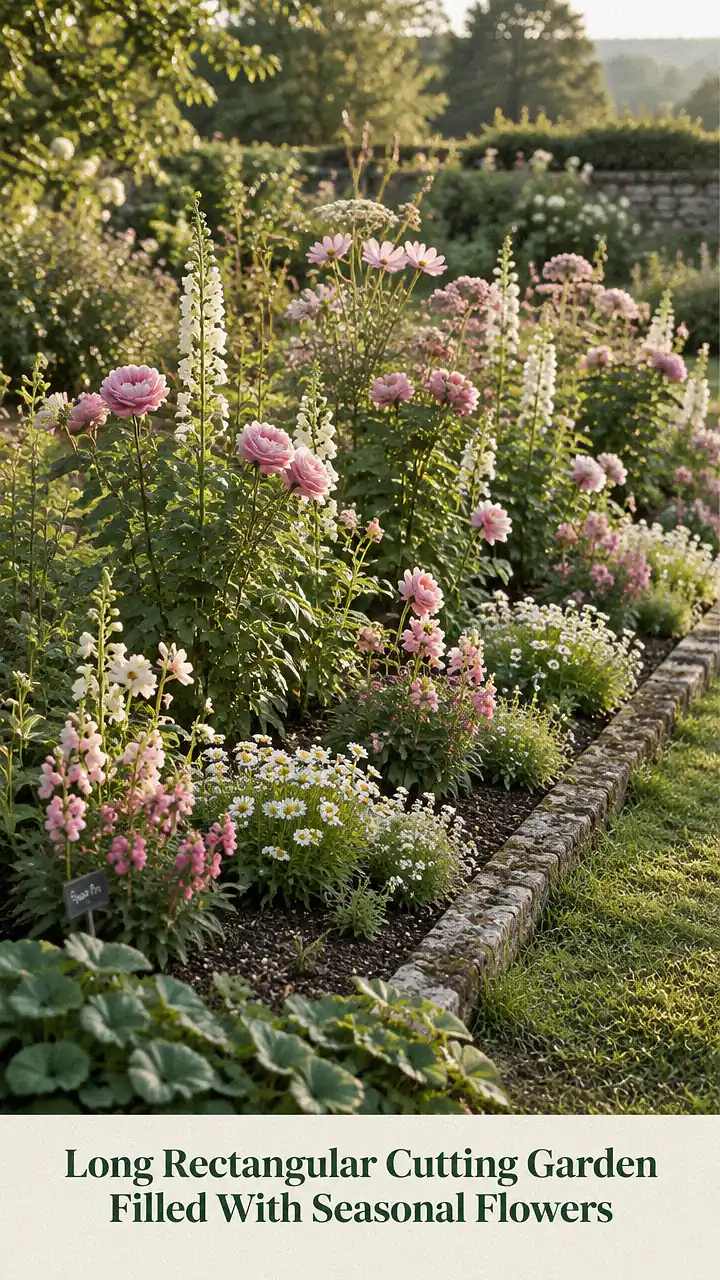
Overview
A horizontal cutting garden combines practical flower production with the beauty of an organized landscape. Narrow rows of cosmos, zinnias, snapdragons, and other seasonal blooms create a colorful patchwork beside a backyard path. The straight layout makes it easy to harvest stems without trampling nearby plants. This design is ideal for gardeners who enjoy bringing fresh flowers indoors.
Materials & Plants
- Zinnias, cosmos, snapdragons, and celosia
- Compost-rich garden soil
- Seed trays or nursery-grown transplants
- Low flower supports or netting where needed
- Garden snips and harvest bucket
- Mulch or straw for pathways
How to Create It
- Select a location with good sunlight and convenient access to water.
- Divide the space into beds narrow enough to reach without stepping on the soil.
- Arrange flower varieties in rows according to their heights, spacing, and growing seasons.
- Install supports early for plants that produce tall or heavy stems.
- Harvest regularly, remove spent blooms, and sow replacement crops when the climate allows.
Matching Rectangular Salad Planters Along a Small Balcony
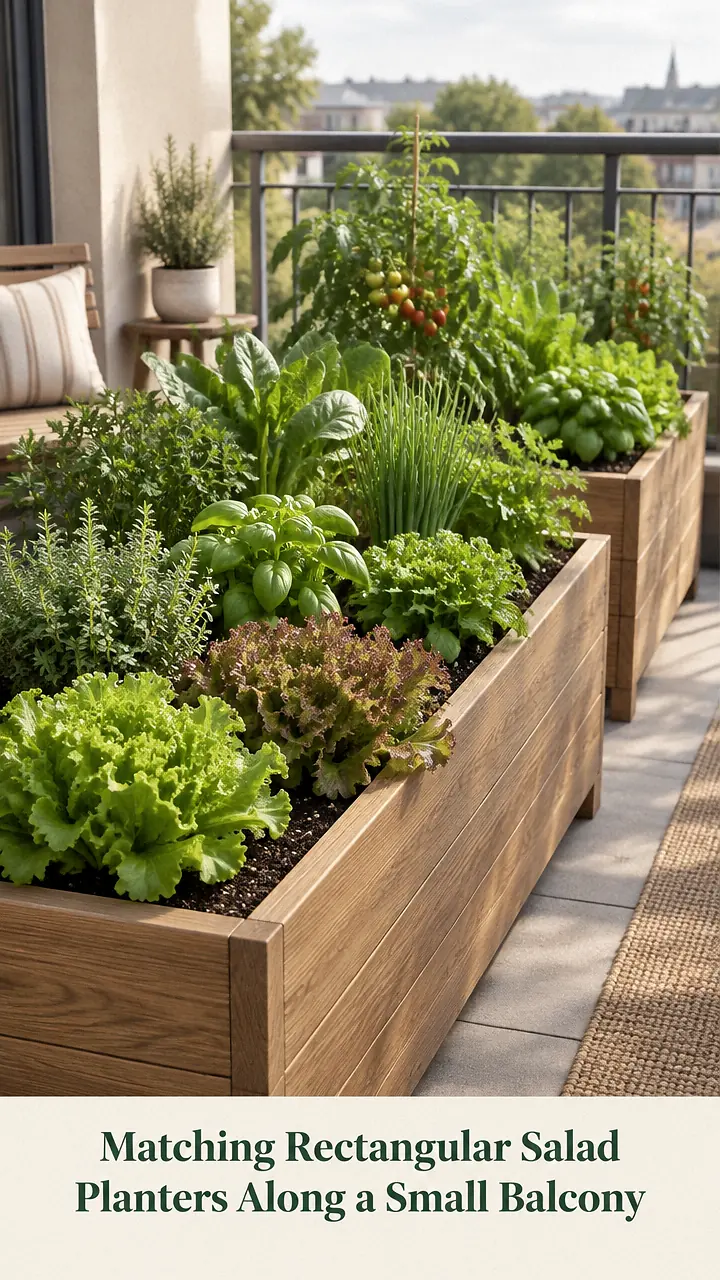
Overview
A narrow balcony can support a productive horizontal garden with a row of matching rectangular planters. Leaf lettuce, arugula, compact kale, and radishes produce a lush mixture of textures without requiring large structures. Neutral-colored containers create a clean, coordinated appearance against simple outdoor flooring. This design works particularly well on balconies that receive gentle morning sun and have adequate structural capacity.
Materials & Plants
- Lightweight rectangular planters with drainage holes
- Leaf lettuce, arugula, radishes, and compact kale
- Vegetable container potting mix
- Waterproof drainage trays
- Small watering can
- Optional lightweight plant labels
How to Create It
- Confirm the balcony’s permitted load and arrange planters without blocking drainage or access.
- Choose edible crops suited to the available sunlight and season.
- Fill containers with potting mix, leaving room below the rims for watering.
- Sow seeds at recommended depths, thinning seedlings to prevent overcrowding.
- Check moisture frequently and harvest outer leaves from suitable varieties as they mature.
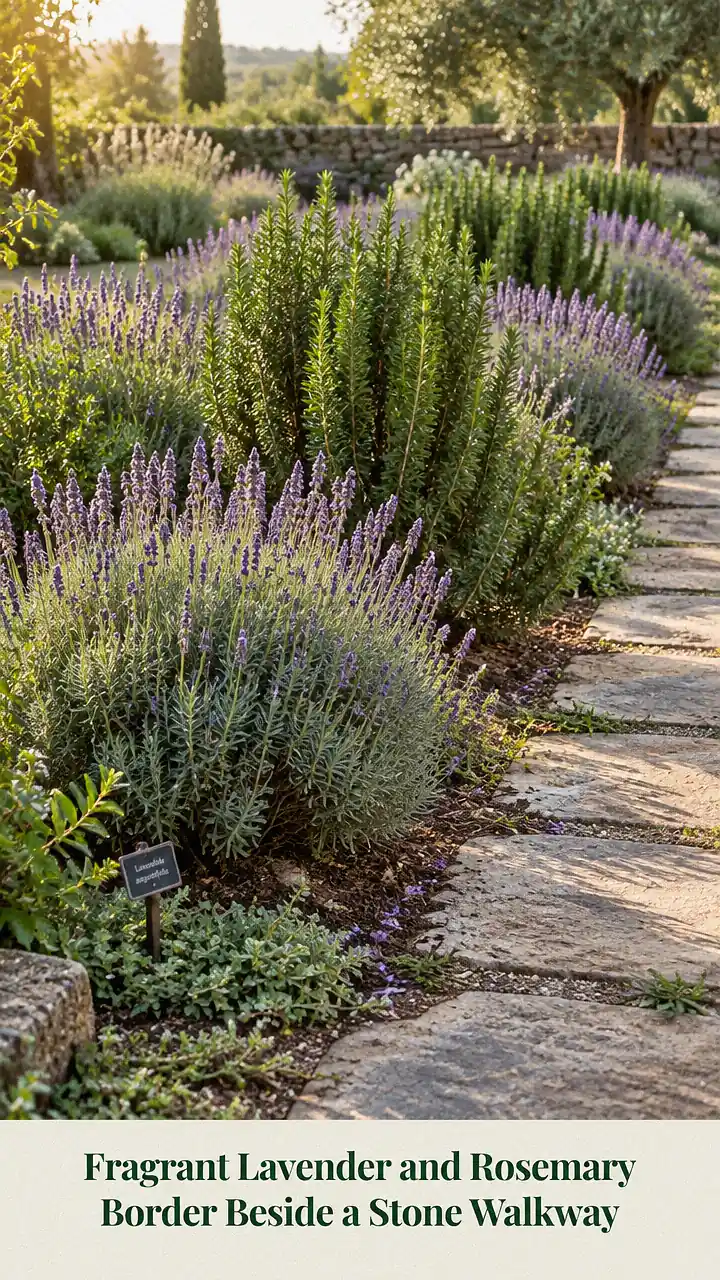
Fragrant Lavender and Rosemary Border Beside a Stone Walkway
Overview
A narrow ribbon of aromatic plants beside a stone walkway creates a beautiful Mediterranean-inspired garden. Silvery lavender foliage, upright rosemary stems, and small purple flowers contrast with warm paving stones. Their compact shapes form a soft horizontal boundary, while their fragrance adds another dimension to the outdoor experience. This arrangement suits sunny entrance paths and well-drained courtyards in appropriate climates.
Materials & Plants
- Lavender varieties adapted to the local climate
- Compact rosemary plants
- Well-draining soil amendments as needed
- Gravel mulch
- Natural stone or brick edging
- Garden trowel and pruning shears
How to Create It
- Choose a site with full sun and soil that drains readily after rain.
- Improve drainage where necessary without creating a water-holding planting pocket.
- Space rosemary and lavender according to their mature sizes, keeping growth clear of the path.
- Apply gravel mulch without piling it against woody stems.
- Prune lightly after flowering where appropriate and avoid excessive watering or fertilization.
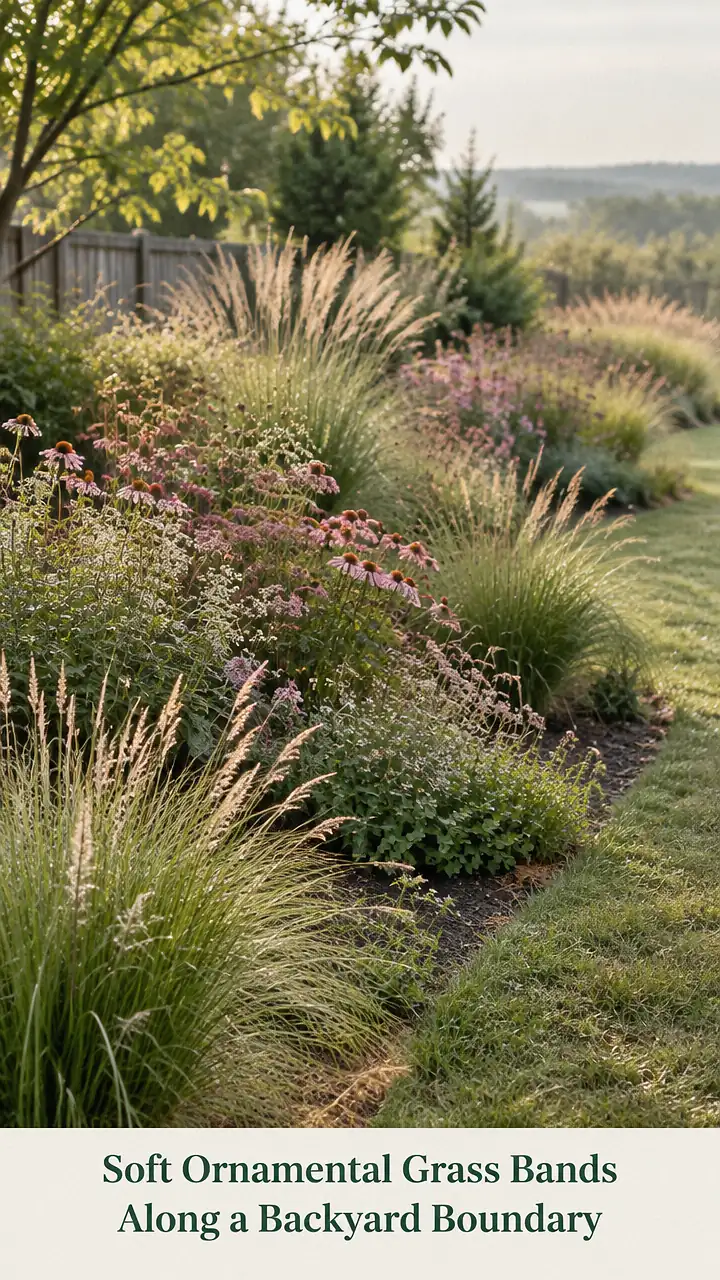
Soft Ornamental Grass Bands Along a Backyard Boundary
Overview
A line of gently arching ornamental grasses creates a graceful horizontal accent along a backyard boundary. Fine foliage moves naturally in the breeze, offering texture even when flowers are absent. Combining compact grasses with low flowering perennials produces a soft, contemporary landscape that changes through the seasons. This design works especially well beside wooden fences, modern patios, and open lawn areas.
Materials & Plants
- Little bluestem, prairie dropseed, or appropriate regional grasses
- Low-growing asters or other compatible perennials
- Compost where needed
- Natural bark mulch
- Simple landscape edging
- Garden spade and pruning tools
How to Create It
- Measure the boundary and choose noninvasive grasses suited to local conditions.
- Plant grasses in repeating groups, accounting for their full mature width.
- Insert compact flowering perennials between selected grass clusters.
- Add mulch and water thoroughly during the first growing season.
- Cut back deciduous grasses at the appropriate season before fresh growth begins.
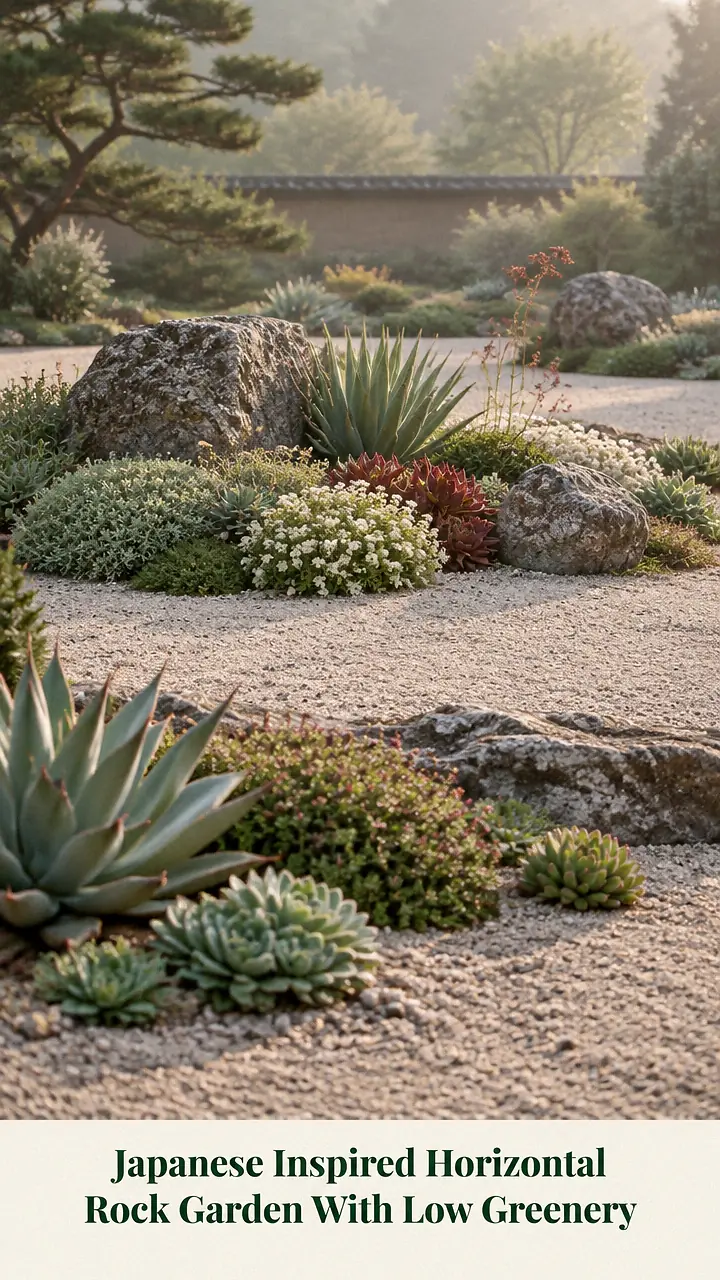
Japanese Inspired Horizontal Rock Garden With Low Greenery
Overview
A quiet Japanese-inspired garden can be created using broad gravel areas, carefully positioned rocks, and low-growing greenery. Instead of relying on tall features, the design emphasizes negative space, asymmetrical arrangements, and gentle horizontal lines. A few compact shrubs and soft mosslike groundcovers add contrast to pale gravel. This peaceful layout works beautifully in sheltered courtyards and small minimalist backyards.
Materials & Plants
- Fine angular decorative gravel
- Natural landscape rocks in varied sizes
- Dwarf Japanese holly or climate-appropriate compact shrubs
- Low-growing groundcovers suited to the site’s sunlight
- Durable landscape edging
- Gravel rake and hand trowel
How to Create It
- Choose a modest, well-drained area and sketch a restrained layout with generous open space.
- Install edging and prepare a stable gravel base with appropriate drainage.
- Position several natural rocks asymmetrically, burying their bases slightly for stability.
- Plant a few compact shrubs and low groundcovers to soften selected edges.
- Rake simple patterns into the gravel and remove fallen leaves regularly.
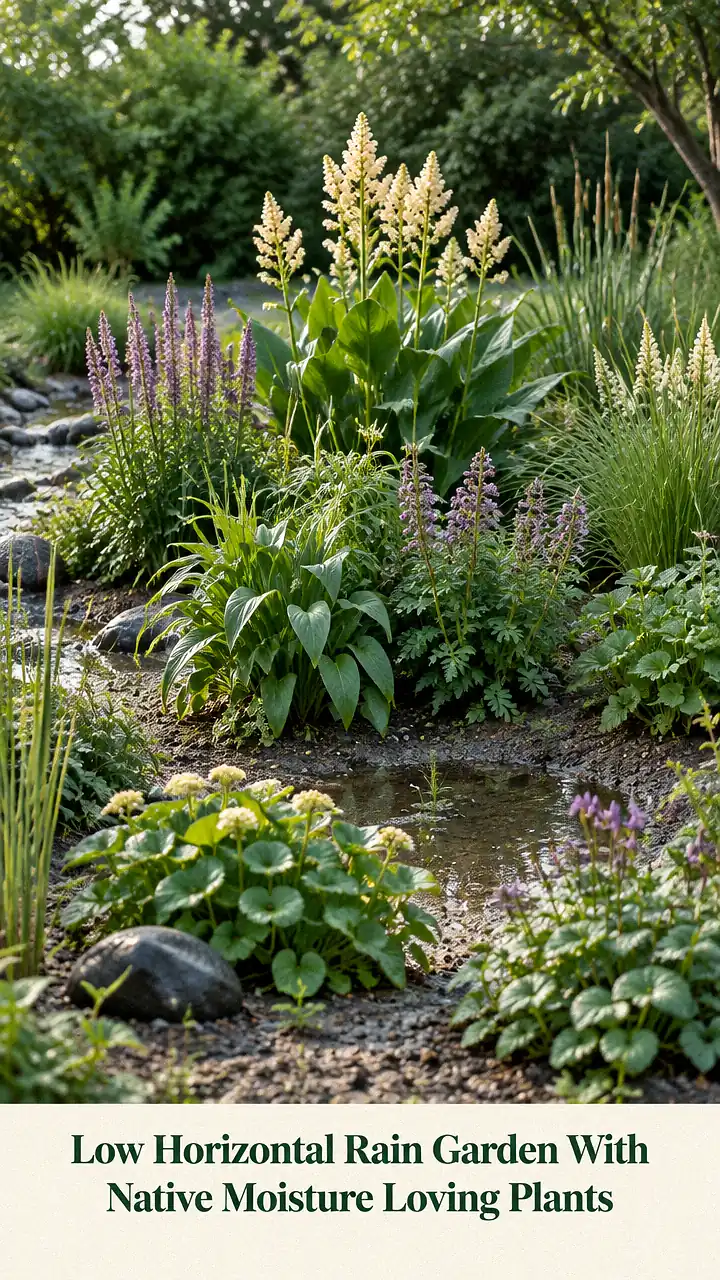
Low Horizontal Rain Garden With Native Moisture Loving Plants
Overview
A shallow, elongated rain garden can turn a naturally damp part of the yard into a beautiful planted landscape. Sweeping bands of moisture-tolerant sedges, blue flag iris, and colorful native perennials fill the gently depressed bed. River stones accent the edges, while dense foliage gives the space a naturalistic appearance. This design is best for yards with suitable drainage and safe rainwater runoff routes.
Materials & Plants
- Locally appropriate moisture-tolerant native sedges
- Blue flag iris where native and suitable
- Swamp milkweed or other regionally appropriate perennials
- Compost or soil amendments based on drainage assessment
- Washed river stones
- Shovel, level, and garden rake
How to Create It
- Identify a runoff collection area away from building foundations, septic systems, and underground utilities.
- Check soil infiltration and determine whether a shallow rain garden is suitable.
- Shape a broad, gently depressed bed with a safe overflow route.
- Position moisture-loving plants toward the center and less moisture-dependent species along the upper edges.
- Mulch appropriately, water during establishment, and clear debris from the inlet after storms.
Conclusion: Create a Beautiful Garden With Simple Horizontal Designs
Horizontal gardens prove that attractive outdoor spaces don’t need elaborate structures or expensive landscaping. A thoughtfully planted border, a few rectangular containers, or a simple arrangement of raised beds can change the entire feeling of a backyard, patio, or front garden.
The best approach depends on how you want to use the space. If you enjoy growing food, long vegetable beds or accessible herb planters may be ideal. For colorful seasonal displays, try flowering ribbons or organized cutting beds. If you prefer a clean, contemporary look, gravel bands, architectural planters, and low ornamental grasses offer an appealing alternative.
Before starting, consider your available sunlight, local climate, drainage, budget, and maintenance preferences. Choose plants suited to those conditions, allow enough room for mature growth, and begin with a manageable section rather than redesigning everything at once.
With a little planning and creativity, these horizontal garden ideas can help you transform an ordinary outdoor area into a welcoming, beautiful space you’ll enjoy throughout the growing seasons.