
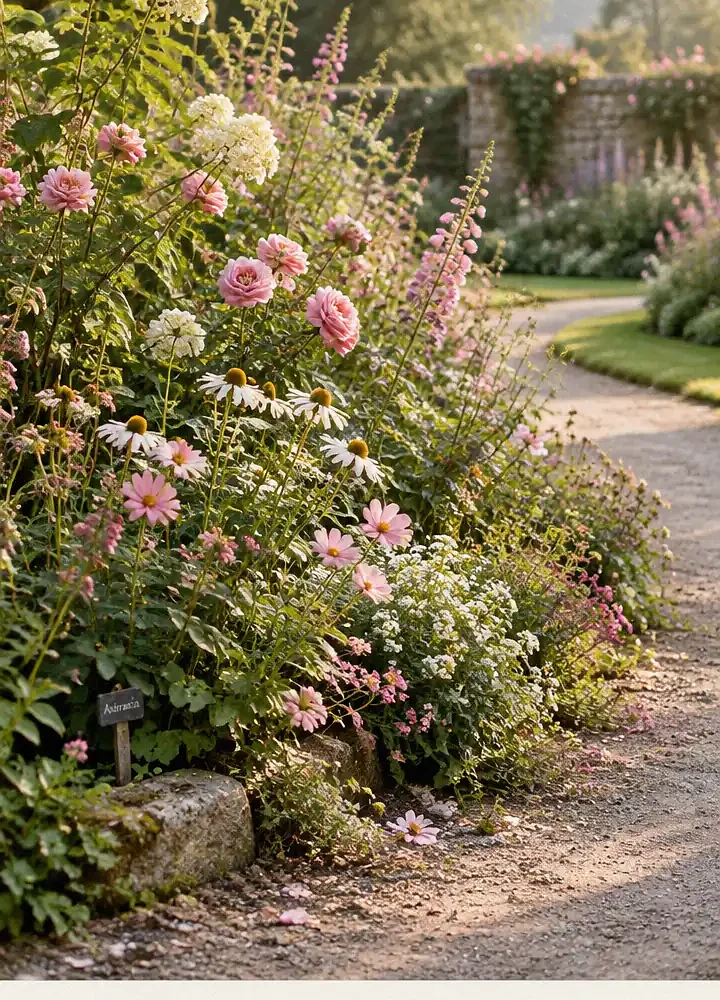
Not every beautiful garden needs perfectly trimmed hedges, straight flower beds, or carefully spaced plants. Sometimes, the most inviting outdoor spaces are the ones that look a little wild, with flowers spilling across pathways, vines climbing weathered fences, and greenery growing in wonderfully unexpected places.
That’s the charm of messy garden ideas. Instead of fighting against nature, these designs embrace loose planting arrangements, layered textures, mismatched containers, and a relaxed atmosphere that makes a garden feel alive.
A thoughtfully messy garden can also be surprisingly practical. Dense planting helps cover bare soil, flowering plants attract pollinators, and reused materials bring character without requiring an expensive landscaping project.
The secret is creating a balance between natural growth and gentle structure. A defined pathway, simple border, or comfortable seating area can make even the wildest planting look intentional.
Whether you’re working with a tiny patio, a suburban backyard, or a narrow side yard, these creative ideas will help you turn ordinary outdoor space into a charming, naturally beautiful retreat.
Beautifully Messy Garden Ideas to Try at Home
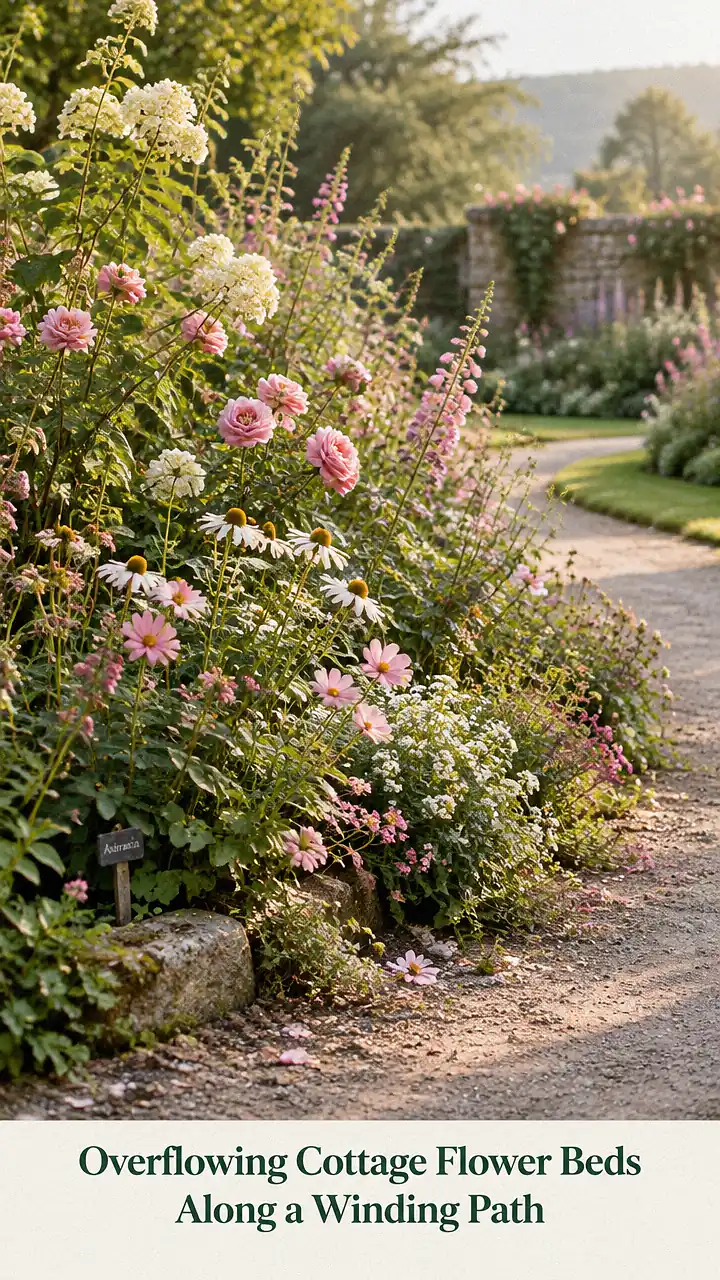
Overflowing Cottage Flower Beds Along a Winding Path
Overview
Imagine a narrow garden path disappearing between clouds of colorful flowers, with soft greenery leaning gently over its edges. Pink cosmos, purple salvia, white daisies, and cheerful calendula create an informal mixture of heights and textures. This romantic design works especially well in sunny front gardens, cottage-style backyards, and small yards where a winding pathway creates the illusion of extra space.
Materials & Plants
- Cosmos, calendula, salvia, and compact daisies
- Stepping stones or reclaimed bricks
- Compost and shredded bark mulch
- Hand trowel, watering can, and garden edging
How to Create It
- Mark a gently curving pathway approximately 24–36 inches wide, leaving enough room for comfortable walking.
- Improve the surrounding soil with compost and arrange taller flowers behind shorter varieties.
- Plant in loose, overlapping groups rather than perfectly straight rows, following each plant’s mature spacing.
- Mulch exposed soil, water new plants regularly, and allow healthy flowers to lean slightly toward the pathway while keeping the walking surface clear.
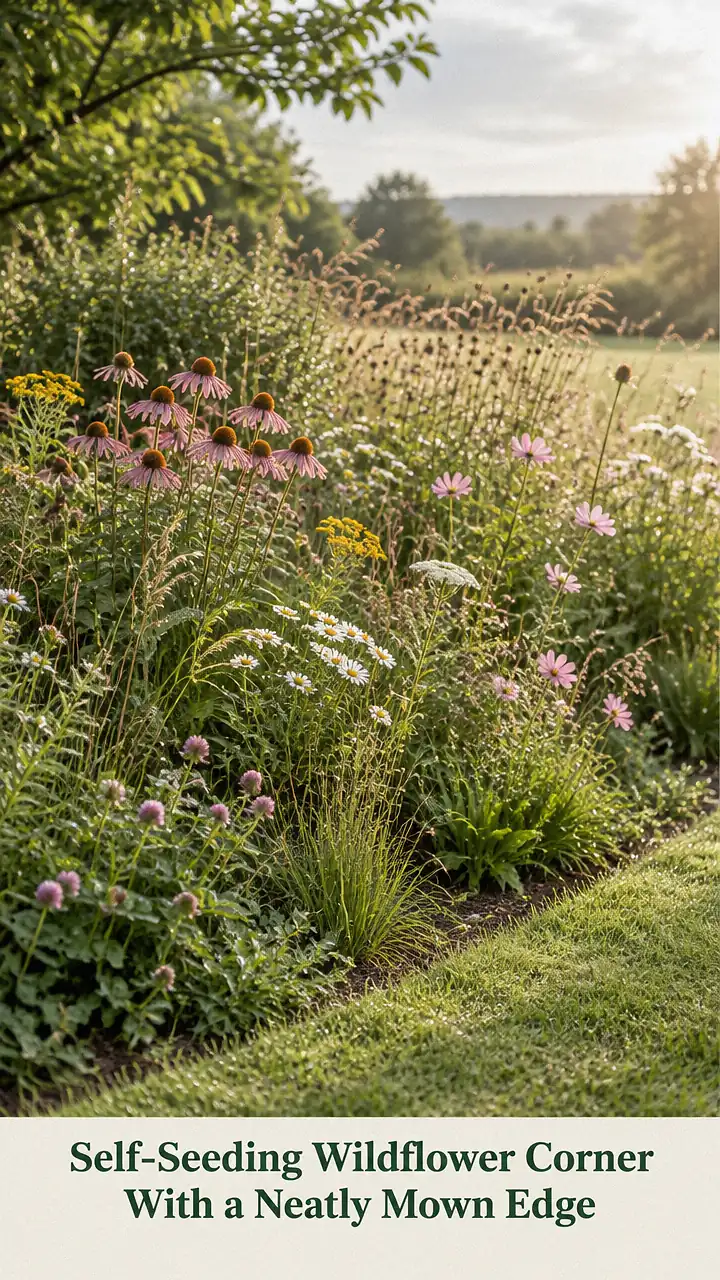
Self-Seeding Wildflower Corner With a Neatly Mown Edge
Overview
A wildflower corner transforms an ordinary patch of lawn into a lively mixture of blossoms, seedheads, and softly moving stems. Purple coneflowers, golden black-eyed Susans, and airy native grasses create an intentionally untamed appearance. A crisp grass border gives the planting a finished look without sacrificing its natural personality. This approach is ideal for sunny backyard corners and larger suburban gardens.
Materials & Plants
- Regionally native wildflowers and bunchgrasses
- Locally appropriate seed mix or nursery-grown plugs
- Rake, hand weeder, and garden hose
- Lawn mower or manual edging tool
How to Create It
- Choose a sunny location and remove existing turf and persistent weeds before planting.
- Select species suited to your local climate and soil, avoiding aggressive or invasive wildflower mixes.
- Sow seeds at the recommended season and depth, or install plugs at their mature spacing.
- Maintain a clean 12–18-inch grass edge, remove unwanted weeds, and leave some healthy seedheads through winter.
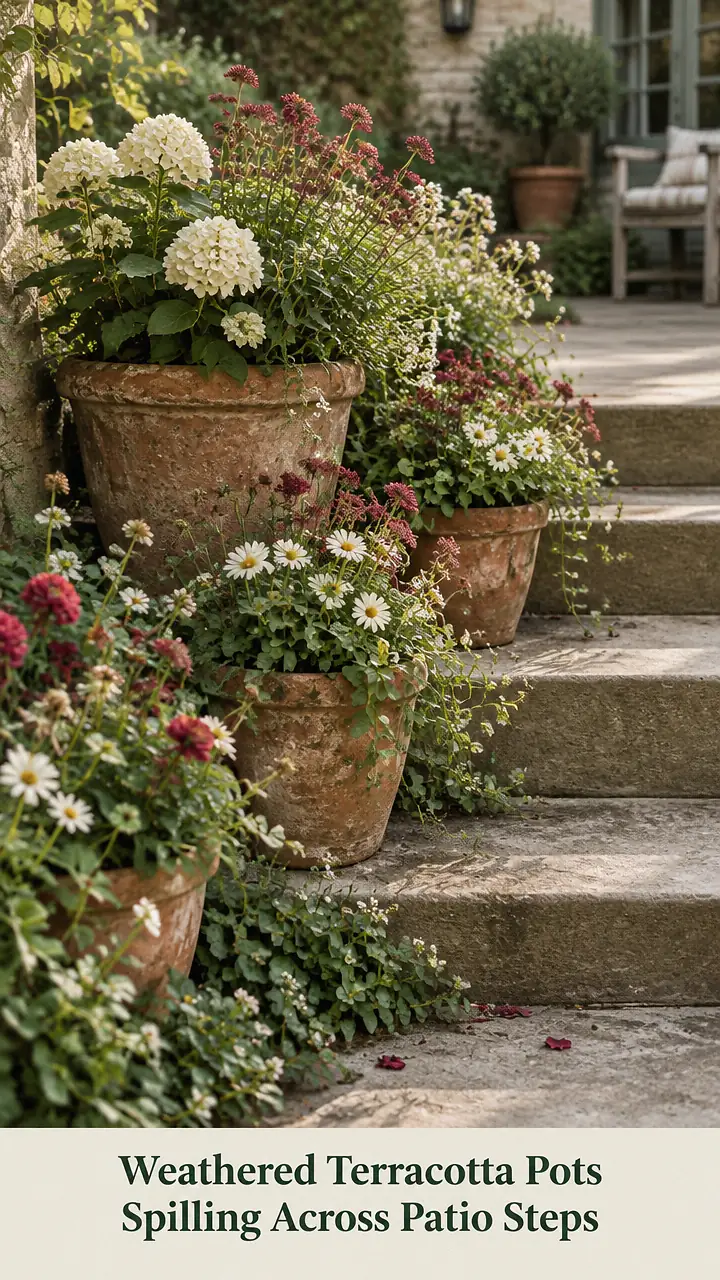
Weathered Terracotta Pots Spilling Across Patio Steps
Overview
A collection of mismatched terracotta pots creates beautiful, casual clutter on a sunny patio. Some containers stand upright with tall flowering stems, while others overflow with trailing greenery and bright seasonal blossoms. Warm clay surfaces, aged finishes, and varied pot sizes bring a distinctly Mediterranean feeling. This idea is particularly effective around patio steps, courtyard corners, and small outdoor seating areas.
Materials & Plants
- Assorted terracotta pots with drainage holes
- Trailing petunias, verbena, and compact geraniums
- Lightweight container potting mix
- Plant stands and protective pot feet
How to Create It
- Gather containers in three or four sizes, cleaning previously used pots before planting.
- Fill them with potting mix, grouping plants with similar sunlight and watering requirements.
- Cluster containers at different heights beside steps, keeping stairs, doorways, and walking routes unobstructed.
- Water when the upper soil begins drying, remove spent flowers as needed, and rotate pots occasionally for balanced growth.
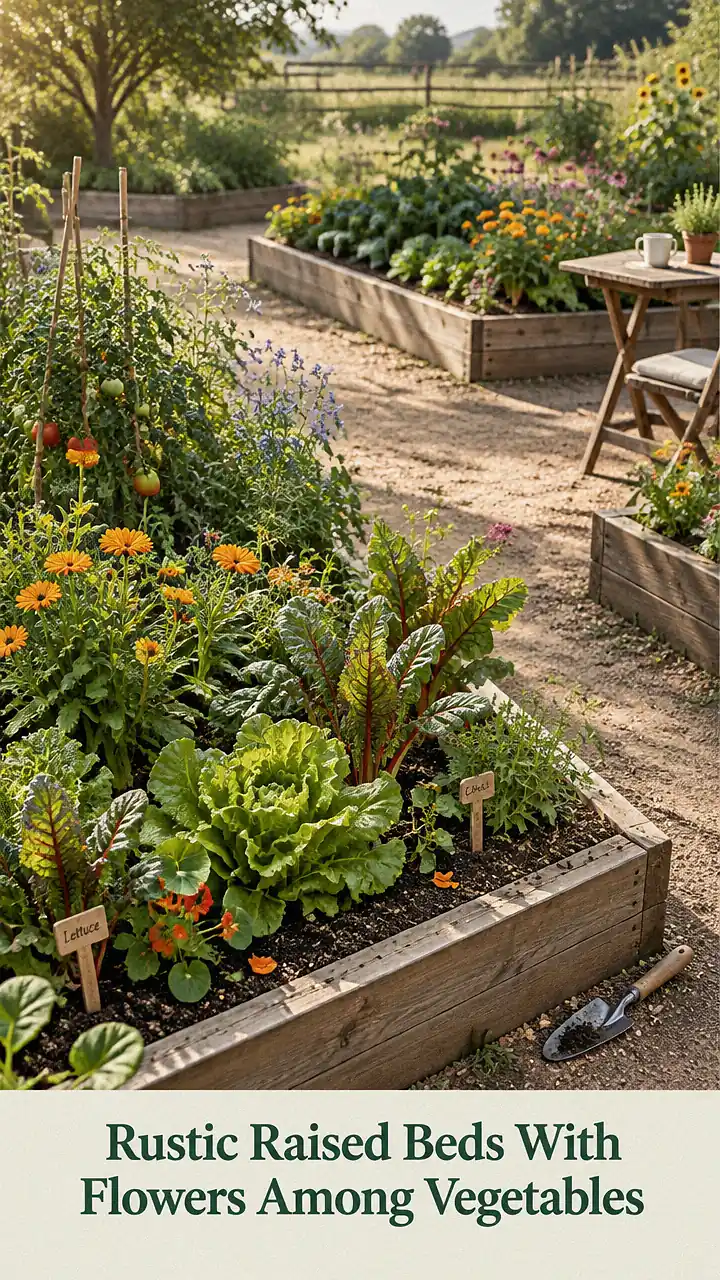
Rustic Raised Beds With Flowers Among Vegetables
Overview
A productive vegetable garden can look wonderfully messy when flowers, herbs, and edible plants grow together in generous layers. Loose wooden raised beds hold leafy kale, climbing beans, bright marigolds, and feathery dill. A few stems lean into the paths, adding character without blocking access. This practical design suits sunny suburban backyards and small kitchen gardens where beauty and harvests share the same space.
Materials & Plants
- Untreated or garden-safe wooden raised beds
- Kale, bush beans, dill, and marigolds
- Compost-rich garden soil
- Wooden stakes, twine, and straw mulch
How to Create It
- Install raised beds approximately 3–4 feet wide, leaving accessible paths between them.
- Fill with suitable garden soil and compost, then position taller crops where they won’t shade smaller vegetables.
- Mix flowers and herbs between vegetables while maintaining adequate airflow and planting distances.
- Tie up wandering stems, harvest regularly, and replace finished seasonal crops to keep the garden productive.
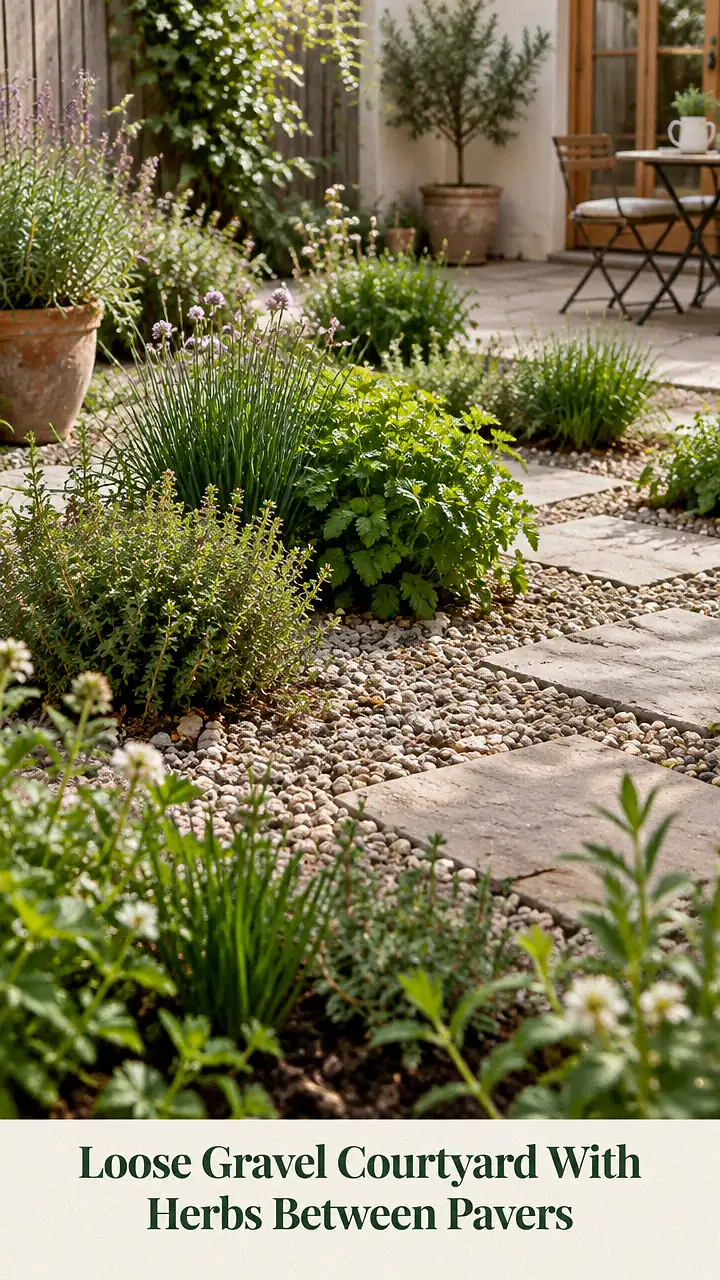
Loose Gravel Courtyard With Herbs Between Pavers
Overview
This relaxed courtyard design combines weathered paving, irregular gravel borders, and small pockets of fragrant greenery. Low-growing thyme softens sunny paver edges, while rosemary and lavender add silvery foliage and purple flowers in wider planting areas. The result feels slightly overgrown but still comfortable to navigate. It’s a lovely solution for compact courtyards, side gardens, and sunny spaces with limited planting soil.
Materials & Plants
- Outdoor pavers and compacted gravel base
- Creeping thyme suited to local conditions
- Rosemary and lavender for suitable dry climates
- Landscape edging and hand tools
How to Create It
- Prepare a stable, properly draining base and install pavers with accessible walking surfaces.
- Leave selected wider joints or planting pockets where roots can develop without undermining the paving.
- Add gritty, well-draining soil and install compact herbs appropriate to the available sunlight.
- Trim growth away from slippery or uneven walking areas and remove volunteer weeds before they establish.
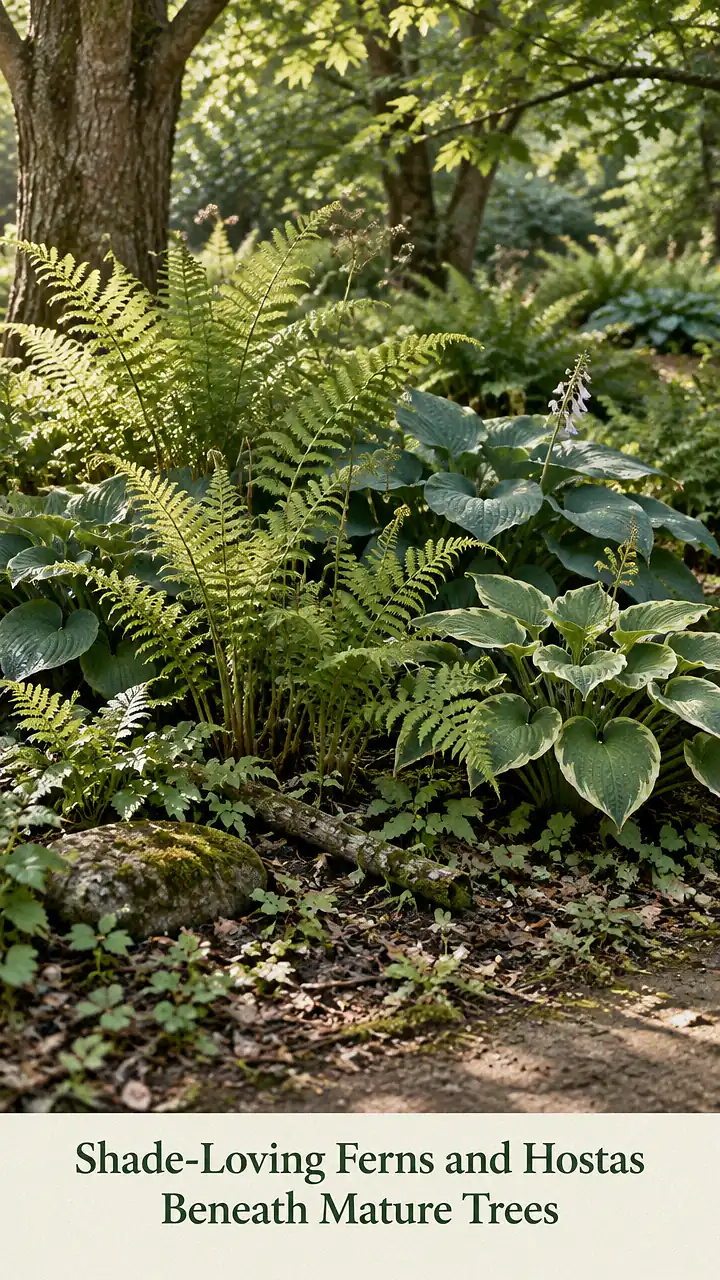
Shade-Loving Ferns and Hostas Beneath Mature Trees
Overview
A shady corner becomes a lush, slightly mysterious retreat when broad hosta leaves mingle with delicate fern fronds. Different shades of green create depth, while fallen leaves and a natural mulch surface soften the ground. The design feels like a miniature woodland rather than a formal flower bed. It works beautifully beneath established deciduous trees or beside a north-facing garden fence.
Materials & Plants
- Shade-tolerant hostas and locally suitable ferns
- Woodland sedges or other native shade groundcovers
- Shredded leaves or fine bark mulch
- Small stepping stones and hand trowel
How to Create It
- Observe the shade pattern and identify planting pockets between major tree roots.
- Choose plants that tolerate root competition and gently install small specimens without damaging woody roots.
- Add a thin layer of organic mulch while keeping it away from tree trunks and plant crowns.
- Water new plants during establishment and leave healthy autumn leaves in planting beds where practical.
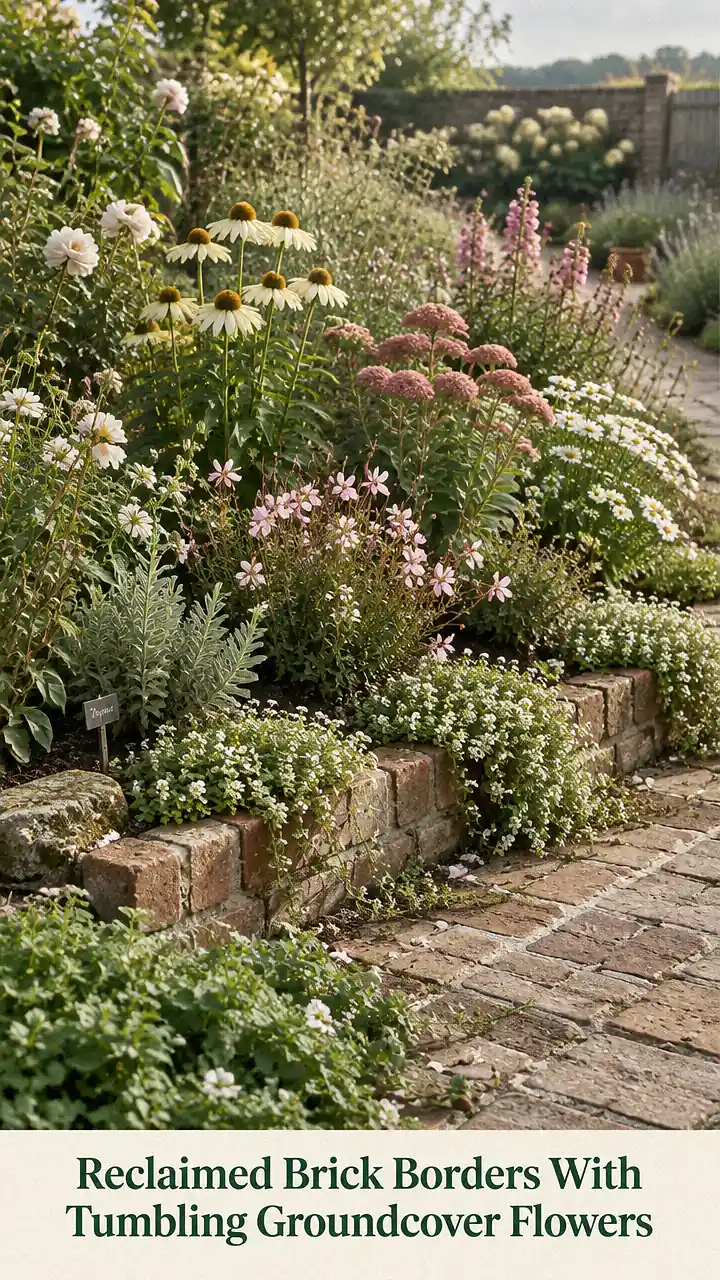
Reclaimed Brick Borders With Tumbling Groundcover Flowers
Overview
An old brick border adds warmth and structure to an otherwise unruly collection of flowering plants. Small blossoms tumble over uneven red bricks, while upright perennials and textured foliage fill the bed behind them. Slight variations in brick color make the garden feel established and informal. This budget-friendly look works especially well beside a front walkway, driveway edge, or narrow backyard flower bed.
Materials & Plants
- Clean reclaimed bricks
- Sweet alyssum and low-growing dianthus
- Coreopsis or compact perennial salvia
- Compost, coarse sand, and rubber mallet
How to Create It
- Remove weeds and establish a shallow, level trench following the desired border.
- Set bricks securely on a compacted base, keeping them low enough to avoid tripping hazards.
- Plant low flowers close to the edging and taller species farther into the bed.
- Allow gentle spilling growth, but trim plants that obstruct the path or conceal the edge entirely.
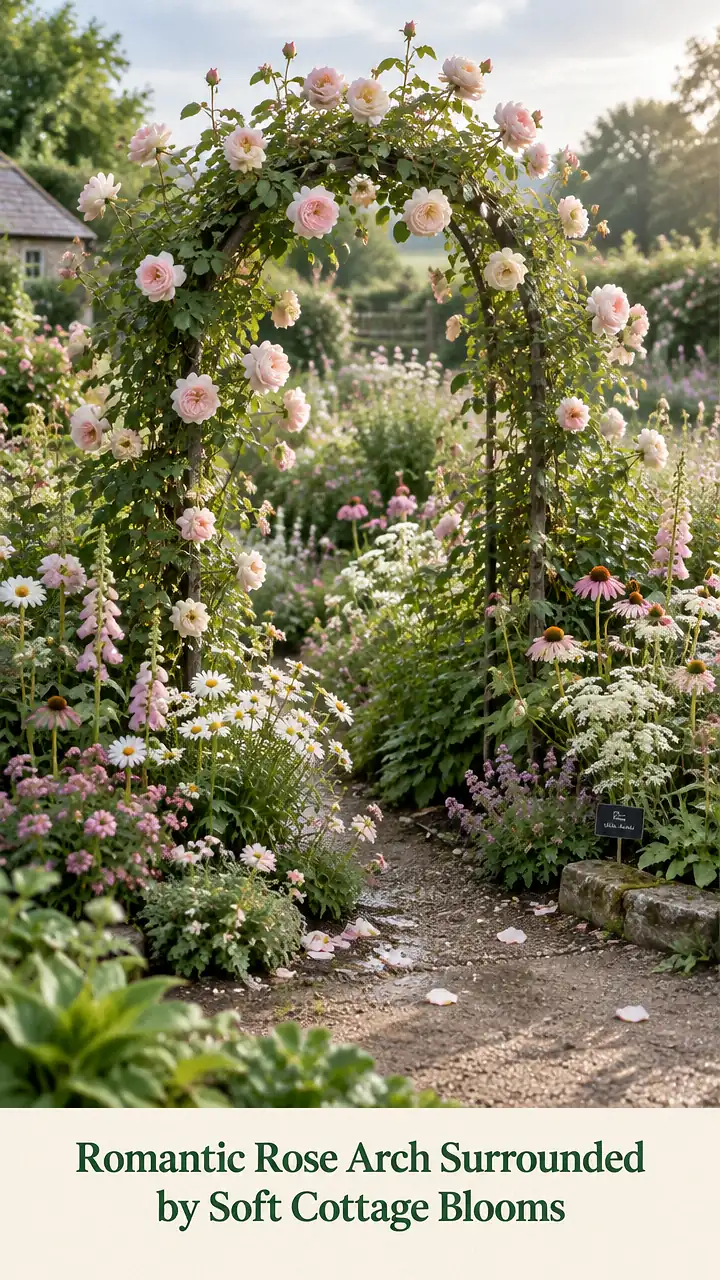
Romantic Rose Arch Surrounded by Soft Cottage Blooms
Overview
A simple garden arch covered in flowering roses creates a beautiful focal point in an otherwise relaxed landscape. Climbing stems frame the entrance, while foxgloves, catmint, and other soft flowers fill the surrounding beds where climate and growing conditions allow. The mix of vertical growth and loose planting feels romantic without becoming formal. This design suits backyard entrances and garden transitions.
Materials & Plants
- Strong, securely anchored metal or wooden arch
- Climbing rose suitable for the local climate
- Catmint, hardy geraniums, and suitable biennials
- Soft plant ties, pruning shears, and mulch
How to Create It
- Install the arch firmly in a sunny, accessible location with sufficient room for mature rose growth.
- Plant climbing roses beside the supports and tie their main stems loosely as they develop.
- Add lower companion flowers around the base, leaving airflow around the roses.
- Prune at the appropriate seasonal time and remove any thorny stems extending into the walkway.
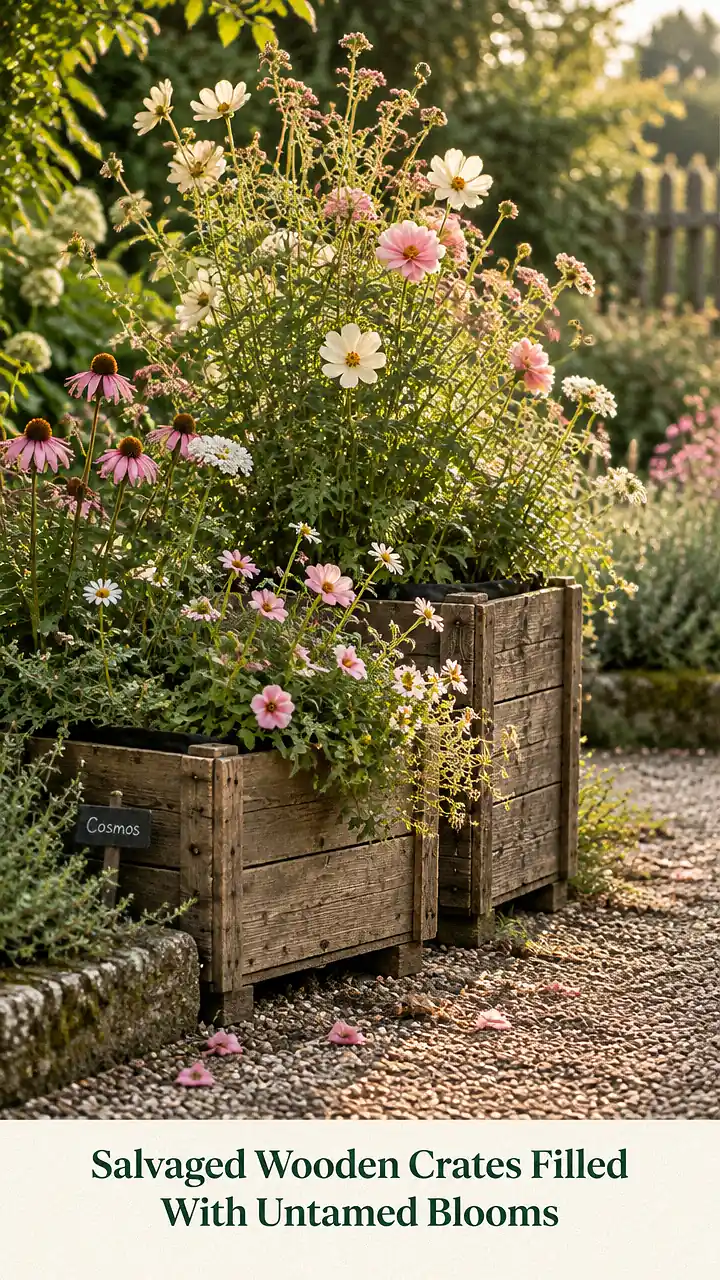
Salvaged Wooden Crates Filled With Untamed Blooms
Overview
Stacked wooden crates make a playful, rustic flower display that looks naturally collected over time. Some crates hold bushy foliage, while others overflow with small colorful blossoms. Weathered wood, imperfect spacing, and varied planting heights create an easygoing farmhouse atmosphere. This approach is particularly useful for patios, porches, and compact yards where permanent flower beds aren’t possible.
Materials & Plants
- Clean, sturdy wooden crates
- Removable planter liners with drainage
- Dwarf zinnias, lobelia, and compact coleus
- Potting mix and exterior-safe wood supports
How to Create It
- Inspect crates for sharp edges, weak boards, and protruding nails before use.
- Place drained planting containers inside each crate, keeping damp soil separated from untreated wood where possible.
- Arrange crates in low, stable groups and choose plants according to the sunlight each position receives.
- Water individual containers as required and inspect the wooden structure periodically for deterioration.
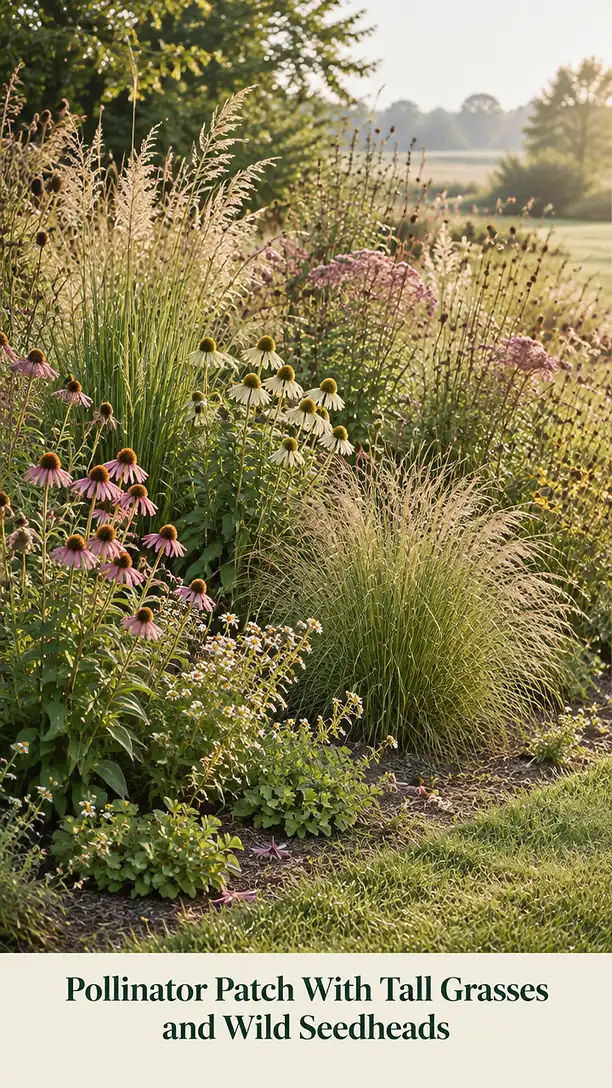
Pollinator Patch With Tall Grasses and Wild Seedheads
Overview
Tall flowering stems, ornamental grasses, and weathered seedheads make this garden feel wonderfully loose and dynamic. Purple coneflowers rise above feathery grass blades, while yellow blooms create bright pockets of color. In autumn, the fading flowers become sculptural rather than untidy. The design suits sunny backyard boundaries and open planting strips where a naturalistic meadow appearance can develop.
Materials & Plants
- Locally native coneflowers and goldenrods
- Regionally appropriate little bluestem or similar bunchgrasses
- Native asters suited to site conditions
- Mulch, compost, and hand weeder
How to Create It
- Choose a sunny strip with enough width for grasses and perennials to reach mature size.
- Arrange plants in repeated, irregular groups, placing taller varieties behind shorter ones.
- Mulch between young plants and water consistently during establishment.
- Leave some healthy stems and seedheads standing through winter, removing diseased material and managing unwanted seedlings.
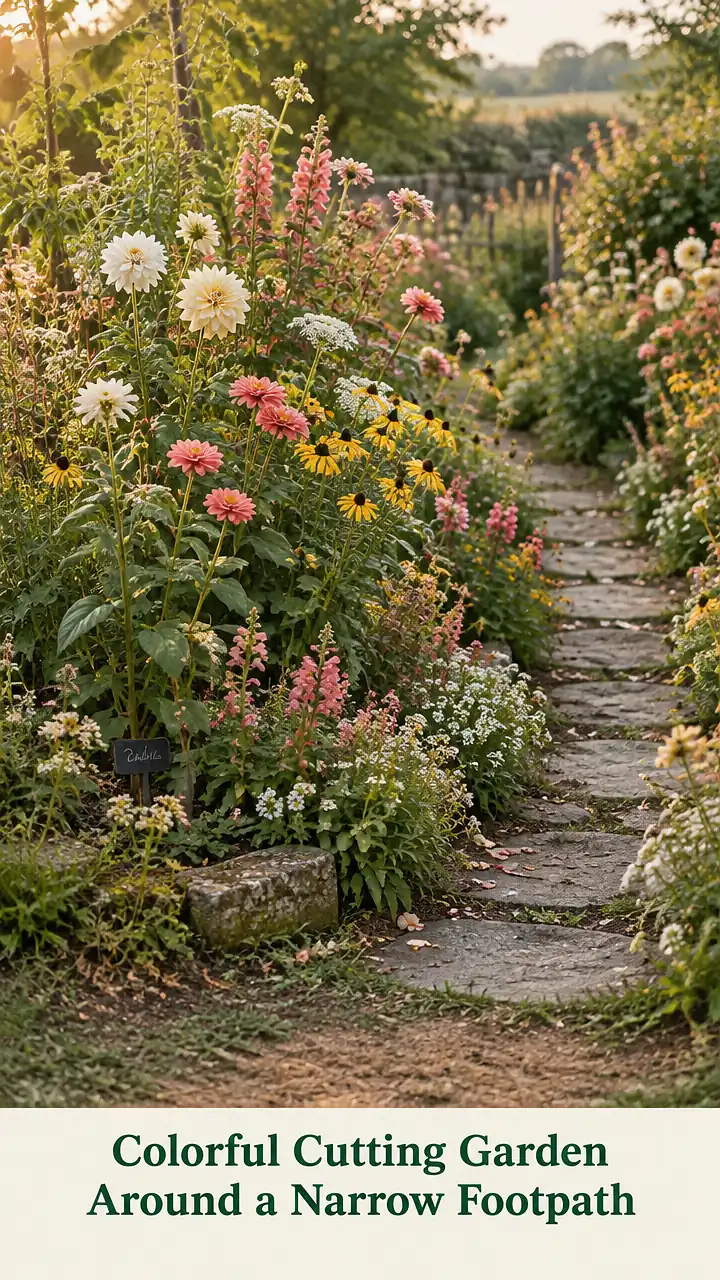
Colorful Cutting Garden Around a Narrow Footpath
Overview
A cutting garden looks especially charming when flowers grow in abundant, slightly unpredictable clusters. Tall snapdragons, cheerful zinnias, and airy cosmos lean toward a narrow pathway, creating layers of pink, orange, yellow, and white. The beds appear casually planted, but the central access path makes harvesting easy. This cheerful arrangement works well in sunny side yards and modest backyard plots.
Materials & Plants
- Zinnias, cosmos, snapdragons, and seasonal fillers
- Compost and organic mulch
- Stepping stones or wood-chip pathway
- Flower snips and discreet plant supports
How to Create It
- Create a path approximately 24–30 inches wide with planting space on both sides.
- Prepare the soil and plant flowering varieties in loose groups based on their final height.
- Use unobtrusive supports for tall stems and keep plants from completely closing the path.
- Harvest flowers frequently, remove damaged foliage, and replant suitable annuals as seasonal conditions permit.
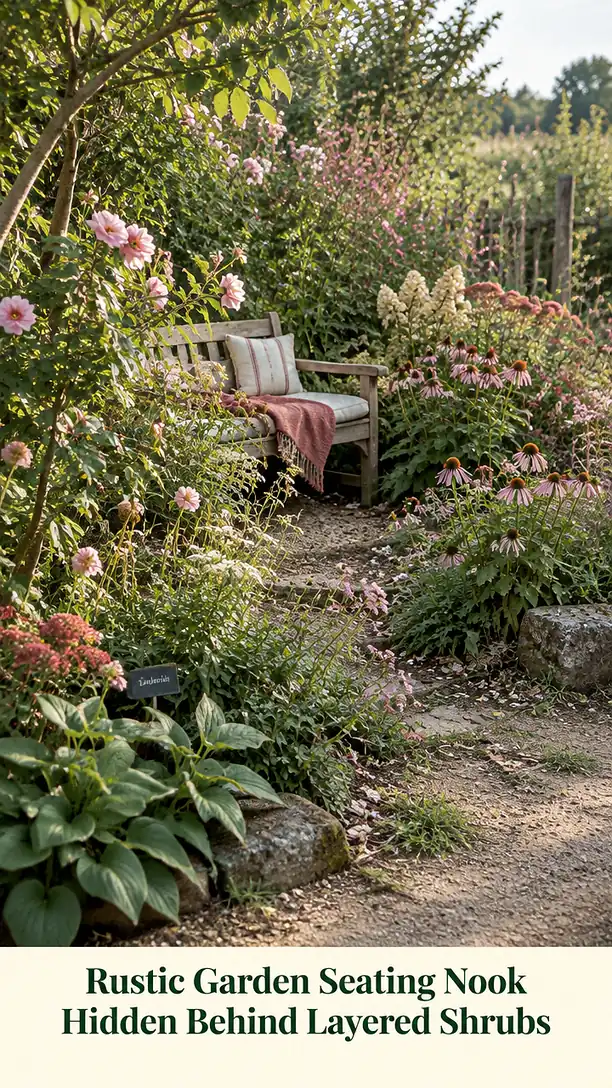
Overview
A tucked-away wooden bench surrounded by greenery gives a messy garden a peaceful destination. Layered shrubs create privacy, while flowering perennials and grasses soften the bench’s edges. A simple mulch or stone path winds toward the seating area, making the space feel discovered rather than deliberately staged. This idea works best in medium-sized backyards with a quiet corner away from everyday activity.
Materials & Plants
- Weather-resistant wooden bench
- Compact viburnum or other locally adapted shrubs
- Shade-appropriate ferns or sunny ornamental grasses
- Mulch, stepping stones, and solar lanterns
How to Create It
- Choose level ground with comfortable light conditions and enough space for safe access.
- Place the bench on a firm, stable surface before adding surrounding plants.
- Arrange shrubs behind the seat and softer perennials around its sides, respecting mature dimensions.
- Maintain an open entry path, trim branches near seating, and refresh the surface mulch when necessary.
Balcony Jungle With Mismatched Hanging Planters and Vines
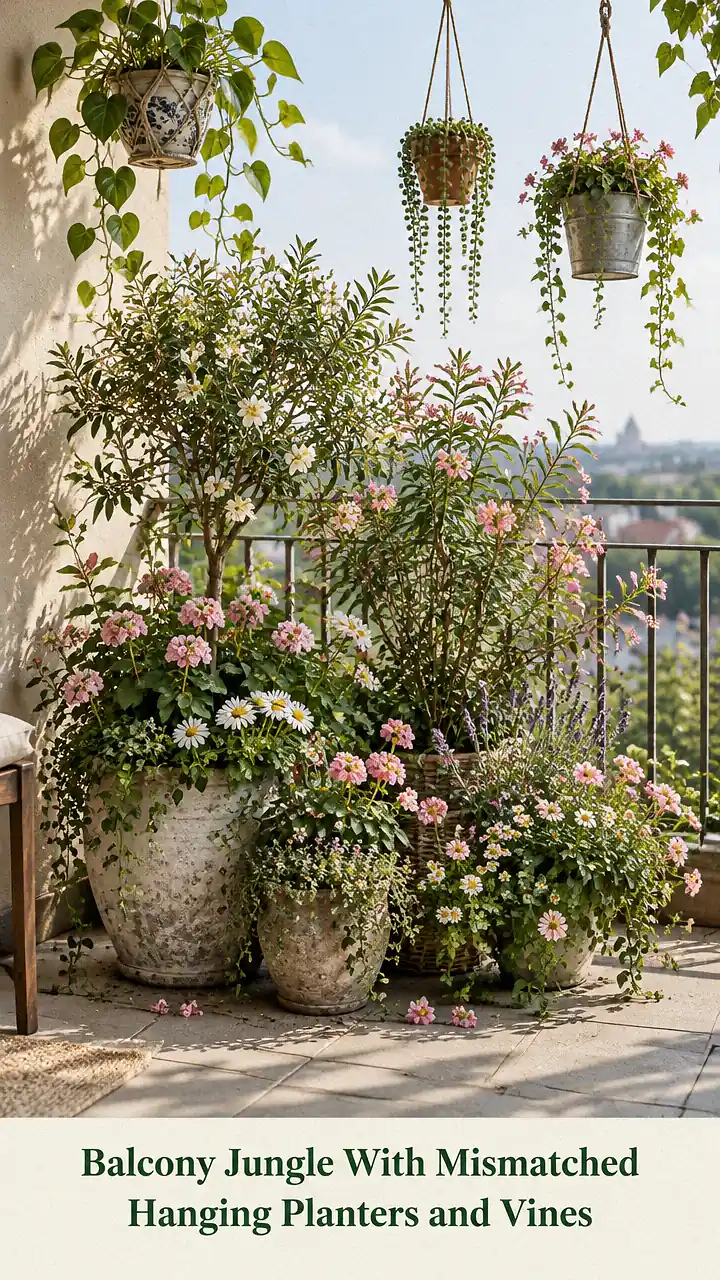
Overview
An ordinary balcony can become a lively green hideaway with hanging baskets, trailing vines, and containers of different shapes and colors. Heart-shaped foliage falls from shelves while upright plants add height beside the railing. The relaxed arrangement feels lush without needing a large garden. This style works especially well on sheltered balconies with bright indirect light or gentle morning sun.
Materials & Plants
- Lightweight planters with drainage
- Pothos, spider plants, and shade-tolerant ferns
- Secure shelves and rated hanging brackets
- Potting mix, drip trays, and watering can
How to Create It
- Confirm the balcony’s weight limits, exposure, and railing rules before installing anything.
- Secure planters and brackets to approved structural supports, keeping emergency access clear.
- Arrange taller containers below trailing foliage and select plants suited to the actual light.
- Empty collected water, trim long vines, and protect tropical plants when temperatures become too cold.
Relaxed Modern Gravel Garden With Wispy Architectural Plants
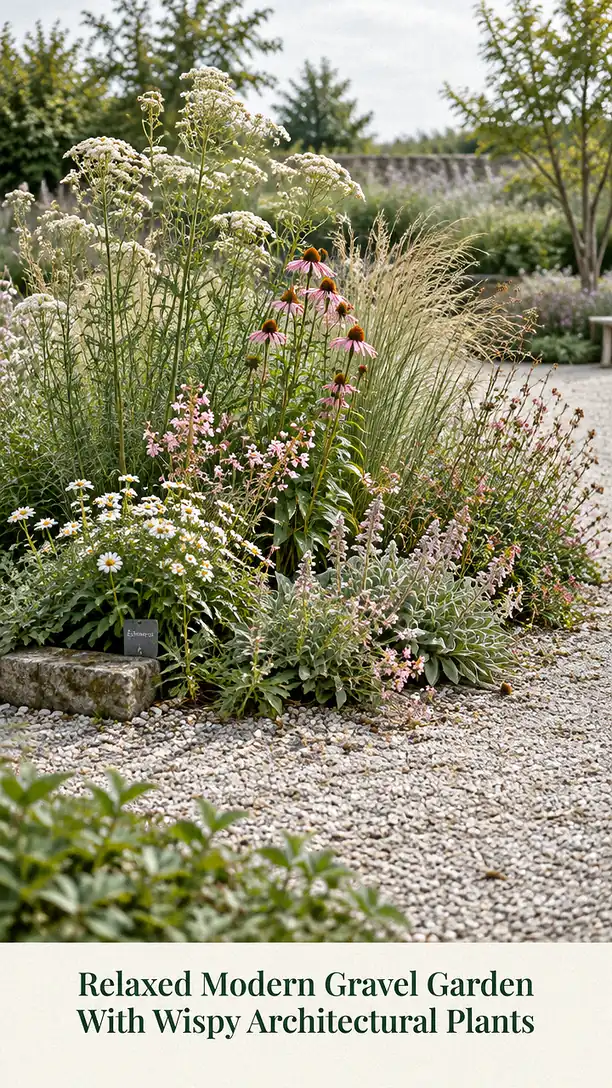
Overview
A modern garden doesn’t have to look rigid or overly polished. Pale gravel, sculptural boulders, and loose drifts of airy plants create an appealing contrast between clean materials and natural movement. Fine grasses sway around upright flowering stems, while scattered stones provide visual weight. This minimalist interpretation of messy garden ideas works beautifully in sunny, well-drained front yards and contemporary courtyards.
Materials & Plants
- Light-colored gravel and locally sourced stones
- Drought-tolerant salvia and yarrow
- Compact, noninvasive ornamental bunchgrasses
- Metal edging, rake, and weed-control tools
How to Create It
- Remove weeds and prepare a well-draining planting area with clearly defined outer edges.
- Position several larger stones first, leaving open gravel space between planting groups.
- Install drought-adapted plants in irregular drifts, following mature spacing recommendations.
- Water during establishment, hand-weed regularly, and cut back old growth at the appropriate season.
Woodland Leaf Garden With Mossy Stones and Fallen Logs
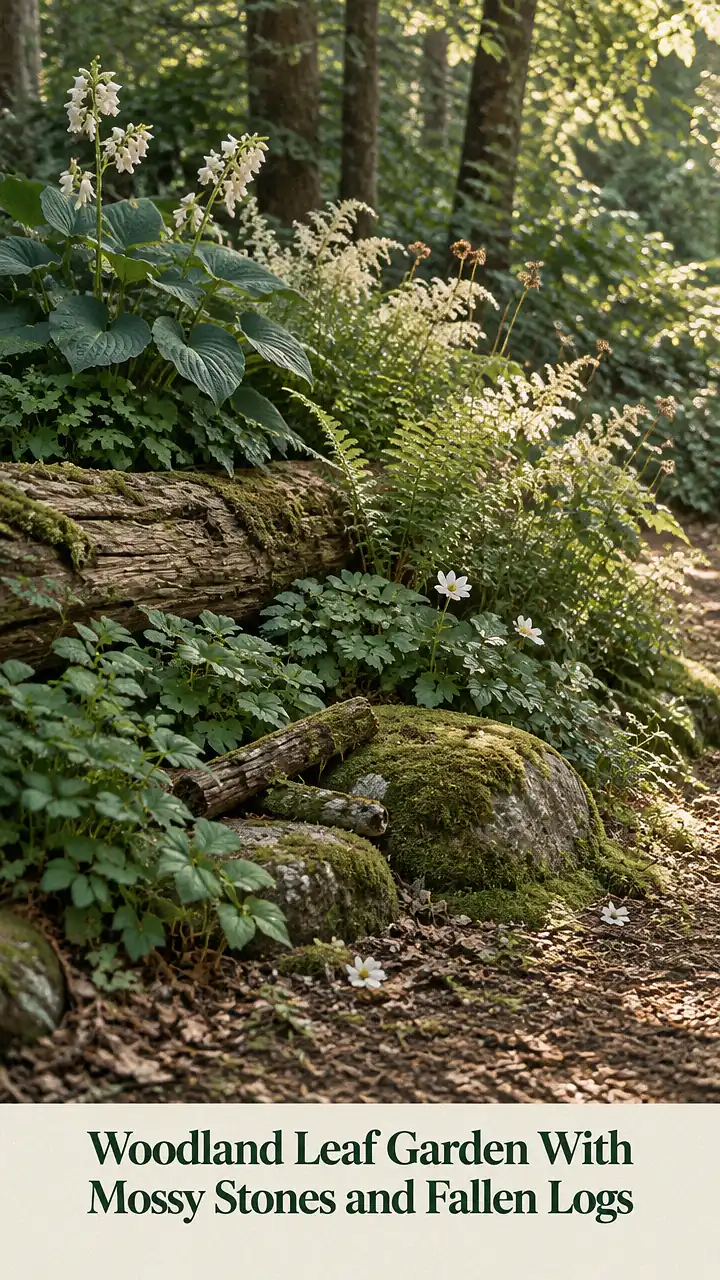
Overview
A woodland-inspired garden celebrates earthy textures rather than bright, formal flower displays. Naturally weathered logs sit between leafy plants, moss-covered stones, and low groundcovers, creating a quiet forest-floor appearance. Small pockets of green contrast with brown fallen leaves and rough bark. This design is ideal for shaded backyard corners where trees provide shelter from strong afternoon sun.
Materials & Plants
- Locally suitable woodland sedges and ferns
- Native shade groundcovers
- Fallen logs from healthy, untreated wood
- Natural stones and shredded leaf mulch
How to Create It
- Select a shaded area away from building foundations and remove invasive weeds.
- Position a few small logs and stones as accents without burying existing tree roots.
- Install shade-loving plants in natural-looking clusters, leaving room for mature growth.
- Allow a light layer of healthy fallen leaves to remain while checking for pests and removing hazardous debris.
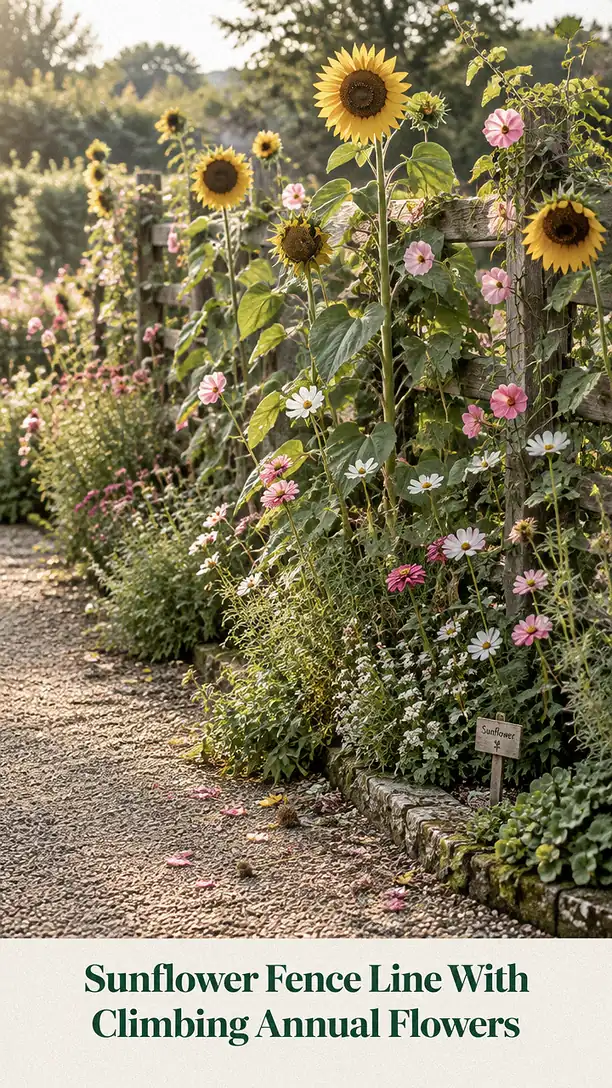
Sunflower Fence Line With Climbing Annual Flowers
Overview
A sunny wooden fence becomes a colorful living backdrop when sunflowers grow alongside climbing flowers. Tall golden sunflower heads rise above smaller blossoms, while delicate vines weave through a simple trellis. The combination looks cheerful, spontaneous, and slightly wild, especially during late summer. This affordable arrangement suits narrow backyard borders, vegetable garden fences, and sunny property edges.
Materials & Plants
- Sunflower seeds in mixed mature heights
- Climbing nasturtiums or suitable annual vines
- Wooden trellis or garden netting
- Compost, mulch, and soft garden twine
How to Create It
- Select a fence receiving at least six hours of direct sun and prepare a planting strip.
- Secure a separate trellis where needed, ensuring it can carry the expected vine growth.
- Sow sunflowers at packet-recommended spacing and plant climbers nearby without overcrowding.
- Support tall stems in windy locations, water during dry periods, and collect seeds or remove spent plants seasonally.
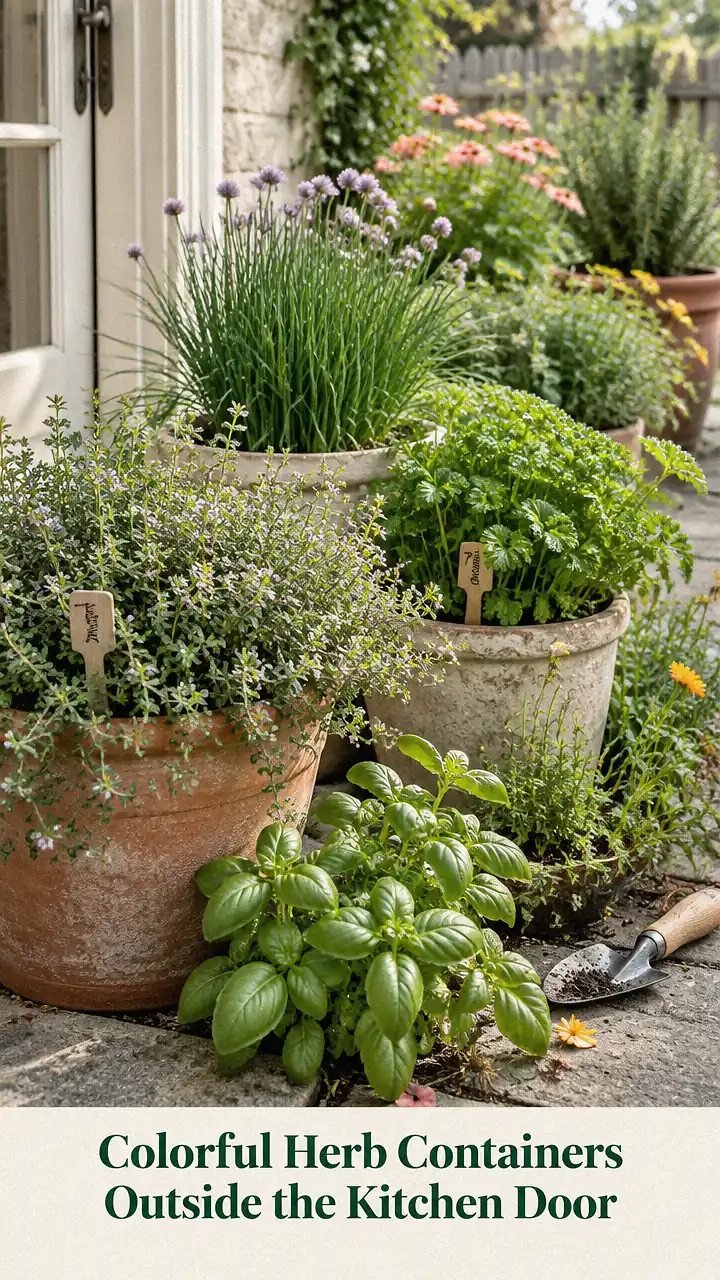
Colorful Herb Containers Outside the Kitchen Door
Overview
A collection of culinary herbs creates a messy little garden that smells wonderful and stays useful throughout the growing season. Basil, parsley, chives, and trailing thyme fill pots of different sizes, while narrow wooden shelves add extra planting space. The greenery looks casual and abundant rather than arranged in strict rows. This idea is perfect for a doorstep, small patio, or sunny balcony.
Materials & Plants
- Basil, parsley, chives, and thyme
- Terracotta, glazed, or recycled food-safe planters
- Well-draining container potting mix
- Small plant labels and sturdy shelving
How to Create It
- Select a spot with suitable sunlight and easy access for watering and harvesting.
- Plant herbs in separate containers or group only those with compatible moisture needs.
- Arrange taller pots behind smaller ones, leaving airflow around foliage and drainage space underneath.
- Pinch basil regularly, harvest leaves without stripping plants, and check soil moisture before watering.
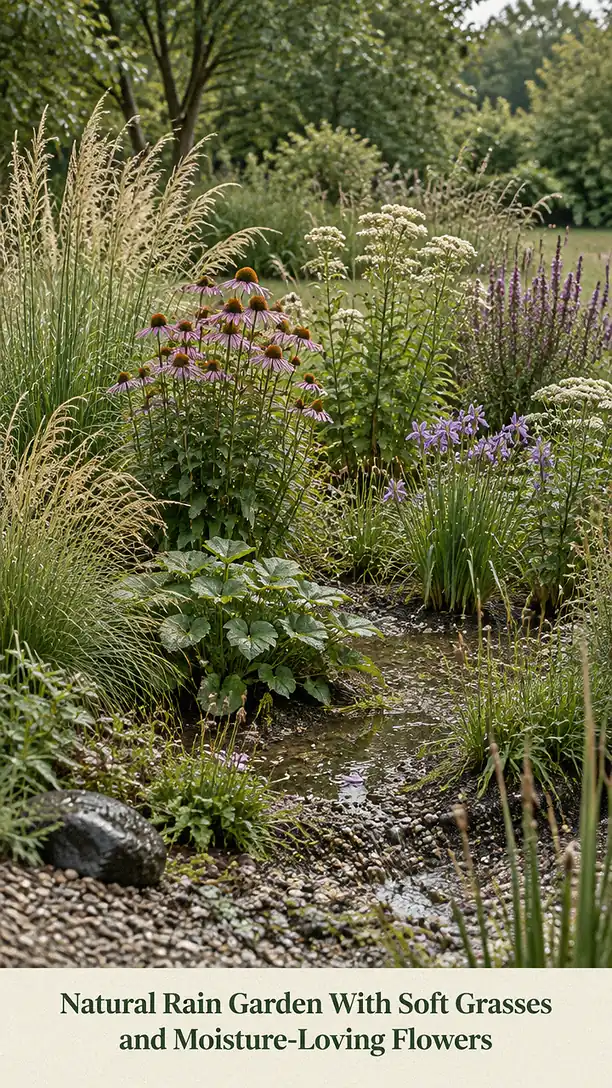
Natural Rain Garden With Soft Grasses and Moisture-Loving Flowers
Overview
A shallow rain garden can transform a suitable part of the yard into a lush, informal planting area. Moisture-tolerant flowers mingle with upright grasses, creating soft layers that change throughout the growing season. After rainfall, the planted basin temporarily holds runoff before it soaks into the soil. This design suits residential yards with appropriate drainage, adequate space, and a safe location away from foundations.
Materials & Plants
- Native blue flag iris where regionally appropriate
- Suitable native sedges and moisture-tolerant perennials
- Compost or soil amendments if recommended by a site assessment
- Shovel, level, and natural stone edging
How to Create It
- Check soil infiltration, underground utilities, slopes, and local requirements; keep the basin at least 10 feet from building foundations and farther away when site conditions require.
- Choose a gently sloping runoff location where water can infiltrate rather than remain stagnant for days.
- Excavate and shape a shallow basin with a safe overflow route, then plant species suited to wetter centers and drier edges.
- Water plants during establishment, remove sediment and weeds, and inspect drainage after heavy rain.
Embrace the Beauty of a Naturally Messy Garden
A messy garden isn’t about abandoning maintenance or letting weeds take over. It’s about making room for natural shapes, generous planting, layered colors, and the little imperfections that give an outdoor space personality.
You might begin with a few overflowing terracotta pots, a relaxed cottage flower border, or a small pollinator-friendly corner. Larger spaces can accommodate winding paths, rustic seating areas, and naturalistic perennial plantings that evolve with the seasons.
The most successful designs still have a few practical boundaries. Clear walkways, appropriate plant spacing, good drainage, and occasional pruning keep the space comfortable and healthy without sacrificing its free-spirited appearance.
Choose ideas that suit your available space, gardening budget, sunlight, local climate, and personal style. Start small, observe how the plants grow, and adjust the arrangement as your garden develops.
Above all, don’t worry about making every corner look perfect. A little wildness, a few unexpected flowers, and plenty of greenery can turn an ordinary backyard into a wonderfully inviting place to spend time.