
Sandstone has a way of making a garden feel welcoming before you’ve planted a single flower. Its warm golden tones, earthy textures, and naturally varied surfaces work beautifully with everything from colorful cottage flowers to sleek modern landscaping. Whether you have a spacious backyard or a tiny patio, sandstone can help create an outdoor space that feels comfortable, inviting, and connected to nature.
One of the best things about sandstone garden ideas is their versatility. You can use sandstone for winding pathways, raised planting areas, decorative rock gardens, cozy seating corners, or simple accents around your favorite plants. Reclaimed pieces and small offcuts can also provide character without requiring an expensive renovation.
The secret is choosing the right arrangement for your garden’s size, sunlight, drainage, and overall style. Natural sandstone varies in durability and weather resistance, so select outdoor-grade stone suited to your local climate, especially where freezing temperatures occur.
Ready to transform your outdoor space? These 18 sandstone garden ideas combine beautiful design with realistic projects that home gardeners can adapt to their needs.
Beautiful Sandstone Garden Ideas for Every Outdoor Style
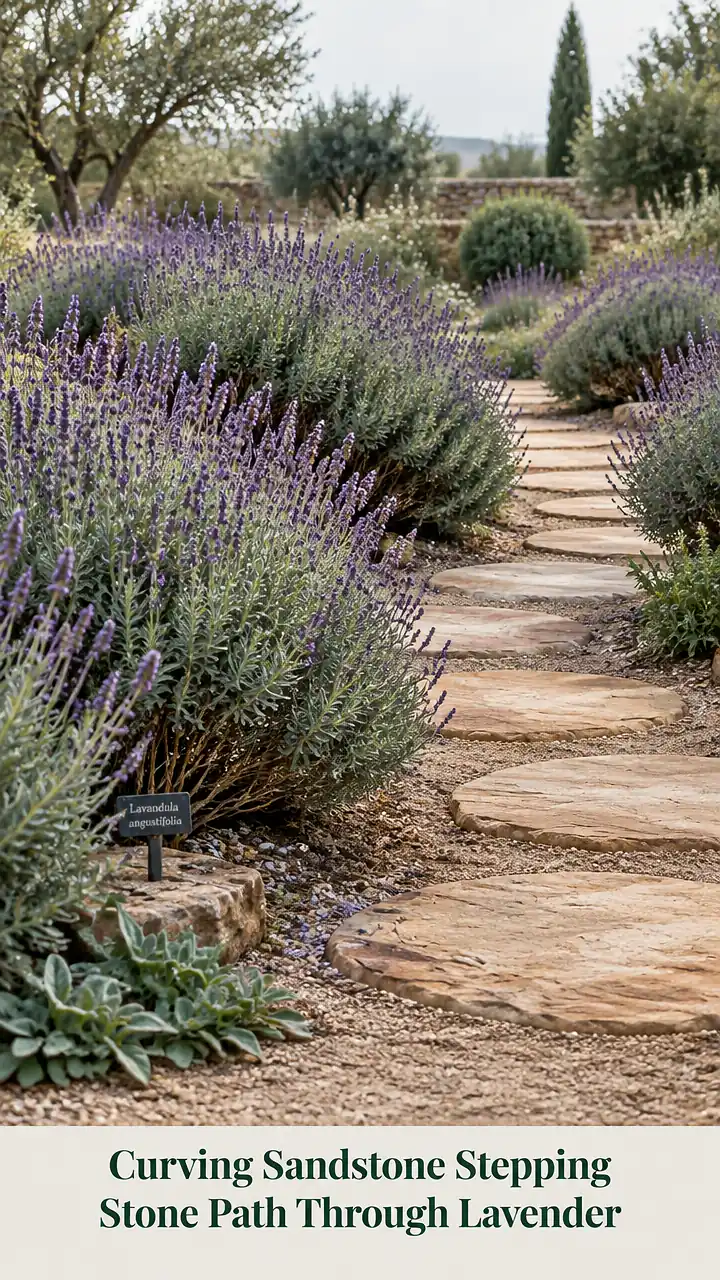
Curving Sandstone Stepping Stone Path Through Lavender
Overview
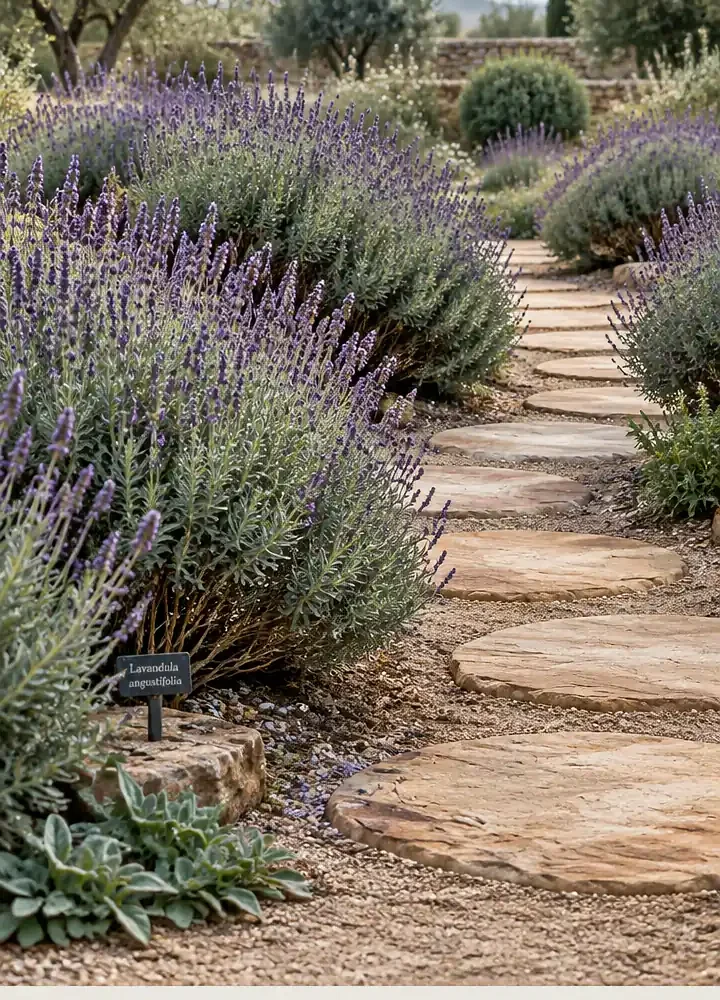
A gently curving sandstone pathway surrounded by lavender creates a romantic garden scene filled with soft colors and natural textures. Irregular golden stepping stones wind through a sunny planting area, while purple lavender flowers spill toward the edges. This design works beautifully in cottage-style backyards, front gardens, and spaces connecting a patio to a flower bed.
Materials & Plants
- Natural sandstone stepping stones, approximately 16–24 inches across
- Lavender varieties suited to your climate
- Creeping thyme for sunny, well-drained gaps
- Compact ornamental grasses
- Crushed stone for the pathway base
- Landscape edging, shovel, and hand tamper
How to Create It
- Mark a gently curving route using a garden hose, keeping the path comfortable for walking.
- Excavate individual stone positions and prepare a compacted, free-draining base appropriate for your soil.
- Set sandstone pieces securely with their upper surfaces level and stable, leaving comfortable stepping distances.
- Plant lavender along both sides, spacing plants according to their mature width.
- Add creeping thyme where foot traffic is light, then prune lavender as appropriate and remove weeds regularly.
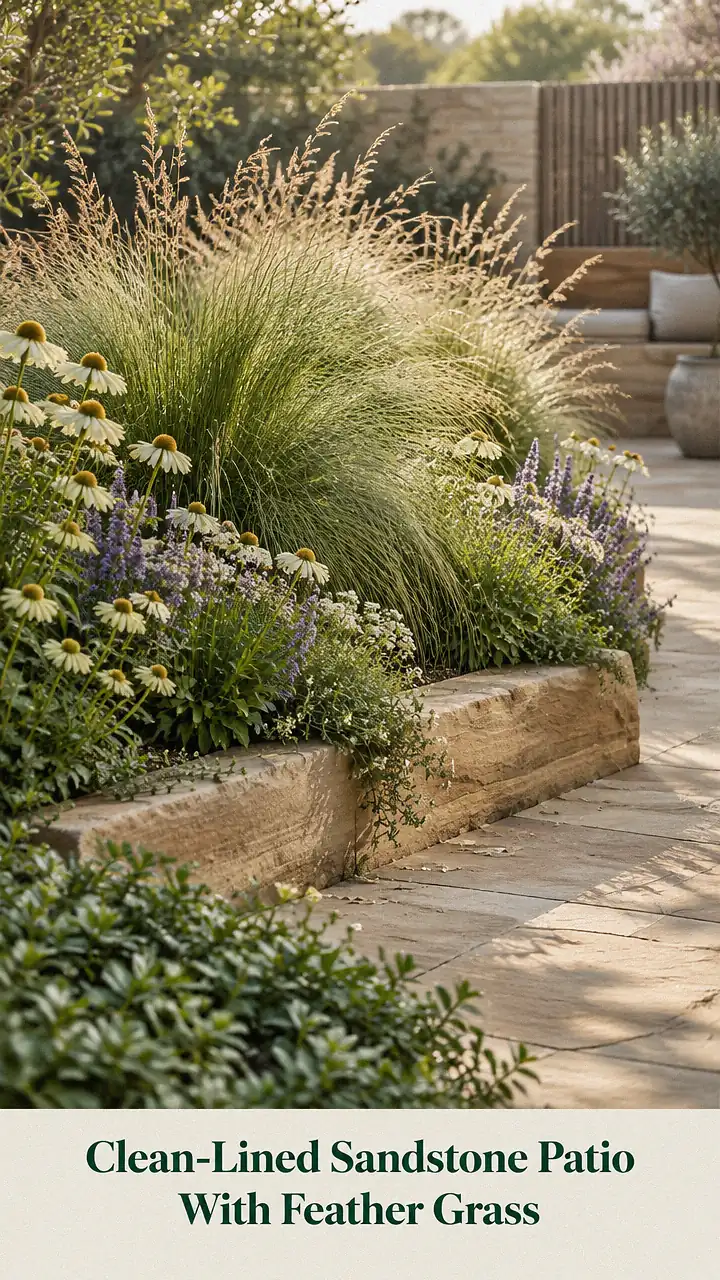
Clean-Lined Sandstone Patio With Feather Grass
Overview
For a contemporary outdoor space, large rectangular sandstone slabs create a clean foundation that contrasts beautifully with soft ornamental grasses. Choose pale beige or muted gray sandstone and arrange the pieces in a simple geometric pattern. Slim planters filled with feathery grasses add movement without cluttering the design. This look suits modern backyards, townhouses, and compact urban patios.
Materials & Plants
- Outdoor-rated rectangular sandstone paving slabs
- Permeable jointing material and suitable paving base
- Powder-coated metal or concrete planters
- Feather reed grass or climate-suitable alternatives
- Dwarf fountain grass in regions where it is appropriate
- Simple outdoor furniture
- Spirit level and paving tools
How to Create It
- Measure the patio and sketch a straightforward rectangular paving layout.
- Prepare a stable foundation with proper drainage and a slight slope away from the house.
- Install the sandstone according to the paving manufacturer’s requirements, hiring a professional for larger installations.
- Position narrow planters around the perimeter and fill them with grasses suited to local growing conditions.
- Add minimal furniture and clean the stone gently to preserve its natural appearance.
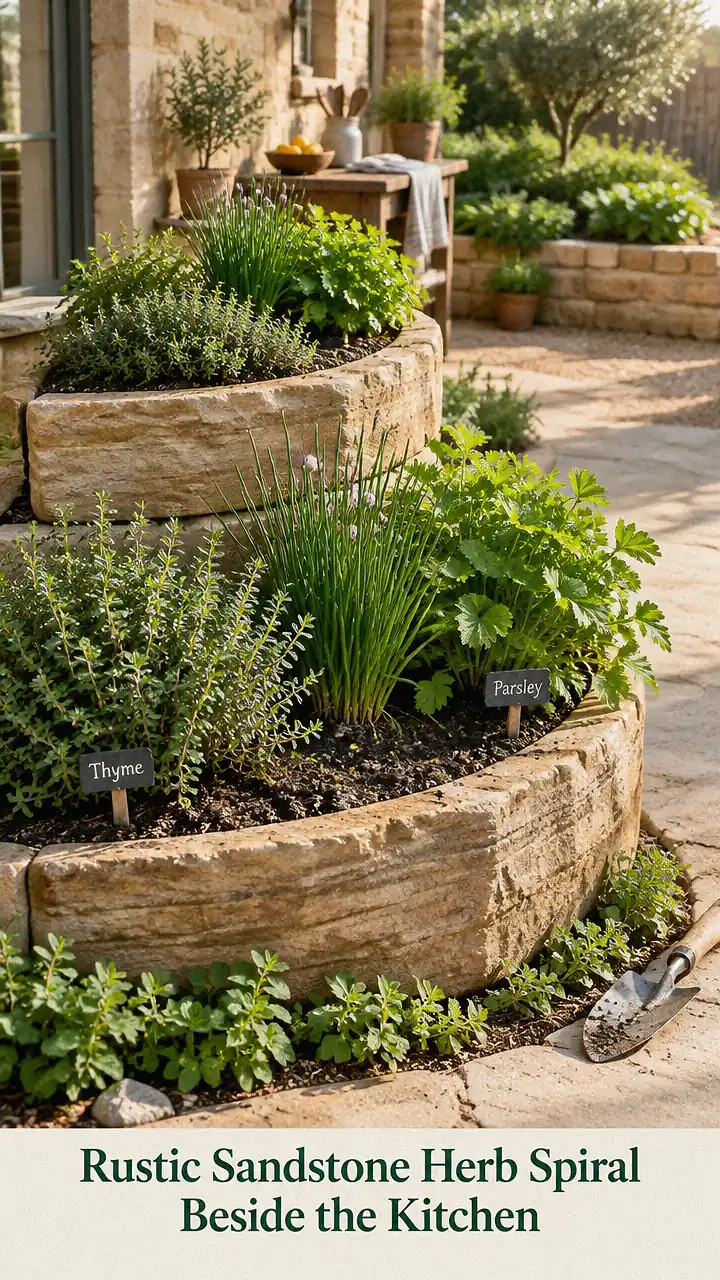
Rustic Sandstone Herb Spiral Beside the Kitchen
Overview
A small herb spiral built with rough sandstone creates a practical garden feature with plenty of rustic character. The stones form a gently rising circular planting area, with rosemary and thyme near the higher, drier section and herbs that appreciate more moisture toward the bottom. It’s an attractive choice for sunny kitchen gardens, cottage backyards, and small edible landscapes.
Materials & Plants
- Rough sandstone blocks or reclaimed stone pieces
- Quality garden soil and compost
- Coarse horticultural grit for drainage
- Rosemary, thyme, oregano, and chives
- Parsley for the lower planting area
- String, stakes, shovel, and watering can
How to Create It
- Choose a sunny location near the kitchen and mark a circle approximately 4–5 feet wide.
- Build a low, stable spiral using broad sandstone pieces, avoiding tall or unsupported sections.
- Fill the planting pockets with suitable soil, improving drainage near the upper portions.
- Plant drought-tolerant herbs toward the top and more moisture-loving selections near the bottom.
- Water according to each herb’s needs and harvest regularly to encourage compact growth.
Honey-Colored Sandstone Edging Around Cottage Flowers
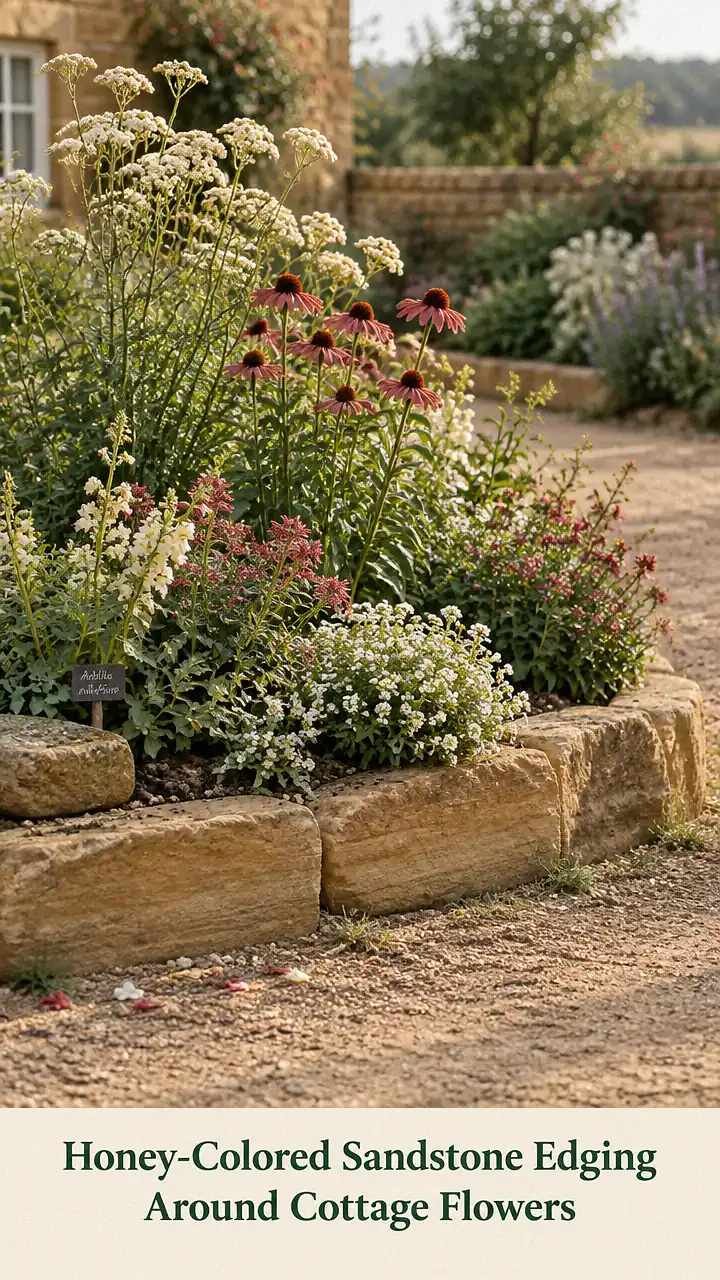
Overview
Warm sandstone edging adds charming definition to a colorful cottage flower garden. Low, irregular stones create a soft boundary between a lush flower bed and surrounding lawn or gravel path. Pink coneflowers, purple salvia, golden coreopsis, and airy white blossoms rise behind the stone. This design works especially well in sunny front gardens and traditional residential backyards.
Materials & Plants
- Small sandstone edging blocks
- Coneflowers and coreopsis
- Perennial salvia or hardy garden sage varieties
- White alyssum or other compact seasonal flowers
- Compost and organic mulch
- Garden spade and rubber mallet
How to Create It
- Outline the flower bed using a garden hose to establish a relaxed, flowing shape.
- Dig a shallow trench and settle the sandstone edging pieces into a firm, level base.
- Improve the planting soil with compost where needed.
- Arrange taller flowers toward the back and shorter flowers near the sandstone border.
- Mulch exposed soil, water new plants consistently, and remove spent blooms to keep the border attractive.
Low Sandstone Borders for Raised Vegetable Beds
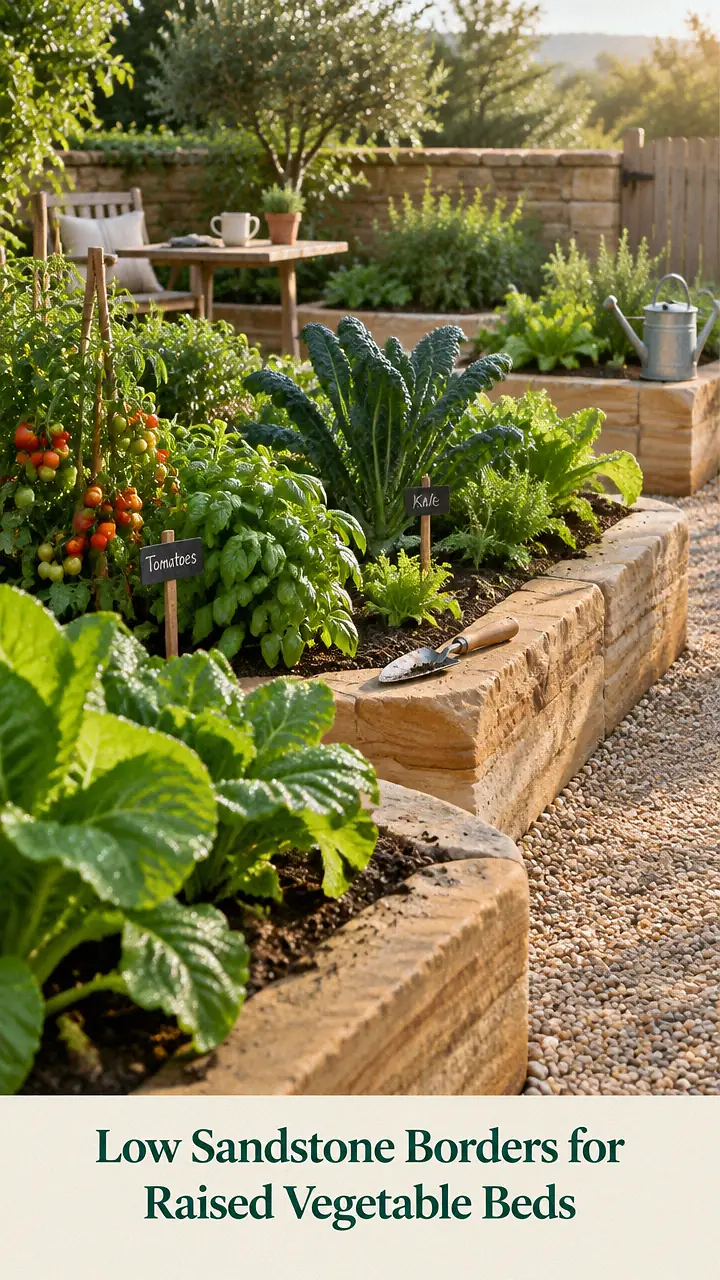
Overview
Sandstone can give an ordinary vegetable garden a more finished, organized appearance. Low sandstone borders frame rectangular growing beds, while gravel or mulch walkways provide easy access between vegetables. Green lettuce, leafy kale, and colorful peppers create an appealing contrast against sandy stone tones. This practical approach suits suburban backyards, side gardens, and sunny kitchen garden areas.
Materials & Plants
- Low sandstone blocks or sandstone edging pieces
- Existing raised beds or sturdy timber bed frames
- Compost-enriched vegetable soil
- Lettuce, kale, bush beans, and peppers
- Organic mulch for walking paths
- Watering hose or drip irrigation supplies
How to Create It
- Plan growing beds approximately 3–4 feet wide so you can reach their centers without stepping on soil.
- Install sandstone edging around established beds, or use it decoratively outside sturdy raised-bed frames.
- Leave accessible paths between the beds and cover them with mulch or compacted gravel.
- Plant vegetables according to the season, sunlight, and recommended spacing.
- Maintain consistent soil moisture and rotate annual vegetable crops when practical.
Layered Sandstone Rock Garden With Alpine Blooms
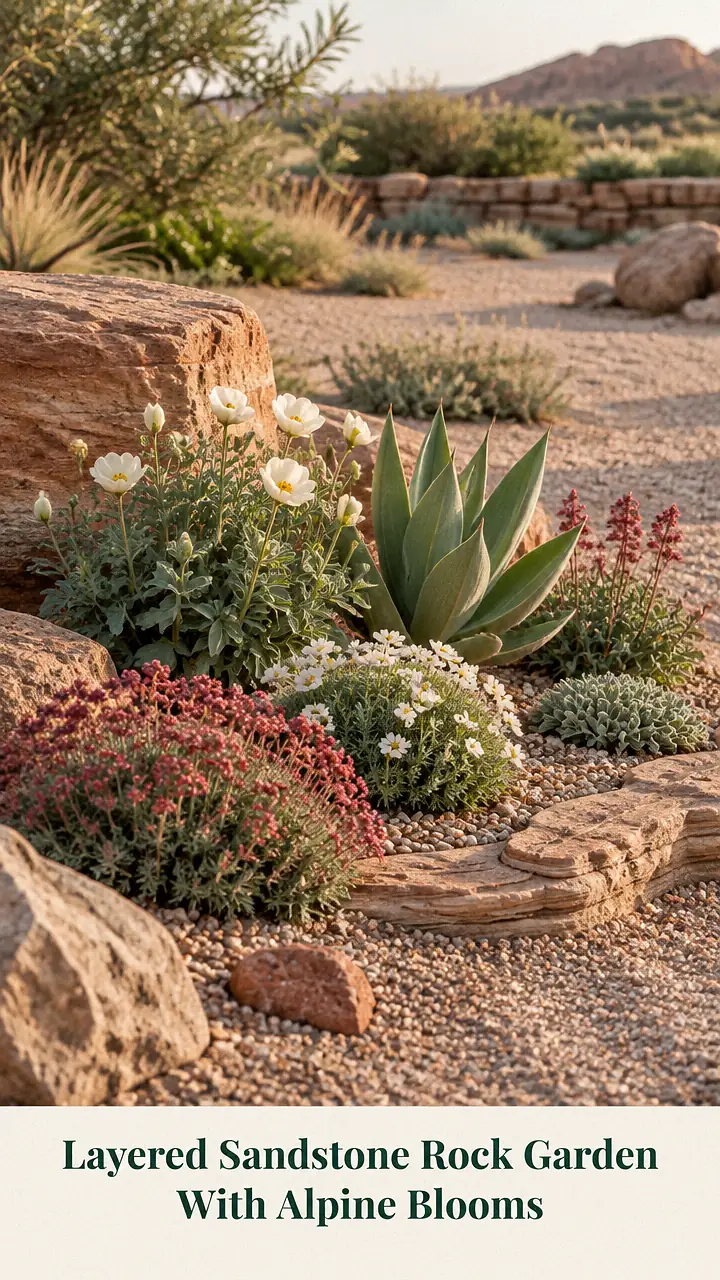
Overview
A layered sandstone rock garden brings the appearance of a miniature mountain landscape into a residential yard. Flat, weathered stones sit at different heights, creating natural pockets for compact flowering plants. Purple creeping phlox, tiny bellflowers, and silvery foliage soften the rugged texture. This garden works best on a sunny, well-drained slope or a raised corner of a backyard.
Materials & Plants
- Sandstone rocks in several sizes
- Creeping phlox and compact bellflowers
- Hardy sedum and suitable alpine plants
- Horticultural grit and sandy loam
- Small decorative gravel
- Shovel, gloves, and hand trowel
How to Create It
- Choose a sunny site with excellent drainage and remove existing weeds.
- Position the largest sandstone rocks first, partially burying them for a natural appearance and secure placement.
- Arrange smaller rocks to create layered planting pockets with consistent stone orientation.
- Fill the spaces with a well-drained planting mix and install compact alpine plants.
- Finish with fine gravel and water carefully until the plants are established.
Desert-Inspired Sandstone Boulder and Gravel Garden
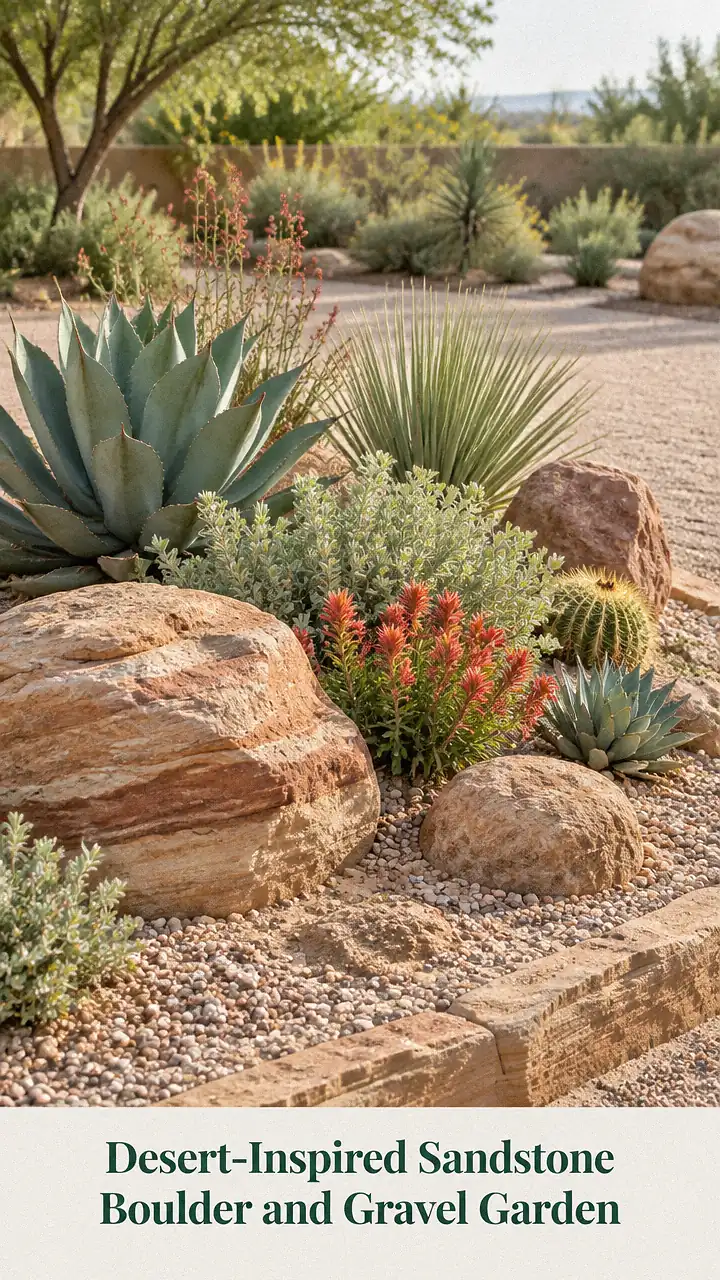
Overview
A desert-inspired garden uses oversized sandstone rocks as sculptural focal points surrounded by decorative gravel and drought-tolerant plants. Rust-colored boulders, pale pebbles, upright yuccas, and rounded succulent foliage create a dramatic combination of forms. This low-water style looks particularly striking in hot, dry climates and makes an attractive alternative to a traditional lawn.
Materials & Plants
- Two or three appropriately sized sandstone boulders
- Tan or light-gray decorative gravel
- Cold-hardy or heat-tolerant yucca varieties
- Hardy sedum or regional drought-tolerant plants
- Agave for suitable warm climates
- Shovel, edging, and wheelbarrow
How to Create It
- Select an open, sunny planting area away from drainage problems and underground utilities.
- Place the largest sandstone boulders in an informal grouping, using professional help for heavy pieces.
- Prepare well-drained planting areas and arrange plants according to their mature dimensions.
- Spread a modest layer of gravel around plants, leaving space around crowns and stems.
- Water deeply during establishment, then adjust watering to rainfall and individual plant requirements.
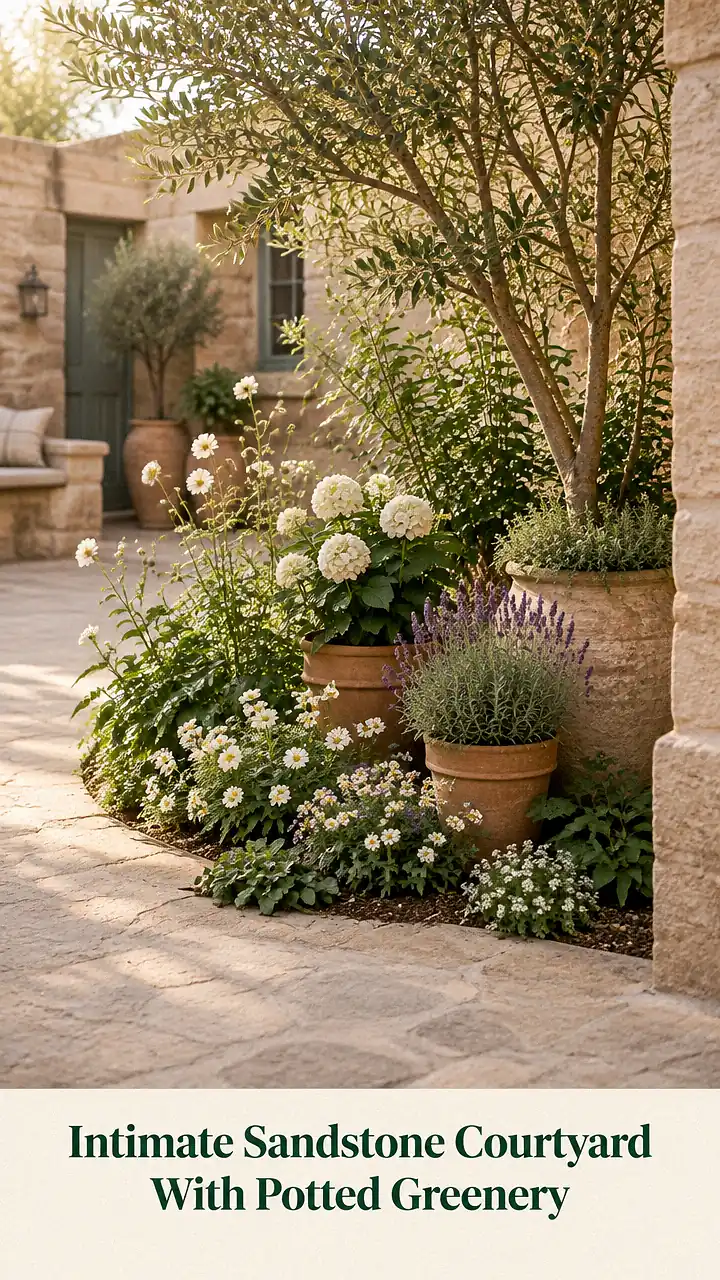
Intimate Sandstone Courtyard With Potted Greenery
Overview
A small courtyard can feel surprisingly lush when warm sandstone paving is paired with thoughtfully arranged containers. Cream-colored stone creates a bright, welcoming floor, while terracotta pots filled with leafy greenery bring softness to the edges. A compact chair and a few flowering plants complete the scene. This design works particularly well in enclosed townhouse courtyards and small paved yards.
Materials & Plants
- Exterior-grade sandstone paving or existing sandstone tiles
- Terracotta pots with drainage holes
- Dwarf citrus for suitable climates
- Compact boxwood alternatives or small evergreen shrubs
- Seasonal begonias or geraniums
- Folding chair and small outdoor table
How to Create It
- Measure the available courtyard space and identify the sunniest and shadiest areas.
- Install suitable sandstone paving if needed, preserving drainage and access to doors.
- Arrange larger planters along walls, keeping walkways and ventilation clear.
- Add smaller flowering containers near the seating area for seasonal color.
- Rotate movable plants as sunlight changes and water containers based on soil moisture.
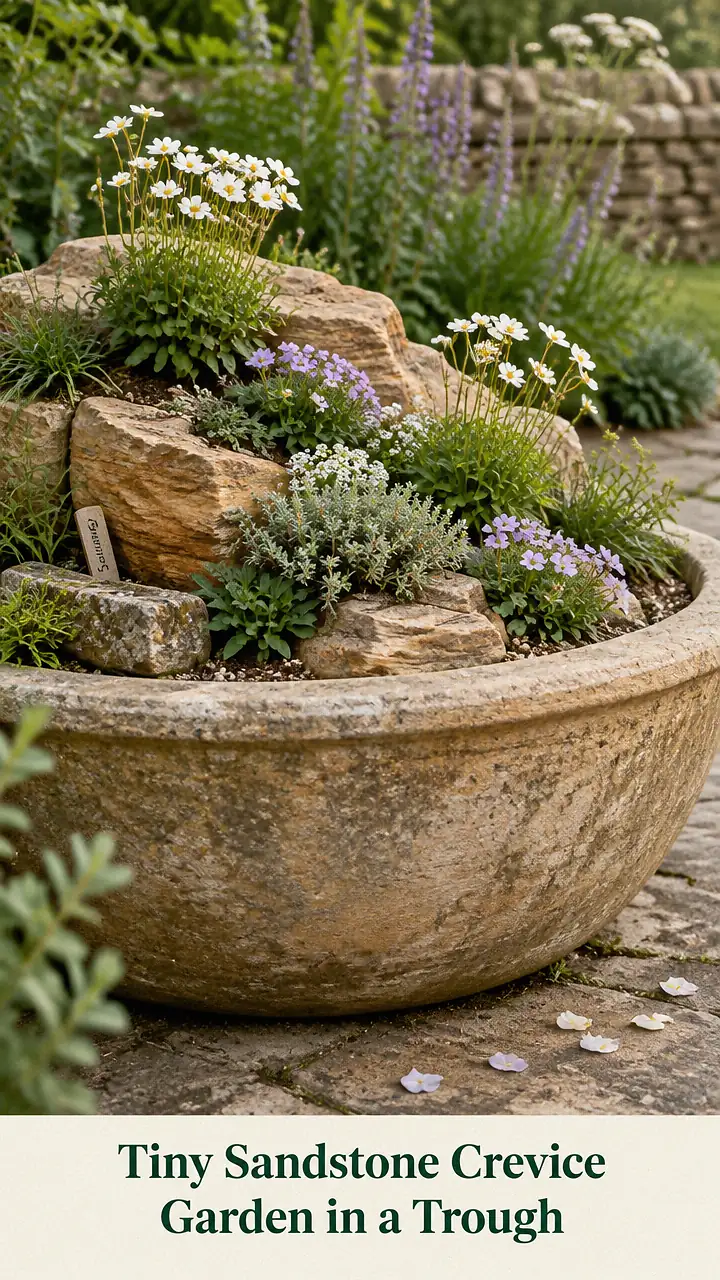
Tiny Sandstone Crevice Garden in a Trough
Overview
A miniature sandstone crevice garden offers the character of a rocky landscape in a single container. Thin sandstone pieces stand at slight angles inside a shallow, wide trough, forming narrow gaps filled with tiny succulents and alpine flowers. Pale gravel enhances the layered structure. This unusual display is perfect for sunny patios, small porches, and sturdy outdoor garden tables.
Materials & Plants
- Wide, frost-resistant trough with drainage holes
- Small, thin sandstone pieces
- Gritty alpine planting mix
- Hardy sempervivum and miniature sedum
- Compact saxifrages suited to the climate
- Horticultural grit and small trowel
How to Create It
- Select a sturdy container and confirm its drainage holes are open.
- Fill the bottom with gritty planting mix and position sandstone slabs securely at slight angles.
- Pack additional mix between the stones, forming narrow but usable planting spaces.
- Tuck miniature plants into the crevices without burying their crowns.
- Add fine grit around the plants and water moderately, protecting the trough from prolonged winter saturation.
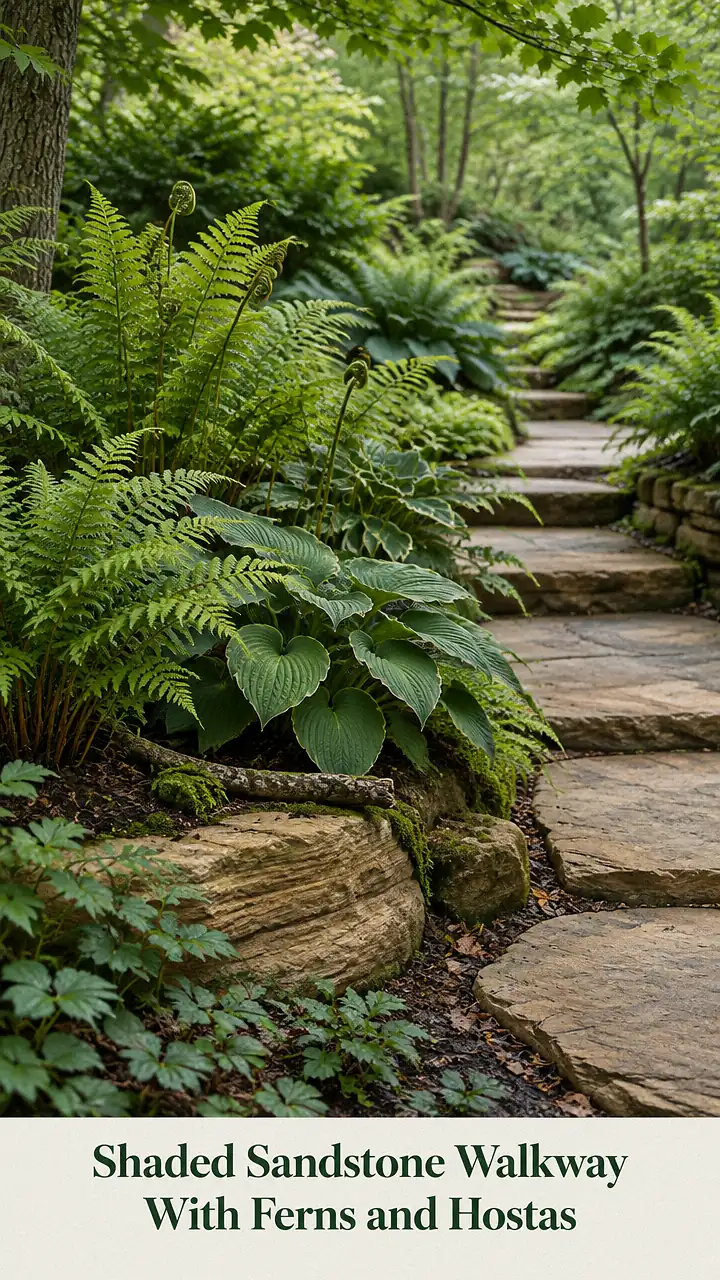
Shaded Sandstone Walkway With Ferns and Hostas
Overview
Sandstone can look especially beautiful in shaded gardens, where its warm colors contrast with deep green foliage. A narrow walkway of irregular sandstone slabs passes between clusters of feathery ferns and broad hosta leaves. Bark mulch covers the surrounding soil, creating a peaceful woodland atmosphere. This design suits shaded side yards, tree-lined gardens, and sheltered backyard corners.
Materials & Plants
- Textured sandstone stepping stones
- Shade-tolerant ferns suited to your region
- Hostas for appropriate climates
- Heuchera for contrasting foliage
- Shredded bark mulch
- Crushed stone, shovel, and level
How to Create It
- Identify an existing shaded route and avoid damaging major tree roots during preparation.
- Create shallow, firm bases for individual sandstone slabs and ensure each stone sits securely.
- Plant ferns and hostas in groups, allowing enough room for their mature spread.
- Apply bark mulch around the plants without covering their crowns.
- Sweep leaves from the path and gently remove algae when necessary to prevent slippery surfaces.
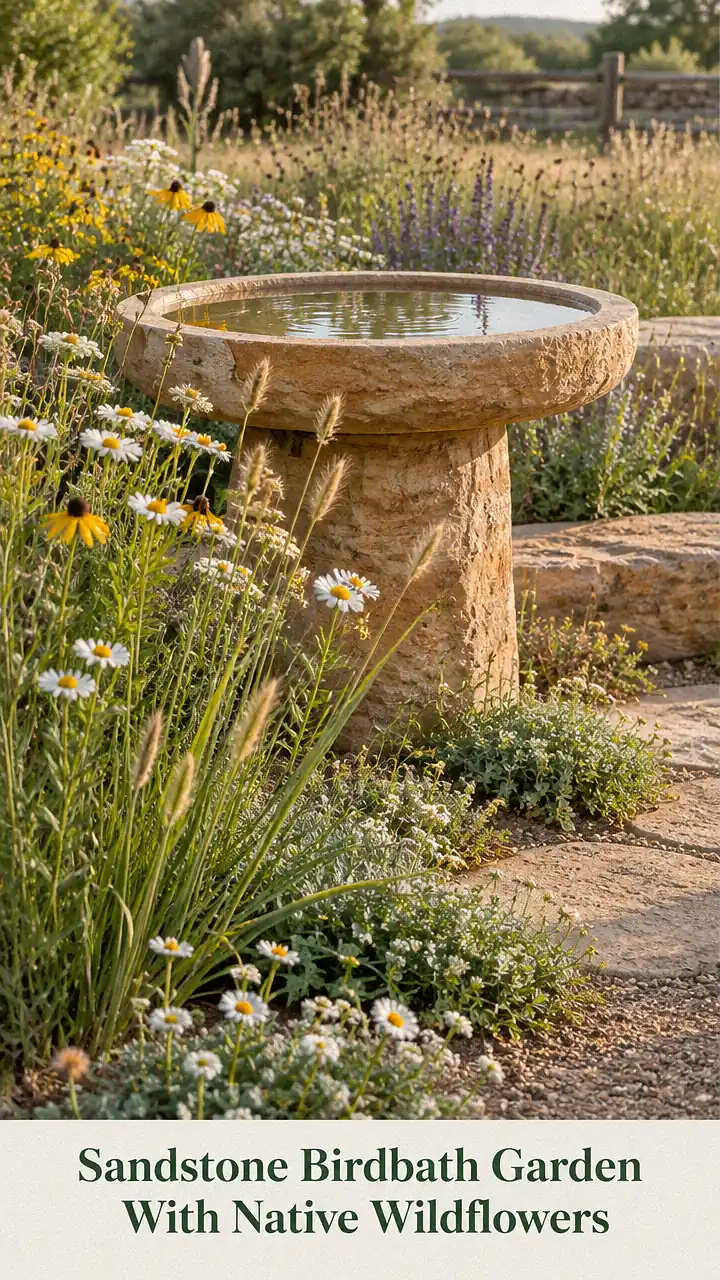
Sandstone Birdbath Garden With Native Wildflowers
Overview
A simple sandstone birdbath becomes a beautiful garden centerpiece when surrounded by flowers and low-growing greenery. A shallow stone basin sits above a small gravel area, while native wildflowers create a colorful ring around it. Butterflies visit the surrounding blooms, and birds can approach the water from nearby vegetation. This welcoming garden works well in a sunny or partially shaded backyard.
Materials & Plants
- Stable sandstone birdbath with a shallow basin
- Small clean stones for secure bird footing
- Native wildflowers suited to your growing region
- Compact coneflowers or native asters
- Low ornamental grasses
- Decorative gravel and garden edging
How to Create It
- Choose a visible location with nearby protective vegetation but sufficient open space to spot approaching predators.
- Install the sandstone birdbath on a firm, level base, preferably with a shallow water depth.
- Arrange native flowers and grasses around the basin without blocking access.
- Add a narrow gravel border to define the feature.
- Replace water frequently, scrub the basin regularly, and empty or protect it during freezing conditions.
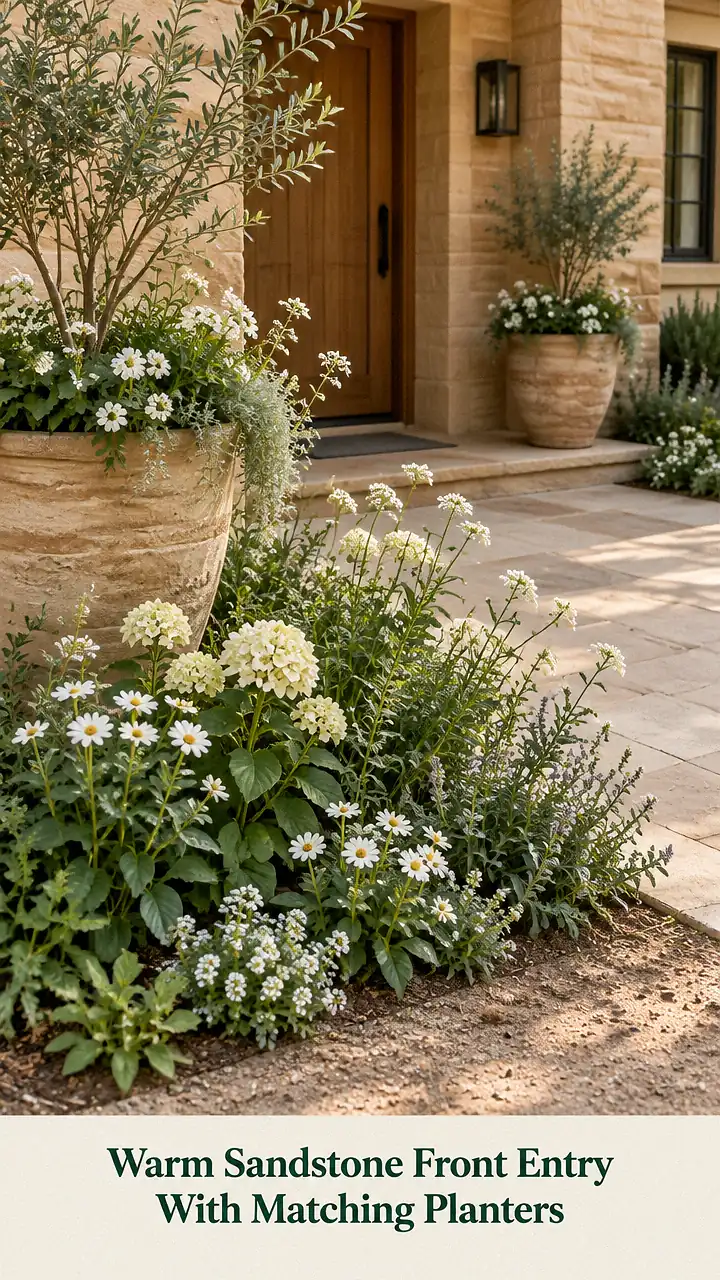
Warm Sandstone Front Entry With Matching Planters
Overview
A front entrance framed by sandstone creates an inviting first impression. Rectangular sandstone stepping stones lead toward the doorway, while matching planters introduce greenery and seasonal color. Soft cream stone complements brick, stucco, and painted siding, making this an adaptable design. The arrangement is particularly effective in compact front yards where a clear, uncluttered walkway improves the overall appearance.
Materials & Plants
- Textured sandstone paving stones
- Two matching outdoor planters
- Compact evergreen shrubs suited to local conditions
- Seasonal petunias, violas, or other annuals
- Crushed stone and suitable jointing material
- Exterior-rated pathway lights
How to Create It
- Measure the front walkway, allowing comfortable access to the door.
- Lay sandstone on a properly prepared foundation with drainage directed away from the home.
- Place matching planters beside the entrance without obstructing the doorway.
- Plant evergreen shrubs for structure and add seasonal flowers around their bases.
- Install low-voltage pathway lighting following product instructions and keep the walking surface clear.
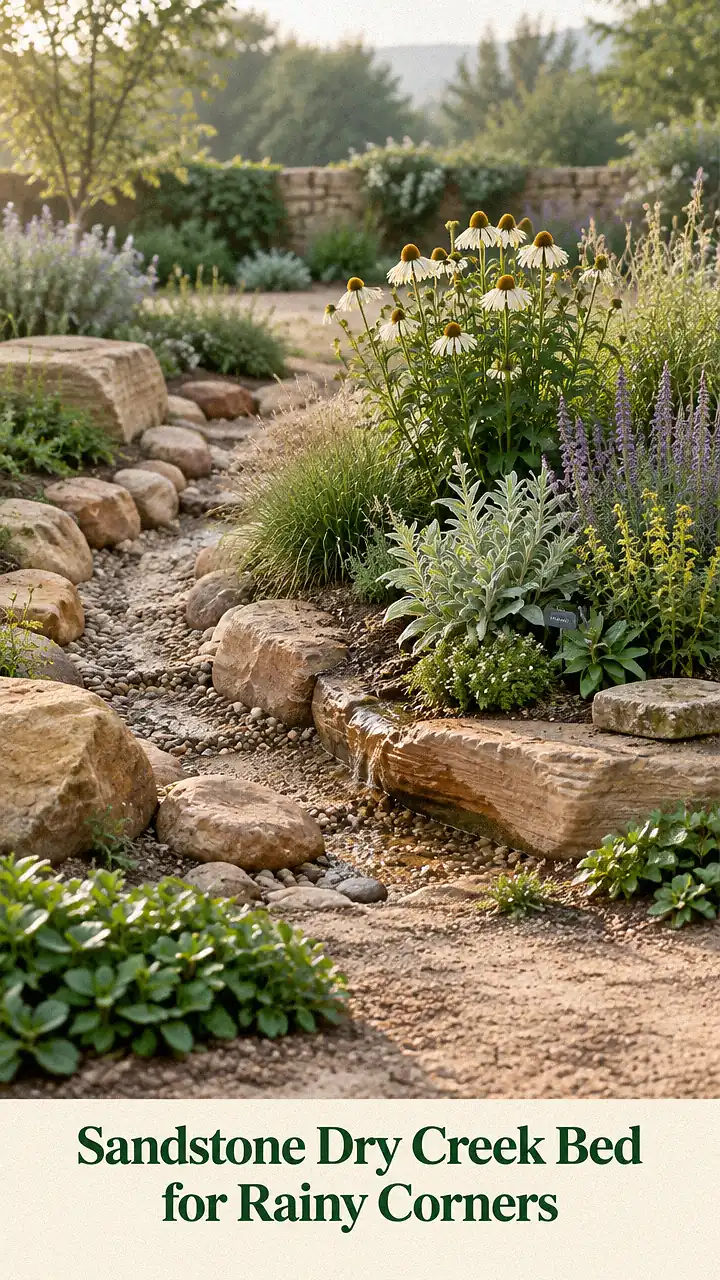
Sandstone Dry Creek Bed for Rainy Corners
Overview
A decorative dry creek bed creates an attractive landscape feature while helping define the route of occasional surface runoff where site conditions permit. Golden sandstone rocks frame a winding channel filled with smaller rounded stones. Moisture-tolerant grasses and flowering perennials soften the edges. This naturalistic design suits larger garden corners with gentle slopes and planned drainage routes.
Materials & Plants
- Irregular sandstone rocks for channel edges
- Rounded river pebbles and washed gravel
- Native sedges suited to local soil conditions
- Switchgrass in suitable regions
- Moisture-tolerant native flowering plants
- Shovel, rake, and permeable separation fabric where appropriate
How to Create It
- Observe where rainwater naturally travels and confirm that the proposed route will not send water toward buildings or neighboring properties.
- Shape a shallow, gently winding channel without disturbing buried utilities.
- Use stable sandstone pieces along the edges and fill the center with smaller stones.
- Plant sedges and perennials outside the main water flow, matching species to typical soil moisture.
- Remove debris after storms and consult a drainage professional if the area experiences significant flooding.
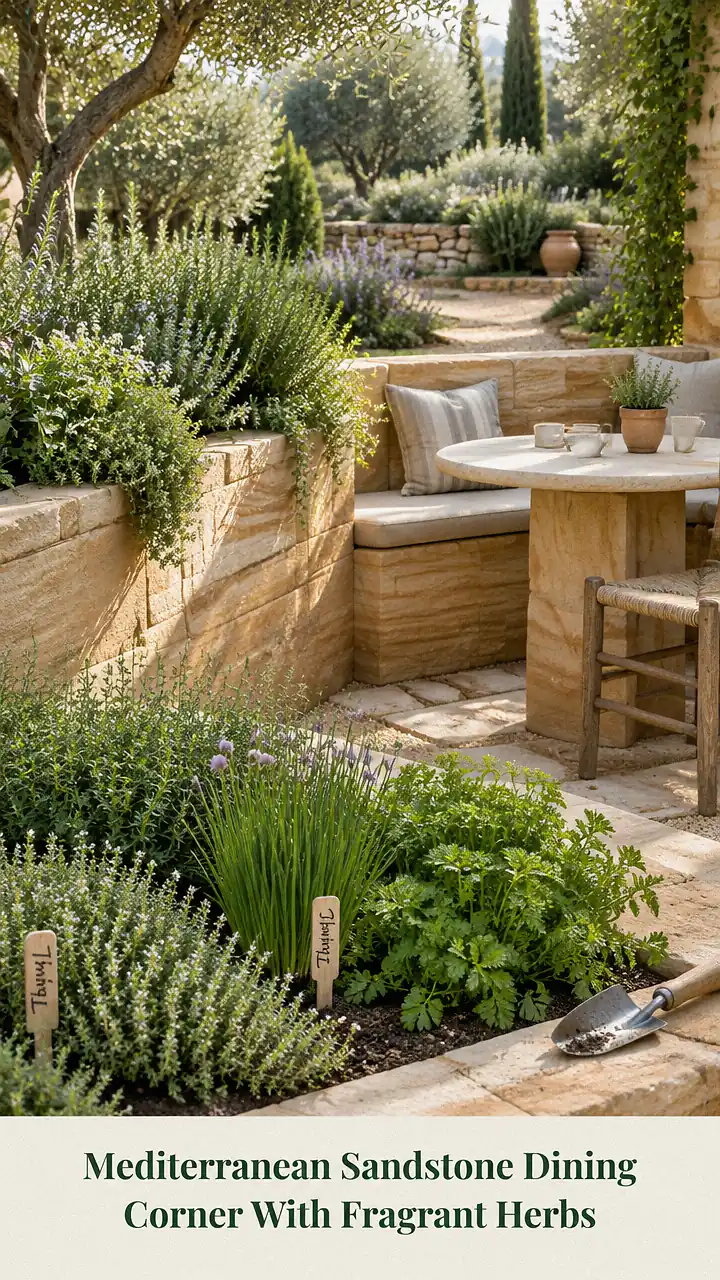
Mediterranean Sandstone Dining Corner With Fragrant Herbs
Overview
A Mediterranean-inspired dining corner combines sun-warmed sandstone with fragrant herbs, terracotta containers, and simple outdoor furniture. Pale gold paving forms a relaxed dining surface, while rosemary, oregano, and thyme add soft greenery around the edges. A small pergola or patio umbrella provides afternoon shade. This cheerful setup is ideal for sunny backyards and sheltered patios.
Materials & Plants
- Buff or golden sandstone paving
- Terracotta pots in several sizes
- Rosemary, oregano, and thyme
- Dwarf olive tree in a container for suitable climates
- Compact outdoor dining table and chairs
- Patio umbrella or securely installed shade structure
How to Create It
- Choose a sunny, accessible corner large enough for furniture and comfortable circulation.
- Prepare a stable sandstone dining surface with appropriate drainage.
- Arrange terracotta pots around the perimeter, leaving sufficient space to move chairs.
- Plant herbs in containers with drainage holes and well-draining potting mix.
- Add shade and water containers as needed, moving frost-sensitive plants to protection during cold weather.
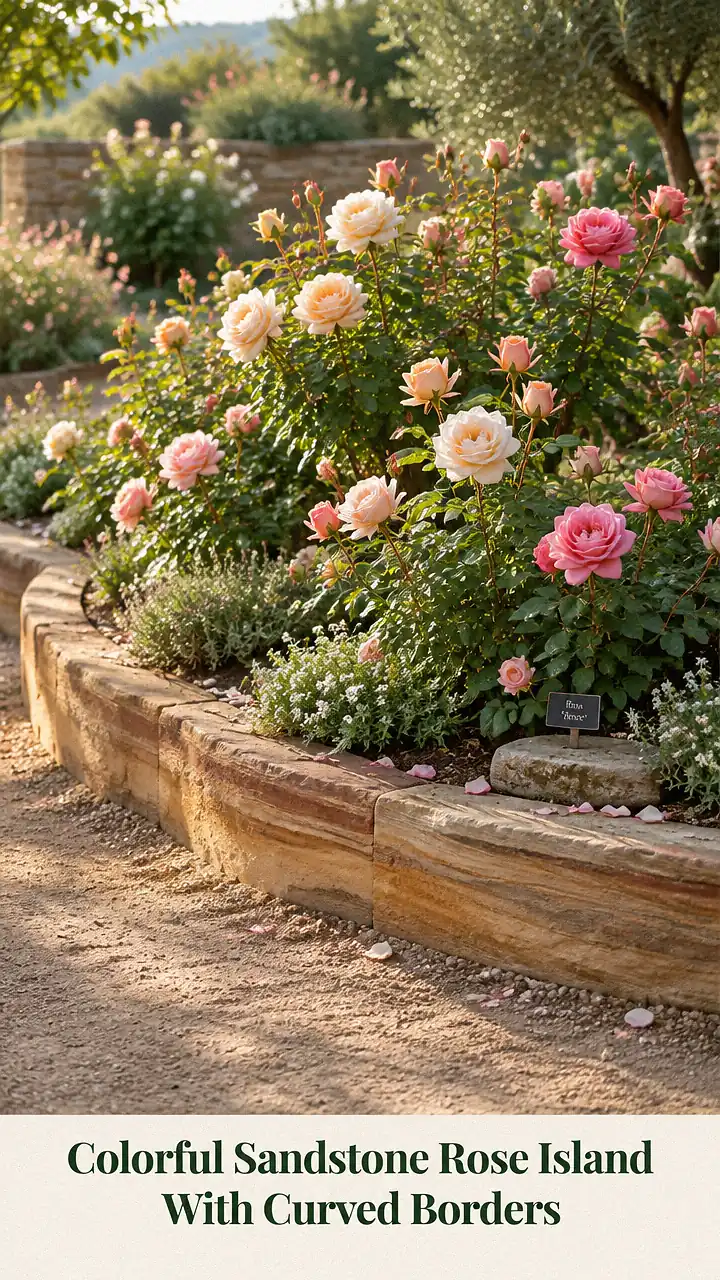
Colorful Sandstone Rose Island With Curved Borders
Overview
A circular flower island edged with warm sandstone creates a classic focal point in a sunny lawn or open garden. Pink and peach shrub roses rise from the center, surrounded by lower purple catmint and white flowering companions. The sandstone forms a crisp boundary without looking overly formal. This arrangement works beautifully in traditional backyards and spacious front gardens.
Materials & Plants
- Small curved or irregular sandstone edging pieces
- Disease-resistant shrub roses suitable for your climate
- Compact catmint
- White sweet alyssum or seasonal flowers
- Compost and organic mulch
- Garden spade and pruning shears
How to Create It
- Mark a circular or oval bed in a location receiving sufficient sunlight for roses.
- Remove existing turf, improve the soil where necessary, and install low sandstone edging.
- Position roses toward the center, respecting their mature height and spread.
- Plant smaller flowering companions around the outer edge for layered color.
- Mulch the soil, water at the base of the plants, and prune roses according to their variety.
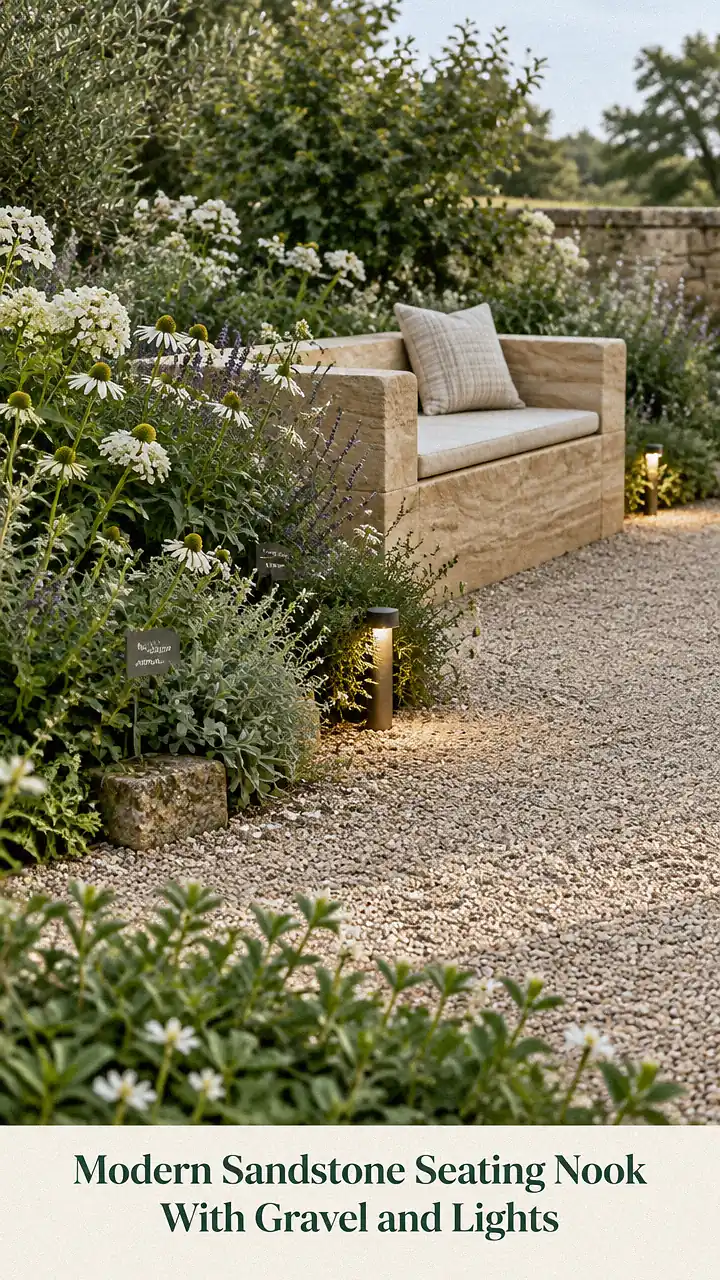
Modern Sandstone Seating Nook With Gravel and Lights
Overview
A quiet corner of the backyard can become an inviting retreat with sandstone stepping pads, decorative gravel, and comfortable seating. Warm stone squares create a simple approach to a compact bench, while ornamental shrubs provide a natural backdrop. Subtle outdoor lighting adds atmosphere after sunset. This design suits small urban yards and modern gardens where relaxation is the main priority.
Materials & Plants
- Square outdoor sandstone stepping pads
- Compactable gravel for the seating area
- Metal, timber, or weather-resistant garden bench
- Dwarf evergreen shrubs
- Compact ornamental grasses
- Low-voltage outdoor lighting
- Steel or recycled-plastic landscape edging
How to Create It
- Select a sheltered garden corner with enough room for a bench and a level approach.
- Prepare a compacted gravel seating surface with secure edging.
- Set sandstone stepping pads on stable bases to connect the nook to the main garden path.
- Plant compact shrubs behind the bench and grasses along the sides.
- Add suitable outdoor lighting and periodically rake the gravel to maintain an even surface.
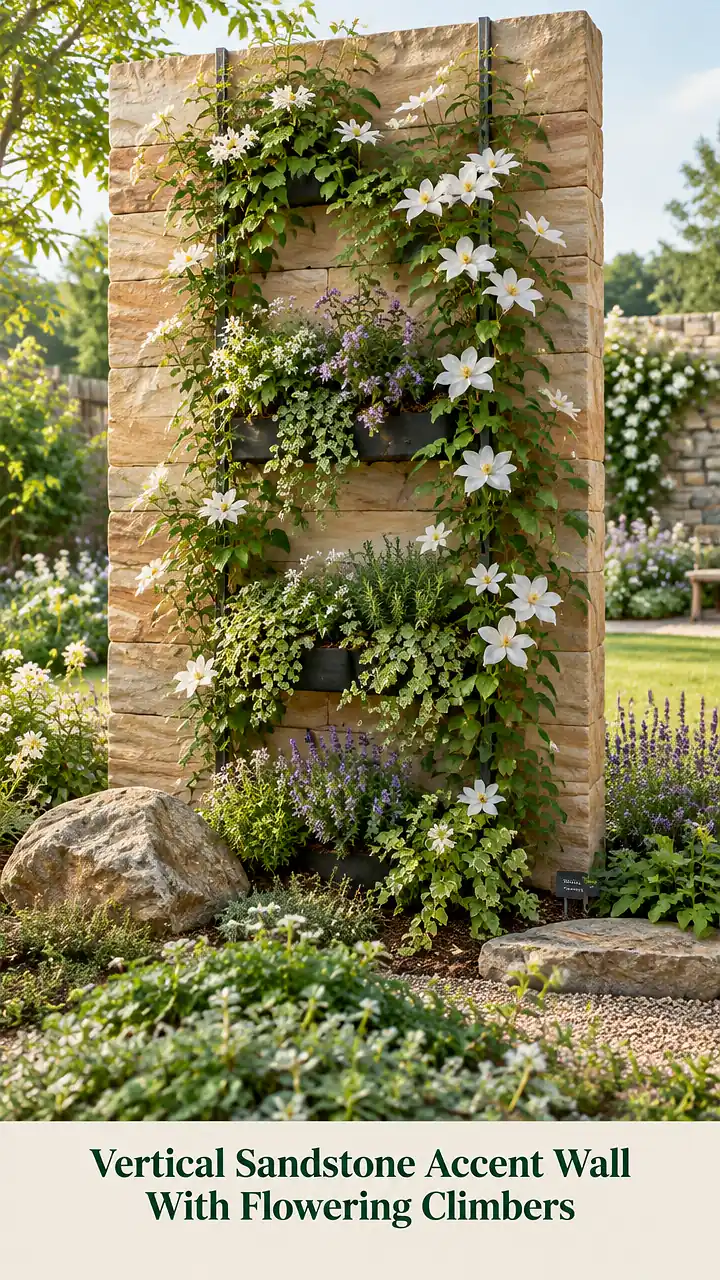
Vertical Sandstone Accent Wall With Flowering Climbers
Overview
A sandstone-clad accent wall creates a dramatic backdrop for a flowering garden. Warm textured stone contrasts with climbing jasmine, clematis, or other regionally suitable vines trained on a separate support. Low planters filled with seasonal flowers complete the vertical arrangement. This design works particularly well in narrow courtyards, along existing garden walls, and beside patios where ground space is limited.
Materials & Plants
- Exterior-rated sandstone veneer or an existing sound sandstone wall
- Compatible masonry installation supplies
- Freestanding or properly anchored trellis
- Clematis or suitable climbing jasmine
- Compact flowering plants for the base
- Mulch and basic pruning tools
How to Create It
- Choose a structurally sound wall and confirm whether sandstone veneer requires professional installation.
- Install a suitable trellis with enough separation from the wall for airflow and maintenance.
- Prepare planting soil at the base or position large containers with drainage holes.
- Plant a climber that matches the light conditions and guide its stems onto the support.
- Prune according to the plant’s flowering cycle and inspect wall joints and supports regularly.
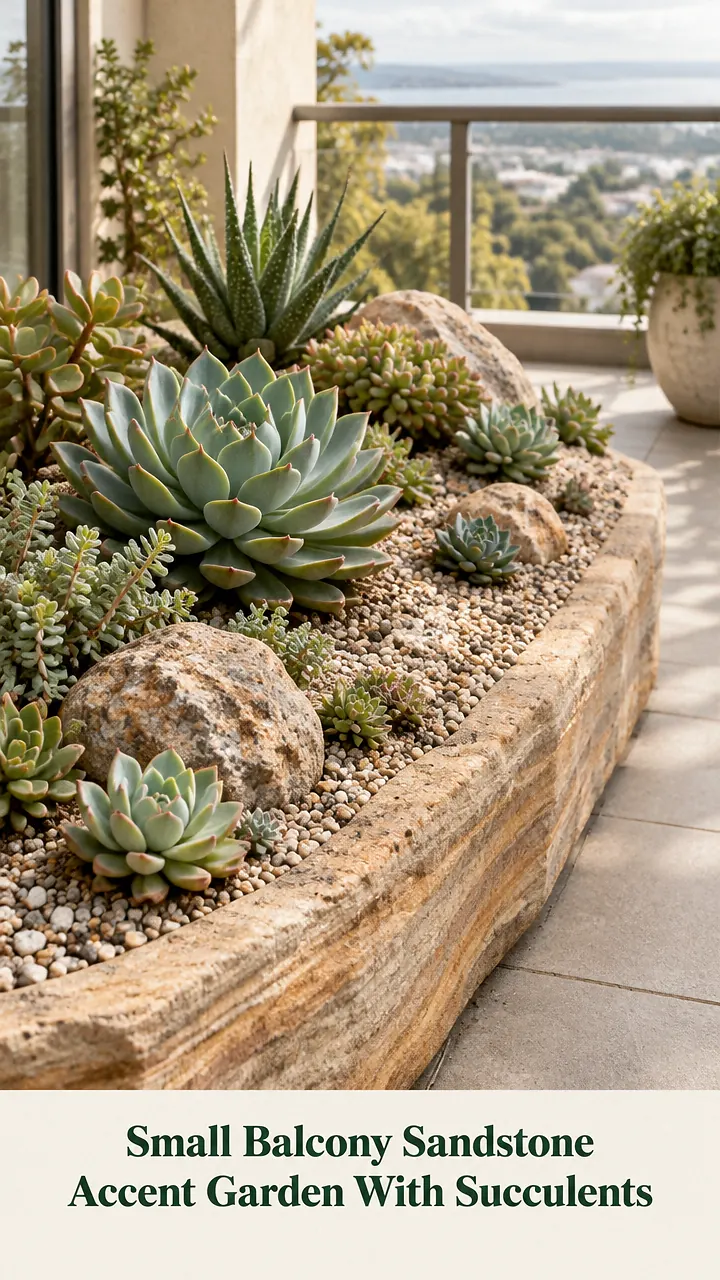
Small Balcony Sandstone Accent Garden With Succulents
Overview
Even a balcony can feature the earthy charm of sandstone without installing heavy paving. Small sandstone pieces arranged inside lightweight planters create a miniature rocky landscape filled with colorful succulents. Rosette-shaped plants, trailing sedum, and pale gravel make the display visually interesting. This approach suits sunny apartment balconies and compact outdoor shelves, provided weight limits and exposure are considered.
Materials & Plants
- Small sandstone fragments or thin decorative pieces
- Lightweight outdoor planters with drainage holes
- Succulent potting mix
- Hardy sedum or compact echeveria in appropriate climates
- Small drought-tolerant ornamental plants
- Fine decorative gravel
- Narrow plant stand suitable for outdoor use
How to Create It
- Check balcony weight limits and choose lightweight containers rather than large solid sandstone slabs.
- Position the containers where plants receive suitable sunlight without excessive heat exposure.
- Fill each planter with well-draining succulent mix and arrange small sandstone pieces securely.
- Plant succulents between the stones, leaving sufficient room for growth.
- Water only as the potting mix requires and protect tender varieties from frost and prolonged rain.
Conclusion: Create a Garden That Feels Naturally Beautiful
Sandstone offers a wonderful combination of natural texture, timeless color, and design flexibility. From curved stepping-stone paths and colorful flower borders to modern courtyards and miniature rock gardens, there are plenty of ways to bring this material into your outdoor space.
The best sandstone garden ideas aren’t necessarily the biggest or most expensive. A few well-placed stones, thoughtfully chosen plants, and a simple layout can make an ordinary corner feel completely different.
Start by considering how much space you have, how much sunlight the area receives, your local climate, and the amount of maintenance you enjoy. Choose appropriate outdoor sandstone, plan for proper drainage, and select plants that will thrive in your conditions.
Whether you prefer a rustic cottage atmosphere, a low-maintenance desert landscape, or a clean modern design, sandstone can provide the warm, enduring foundation for a garden you’ll enjoy throughout the seasons.