
A semi-detached home often comes with a garden full of possibilities, even when the outdoor space feels narrow, overlooked, or awkwardly shaped. With one side of the house connected to a neighbor, creating privacy while making the most of limited square footage can be a challenge. Fortunately, a thoughtful garden design can turn even a modest backyard into a welcoming outdoor retreat.
The best semi detached garden ideas combine beautiful planting with practical features such as comfortable seating, attractive pathways, clever screening, and space-saving containers. You don’t need an enormous budget or professional landscaping experience to achieve a garden that feels personal, organized, and inviting.
Whether you prefer contemporary landscaping, colorful cottage flowers, productive vegetable beds, or a peaceful spot surrounded by greenery, there are plenty of ways to transform your outdoor space.
These 18 ideas offer inspiration for different garden sizes, sunlight conditions, and budgets. Each design focuses on realistic improvements that home gardeners can create gradually, making it easier to build an outdoor space that looks beautiful and works for everyday life.
Beautiful Semi Detached Garden Ideas For Every Outdoor Space
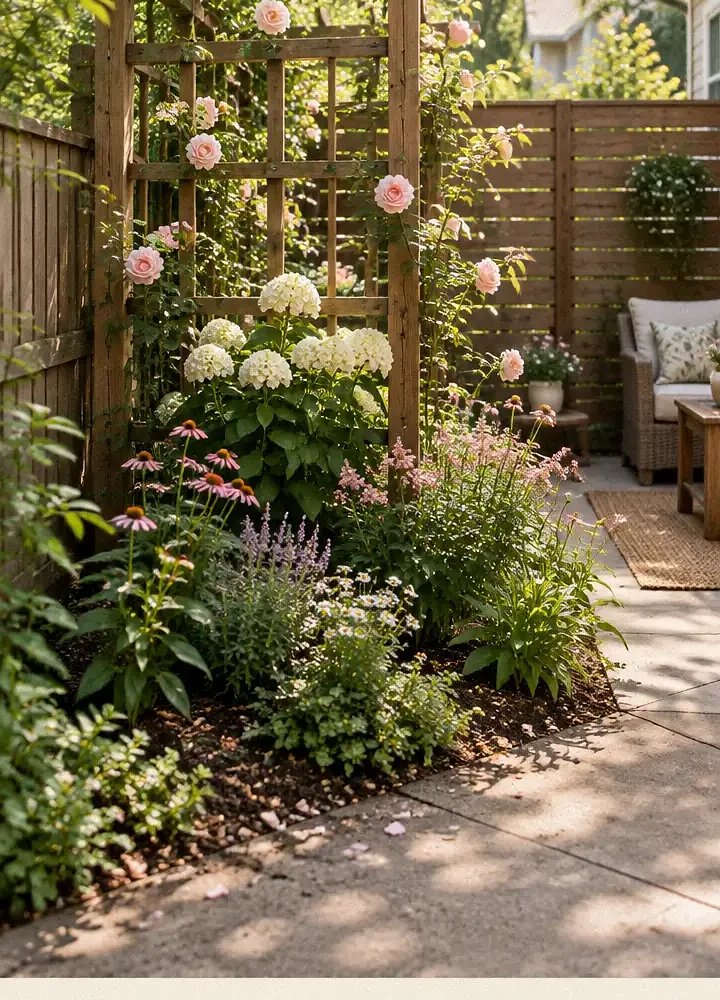
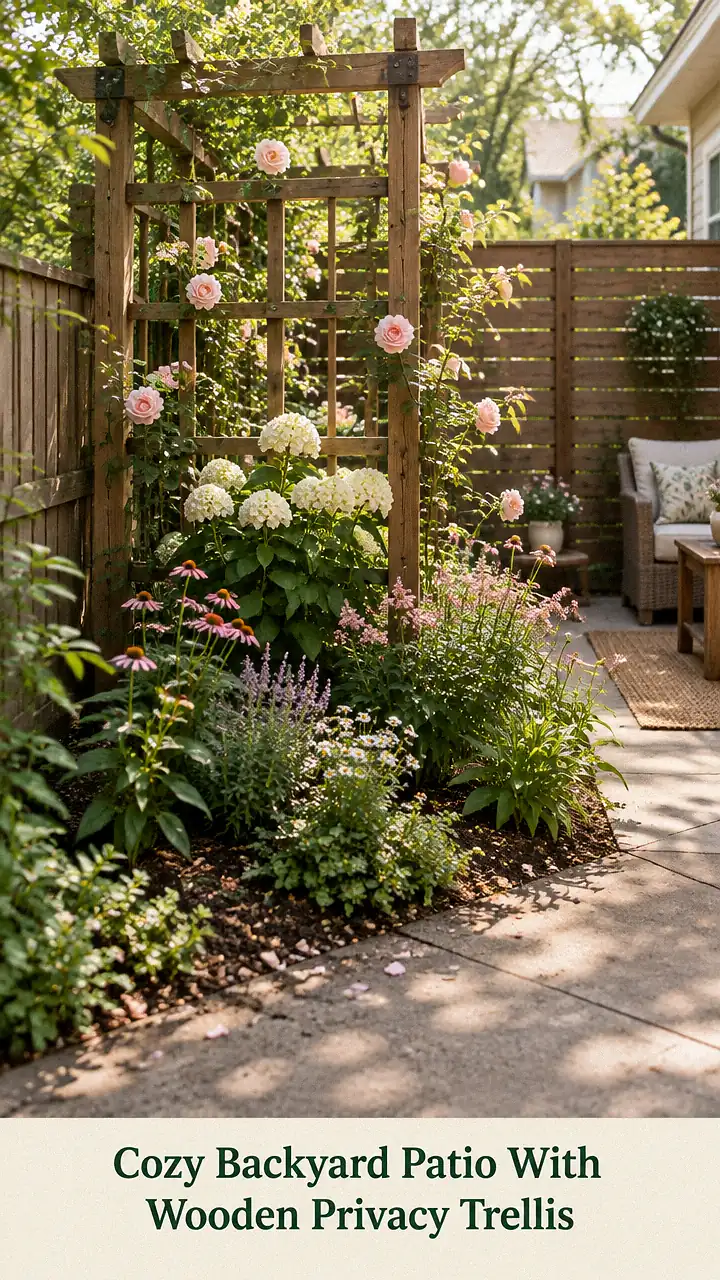
Cozy Backyard Patio With Wooden Privacy Trellis
Overview
Turn a small backyard patio into a secluded retreat with warm wooden screening and lush climbing plants. A simple timber trellis positioned along an exposed boundary creates vertical interest without taking up much ground space. Add comfortable neutral-colored seating, soft green foliage, and a few flowering containers for an inviting atmosphere. This design works especially well in overlooked semi-detached backyards.
Materials & Plants
- Freestanding wooden trellis panels or suitable fence-mounted supports
- Honeysuckle or clematis suited to local conditions
- Compact outdoor loveseat or two lounge chairs
- Large planters with drainage holes
- Outdoor cushions and solar lanterns
- Mulch, potting mix, and basic gardening tools
How to Create It
- Identify the area where neighboring windows or patios overlook your garden most directly.
- Install secure trellis panels within your property, checking boundary ownership and local height restrictions.
- Plant suitable climbers at their recommended spacing, leaving room for mature growth and airflow.
- Arrange seating beneath the greenery and add weather-resistant cushions and subtle outdoor lighting.
- Water new plants regularly and prune climbing stems to maintain an attractive, manageable screen.
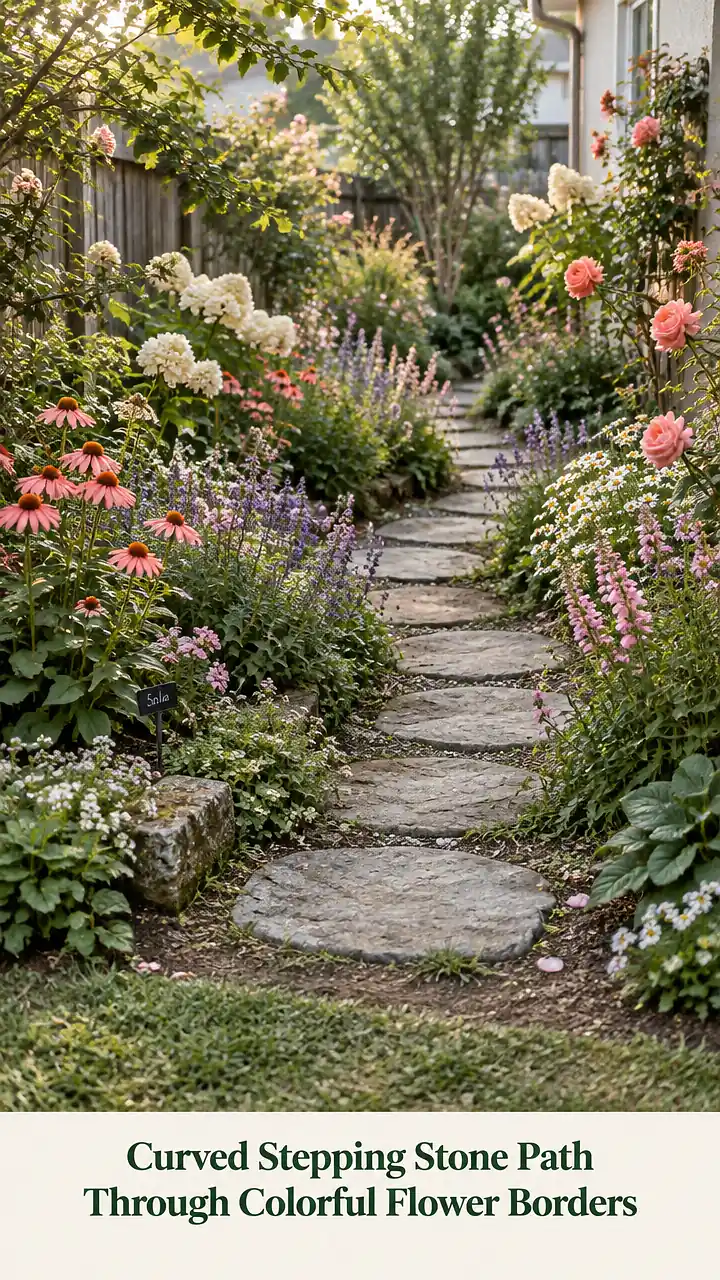
Curved Stepping Stone Path Through Colorful Flower Borders
Overview
A gently winding stepping stone path can make a long, narrow semi-detached garden feel more interesting and spacious. Rather than emphasizing straight boundaries, the curved layout guides your eye through soft layers of flowers and foliage. Lavender, catmint, and low-growing sedums introduce purple, blue, and silver-green tones. The finished garden feels relaxed, natural, and wonderfully inviting during warmer months.
Materials & Plants
- Flat natural stone or textured concrete pavers
- Compactable gravel base and leveling sand
- Lavender, catmint, and creeping sedum
- Compost and bark mulch
- Garden edging and a hand trowel
- Optional small solar pathway lights
How to Create It
- Mark a gentle curved route using a garden hose, allowing comfortable walking space.
- Excavate and prepare a stable, well-draining base before setting each stepping stone securely.
- Create planting beds along the curves and improve the soil where needed.
- Group sun-loving flowers in repeating clusters, allowing space for their mature width.
- Mulch exposed soil and trim plants when necessary to keep the pathway accessible.
Modern Minimalist Courtyard With Pale Pavers And Greenery

Overview
Create a sophisticated outdoor space using clean lines, pale paving, and carefully selected evergreen plants. Large rectangular pavers make a compact courtyard appear organized, while dark planters introduce contrast and visual depth. Rounded shrubs soften the hard surfaces without overwhelming the design. This modern approach works beautifully in small paved gardens where easy maintenance and a calm, uncluttered appearance are priorities.
Materials & Plants
- Large-format outdoor porcelain or concrete pavers
- Charcoal or matte-black fiberglass planters
- Compact Japanese holly or dwarf conifers
- Fine-textured ornamental grasses
- Simple outdoor bench
- Free-draining potting mix and decorative gravel
How to Create It
- Measure your courtyard and plan a straightforward paving layout with enough space for furniture.
- Install pavers over a properly prepared base, maintaining drainage away from the house.
- Position two or three large planters where they soften corners without obstructing movement.
- Plant compact evergreens and grasses suited to the available sunlight and local climate.
- Add a simple bench and keep decorations minimal to preserve the contemporary atmosphere.
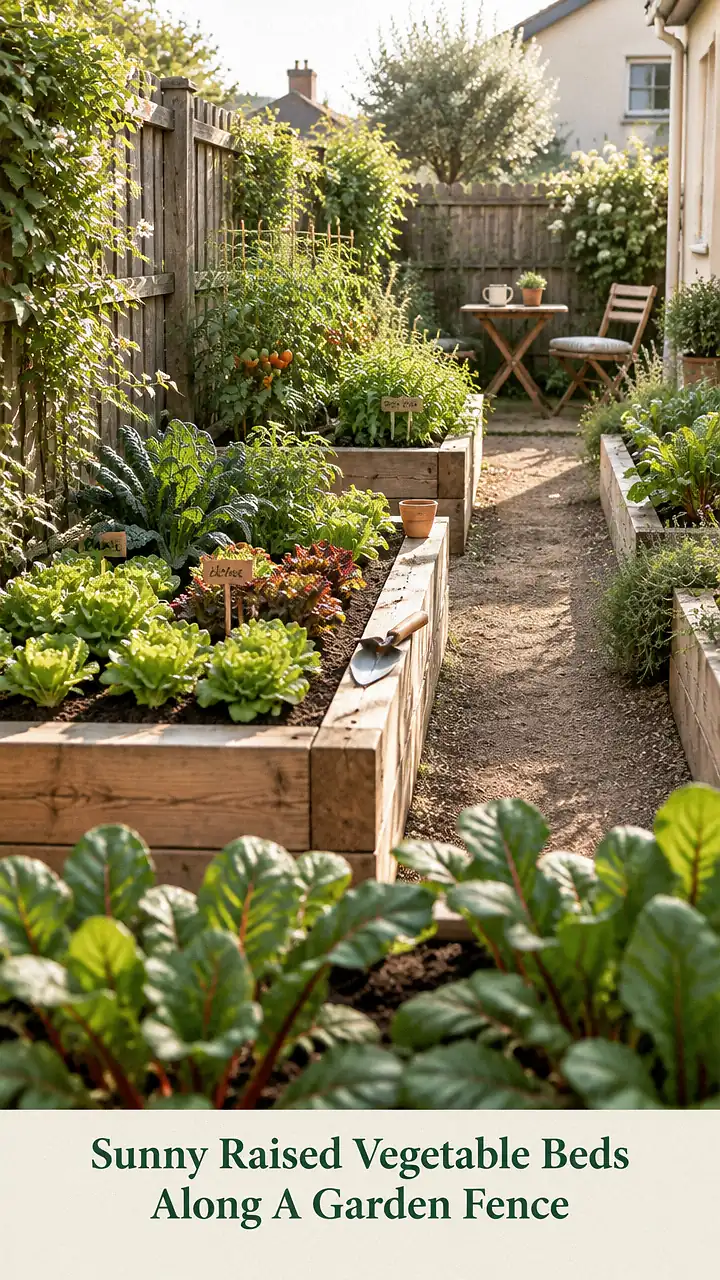
Sunny Raised Vegetable Beds Along A Garden Fence
Overview
Make a narrow backyard more productive with raised vegetable beds arranged neatly along a sunny boundary. Natural wooden frames provide structure, while leafy greens, tomatoes, and herbs create a colorful edible landscape. A gravel or mulch walkway makes harvesting convenient without sacrificing valuable planting space. This practical design is ideal for households that want fresh homegrown ingredients in a manageable garden.
Materials & Plants
- Untreated, naturally durable timber or raised-bed kits
- Quality topsoil blended with mature compost
- Lettuce, bush beans, parsley, and compact tomatoes
- Tomato supports or small trellises
- Mulch and a watering can
- Gravel or wood chips for the walkway
How to Create It
- Select a location receiving at least six hours of direct sunlight for most fruiting vegetables.
- Build beds approximately three feet wide when access is available from only one side.
- Fill the beds with suitable soil and compost, leaving a little space below the rim.
- Plant vegetables according to their mature spacing and install supports before stems become large.
- Check soil moisture regularly, mulch the surface, and harvest frequently to encourage continued production.
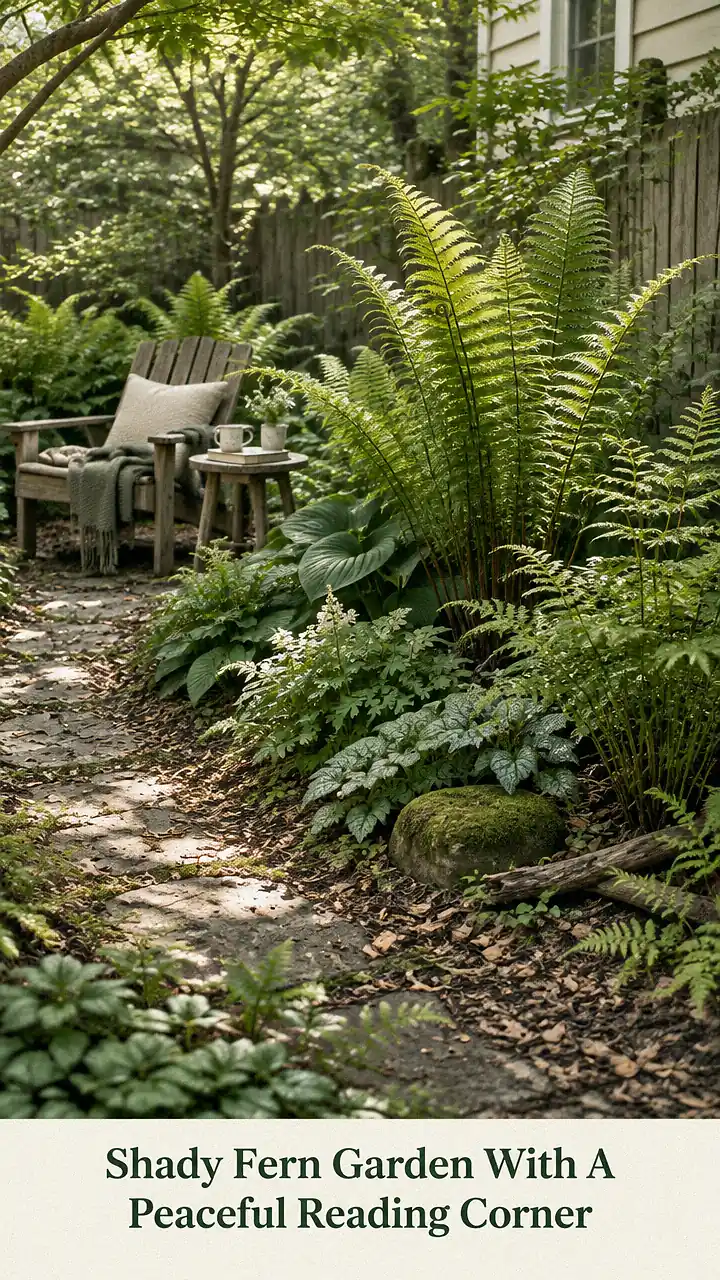
Shady Fern Garden With A Peaceful Reading Corner
Overview
A shaded corner beside a semi-detached house can become an intimate woodland-inspired retreat. Lush ferns, textured hostas, and delicate woodland flowers create overlapping layers of deep green and soft lime foliage. A small wooden chair and natural stepping stones complete the relaxing setting. This idea works especially well in north-facing gardens or areas shaded by neighboring buildings.
Materials & Plants
- Ferns such as Japanese painted fern or lady fern
- Hostas and heuchera
- Foamflower or other shade-tolerant groundcovers
- Natural stone stepping pads
- Compact wooden chair
- Leaf mold, compost, and organic mulch
How to Create It
- Observe the corner throughout the day to confirm whether it receives partial or deep shade.
- Clear weeds and improve suitable garden soil with compost or well-rotted leaf mold.
- Place larger ferns toward the back, with hostas and smaller foliage plants in front.
- Add stepping pads and a weather-resistant chair on stable, level ground.
- Keep the soil consistently moist during establishment while avoiding permanently waterlogged conditions.
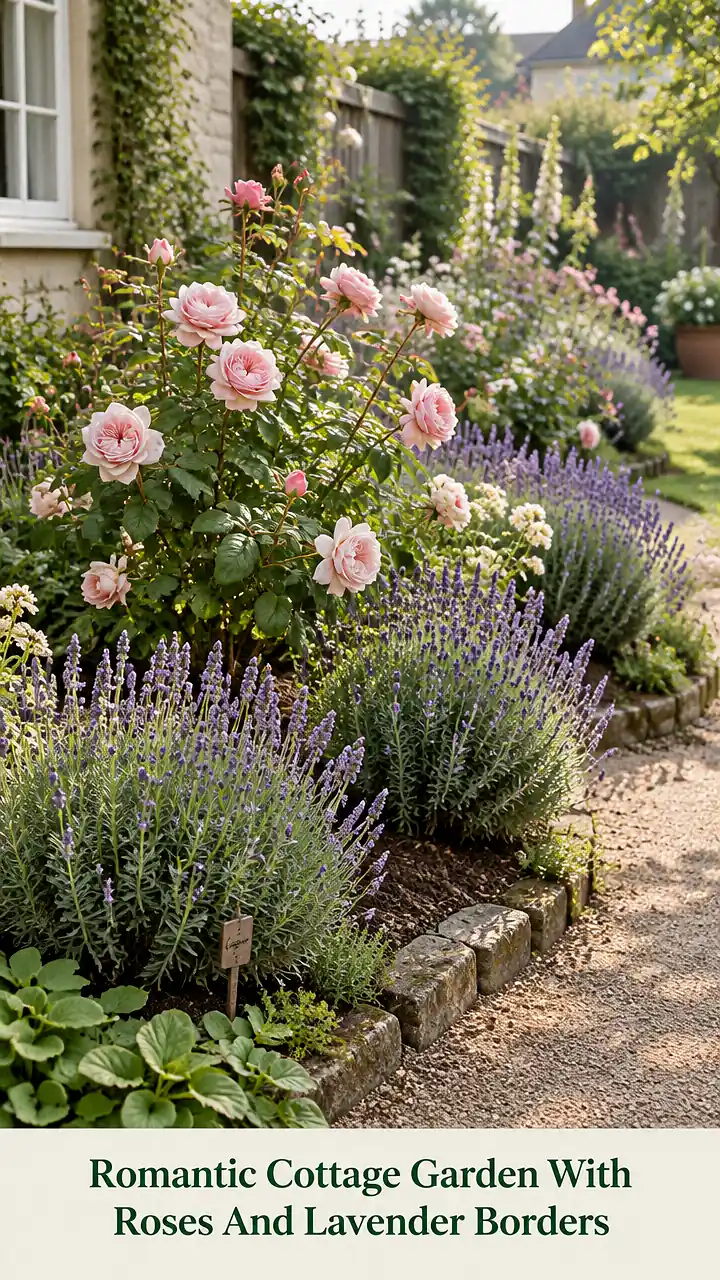
Romantic Cottage Garden With Roses And Lavender Borders
Overview
Bring traditional cottage-garden charm to a modest semi-detached backyard with overflowing flowers and softly layered planting. Compact shrub roses, lavender, foxgloves, and hardy geraniums create a colorful combination of pink, purple, cream, and blue. A simple brick-edged path adds rustic character. This garden suits sunny residential spaces where a relaxed, abundant planting style feels more appealing than rigid landscaping.
Materials & Plants
- Compact disease-resistant shrub roses
- Lavender for sunny, well-drained positions
- Hardy geraniums and foxgloves
- Reclaimed brick edging
- Organic compost and mulch
- Small hand pruners and gardening gloves
How to Create It
- Choose a sunny border with enough space for plants to reach their mature size.
- Arrange roses as structural focal points, leaving adequate airflow around each shrub.
- Fill gaps with flowering perennials matched to the soil and moisture conditions.
- Edge the planting area with reclaimed bricks for a charming, informal finish.
- Deadhead suitable flowers, prune roses seasonally, and replace short-lived plants when necessary.
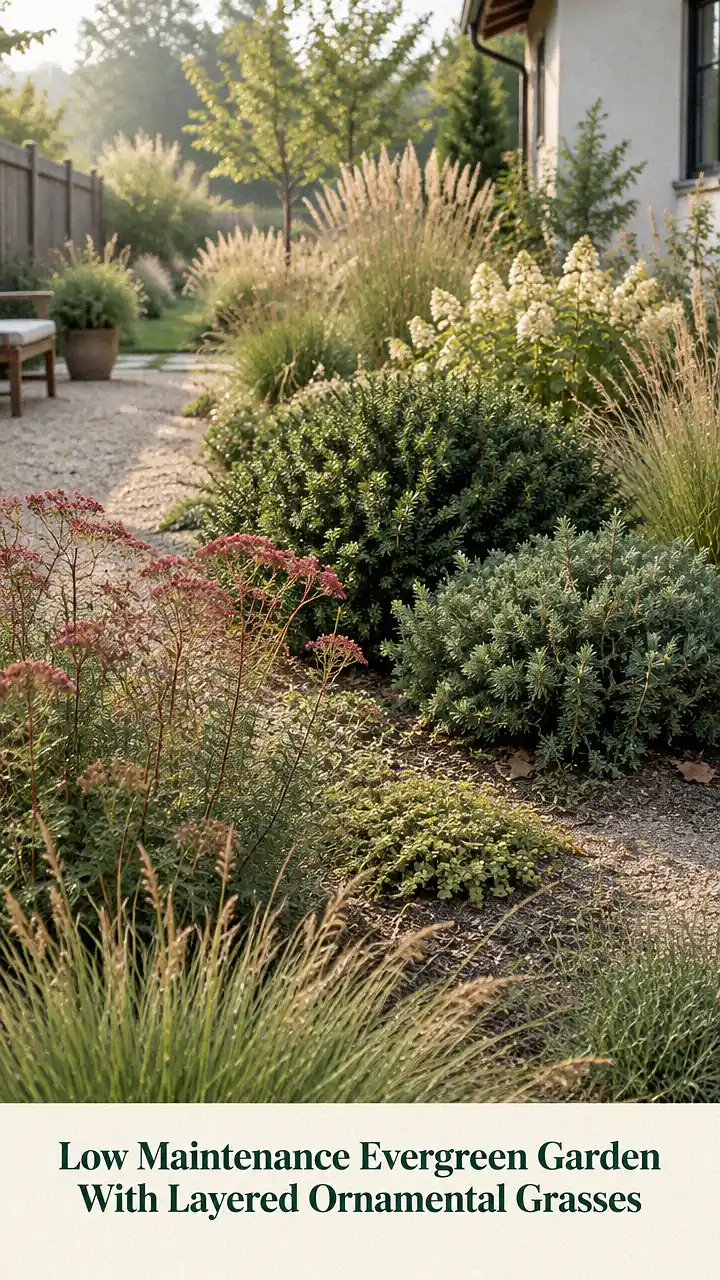
Low Maintenance Evergreen Garden With Layered Ornamental Grasses
Overview
For homeowners who prefer a tidy garden throughout the year, combine compact evergreens with graceful ornamental grasses. Rounded green shrubs provide permanent structure, while upright grasses introduce movement and contrasting textures. Decorative gravel and restrained planting colors keep the design simple. This combination is especially effective along semi-detached property boundaries where a neat appearance and manageable maintenance are important.
Materials & Plants
- Dwarf inkberry holly or suitable compact evergreens
- Little bluestem for sunny, well-drained gardens
- Compact carex for appropriate shaded positions
- Decorative gravel and landscape edging
- Shredded bark mulch for planting areas
- Shovel, rake, and hand pruners
How to Create It
- Select plants with mature sizes that fit comfortably within your available border.
- Prepare planting pockets with soil conditions appropriate to each species.
- Position evergreens at intervals, using ornamental grasses to fill the spaces between them.
- Apply mulch around plants and use decorative gravel only where it suits the design.
- Remove damaged foliage and cut back deciduous grasses at the appropriate seasonal time.
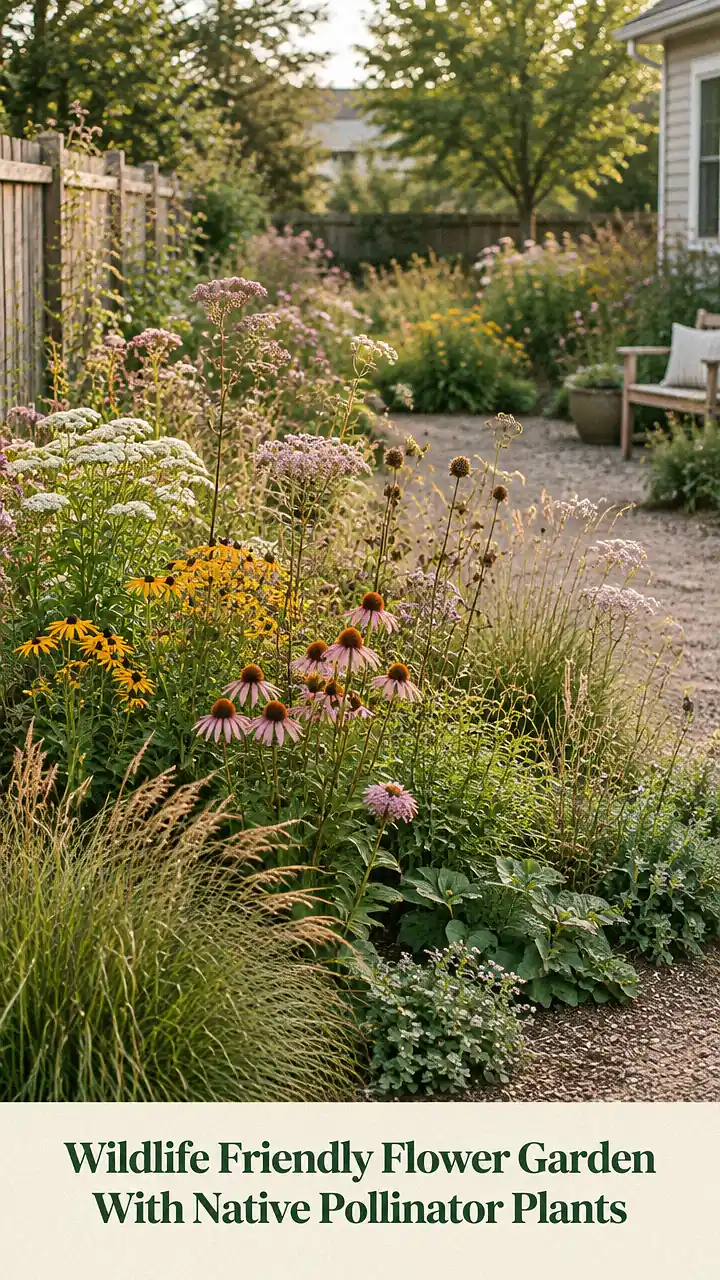
Wildlife Friendly Flower Garden With Native Pollinator Plants
Overview
A colorful wildlife garden brings movement and seasonal interest to a small residential landscape. Planting clusters of nectar-rich flowers creates a lively display that attracts bees, butterflies, and other beneficial insects. A narrow meadow-style border with purple coneflowers, golden blooms, and delicate flowering stems feels natural without becoming messy. This design works well in sunny backyard corners or alongside existing lawns.
Materials & Plants
- Regionally native coneflowers and asters
- Locally appropriate goldenrod varieties
- Native milkweed species where suitable
- Small bunchgrasses
- Compost and leaf mulch
- Shallow birdbath with textured landing stones
How to Create It
- Choose a sunny patch and research native flowering species suitable for your local ecosystem.
- Remove turf and persistent weeds before preparing the planting area.
- Arrange flowers in groups of three to five for a fuller, more noticeable display.
- Include early-, mid-, and late-season bloomers to extend the flowering period.
- Leave some healthy stems standing over winter and maintain a clean edge around the planting.
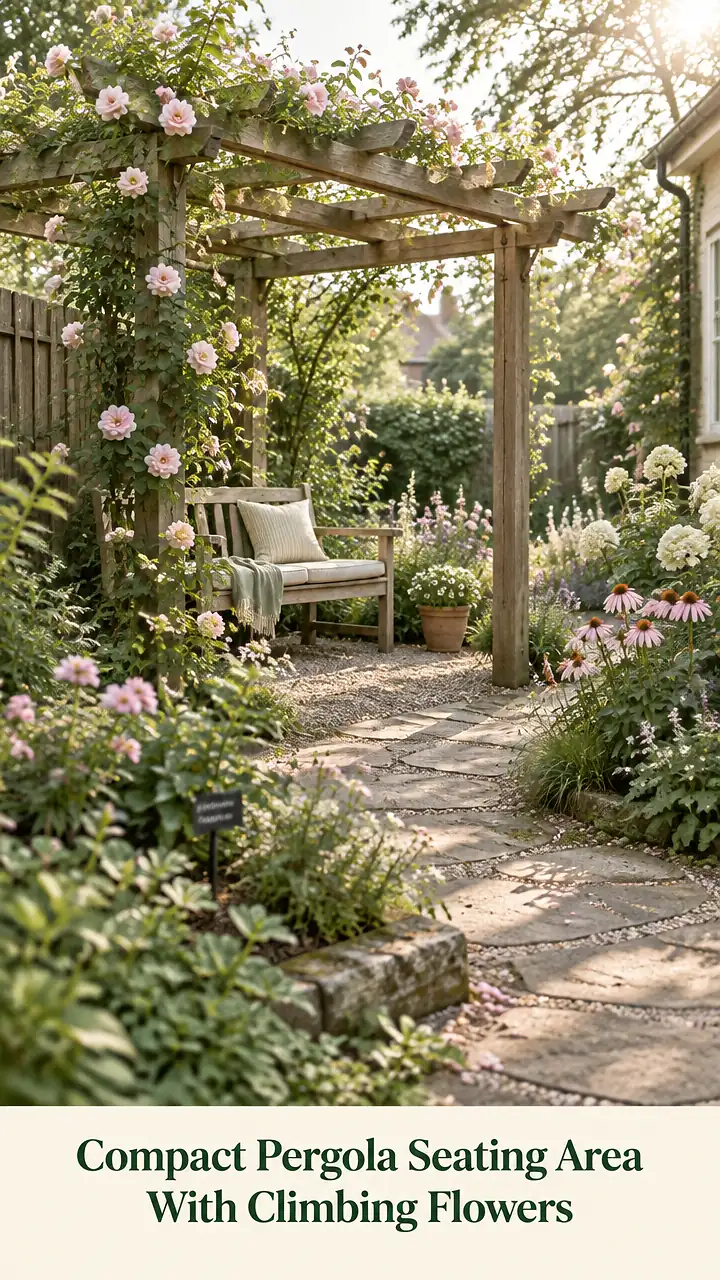
Compact Pergola Seating Area With Climbing Flowers
Overview
A small pergola can give a semi-detached backyard a charming outdoor-room feeling without requiring a large footprint. Its overhead beams create architectural interest, while flowering climbers soften the framework with greenery. Beneath the structure, a bistro table and two chairs provide a comfortable place for morning coffee. This garden idea works best toward the back of a narrow sunny yard.
Materials & Plants
- Compact freestanding pergola kit
- Concrete footings or approved anchoring system
- Clematis or an appropriately sized climbing rose
- Small metal or wooden bistro set
- Outdoor-safe string lights
- Compost, mulch, and plant ties
How to Create It
- Choose a level spot that leaves comfortable access around the structure and neighboring boundaries.
- Check local requirements before installing the pergola and anchor it securely against wind.
- Plant climbers near suitable supports, following their particular soil and sunlight requirements.
- Place the bistro table underneath and install outdoor-rated lighting safely.
- Guide new growth along the supports and prune plants to prevent overcrowding.
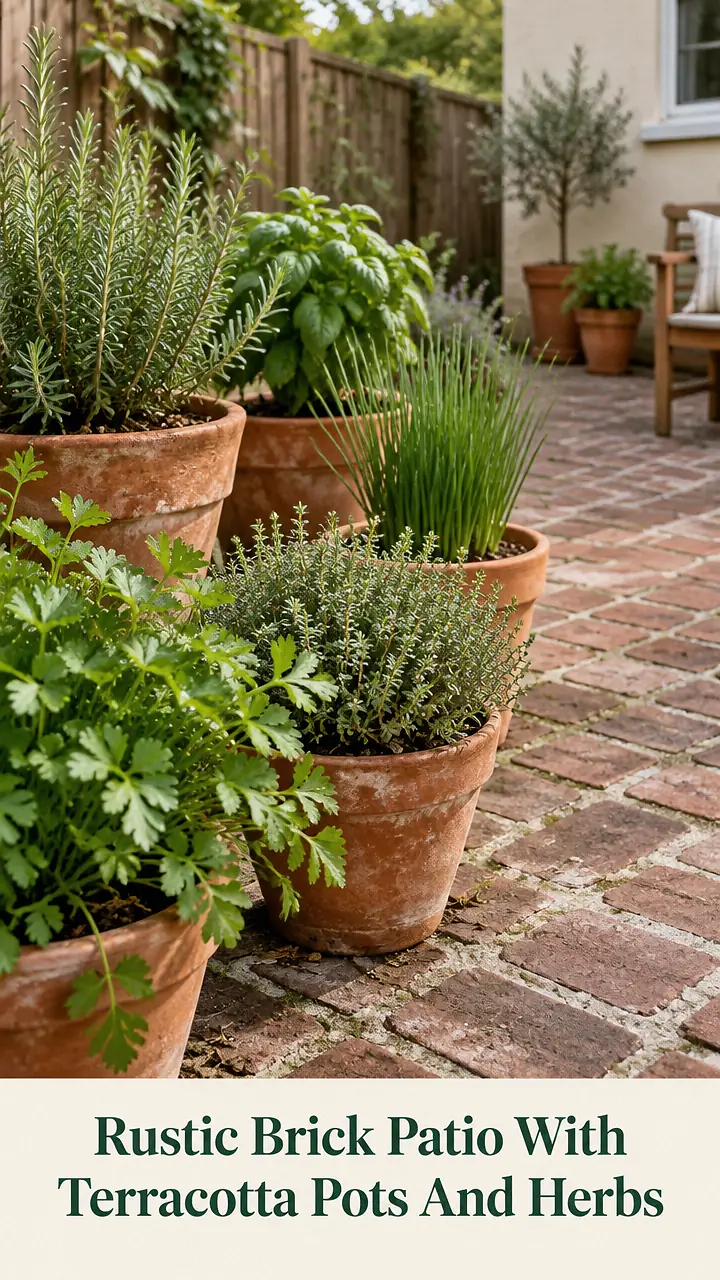
Rustic Brick Patio With Terracotta Pots And Herbs
Overview
Warm reclaimed bricks and traditional terracotta containers create a welcoming rustic garden that feels timeless and lived-in. A small paved patio becomes the center of the design, surrounded by fragrant culinary herbs and compact flowering plants. Weathered textures, earthy orange pots, and soft green foliage work beautifully together. This affordable idea is particularly suitable for older semi-detached homes with brick exteriors.
Materials & Plants
- Reclaimed paving bricks or brick-look pavers
- Terracotta containers in several sizes
- Rosemary, thyme, sage, and oregano
- Potting mix with good drainage
- Wooden garden stool or small café table
- Watering can and gardening gloves
How to Create It
- Plan a simple brick patio with a stable foundation and suitable drainage.
- Arrange terracotta pots in small groups, using different heights for a natural appearance.
- Plant Mediterranean herbs in containers receiving plenty of sunlight.
- Add a small table or rustic stool without blocking the main walking route.
- Water according to soil moisture and protect tender potted plants during freezing weather.
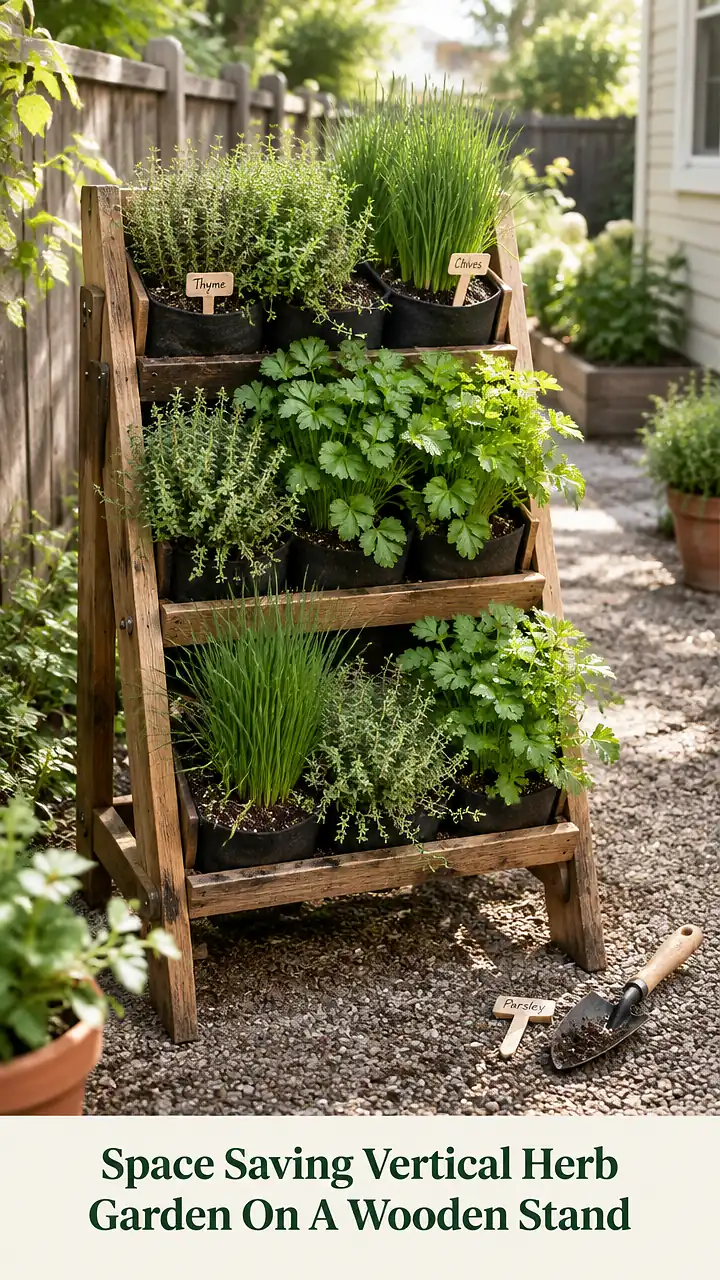
Space Saving Vertical Herb Garden On A Wooden Stand
Overview
When ground space is limited, a vertical herb station transforms an unused patio corner into an attractive edible garden. A narrow wooden ladder shelf or tiered plant stand holds neat rows of containers filled with fragrant herbs. Different leaf colors and textures create visual interest without clutter. This design is especially useful beside a sunny kitchen door or compact outdoor dining area.
Materials & Plants
- Sturdy freestanding wooden or metal plant stand
- Small pots with drainage holes
- Basil, chives, thyme, and parsley
- Separate container for mint
- Quality container potting mix
- Plant labels and a small watering can
How to Create It
- Select a stable location with enough sunlight for the herbs you want to grow.
- Secure the stand against tipping and confirm that its shelves can support wet containers.
- Place larger pots on lower shelves and smaller lightweight containers above.
- Group plants with similar watering needs while keeping spreading mint in its own pot.
- Harvest stems regularly, rotate containers when necessary, and replace seasonal herbs as needed.
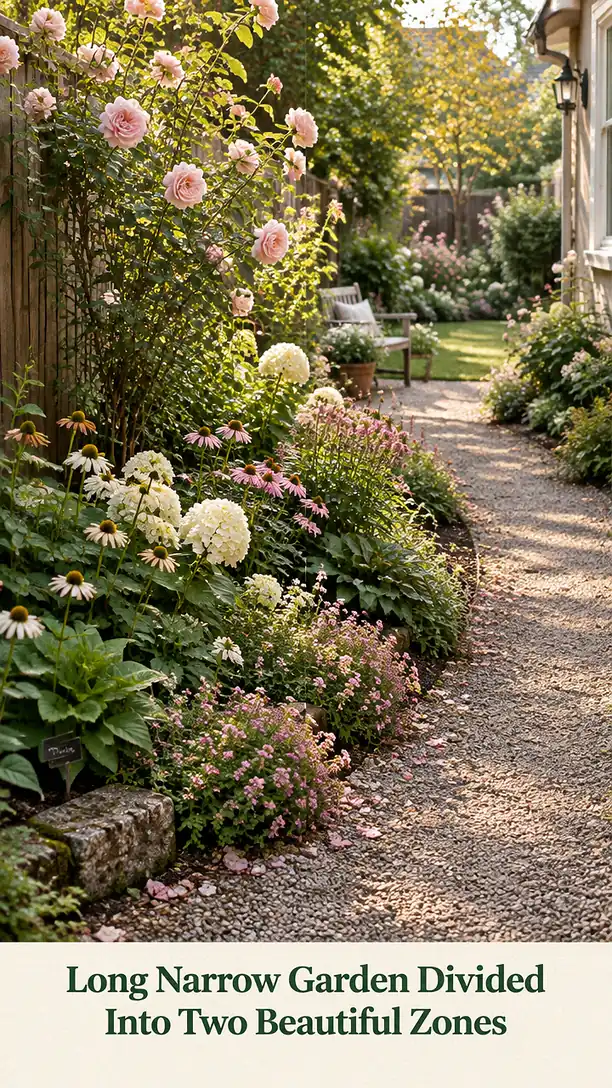
Long Narrow Garden Divided Into Two Beautiful Zones
Overview
A long rectangular backyard can feel more balanced when divided into distinct outdoor areas. Create a seating terrace near the house and a soft green garden retreat farther away, connected by a comfortable pathway. Flowering borders and a low planted divider gently separate the spaces without blocking views completely. This layout makes a narrow semi-detached garden feel purposeful and surprisingly spacious.
Materials & Plants
- Patio pavers or outdoor decking materials
- Stepping stones or compacted gravel
- Compact hydrangeas for suitable partial shade
- Dwarf ornamental grasses or low shrubs
- Outdoor dining furniture
- Garden edging, compost, and mulch
How to Create It
- Measure the garden and decide how much space each activity requires.
- Establish a practical dining or seating area immediately outside the back door.
- Create a pathway leading toward a smaller relaxation area at the far end.
- Use low planting beds to define the zones without creating an enclosed feeling.
- Repeat a few plants or materials throughout the garden to connect the overall design.
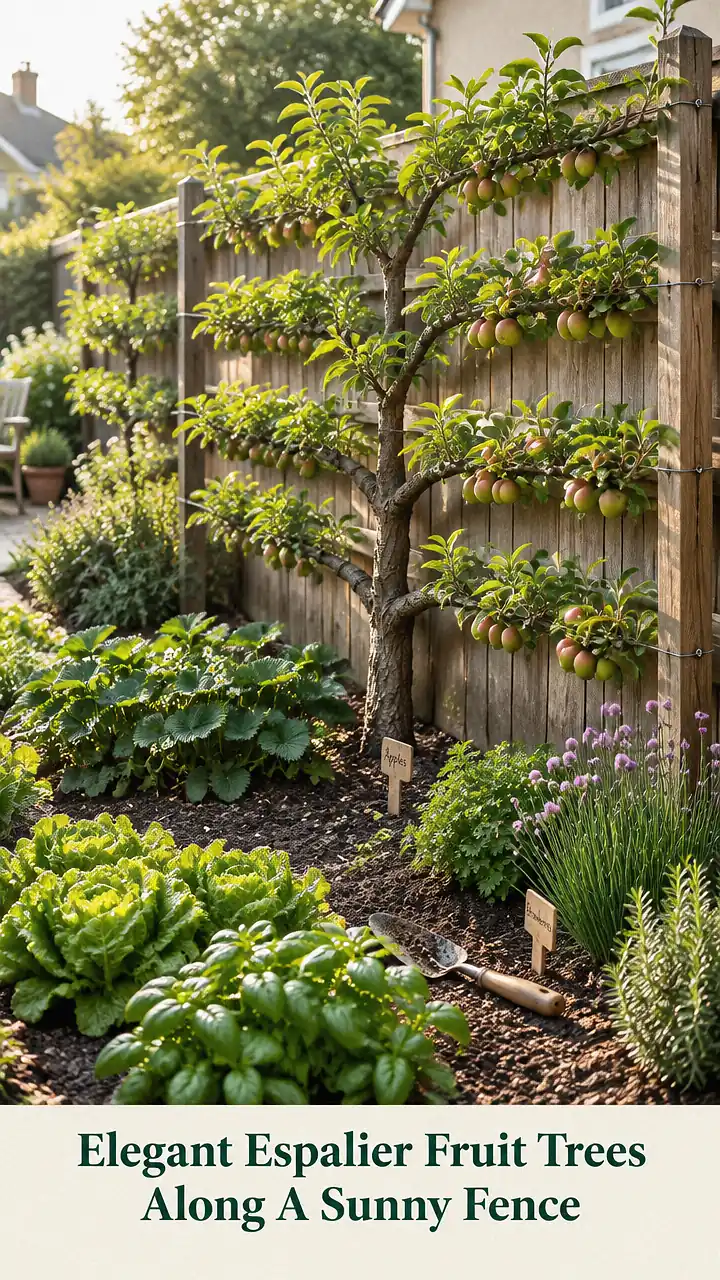
Elegant Espalier Fruit Trees Along A Sunny Fence
Overview
Espalier fruit trees offer an attractive solution for narrow gardens where traditional fruit trees would occupy too much space. Trained horizontally against sturdy supports, apple or pear branches create elegant architectural patterns while producing edible fruit. Underplanting with low herbs or seasonal flowers softens the structured appearance. This design suits sunny garden boundaries with sufficient width for a permanent trained tree.
Materials & Plants
- Spur-bearing apple or pear tree on suitable rootstock
- Sturdy support posts and galvanized training wires
- Soft garden ties
- Chives or low seasonal flowers
- Compost and organic mulch
- Clean, sharp pruning shears
How to Create It
- Select a sunny location with approximately ten feet of available width for a traditional espalier.
- Install secure horizontal wires around 14–18 inches apart, allowing airflow behind the branches.
- Plant a suitable tree and confirm its pollination requirements before purchasing.
- Gently tie developing branches into horizontal positions as they grow.
- Follow species-specific winter and summer pruning guidance to preserve the trained shape.
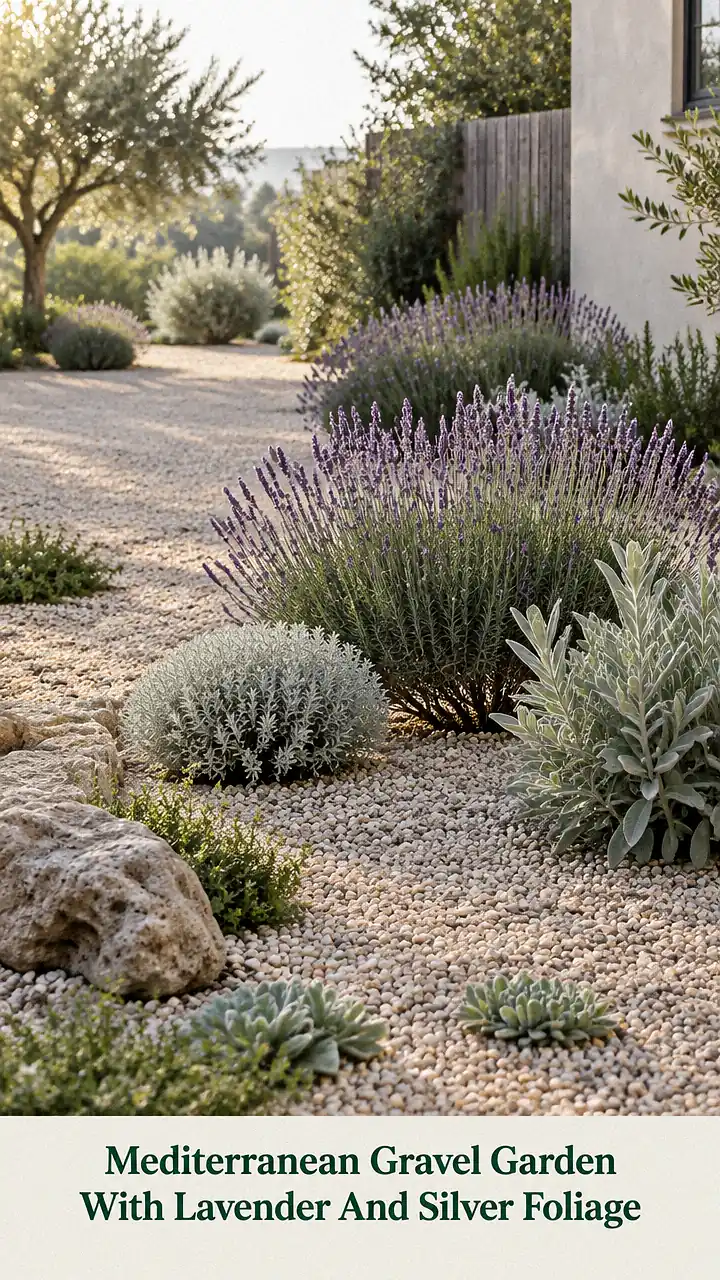
Mediterranean Gravel Garden With Lavender And Silver Foliage
Overview
Give a sunny semi-detached garden a relaxed Mediterranean character with warm gravel, aromatic plants, and silver-toned foliage. Lavender, rosemary, and compact drought-tolerant perennials create a beautiful contrast against pale stone. Large terracotta pots introduce height without requiring dense planting. This design works particularly well in sunny, well-drained backyards where traditional lawns demand too much maintenance.
Materials & Plants
- Pale pea gravel or angular decorative gravel
- Lavender and upright rosemary
- Santolina or other climate-appropriate silver foliage
- Compact sedums for additional texture
- Terracotta pots and stone edging
- Mulch and basic garden tools
How to Create It
- Choose a location receiving abundant sunlight and check that the soil drains freely.
- Remove weeds and mark planting islands with natural stone or metal edging.
- Position lavender, rosemary, and silver-foliage plants according to their mature spacing.
- Spread decorative gravel over suitable prepared areas, keeping it away from plant crowns.
- Water regularly during establishment, then adjust irrigation to match the plants’ needs.
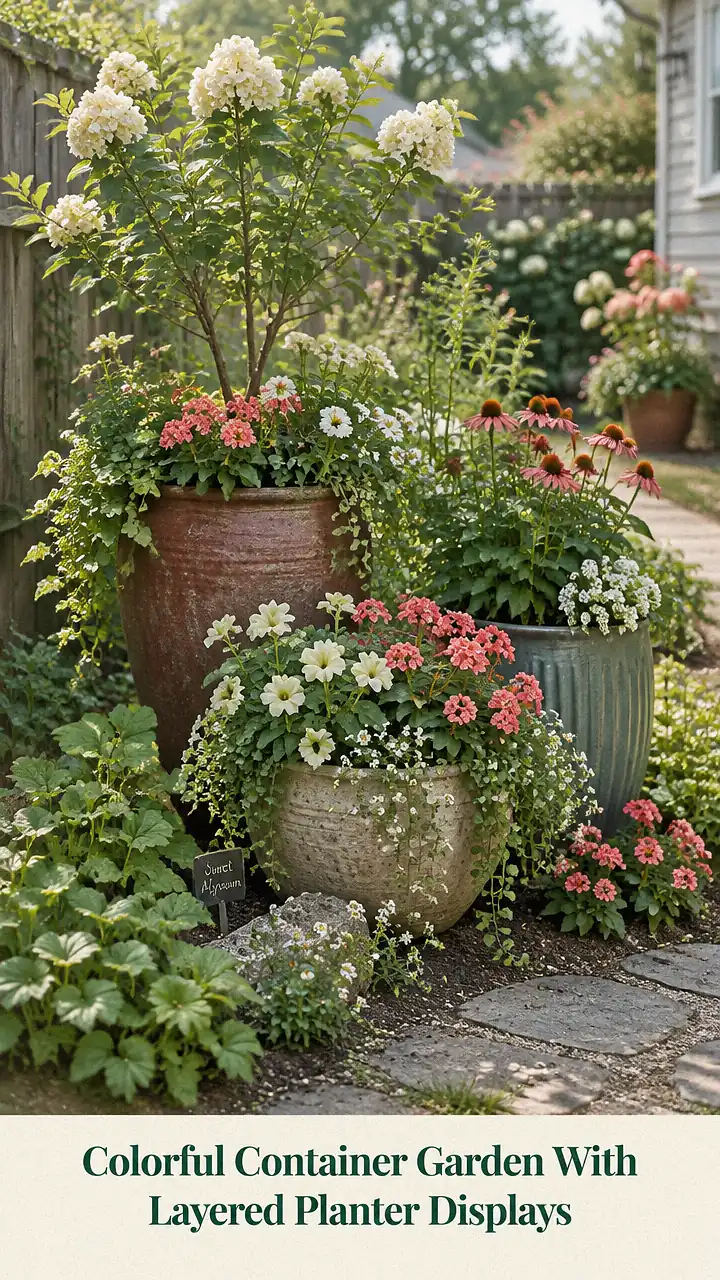
Colorful Container Garden With Layered Planter Displays
Overview
A container garden offers flexibility for small semi-detached patios where permanent landscaping isn’t practical. Arrange generous planters at different heights to create a lush, layered display of flowers, foliage, and ornamental grasses. A coordinated collection of cream, charcoal, or terracotta containers gives the space a polished appearance. This approach suits paved backyards, rental properties, and gardens with difficult planting soil.
Materials & Plants
- Large lightweight planters with drainage holes
- Compact coleus for shade or part shade
- Petunias and calibrachoa for sunny positions
- Dwarf ornamental grasses
- Potting mix and slow-release fertilizer
- Weather-resistant plant stands
How to Create It
- Select a limited color palette for containers to create a unified appearance.
- Position the largest pots first, keeping pathways and doorways unobstructed.
- Combine plants with similar light and moisture needs within each container.
- Use sturdy stands to raise smaller pots and introduce visual layers.
- Check moisture frequently during warm weather and feed flowering plants as recommended.
Rain Garden Border With Natural Stones And Moisture Loving Plants

Overview
A carefully positioned rain garden can turn a suitable low area into a beautiful landscape feature while helping manage runoff. A shallow planted basin filled with moisture-tolerant perennials creates an attractive combination of foliage, flowers, and natural stones. This idea works best in larger semi-detached backyards with well-draining soil and sufficient distance from buildings, underground utilities, and neighboring foundations.
Materials & Plants
- Regionally suitable native sedges
- Swamp milkweed or blue flag iris where appropriate
- Smooth river stones for an inlet
- Compost where soil amendment is needed
- Shovel, level, and garden hose
- Mulch suitable for rain gardens
How to Create It
- Choose a safe location at least ten feet from building foundations and away from underground utilities.
- Test soil drainage; if water remains after 24 hours, select a different location.
- Shape a shallow basin with gently sloping edges, a stabilized inlet, and a safe overflow route.
- Plant species suited to temporary wet conditions and the local climate.
- Mulch lightly, remove debris from the inlet, and inspect the basin after heavy rainfall.
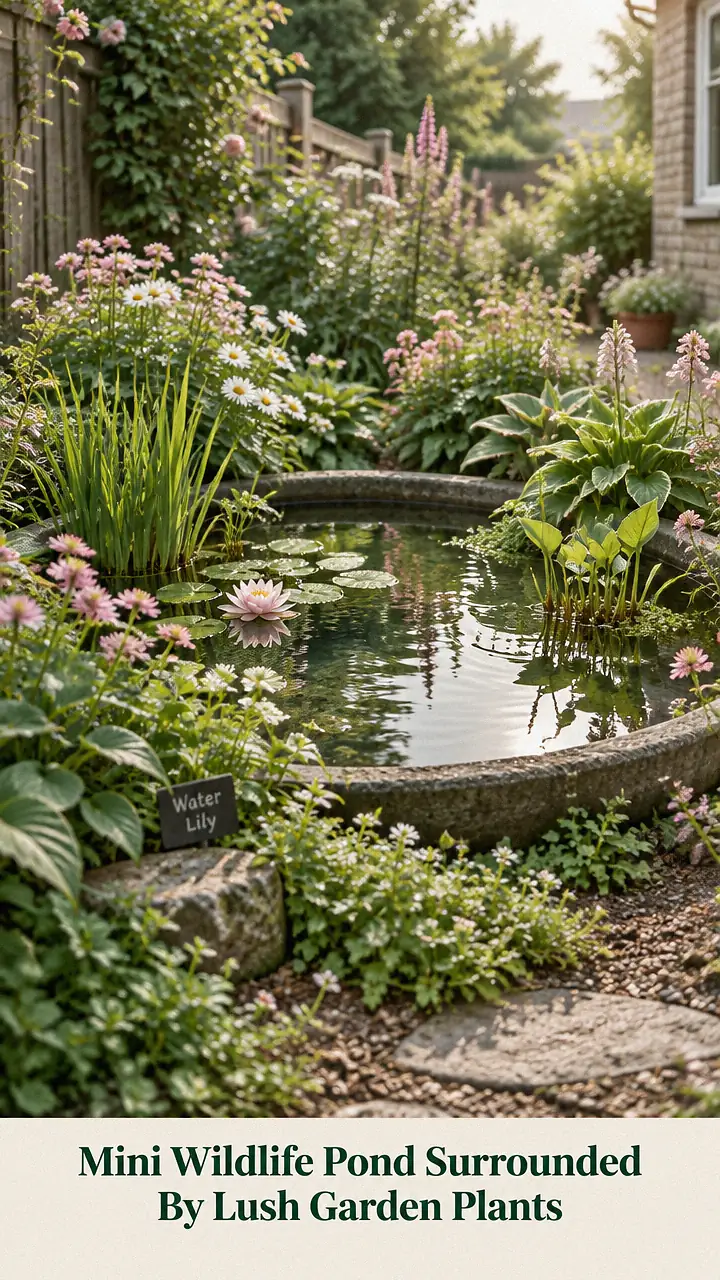
Mini Wildlife Pond Surrounded By Lush Garden Plants
Overview
A small wildlife pond adds a peaceful focal point to a compact backyard without requiring major excavation. A recycled half-barrel or watertight garden container can hold aquatic plants surrounded by attractive stones and green foliage. The reflective water introduces a calming visual element and provides habitat opportunities for small creatures. Position this feature in a sheltered corner with some sunlight and afternoon shade.
Materials & Plants
- Watertight half-barrel or large pond container
- Pond liner if the container leaks
- Compact aquatic plants appropriate to your region
- Smooth stones and untreated wooden access ramps
- Rainwater for filling
- Ferns or other suitable surrounding plants
How to Create It
- Choose a stable position and assess safety carefully, especially where children or pets have access.
- Test the container for leaks and install a suitable pond liner if necessary.
- Add stones and secure ramps that allow small wildlife to enter and escape.
- Fill with rainwater and introduce a few appropriately sized aquatic plants.
- Top up water during dry weather and remove excessive algae or fallen leaves as needed.
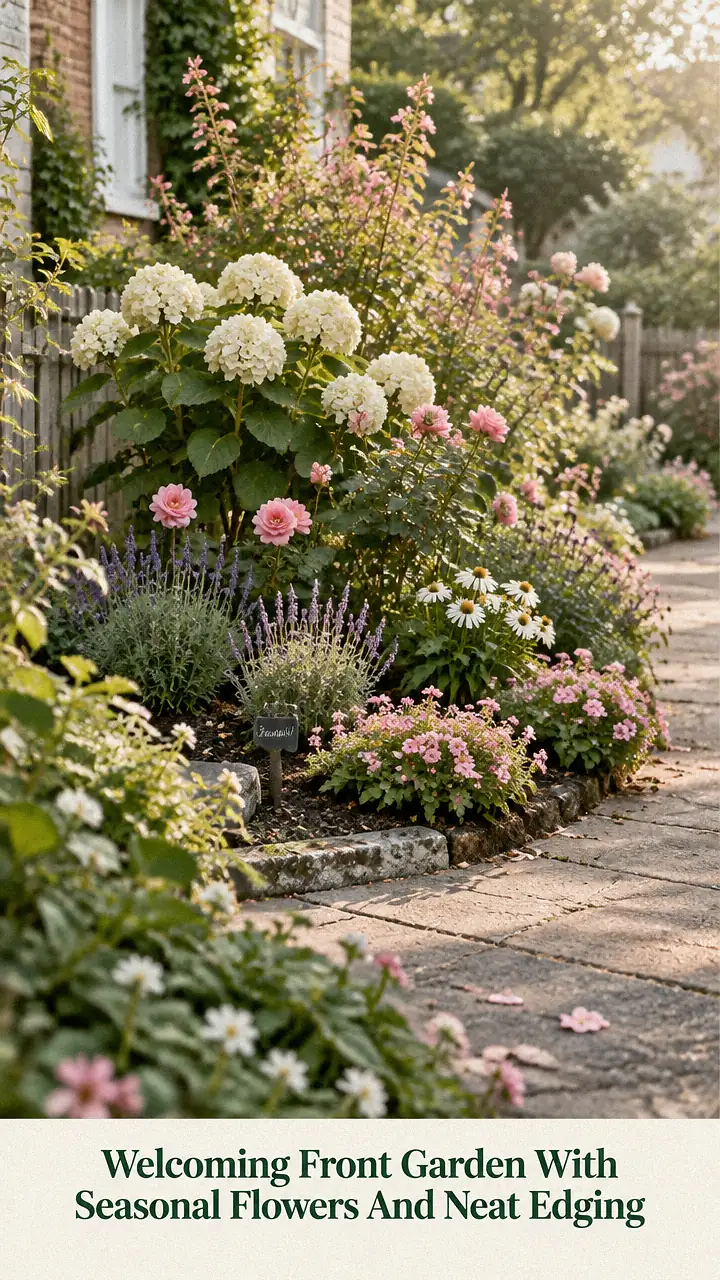
Welcoming Front Garden With Seasonal Flowers And Neat Edging
Overview
Make the entrance of a semi-detached home feel welcoming with a tidy pathway framed by seasonal flowers and compact shrubs. Crisp edging creates definition, while cheerful planting adds color without obscuring windows or entrances. Two matching planters beside the front door complete the balanced appearance. This simple garden design is especially effective for small front yards where curb appeal matters just as much as practicality.
Materials & Plants
- Low-growing dwarf shrubs
- Pansies, violas, or seasonal petunias
- Spring-flowering daffodil bulbs
- Brick or metal garden edging
- Matching entrance planters
- Compost, mulch, and hand tools
How to Create It
- Clear overgrown vegetation while preserving a safe, convenient route to the front door.
- Define planting beds beside the walkway using attractive, durable edging.
- Plant compact shrubs as permanent structure, allowing room for mature growth.
- Add seasonal flowers and suitable bulbs for changing colors throughout the year.
- Refresh bedding plants when needed and keep shrubs trimmed away from windows and pathways.
Create A Semi Detached Garden That Feels Like Your Own
A beautiful garden doesn’t depend on having an enormous backyard or an unlimited landscaping budget. With thoughtful planning, even a narrow or overlooked semi-detached outdoor space can become a comfortable and attractive extension of your home.
Start by considering how you want to use your garden. A private patio might be your priority, while another household may prefer colorful flower borders, easy-care planting, or a practical vegetable garden. Look carefully at sunlight, drainage, soil conditions, neighboring boundaries, and the space needed for everyday movement.
You can also combine several semi detached garden ideas to create a design that feels truly personal. A modern paved terrace might lead into a wildlife-friendly flower border, while a small herb garden could sit beside a cozy seating area.
Begin with one manageable improvement, choose plants suited to your climate, and let your garden develop naturally. Over time, those thoughtful details can transform an ordinary outdoor space into somewhere you’ll love spending time.