
Succulents have a way of making even the simplest garden feel thoughtfully designed. Their sculptural leaves, unusual shapes, and beautiful shades of green, silver, pink, and purple bring character to spaces that might otherwise feel ordinary. Whether you have a spacious backyard, a tiny apartment balcony, or a sunny front porch, there’s a succulent arrangement that can fit your home.
One of the best things about succulent gardening is its flexibility. You can create an impressive display with a handful of inexpensive plants, repurpose containers you already own, or design an entire landscape around drought-tolerant varieties. Many succulents require relatively little maintenance once established, provided they receive appropriate light and grow in well-draining soil.
These sucullent garden ideas offer inspiration for every style, from rustic farmhouse arrangements to sleek modern gardens. Each design includes practical materials and straightforward steps, making it easier to create a beautiful space without an overwhelming budget or complicated landscaping work.
Creative Succulent Garden Ideas to Transform Your Space
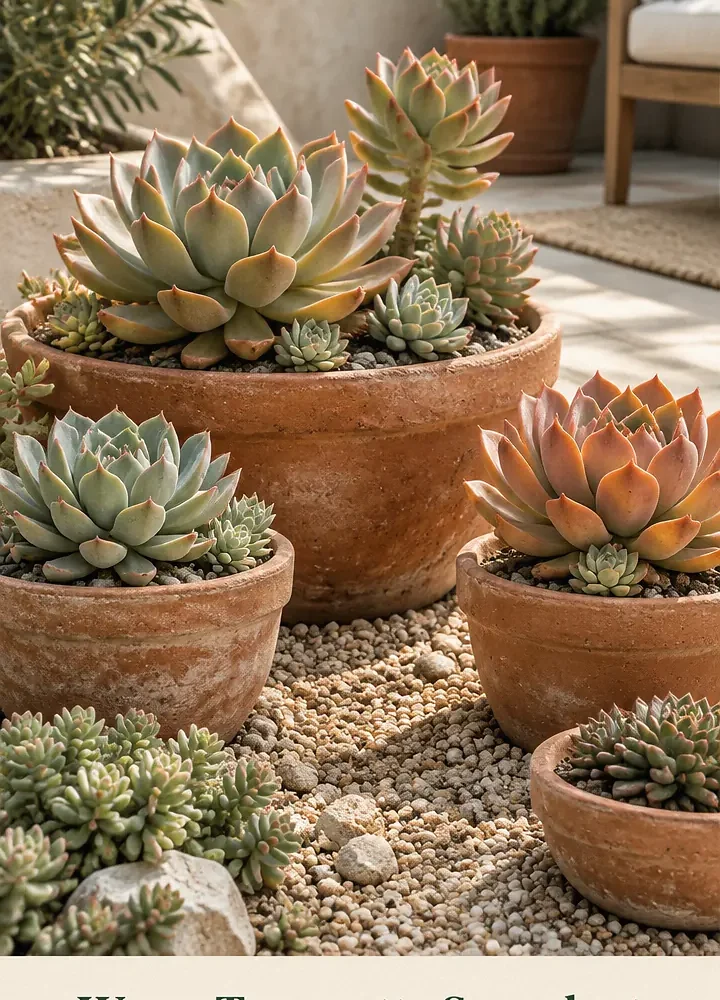
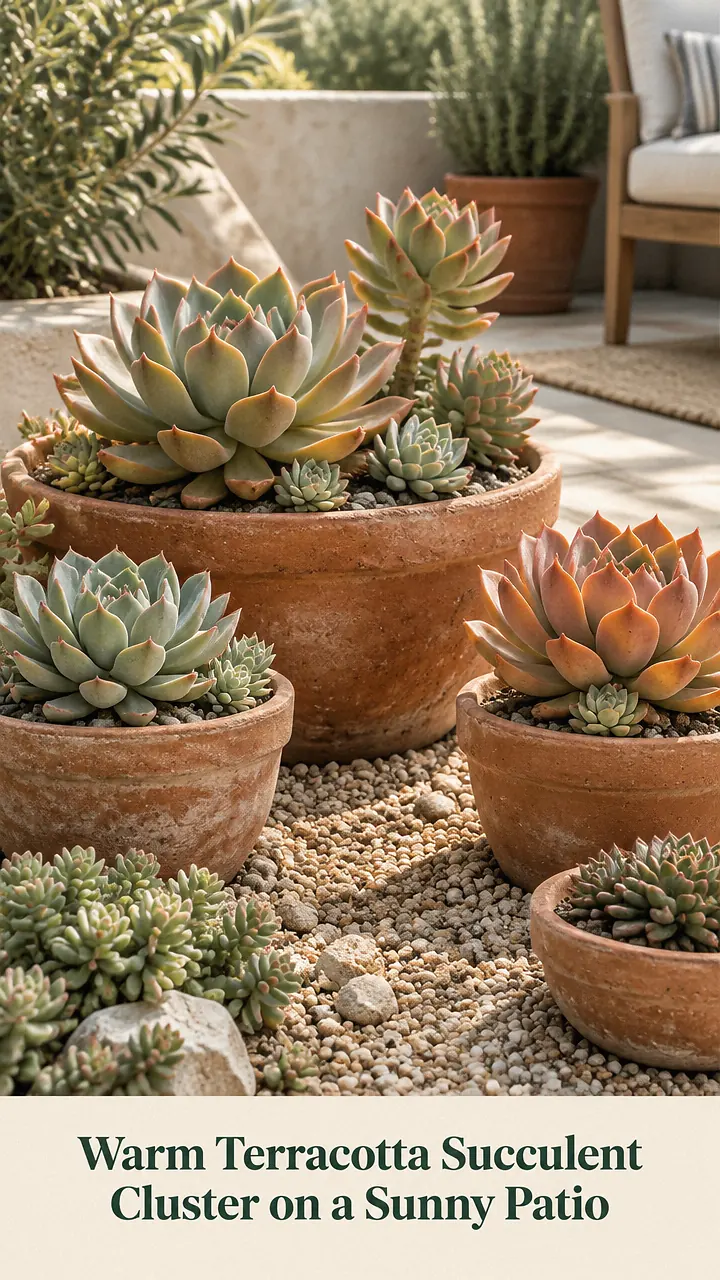
Warm Terracotta Succulent Cluster on a Sunny Patio
Overview
Create a welcoming Mediterranean-inspired display by grouping terracotta pots of different heights on a gravel-covered patio. Soft green echeverias, upright jade plants, and cascading sedums create an interesting mixture of forms. The warm orange clay contrasts beautifully with blue-green foliage, while irregular pot placement gives the arrangement a relaxed, collected-over-time appearance that’s perfect beside outdoor seating.
Materials & Plants
- Five to seven terracotta pots with drainage holes
- Echeveria, jade plant, and trailing sedum varieties
- Commercial cactus and succulent potting mix
- Pea gravel or decorative stone
- Pot feet and a small watering can
How to Create It
- Choose a bright patio corner with suitable sunlight and enough room for several containers.
- Fill the pots with well-draining mix, placing taller plants in larger containers.
- Arrange the pots in loose groups, with smaller rosettes near the front.
- Elevate pots for drainage, water when the mix dries, and protect tender plants from frost.
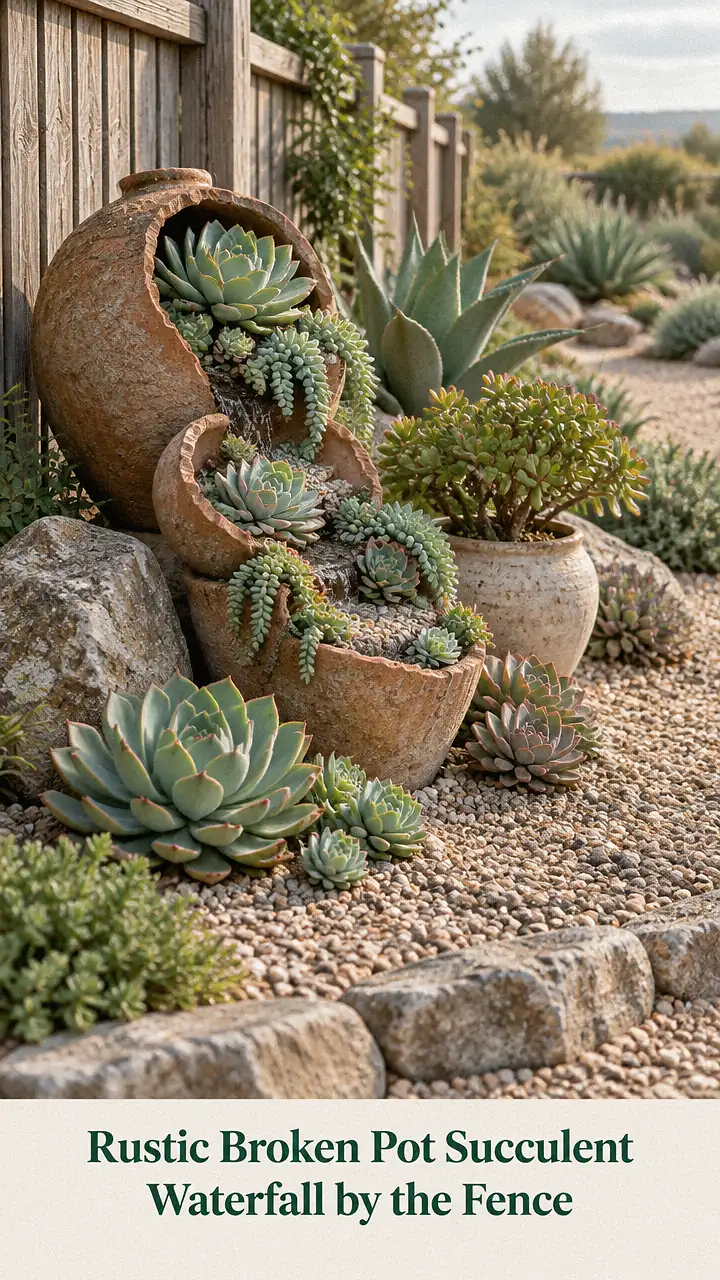
Rustic Broken Pot Succulent Waterfall by the Fence
Overview
Turn a damaged terracotta planter into a charming miniature landscape that appears to spill succulents across the ground. A large pot rests on its side, with small rosettes flowing from its opening toward a curved bed of pebbles. Red-tipped houseleeks and low-growing stonecrops resemble a colorful waterfall, making this an eye-catching feature beside a wooden fence or garden shed.
Materials & Plants
- Large broken terracotta pot with smooth, safe edges
- Sempervivum and low-growing hardy stonecrop
- Coarse succulent planting mix
- Small river pebbles and larger accent stones
- Gardening gloves and hand trowel
How to Create It
- Select a sunny, well-drained location and remove any dangerously sharp pottery fragments.
- Position the pot sideways, partially burying its lower edge for stability.
- Create a shallow, gently curving planting bed extending from the opening.
- Plant the succulents in irregular clusters, add pebbles, and water lightly during establishment.
Minimalist Concrete Succulent Planters at the Front Entry

Overview
For a clean contemporary entrance, arrange three square concrete planters in different sizes along a pale exterior wall. Architectural succulents with strong silhouettes create a striking contrast against the simple geometric containers. A tall snake plant can provide height in a suitably sheltered location, while compact echeverias and sculptural aloes complete the composition with subtle variations in green and silver.
Materials & Plants
- Three lightweight concrete-look planters with drainage
- Echeveria, compact aloe, and snake plant
- Fast-draining succulent potting mix
- White or light gray decorative gravel
- Pot feet or risers
How to Create It
- Measure the entryway and leave sufficient space for doors and comfortable walking.
- Select plants according to the entrance’s actual light, using containers for different needs.
- Position the tallest planter at the back and stagger smaller ones toward the front.
- Add a thin gravel topdressing and move frost-sensitive plants indoors when necessary.
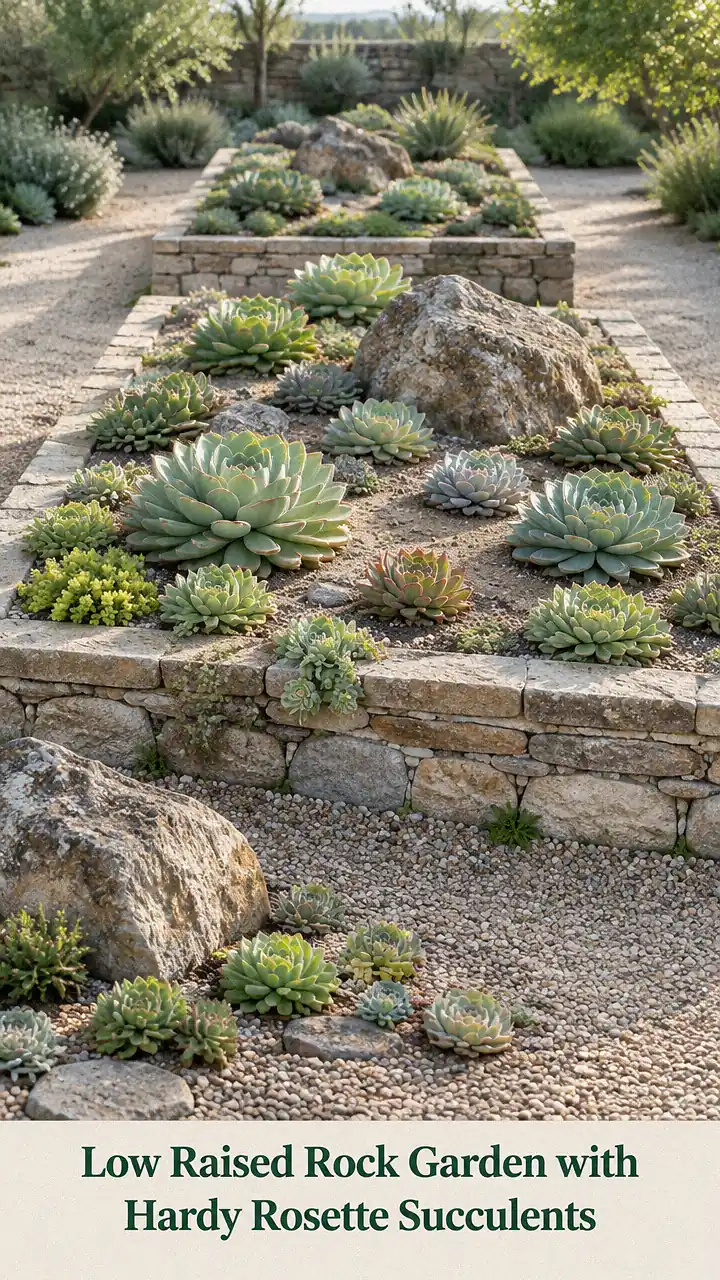
Low Raised Rock Garden with Hardy Rosette Succulents
Overview
A raised rock garden makes an attractive permanent landscape feature in a sunny backyard. Large weathered stones create natural-looking pockets filled with hardy sempervivums and low stonecrops. Their tight rosettes appear between rough stone surfaces, creating a beautiful contrast between living plants and rugged textures. This design works especially well on sloping ground or in gardens with limited planting space.
Materials & Plants
- Sempervivum varieties and hardy creeping stonecrop
- Local landscaping rocks in several sizes
- Free-draining, gritty planting soil
- Crushed stone for surface dressing
- Shovel, trowel, and gardening gloves
How to Create It
- Choose a sunny area and build a low, stable mound using suitable free-draining soil.
- Position larger rocks first, burying their bases slightly to prevent movement.
- Fill planting pockets with gritty soil and install succulents with room to spread.
- Finish with small stones and remove weeds before they become established.
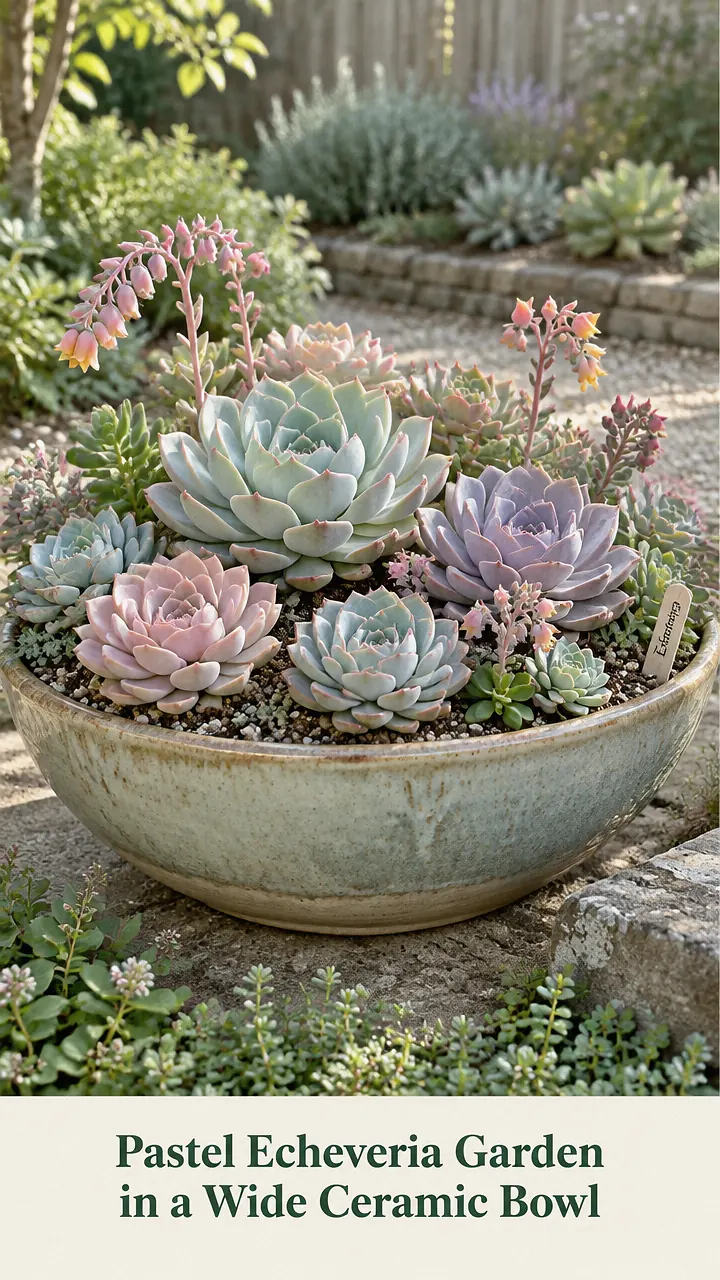
Pastel Echeveria Garden in a Wide Ceramic Bowl
Overview
A shallow ceramic bowl filled with pastel-colored echeverias creates a living floral arrangement without traditional cut flowers. Powdery lavender, pale mint, and dusty pink rosettes resemble oversized blossoms against a bed of cream-colored gravel. The design looks especially beautiful on a sunny patio table, outdoor pedestal, or sheltered balcony where its delicate leaf colors can be appreciated up close.
Materials & Plants
- Wide ceramic planter, approximately 14–18 inches across
- Echeveria varieties in complementary pastel colors
- Succulent potting mix
- Fine decorative gravel
- Small planting spoon and soft brush
How to Create It
- Choose a shallow but sufficiently deep planter with drainage holes.
- Arrange the largest rosette slightly off-center, with smaller varieties around it.
- Plant carefully without burying the leaves, keeping space for natural growth.
- Add gravel between plants and provide bright light with protection from harsh afternoon sun where needed.
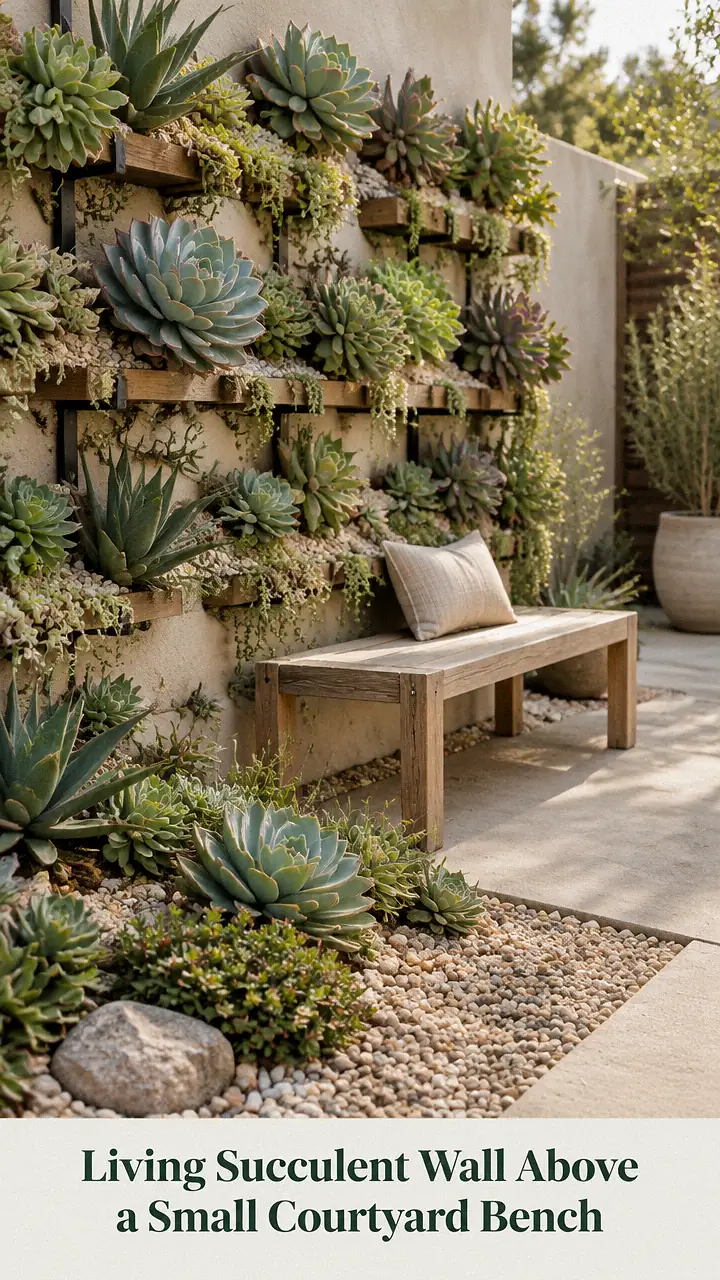
Living Succulent Wall Above a Small Courtyard Bench
Overview
A vertical succulent garden introduces lush greenery without consuming valuable floor space. Several securely mounted planting modules create a rectangular living artwork above a simple wooden bench. Trailing sedums soften the edges, while compact rosettes provide repeating patterns of green, burgundy, and silver. This space-saving design is especially appealing in a small courtyard or sheltered urban patio.
Materials & Plants
- Outdoor-rated vertical planting modules with drainage
- Compact sedums and suitable small rosette succulents
- Lightweight, well-draining growing medium
- Weather-resistant mounting brackets and hardware
- Waterproof wall protection where required
How to Create It
- Choose a sturdy wall receiving suitable light and confirm its load-bearing capacity.
- Install the mounting system according to its instructions, allowing proper drainage.
- Plant rooted succulents into individual pockets without overcrowding.
- Check moisture regularly, since vertical pockets dry unevenly, and replace plants that outgrow their compartments.
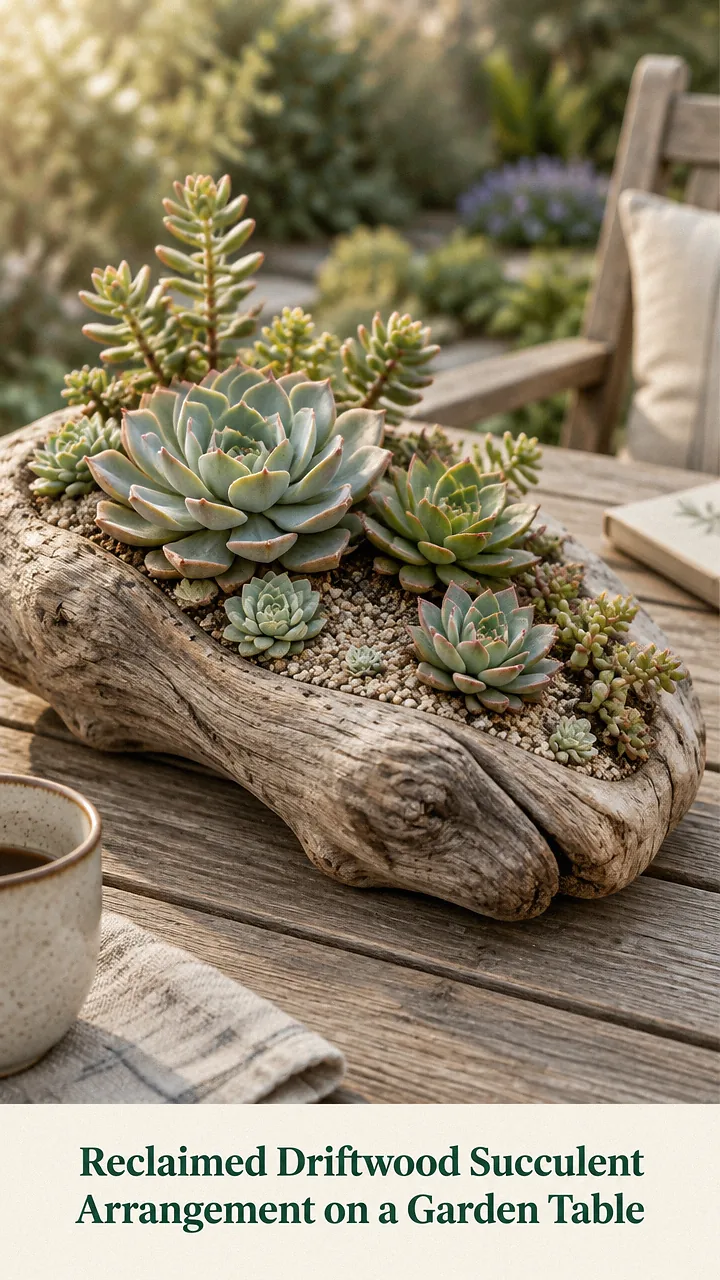
Reclaimed Driftwood Succulent Arrangement on a Garden Table
Overview
Weathered driftwood and sculptural succulents make an unexpectedly elegant combination. A long, irregular piece of wood becomes the centerpiece of a rustic garden table, with miniature rosettes nestled around its natural curves. Silvery echeverias, compact haworthias, and small decorative stones create a coastal atmosphere. The arrangement feels especially appropriate for a covered porch or outdoor entertaining area.
Materials & Plants
- Clean, stable piece of reclaimed driftwood
- Small succulents in individual draining nursery pots
- Decorative pebbles and natural gravel
- Discreet pot supports or holders
- Small pruning scissors
How to Create It
- Clean the driftwood and check that it rests securely without rolling.
- Select small pots that fit around natural depressions and branches.
- Conceal the containers using stones while leaving drainage openings unobstructed.
- Water the pots separately and return them once excess moisture has drained.
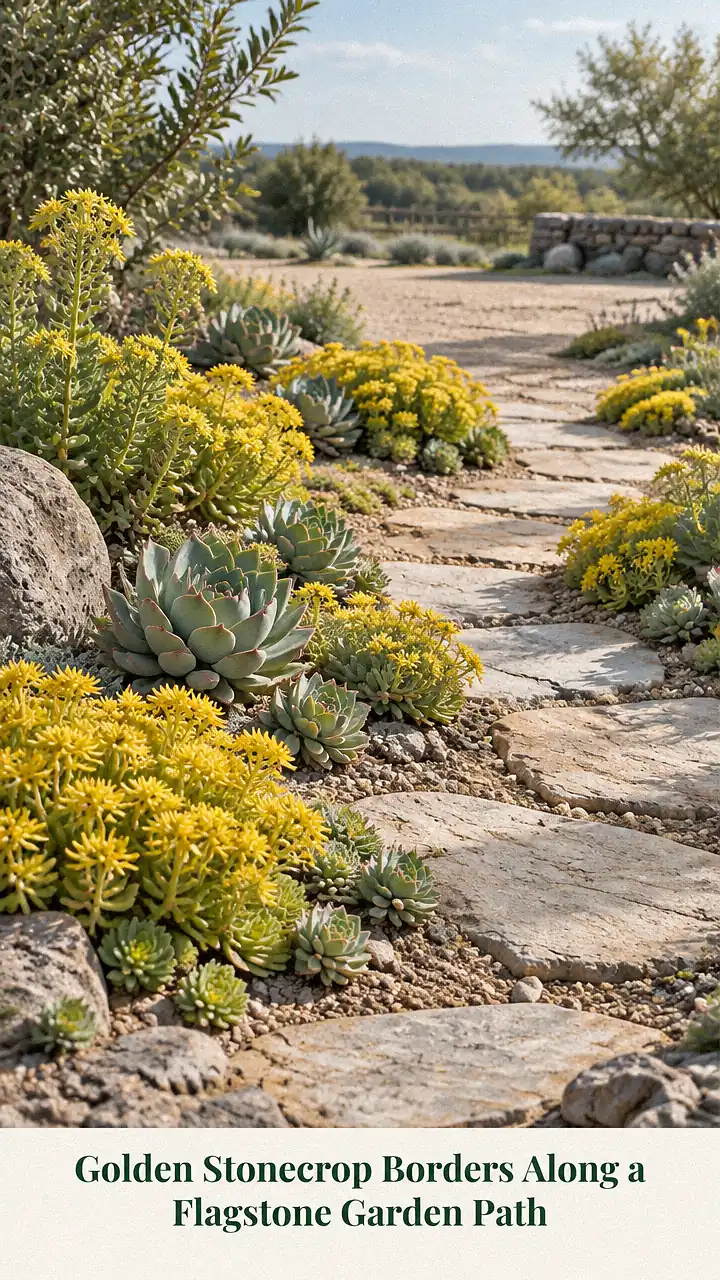
Golden Stonecrop Borders Along a Flagstone Garden Path
Overview
Frame an informal flagstone walkway with flowing ribbons of low-growing stonecrop. Small yellow-green leaves soften the edges of irregular gray stones, while patches of darker foliage introduce visual contrast. The result feels natural and inviting rather than overly landscaped. This design works beautifully in sunny side yards, cottage-style gardens, and narrow pathways where traditional shrubs would become too bulky.
Materials & Plants
- Hardy creeping stonecrop suited to the local climate
- Existing or new flagstone pathway
- Gritty, free-draining planting soil
- Small stones or gravel for gaps
- Hand trowel and garden edging tool
How to Create It
- Prepare planting strips along both sides of a stable, level pathway.
- Improve poorly draining soil before planting, especially in heavy clay.
- Space stonecrop plants according to their mature spread, generally several inches apart.
- Trim growth away from walking surfaces and remove weeds as the plants fill in.
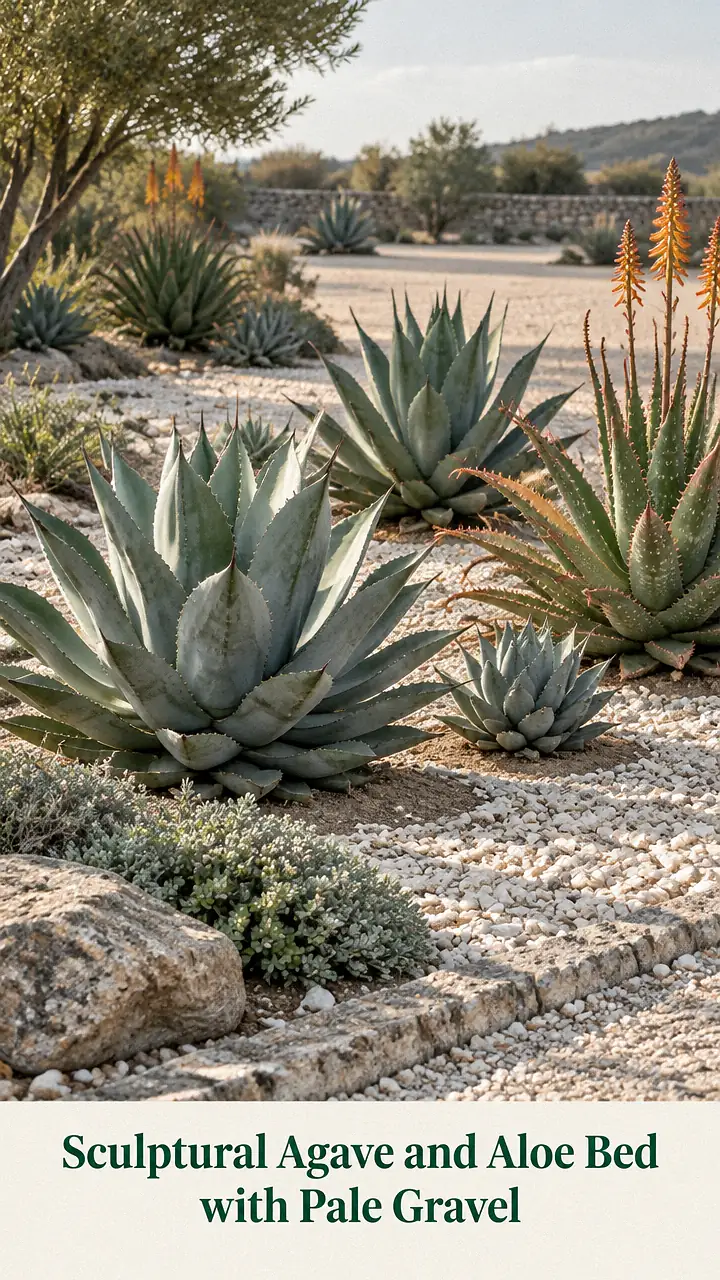
Sculptural Agave and Aloe Bed with Pale Gravel
Overview
Create a bold desert-inspired corner using the architectural forms of agaves and aloes. Broad, pointed leaves cast dramatic shadows over a bed of pale gravel, while scattered dark boulders add contrast. A few compact plants soften the arrangement without hiding its striking silhouettes. This design works best in warm, sunny regions with excellent drainage and enough room to keep sharp leaves away from pathways.
Materials & Plants
- Appropriately sized agave and aloe varieties
- Optional low-growing drought-tolerant companions
- Free-draining mineral-rich soil
- Pale gravel and several dark accent boulders
- Heavy-duty gardening gloves
How to Create It
- Choose a sunny position that remains reasonably dry during cooler months.
- Prepare a raised or mounded planting area if the native soil drains poorly.
- Position larger plants toward the back, allowing for their mature size and sharp leaf tips.
- Spread gravel over exposed soil and protect frost-sensitive varieties during cold weather.
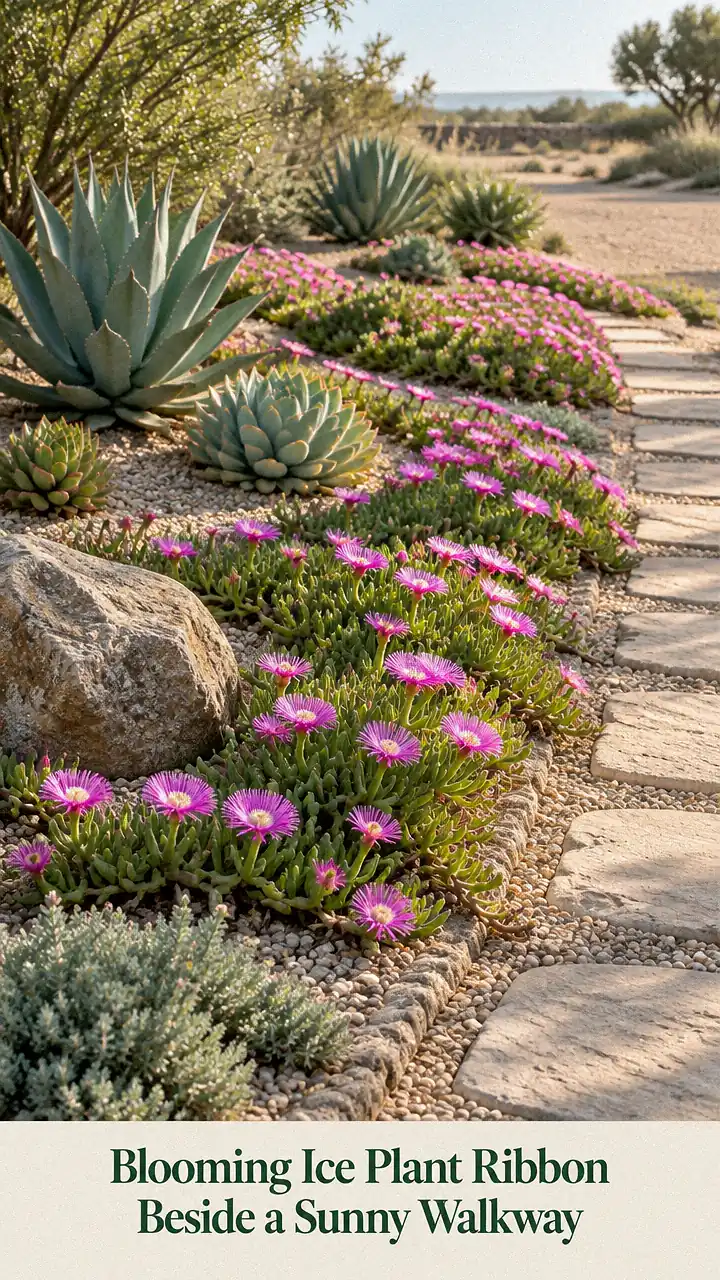
Blooming Ice Plant Ribbon Beside a Sunny Walkway
Overview
Flowering ice plants create an impressive carpet of color along a sunny garden walkway. Their fleshy green foliage spreads close to the ground, producing cheerful daisy-like flowers in shades of magenta, orange, pink, or yellow depending on the variety. Combined with natural stone edging, the planting creates a lively border that attracts attention without requiring tall plants or elaborate structures.
Materials & Plants
- Flowering Delosperma varieties suited to your hardiness zone
- Small natural edging stones
- Gritty, well-draining soil
- Coarse gravel for topdressing
- Garden trowel and hand rake
How to Create It
- Select an open location receiving plenty of direct sunlight.
- Prepare a narrow border with sharp drainage, avoiding persistently wet soil.
- Plant ice plants with enough space for their mature spread.
- Water during establishment, then reduce irrigation and remove unwanted growth from the walkway.
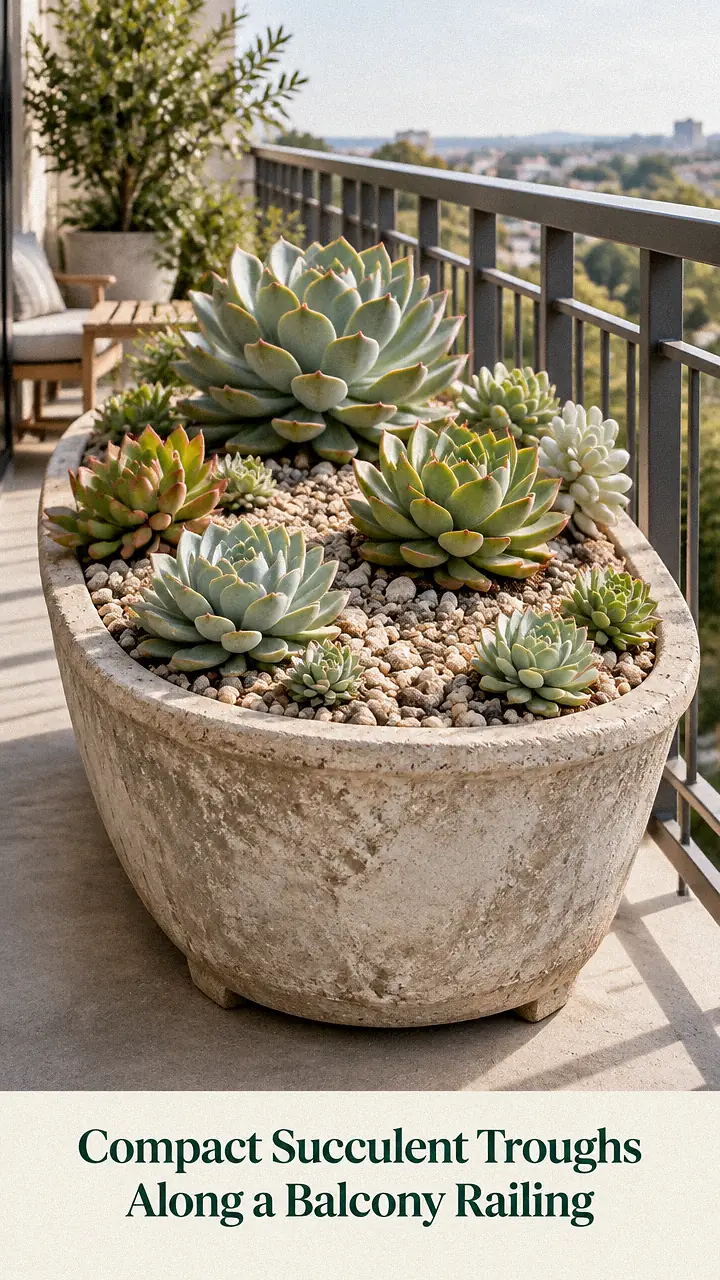
Compact Succulent Troughs Along a Balcony Railing
Overview
A row of narrow succulent troughs can transform a plain balcony into a colorful miniature garden. Compact echeverias, small sedums, and soft-edged haworthias create layered foliage without overwhelming the limited space. Coordinated planters give the arrangement a neat appearance, while trailing varieties add gentle movement. This approach works especially well where floor space is needed for chairs or storage.
Materials & Plants
- Lightweight railing planters with drainage
- Compact echeverias, sedums, or haworthias
- Succulent potting mix
- Secure railing brackets and locking hardware
- Small gravel topdressing
How to Create It
- Check the railing’s weight capacity and choose secure planters that cannot fall.
- Match plants to the balcony’s exposure, reserving haworthias for bright, indirect light.
- Fill each trough with draining mix and arrange plants below the railing’s top edge.
- Monitor soil moisture and wind exposure, especially during hot weather.
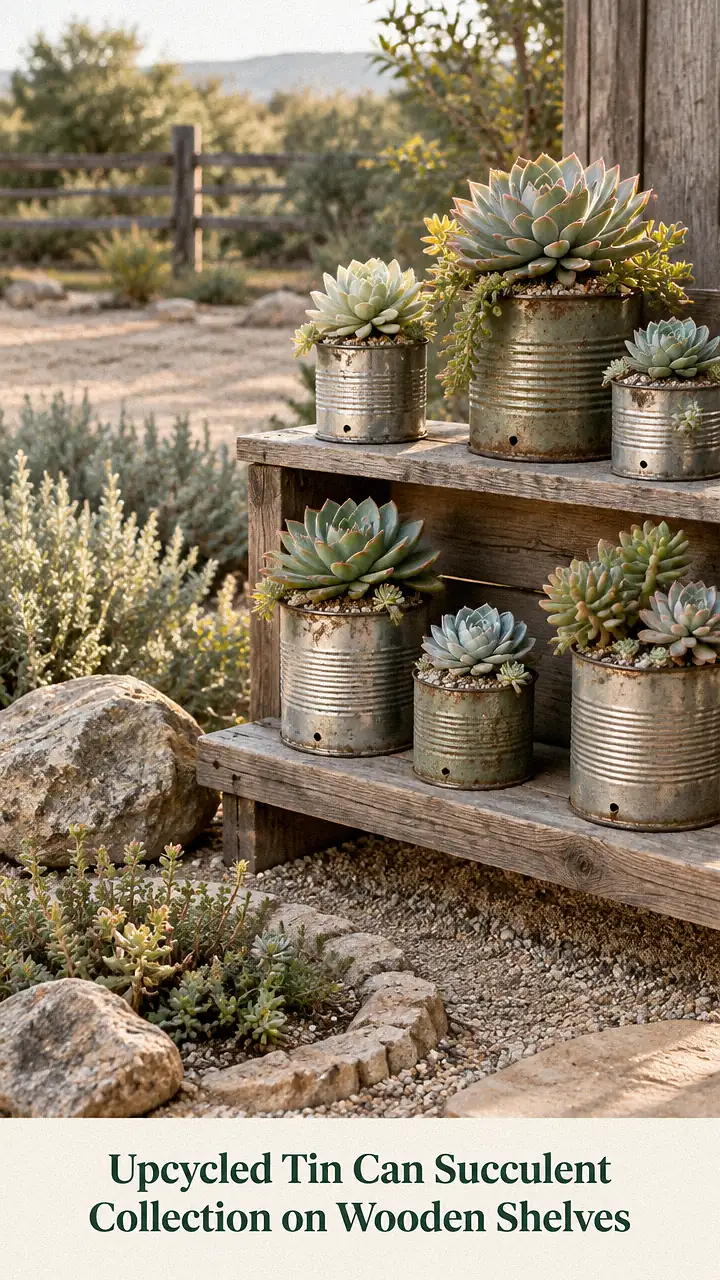
Upcycled Tin Can Succulent Collection on Wooden Shelves
Overview
Give old metal containers a second life by transforming them into an eclectic succulent collection. A simple wooden shelf against a fence holds painted tin cans in muted sage, cream, and terracotta shades. Each container features a different compact succulent, creating a cheerful collection of textures and shapes. This inexpensive DIY project is ideal for small patios, garden sheds, or budget-friendly backyard makeovers.
Materials & Plants
- Clean recycled metal cans with smoothed edges
- Small sedums, echeverias, and other compact succulents
- Exterior-grade paint suitable for metal
- Drill and metal drill bit
- Weather-resistant wooden shelving and potting mix
How to Create It
- Clean the cans, smooth sharp rims, and drill several drainage holes.
- Paint the exteriors and allow them to dry completely.
- Fill the cans with succulent mix and plant one small specimen in each.
- Arrange containers on securely anchored shelves and replace rusting cans when necessary.
Miniature Succulent Fairy Garden in a Rustic Planter
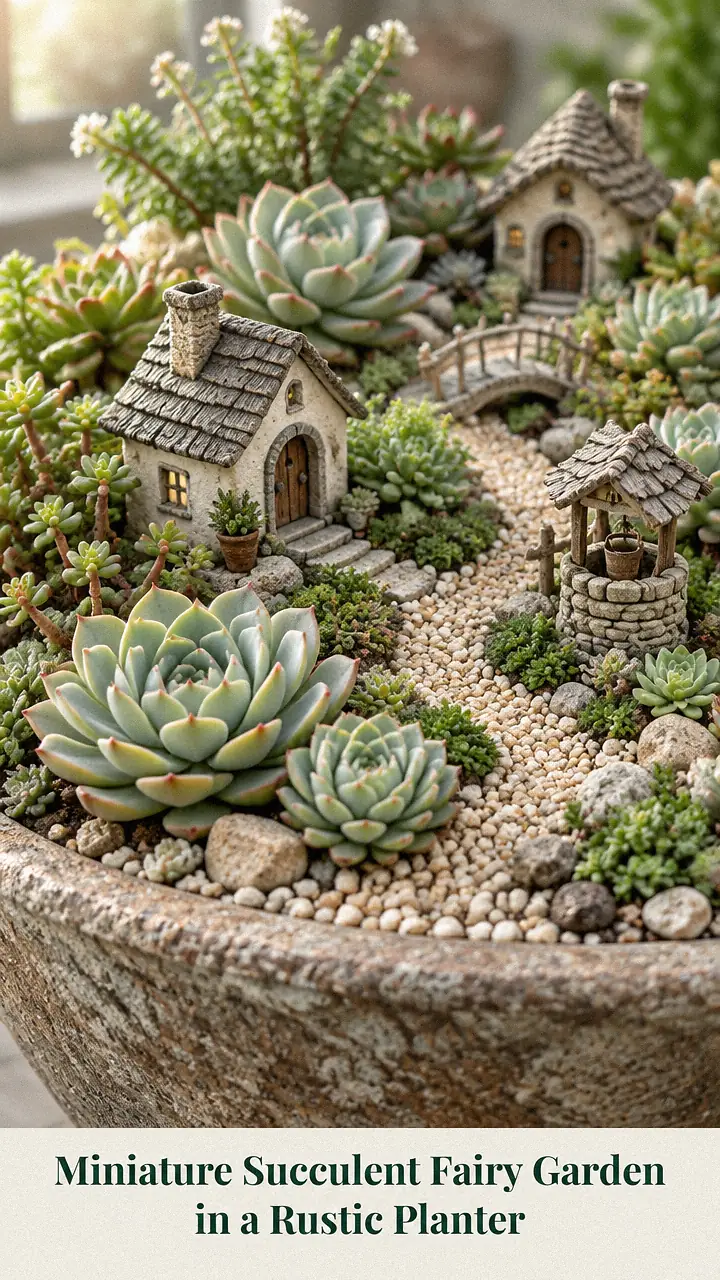
Overview
Build a whimsical miniature landscape using tiny succulents, pebbled pathways, and a few carefully chosen decorative accessories. Low-growing rosettes resemble garden flowers, while small upright plants look like miniature trees. A winding stone path leads toward a tiny wooden bench or cottage. The design makes a charming addition to a family patio, sheltered garden table, or sunny backyard corner.
Materials & Plants
- Wide rustic planter with drainage holes
- Miniature sempervivums, small sedums, or compact echeverias
- Fine pebbles and miniature stepping stones
- Weather-resistant miniature bench or cottage
- Well-draining succulent potting mix
How to Create It
- Fill the planter with appropriate soil, leaving room for decorative materials.
- Sketch a simple pathway and position the largest accessory first.
- Place taller succulents at the back and miniature rosettes along the path.
- Add pebbles, water carefully, and remove decorations when cleaning the planter.
Color Blocked Succulent Rosette Mosaic in a Timber Bed
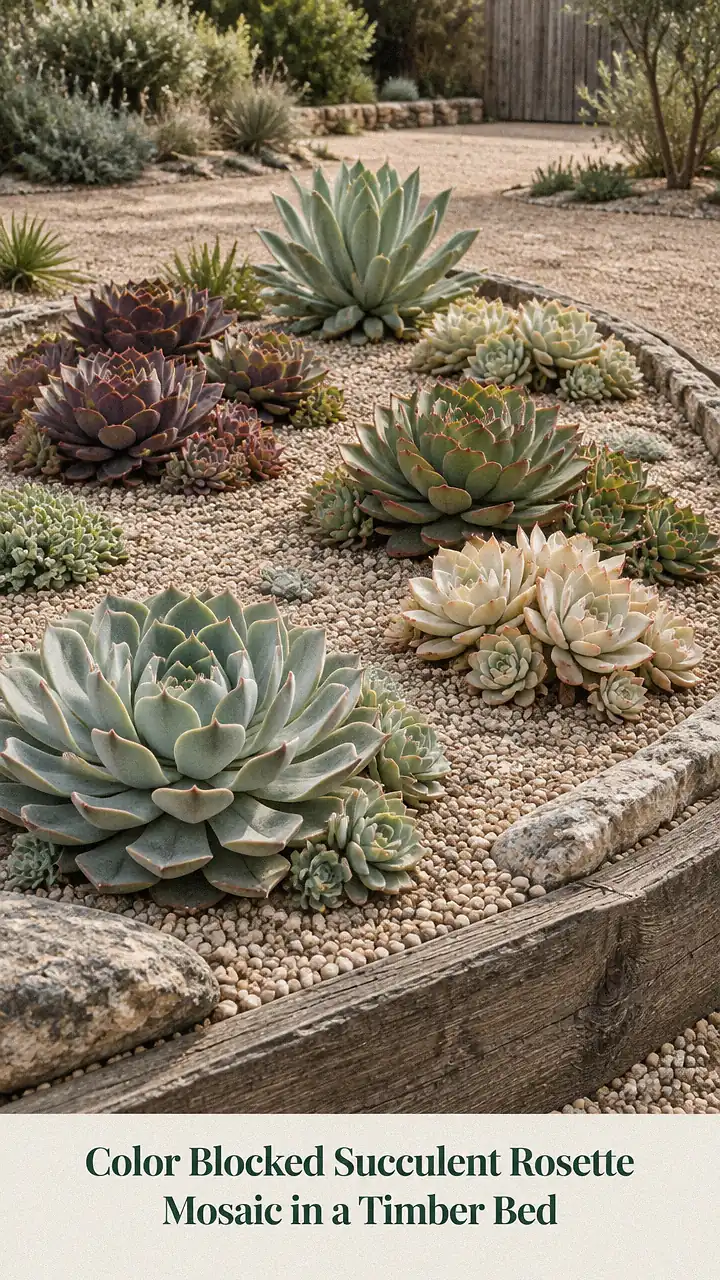
Overview
Transform a shallow raised wooden bed into a living mosaic of colorful succulent rosettes. Alternating patches of burgundy, lime green, lavender, and blue-gray foliage create bold geometric patterns that look particularly striking from above. Simple wooden borders keep the arrangement organized, making it an appealing focal point beside a patio or in a contemporary courtyard with generous natural light.
Materials & Plants
- Raised timber bed, roughly 8–10 inches deep
- Sempervivum varieties for cold climates or suitable echeverias for mild climates
- Free-draining succulent planting medium
- Measuring tape and small garden trowel
- Gravel or narrow stone dividers
How to Create It
- Construct a stable raised bed with drainage and suitable rot-resistant or untreated garden-safe timber.
- Divide the planting surface into several simple geometric sections.
- Group matching succulents within each section, leaving space for mature growth.
- Maintain the color pattern by trimming offsets and replacing plants when necessary.
Tiered Wooden Crate Garden with Potted Succulents
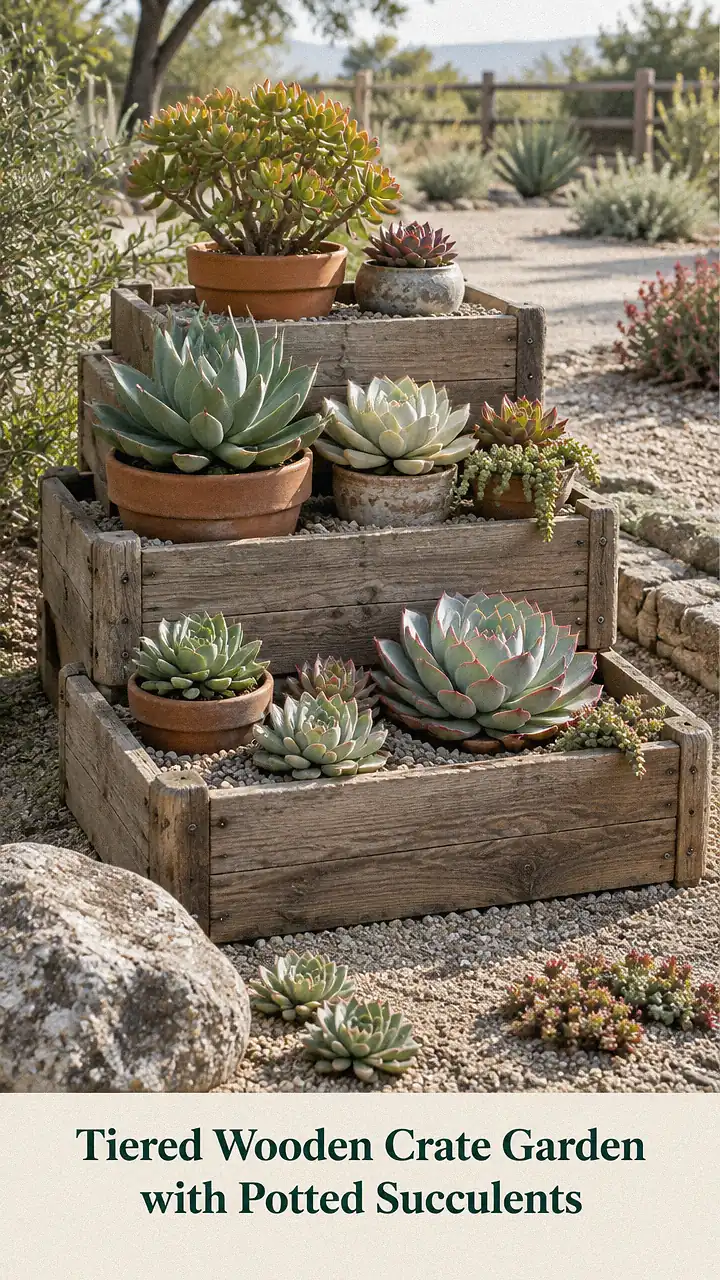
Overview
Stacked wooden crates provide an affordable way to display a large succulent collection in a small backyard corner. Each level holds individual terracotta or ceramic pots, with taller plants placed above and trailing varieties spilling gently from lower shelves. The mixture of weathered timber, warm pottery, and green foliage creates a relaxed farmhouse atmosphere that pairs beautifully with brick walls and wooden fences.
Materials & Plants
- Three or four sturdy wooden crates
- Small terracotta pots with drainage
- Jade plants, kalanchoes, and trailing sedums
- Outdoor wood sealant and fasteners
- Succulent potting mix
How to Create It
- Inspect the crates for damage and reinforce weak joints before use.
- Arrange them into a stable tiered structure and anchor them securely.
- Fill individual pots with succulents, grouping plants by their light requirements.
- Position taller plants where they will not shade smaller ones and rotate pots as needed.
Blue Gray Succulent Zen Garden with River Stones
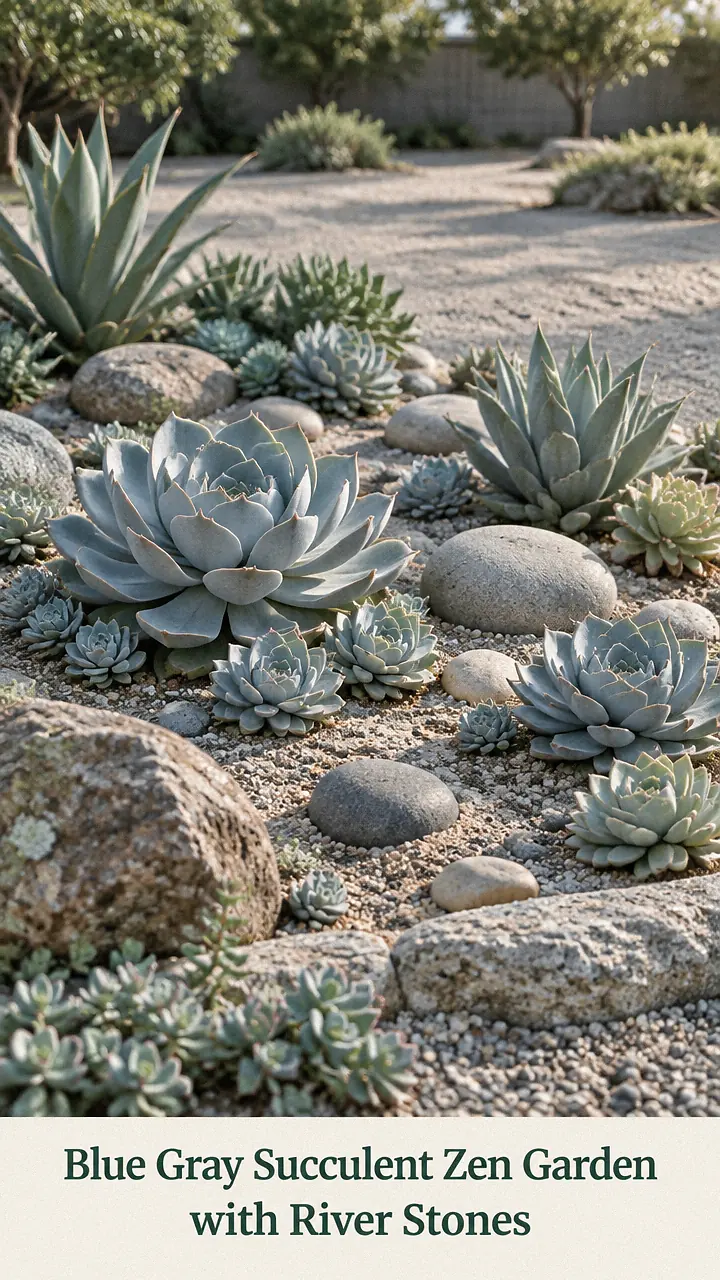
Overview
Create a calm, minimalist garden using blue-gray succulents, smooth river stones, and pale gravel. A few carefully spaced rosettes provide living focal points within a broad, uncluttered surface. Dark stones introduce contrast, while a small weathered boulder adds a natural sculptural element. This restrained design works particularly well in modern courtyards, sheltered patios, or quiet corners beside outdoor seating.
Materials & Plants
- Blue-gray echeverias or hardy blue-toned sempervivums
- Shallow draining planters or prepared planting pockets
- Pale mineral gravel
- Smooth river stones and one accent boulder
- Small hand rake
How to Create It
- Choose a well-drained, bright space and clear unwanted vegetation.
- Establish a simple arrangement with one larger stone as the main focal point.
- Install succulents in suitable growing medium, leaving generous empty spaces.
- Add gravel around the plantings and lightly rake decorative areas to maintain neat patterns.
Hardy Houseleeks Tucked into a Dry Stone Wall
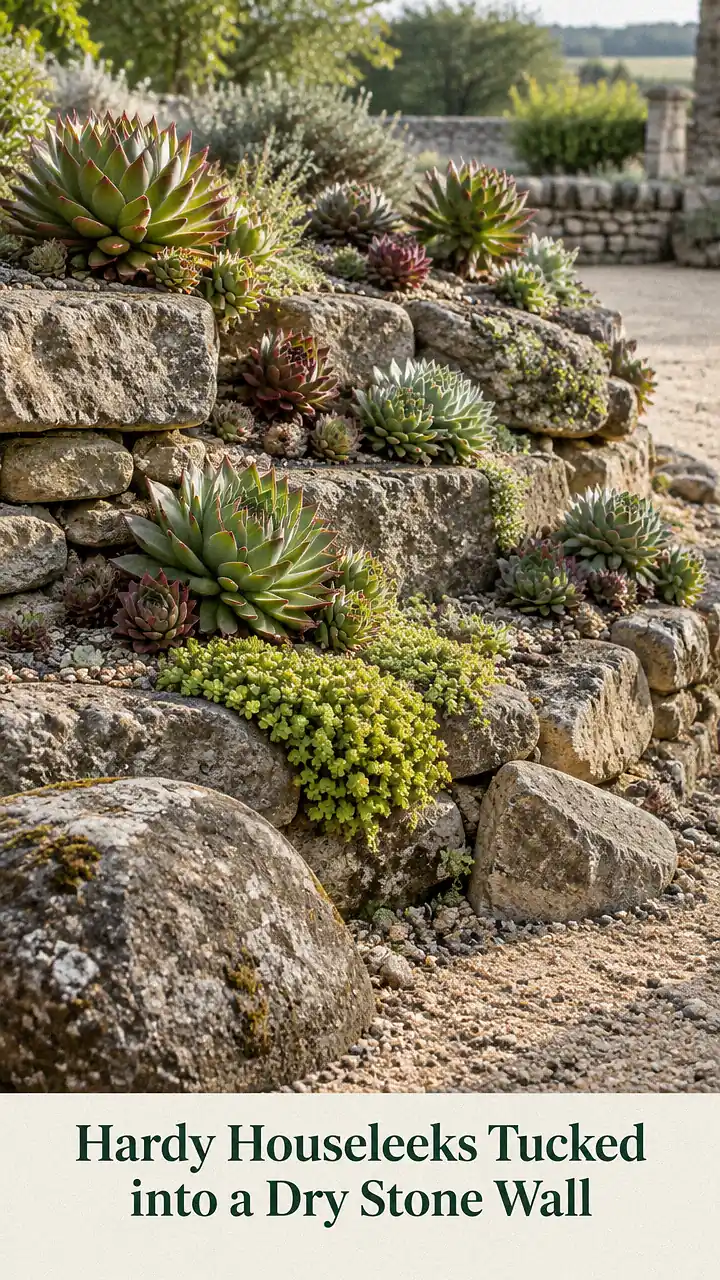
Overview
A low dry stone wall becomes a beautiful living feature when small houseleek rosettes are planted into suitable gaps. Their pointed green and red leaves soften rugged stone surfaces, creating the impression of plants growing naturally from the masonry. This charming design works in cottage gardens, terraced backyards, and raised borders where a stable wall already provides pockets of well-drained growing space.
Materials & Plants
- Hardy Sempervivum varieties
- Existing stable dry stone wall
- Gritty planting compost
- Small gravel pieces
- Narrow planting trowel or spoon
How to Create It
- Inspect the wall and select stable crevices with enough room for roots.
- Add small amounts of gritty growing medium to suitable openings.
- Insert rooted houseleek offsets gently without forcing apart structural stones.
- Water during establishment and remove fallen leaves that collect around the rosettes.
Soft Light Haworthia and Gasteria Balcony Corner
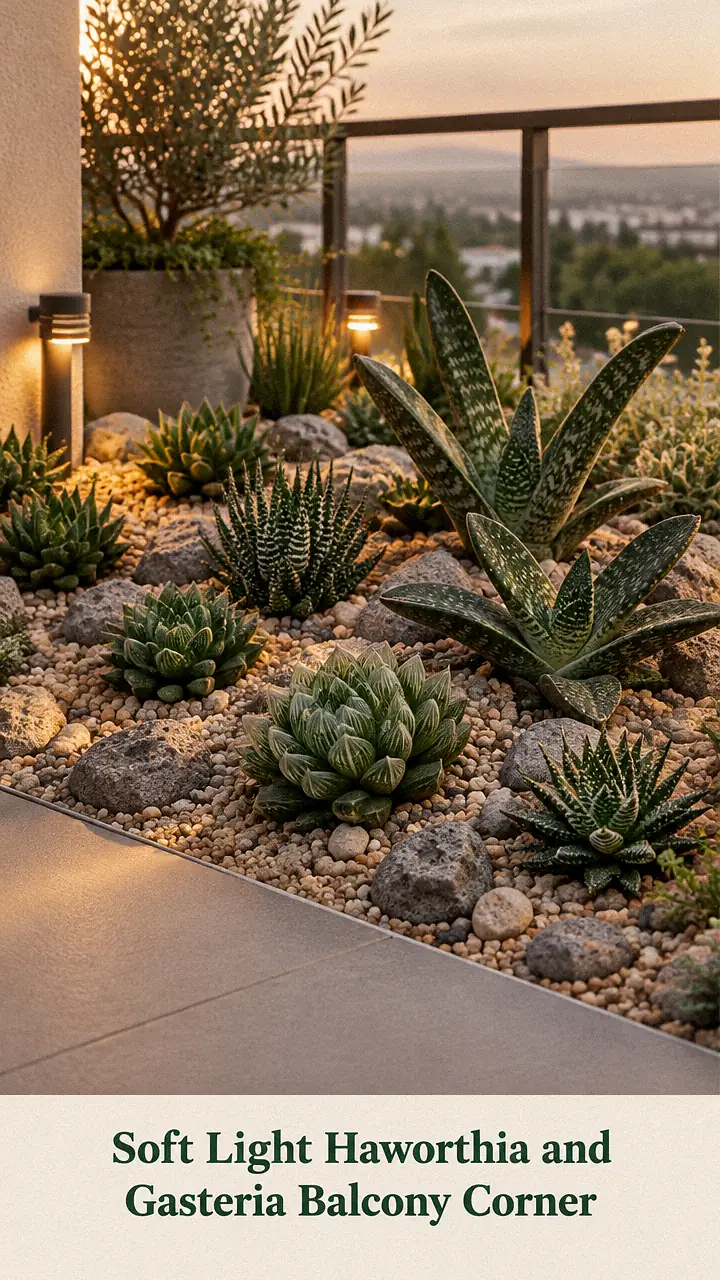
Overview
Not every succulent display needs blazing sunshine. A sheltered balcony corner with bright, indirect light can support an attractive collection of haworthias and gasterias. Their striped, spotted, and richly textured leaves create interest without relying on colorful flowers. Arrange them in neutral ceramic containers beside a small wooden stool for a peaceful, contemporary garden that feels especially inviting in a compact apartment.
Materials & Plants
- Haworthiopsis attenuata and suitable Haworthia varieties
- Compact Gasteria plants
- Small ceramic pots with drainage
- Free-draining succulent mix
- Low wooden plant stand or stool
How to Create It
- Identify an area receiving bright indirect light or gentle morning sunshine.
- Choose containers slightly larger than each plant’s root system.
- Arrange pots at different heights while leaving space for airflow.
- Water after the soil dries and protect plants from cold temperatures and prolonged rain.
Trailing Burro’s Tail Baskets on a Covered Porch
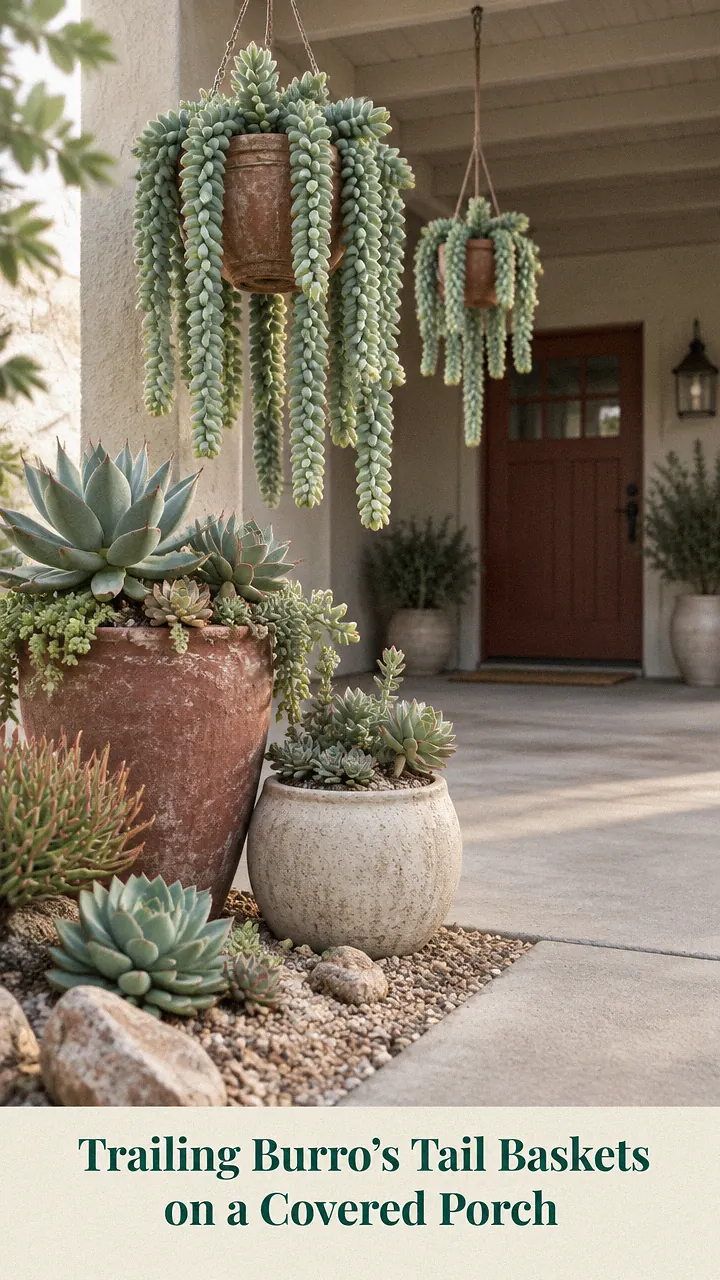
Overview
Hanging baskets filled with burro’s tail create beautiful curtains of plump, overlapping leaves. Their soft blue-green stems gradually spill over the rims, giving a covered porch a lush, cascading appearance without requiring climbing plants. A row of two or three baskets looks particularly attractive against white siding or natural wood. This design suits warm, sheltered locations with bright light and protection from frost.
Materials & Plants
- Burro’s tail succulent plants
- Two or three lightweight hanging baskets with drainage
- Succulent potting mix
- Strong hanging hooks and secure supports
- Watering can with a narrow spout
How to Create It
- Install secure hooks that can safely support the weight of fully watered baskets.
- Fill the containers with draining mix and plant rooted burro’s tail specimens.
- Hang them where they receive bright light without harsh exposure or frequent brushing.
- Water when dry and handle stems gently, since their leaves detach easily.
Rain Sheltered Succulent Courtyard with Gravel Islands
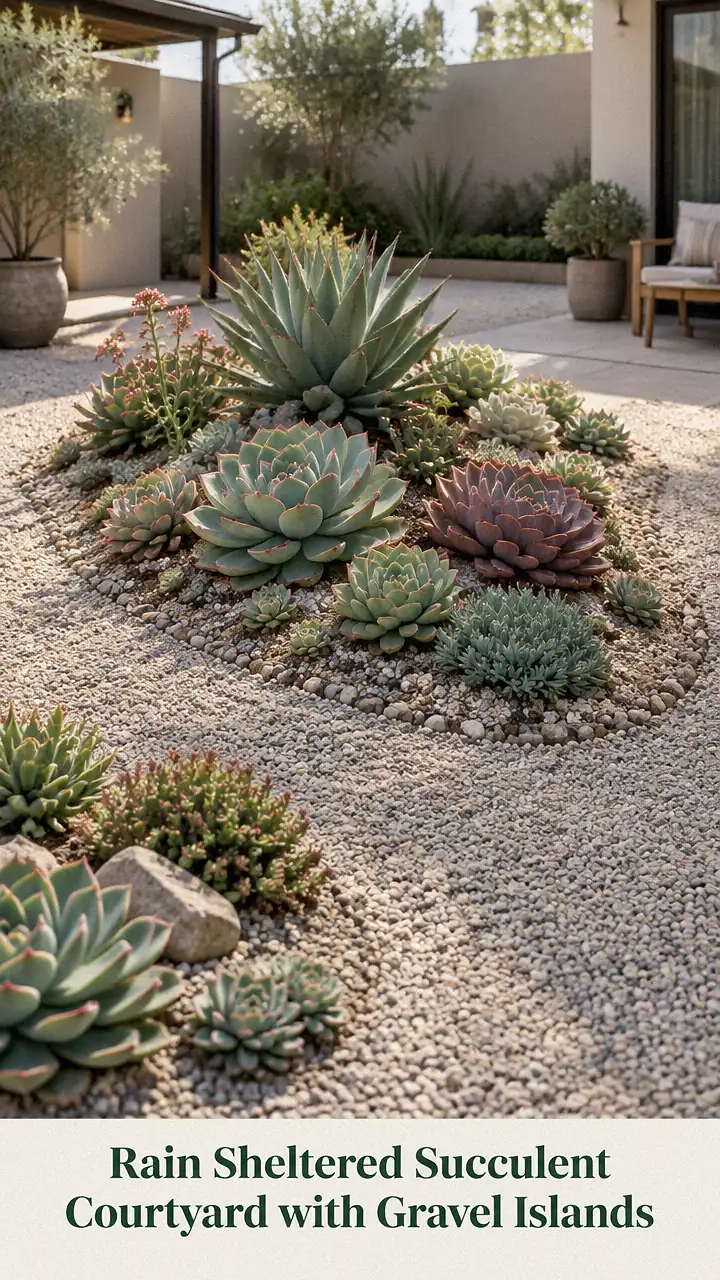
Overview
In regions with frequent rainfall, a sheltered courtyard can provide a practical setting for a beautiful succulent garden. Create several separate gravel-covered planting islands using movable pots positioned beneath a translucent roof or generous overhang. Group rosette succulents with upright jade plants and contrasting black pebbles. The resulting space feels like a carefully curated outdoor gallery while offering protection from excessive moisture.
Materials & Plants
- Echeverias, jade plants, and other climate-appropriate succulents
- Assorted draining ceramic or terracotta planters
- Pale and dark decorative gravel
- Stable planter stands or pot feet
- Existing rain shelter with adequate daylight and ventilation
How to Create It
- Identify a covered location that stays bright and receives good airflow.
- Arrange draining containers into three loose groups with open space between them.
- Use contrasting gravel beneath and around pots to define separate islands.
- Check moisture before watering and move plants seasonally if light or temperatures become unsuitable.
Conclusion: Create a Succulent Garden That Fits Your Home
A beautiful succulent garden doesn’t require a large yard, expensive landscaping, or an extensive plant collection. Sometimes a few well-chosen rosettes in terracotta pots can create just as much visual impact as a carefully designed rock garden.
The key is choosing an arrangement that matches your available space, sunlight, climate, and budget. For cooler climates, hardy sempervivums and suitable stonecrops offer excellent outdoor options. In warmer regions, echeverias, aloes, and other tender varieties can provide even more opportunities to experiment with colorful foliage and unusual shapes.
Remember that good drainage, appropriate light, and thoughtful watering matter more than elaborate decorations. Start with one manageable project, allow your plants room to grow, and gradually expand your collection as you discover which varieties thrive in your garden.
Whether your style is modern and minimal, rustic and natural, or bright and playful, these succulent garden ideas can help turn an ordinary outdoor area into a distinctive and inviting space.