
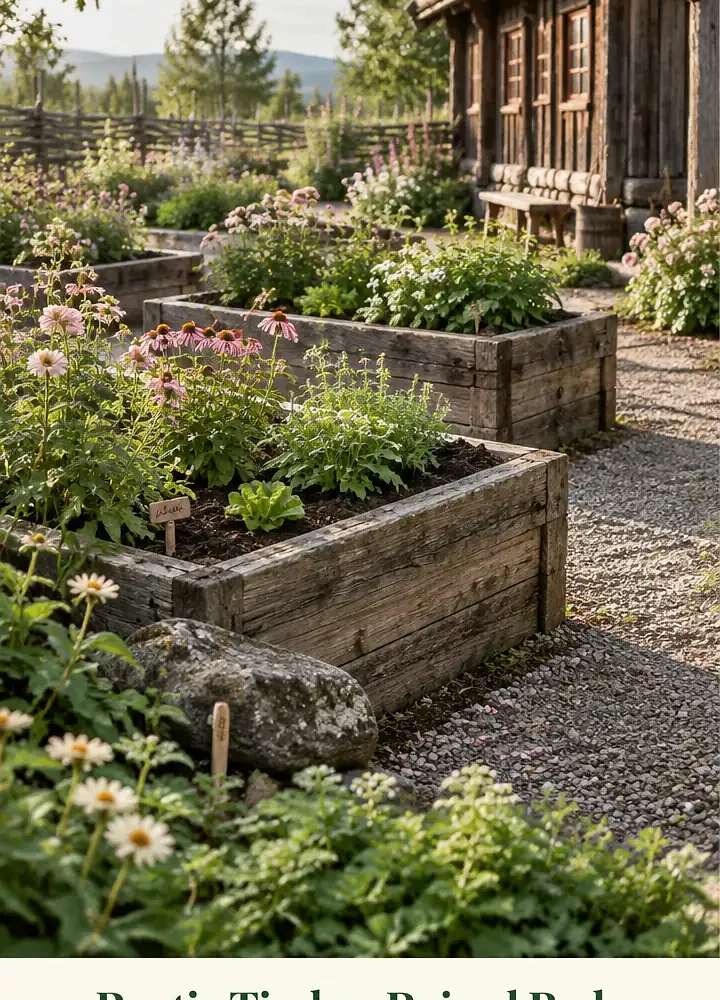
There’s something captivating about a garden that feels as though it belongs beside an ancient Nordic longhouse. Weathered timber, rugged stone, wildflowers, fragrant herbs, and natural pathways create an outdoor space that’s both welcoming and full of character. That’s the inspiration behind these Viking garden ideas.
Viking-inspired gardening isn’t about turning your backyard into a historical museum. It’s about combining elements of Scandinavian landscapes and traditional craftsmanship with practical gardening techniques. Think wooden raised beds filled with vegetables, winding gravel paths, simple woven fences, and quiet corners surrounded by greenery.
You don’t need a sprawling property or an enormous landscaping budget to achieve this look. A few rustic planters can transform a balcony, while larger yards provide room for woodland retreats, edible gardens, and dramatic stone features.
The following ideas blend historically inspired plants and materials with modern garden design. Whether you prefer a rugged Viking settlement atmosphere or a softer Nordic cottage aesthetic, there’s plenty of room to create something personal.
Rustic Viking Garden Ideas to Bring Nordic Charm Home
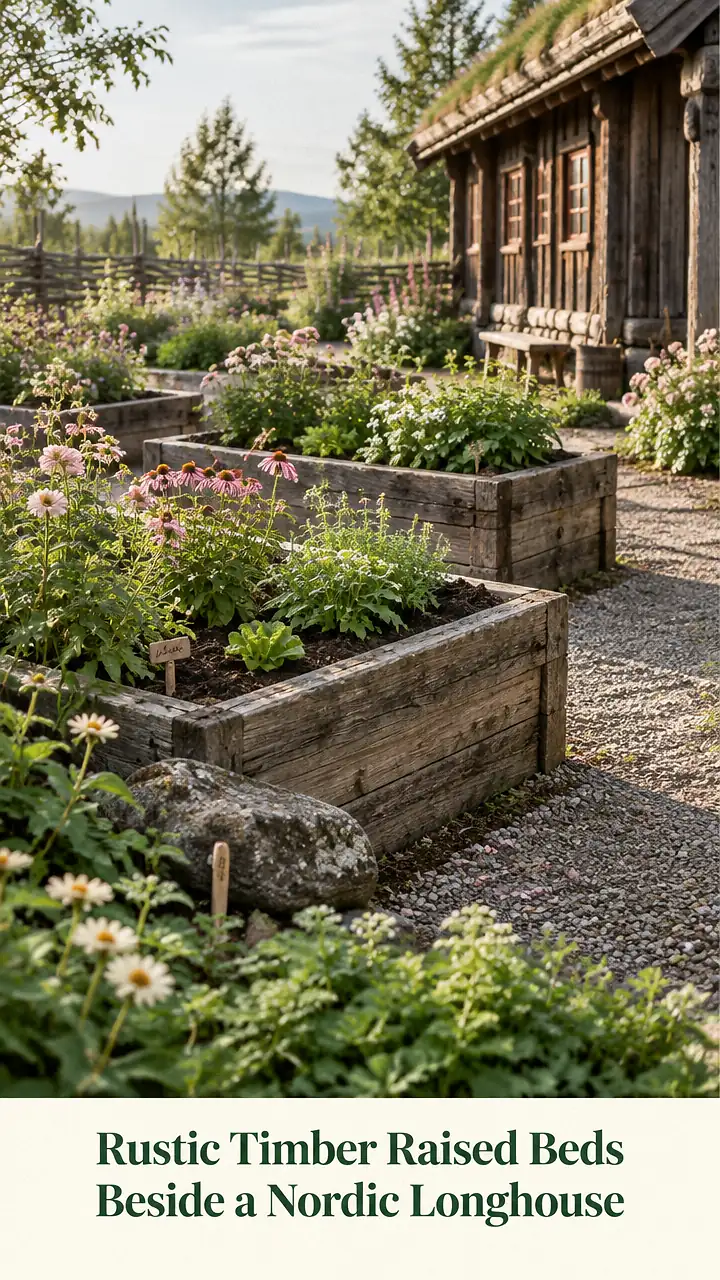
Rustic Timber Raised Beds Beside a Nordic Longhouse
Overview
Imagine a row of sturdy wooden garden beds surrounded by gravel pathways, with leafy vegetables spilling over their edges. Rough timber, dark soil, and deep green foliage create an earthy atmosphere reminiscent of a traditional Nordic homestead. This design works particularly well in a sunny backyard, where the rectangular beds can form an organized, productive kitchen garden.
Materials & Plants
- Untreated cedar, larch, or naturally durable local lumber
- Compost-enriched raised-bed soil
- Kale, cabbage, onions, and leafy greens
- Peas and seasonal root vegetables
- Wood chips or crushed gravel for pathways
- Basic saw, drill, screws, and garden spade
How to Create It
- Choose a sunny area receiving at least six hours of direct sunlight during the growing season.
- Build rectangular raised beds approximately four feet wide, allowing easy access from both sides.
- Fill with suitable soil and compost, leaving enough space for roots to develop.
- Plant vegetables according to their mature spacing and seasonal requirements.
- Cover walking areas with wood chips and replenish organic mulch as needed.
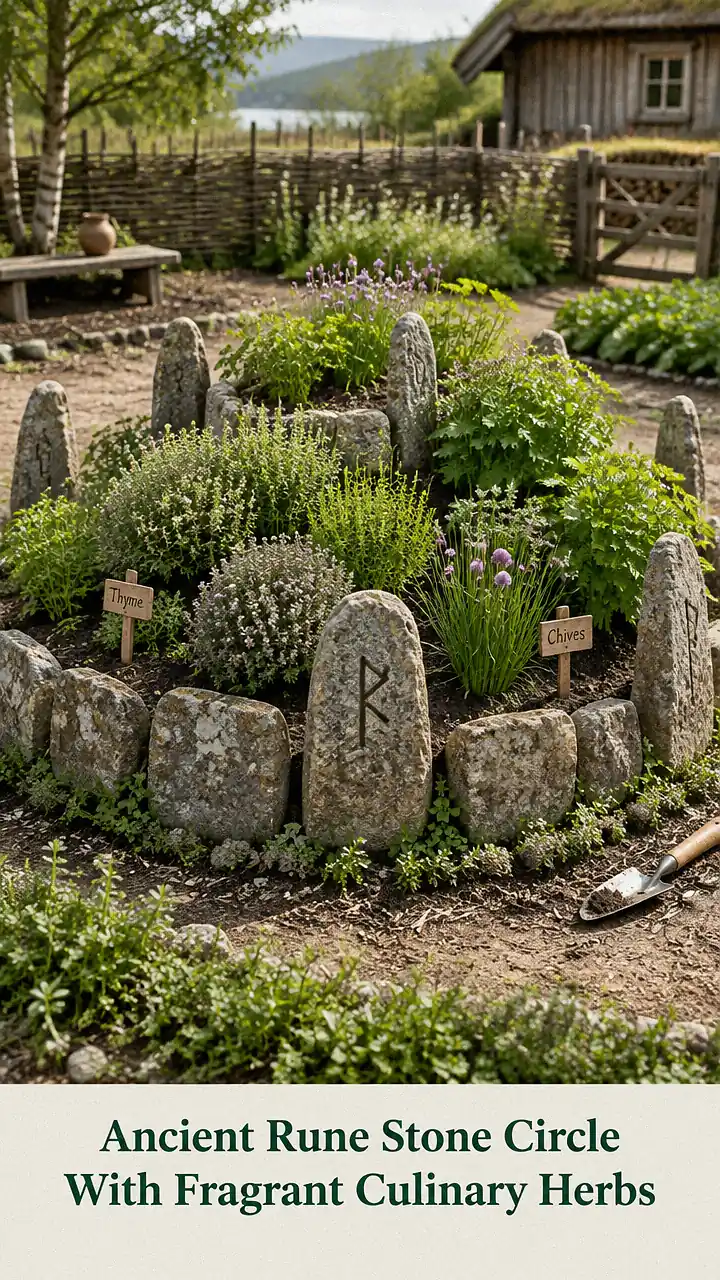
Ancient Rune Stone Circle With Fragrant Culinary Herbs
Overview
A circular herb garden surrounded by natural stones creates a striking focal point with a subtle Viking-inspired atmosphere. A central standing stone featuring decorative rune-style carvings can anchor the composition, while thyme, sage, and oregano soften the surrounding edges. The contrast between gray rock and silver-green foliage looks especially beautiful in a sunny front garden or courtyard.
Materials & Plants
- Natural fieldstones or reclaimed landscaping rocks
- One decorative carved stone or cast-stone ornament
- Thyme, sage, oregano, and chives
- Free-draining soil and horticultural grit
- Crushed granite or pea gravel
- Measuring tape and hand trowel
How to Create It
- Mark a circular planting area approximately six to eight feet across.
- Arrange stones around the perimeter, setting larger pieces securely on a firm base.
- Position the decorative centerpiece without obstructing access to plants.
- Improve drainage and arrange herbs according to their moisture and sunlight needs.
- Trim herbs regularly and remove weeds before they spread between stones.
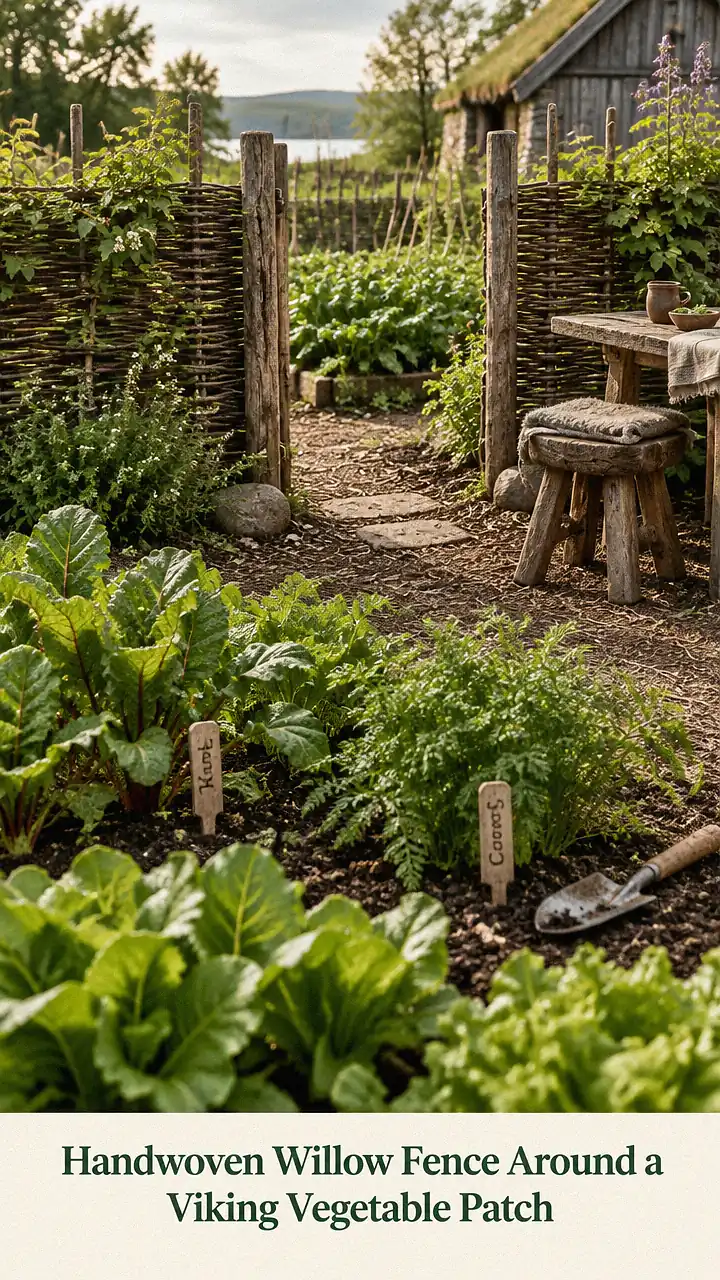
Handwoven Willow Fence Around a Viking Vegetable Patch
Overview
A low woven fence instantly introduces the handcrafted appearance associated with traditional rural settlements. Flexible willow branches interlaced between wooden stakes create a beautiful boundary around vegetables, herbs, or cottage flowers. The warm brown fencing contrasts naturally with bright green foliage and dark soil. This affordable design suits kitchen gardens, small backyards, and informal front-yard planting areas.
Materials & Plants
- Flexible willow or hazel rods
- Untreated wooden stakes
- Kale, lettuce, carrots, and peas
- Compost and organic mulch
- Rubber mallet and pruning shears
- Natural garden twine
How to Create It
- Outline the vegetable patch, leaving an opening wide enough for comfortable access.
- Drive stakes into the ground at approximately 12-inch intervals.
- Weave flexible branches alternately in front of and behind each stake.
- Trim uneven branch ends and secure loose sections with natural twine.
- Plant vegetables inside, checking that the fence doesn’t shade smaller crops excessively.
Keep the fence relatively low for easy harvesting and replace brittle branches when necessary.
Wild Nordic Meadow Filled With Colorful Native Flowers
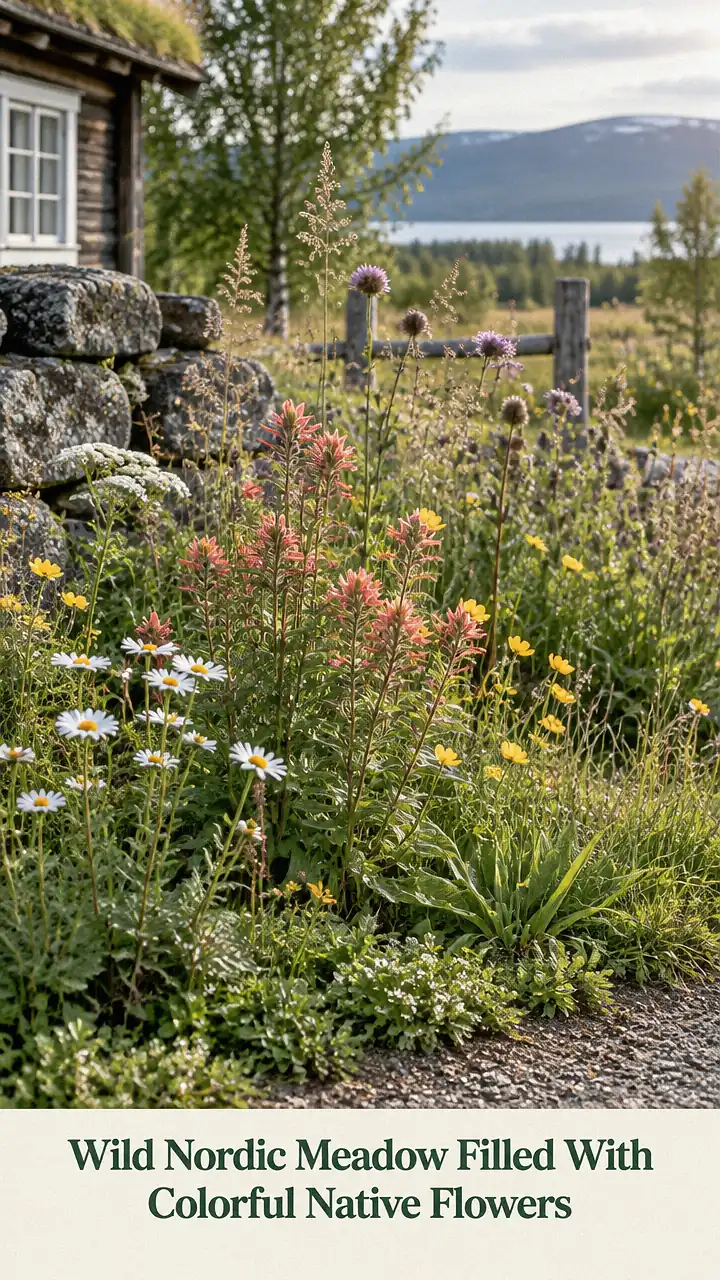
Overview
A relaxed wildflower meadow offers a softer interpretation of the rugged Scandinavian landscape. Airy grasses, delicate blossoms, and irregular drifts of color create movement and natural beauty throughout the growing season. Rather than recreating a specific Viking-era habitat, this garden captures the feeling of an open northern meadow. It works wonderfully in larger sunny yards and along informal property boundaries.
Materials & Plants
- Regionally native wildflower seed or young plants
- Locally appropriate bunchgrasses
- Yarrow where native and suitable
- Black-eyed Susans or asters in suitable North American regions
- Stepping stones or a narrow mowed pathway
- Rake and watering can
How to Create It
- Identify the soil type, sunlight conditions, and wildflowers native to your region.
- Remove existing turf and persistent weeds before planting.
- Sow or transplant flowers in loose groups rather than rigid straight lines.
- Add a simple walking path to provide access without disturbing emerging plants.
- Water during establishment and follow seasonal mowing or cutting recommendations.
Avoid aggressive seed mixtures that contain invasive species.
Weathered Wooden Barrels Overflowing With Nordic Herbs

Overview
A cluster of weathered barrels creates a charming garden corner without permanent landscaping. Their curved wooden sides and dark metal bands add rustic texture, while rosemary, parsley, and chives provide a practical harvest. Arrange barrels in staggered heights beside a wooden wall, patio entrance, or garden bench. The result feels like a useful little kitchen garden outside a Nordic farmhouse.
Materials & Plants
- Food-safe reclaimed wooden barrels or half-barrel planters
- Quality container potting mix
- Chives, parsley, thyme, and rosemary
- Gravel for decorative ground cover
- Small wooden plant labels
- Drill for drainage holes
How to Create It
- Select sound barrels that have not held hazardous chemicals or unknown substances.
- Ensure drainage holes are present before filling each container.
- Group plants with similar water and sunlight requirements together.
- Position taller barrels toward the rear and smaller containers near the front.
- Water according to plant needs and refresh the potting mix when required.
Keep moisture-loving parsley separate from drought-tolerant Mediterranean herbs when possible.
Viking Shield Inspired Circular Flower Garden
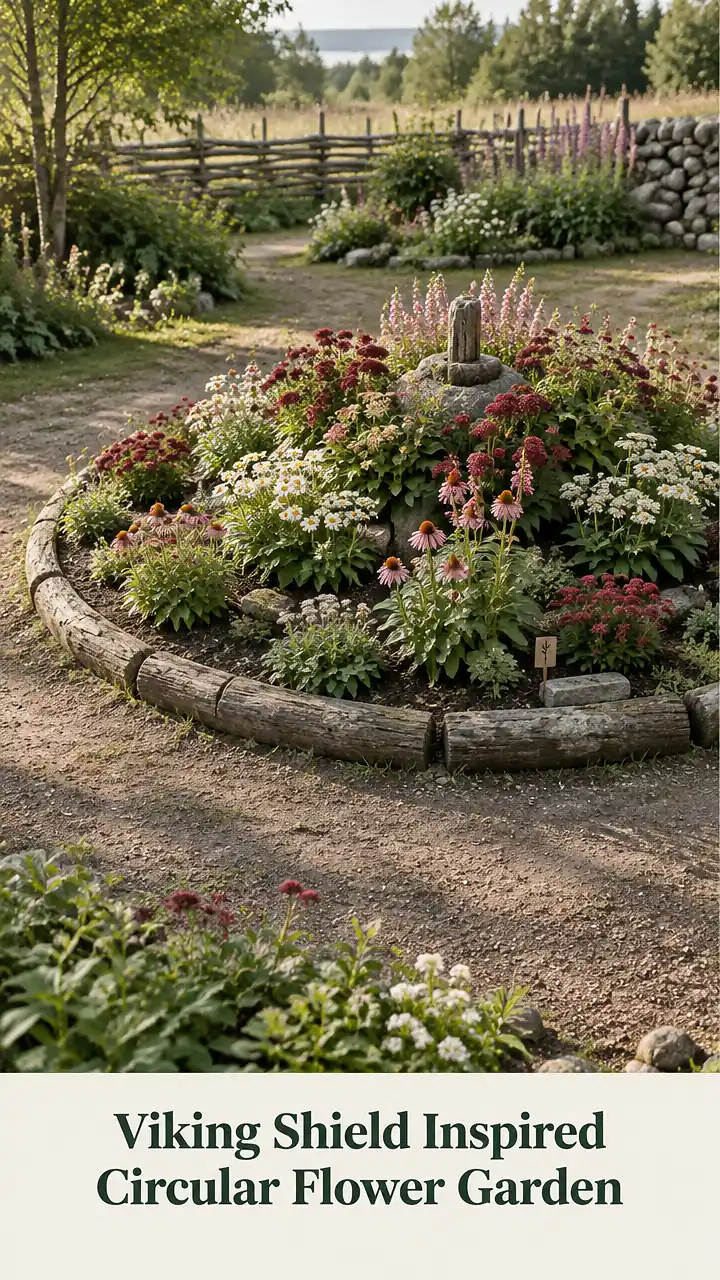
Overview
A bold circular flower bed inspired by the shape of a traditional Viking shield can become a memorable garden centerpiece. Concentric planting rings, natural stone edging, and a small wooden ornament create a balanced, geometric appearance. Choose flowers with contrasting colors and foliage textures for visual impact. This design is especially attractive in open lawns, spacious front gardens, and sunny courtyard settings.
Materials & Plants
- Natural stone or brick edging
- Dwarf lavender in suitable sunny climates
- Calendula, compact salvia, and seasonal flowers
- Ornamental grasses for the outer ring
- Small weather-resistant wooden centerpiece
- String, measuring tape, and compost
How to Create It
- Mark a circle using string attached to a central stake.
- Divide the planting space into broad rings or curved segments.
- Position taller plants toward the center and lower-growing varieties around the edges.
- Install stone edging and place a decorative wooden feature in the middle.
- Mulch exposed soil and deadhead flowers as needed to maintain a neat appearance.
Use restrained colors for a historical feel or brighter combinations for a modern interpretation.
Viking Ship Shaped Wooden Planter With Trailing Flowers

Overview
A small boat-shaped planter brings a playful nautical touch to a Viking-themed garden. Its elongated wooden form suggests a traditional longship without requiring an actual boat or elaborate woodworking. Fill the container with colorful flowers, herbs, and trailing foliage that soften its angular edges. This distinctive feature suits patios, front gardens, and larger decks where it can stand alone.
Materials & Plants
- Untreated timber boards or a premade boat-shaped planter
- Exterior-safe screws and wooden supports
- Potting mix suitable for containers
- Trailing nasturtiums, compact marigolds, and thyme
- Optional lightweight decorative wooden prow
- Drill, saw, and measuring tape
How to Create It
- Build or purchase a stable boat-shaped planter with a flat, supported base.
- Provide drainage openings and sufficient soil depth for the chosen plants.
- Fill with potting mix, keeping the container slightly below its upper edge.
- Position taller flowers near the middle and trailing plants along the sides.
- Place on a level surface and check moisture frequently during warm weather.
Avoid adding heavy decorative features that could make the planter unstable.
Rustic Fire Pit Garden Surrounded by Rough Stone
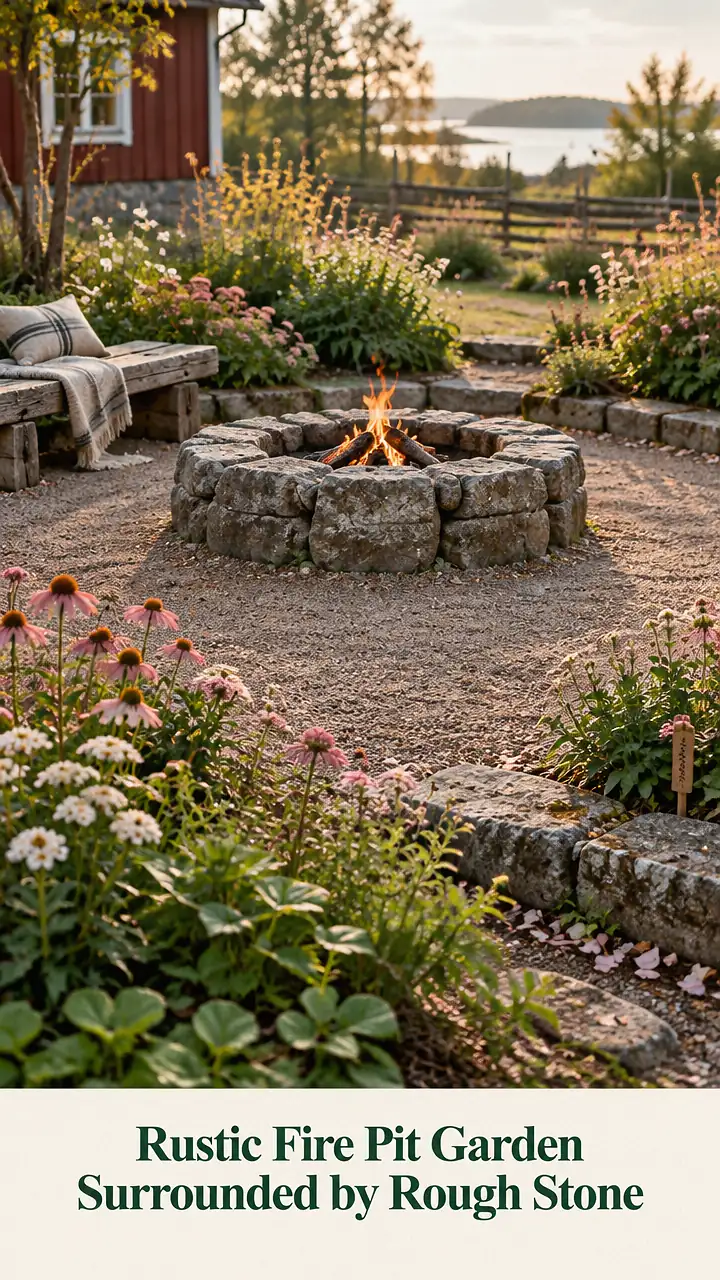
Overview
A stone-bordered gathering area captures the communal warmth of a Nordic outdoor settlement. Rugged rocks, weathered wooden seating, and gravel underfoot create a dramatic contrast against surrounding greenery. The central fire feature becomes an inviting place for evening conversations when local regulations allow. This arrangement works best in a spacious backyard with appropriate clearance from buildings and vegetation.
Materials & Plants
- Approved outdoor fire bowl or fire pit
- Noncombustible gravel or stone pavers
- Professionally suitable fire-resistant surround materials
- Movable outdoor benches or chairs
- Low-growing plants outside the required safety clearance
- Outdoor lighting with a warm glow
How to Create It
- Check local fire regulations, manufacturer instructions, and property restrictions.
- Choose a level location with the required clearance from structures, branches, and combustible materials.
- Install a stable noncombustible base and an approved fire feature.
- Arrange seating at a safe distance and keep plants outside the designated clearance area.
- Maintain the area free of dry debris and keep appropriate fire-extinguishing equipment nearby.
For restricted spaces, use an unlit decorative stone centerpiece instead.
Nordic Woodland Retreat With Mossy Logs and Ferns
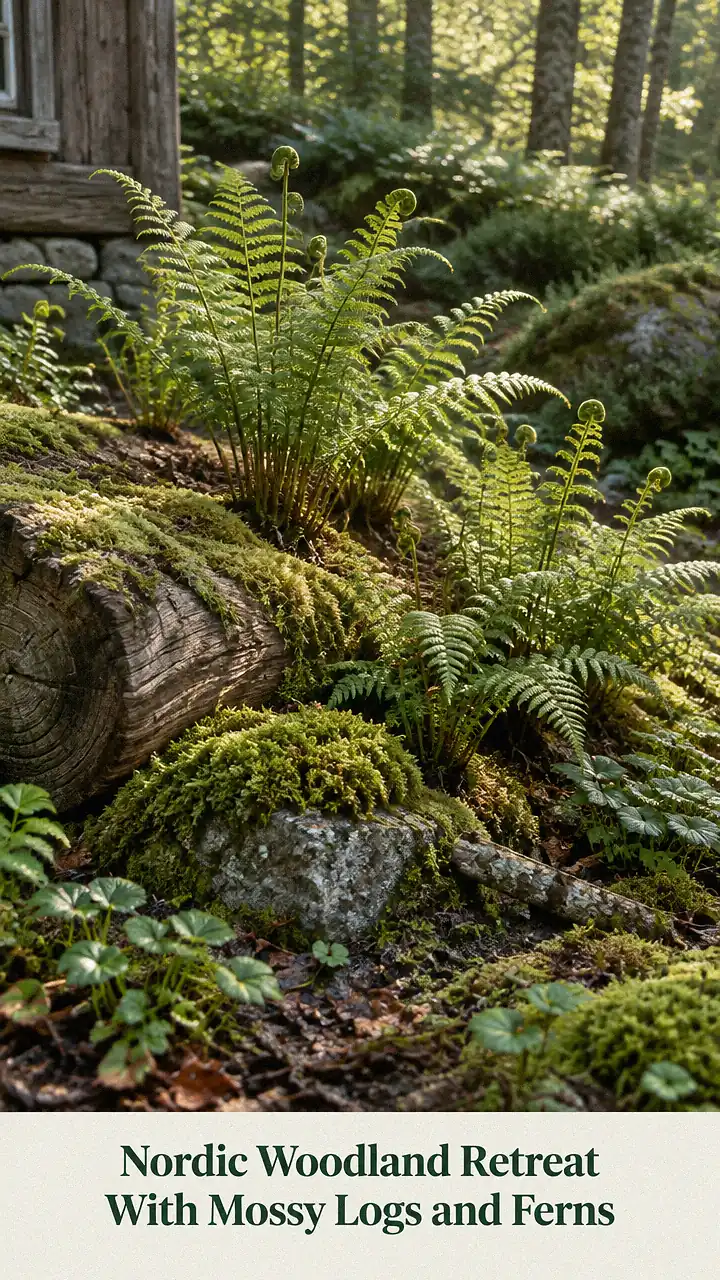
Overview
A shaded woodland corner can evoke the quiet atmosphere of a Scandinavian forest. Fallen logs, textured bark, rounded stones, and lush ferns create a peaceful setting that feels naturally established. The palette remains simple, with deep greens, earthy browns, and soft gray rocks. This garden is especially suitable beneath mature trees or along shaded backyard boundaries.
Materials & Plants
- Shade-tolerant native ferns
- Woodland sedges and suitable groundcovers
- Moss where local conditions support it
- Fallen logs from a safe, untreated source
- Natural stones and leaf mulch
- Rustic wooden bench
How to Create It
- Observe the area’s shade and soil moisture throughout the day.
- Remove invasive weeds while protecting existing tree roots.
- Arrange logs and stones in informal groups, leaving natural gaps.
- Add shade-loving plants suited to your region and soil conditions.
- Mulch with shredded leaves and water during dry periods.
Allow fallen leaves to enrich the soil naturally while keeping pathways accessible.
Traditional Flax and Dye Flower Garden

Overview
A garden inspired by traditional textile plants adds historical character through beautiful blossoms and upright stems. Blue-flowering flax, golden calendula, and selected dye plants create a soft tapestry of color against weathered timber edging. The design celebrates the importance of useful plants in historical craftsmanship without attempting an exact reconstruction. It works especially well in sunny cottage gardens or narrow backyard beds.
Materials & Plants
- Annual flax seeds
- Calendula seeds
- Coreopsis varieties suitable for the local climate
- Untreated timber or stone edging
- Compost-enriched garden soil
- Small wooden plant markers
How to Create It
- Prepare a sunny bed with loose, well-drained soil.
- Sow flax according to packet instructions, avoiding excessive fertilizer.
- Plant calendula and coreopsis in separate groups for clear color contrast.
- Install simple labels identifying the plants and their traditional associations.
- Remove unwanted seedlings and collect mature seeds where appropriate.
Check local plant regulations before introducing unfamiliar traditional dye species, since some can become invasive.
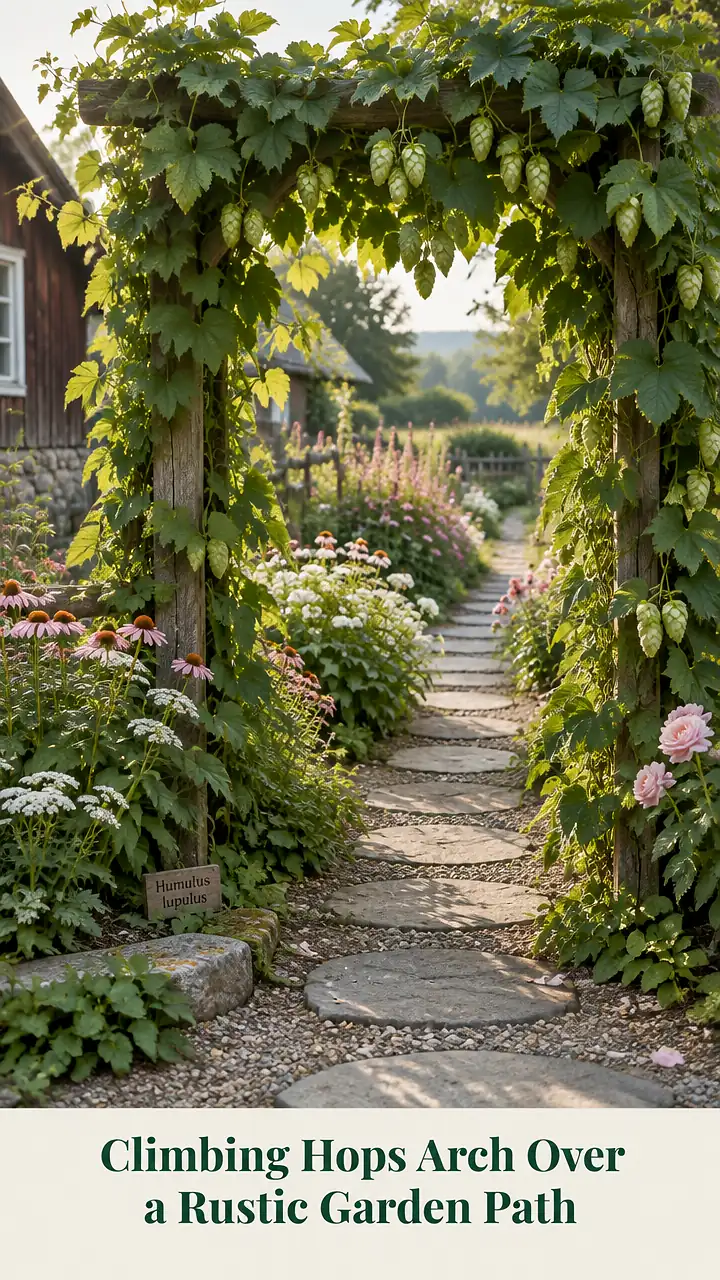
Climbing Hops Arch Over a Rustic Garden Path
Overview
A sturdy wooden arch covered in climbing greenery creates an enchanting entrance to a Viking-inspired backyard. Hops, a plant associated with northern European brewing traditions, provides abundant foliage during the growing season. Its vigorous stems can form a leafy canopy over a gravel walkway. This dramatic feature suits larger gardens where the climbing plants have adequate space to develop.
Materials & Plants
- Strong timber arch or pergola
- Hop plants suited to your climate
- Heavy-duty climbing wires or natural-fiber rope
- Compost and organic mulch
- Gravel or stepping stones
- Pruning shears and sturdy gloves
How to Create It
- Install a firmly anchored arch capable of supporting mature climbing growth.
- Plant hops in fertile, well-drained soil with appropriate sunlight.
- Guide emerging bines around strong vertical supports as they grow.
- Provide consistent moisture during active growth without waterlogging the roots.
- Cut back seasonal growth and manage spreading underground shoots.
Hops can become vigorous, so consider compact climbing annuals for smaller spaces.
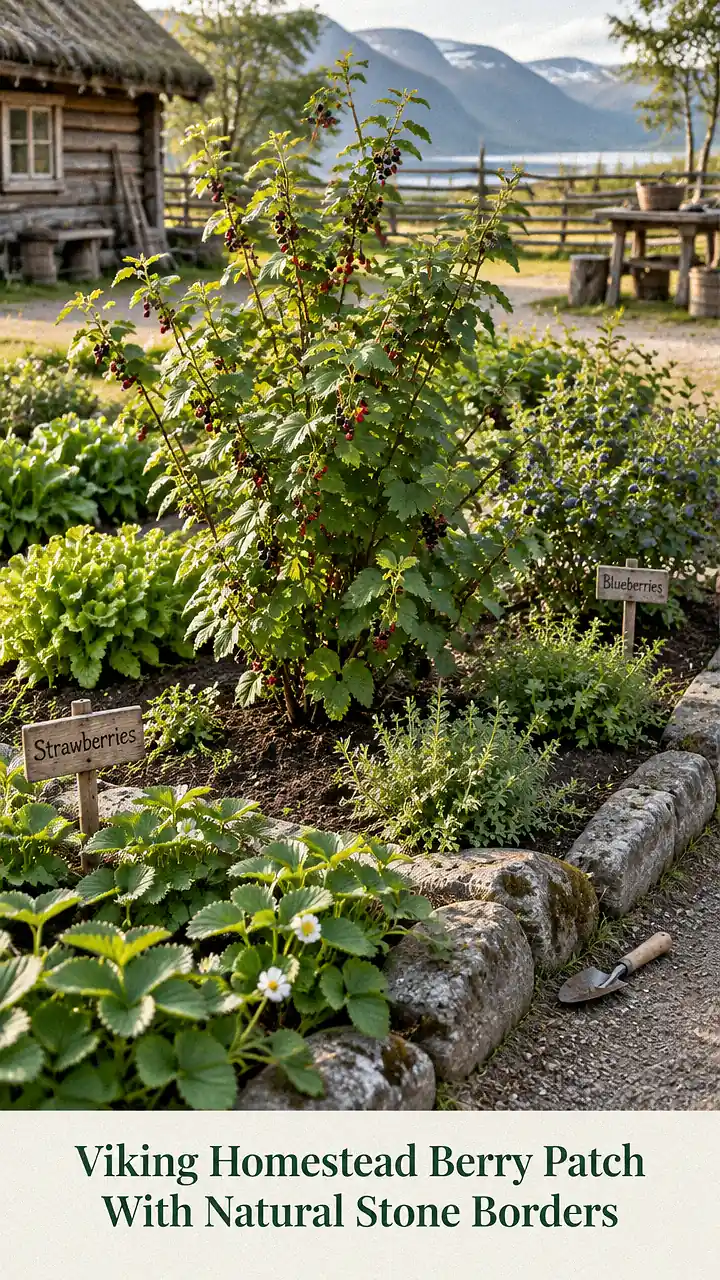
Viking Homestead Berry Patch With Natural Stone Borders
Overview
A berry garden combines practical harvests with the informal charm of a northern homestead. Small fruiting shrubs, strawberry plants, and irregular stone edging create a productive landscape with seasonal interest. Spring blossoms give way to summer berries, while autumn foliage provides additional color. This idea works beautifully along sunny fences, backyard boundaries, or within a dedicated edible garden.
Materials & Plants
- Strawberry plants
- Thornless raspberry varieties suited to the region
- Blueberry shrubs where acidic soil can be provided
- Natural stone edging
- Compost, mulch, and suitable soil amendments
- Simple raspberry support wires
How to Create It
- Choose berry varieties adapted to your climate and growing season.
- Test the soil, particularly before planting acid-loving blueberries.
- Create separate planting sections so each fruit crop receives suitable care.
- Add edging, mulch, and support structures where needed.
- Harvest regularly and prune according to each plant’s fruiting habit.
Avoid crowding raspberry canes, which need airflow and occasional thinning.
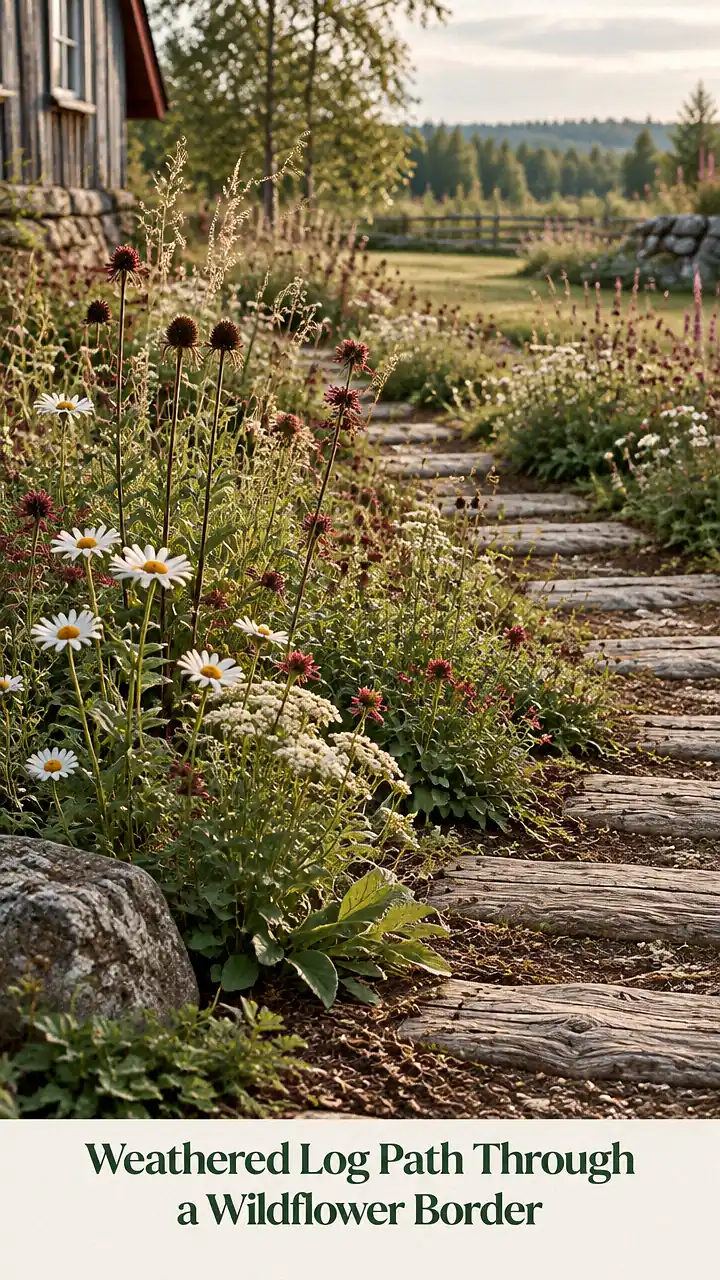
Weathered Log Path Through a Wildflower Border
Overview
A natural pathway made with timber rounds creates the impression of a trail through an ancient Nordic woodland. Surrounded by soft flowers, ornamental grasses, and irregular stones, the walkway adds texture without looking overly formal. The contrast between pale wood and colorful planting makes it visually appealing. This design works best in low-traffic garden areas rather than primary household walkways.
Materials & Plants
- Thick, durable wooden stepping rounds
- Compactable crushed stone for the base
- Creeping thyme in sunny, well-drained areas
- Native woodland flowers for shaded locations
- Suitable ornamental grasses
- Landscape rake and level
How to Create It
- Mark a gently curving route through the planting area.
- Excavate shallow positions and prepare compacted, well-draining bases.
- Set stable wood rounds flush with surrounding ground, avoiding raised tripping edges.
- Plant flowers and low-growing greenery outside the walking surface.
- Inspect rounds for rot, movement, and slipperiness, replacing them when needed.
Wood becomes slippery in damp conditions, so use textured stone instead for frequently traveled paths.
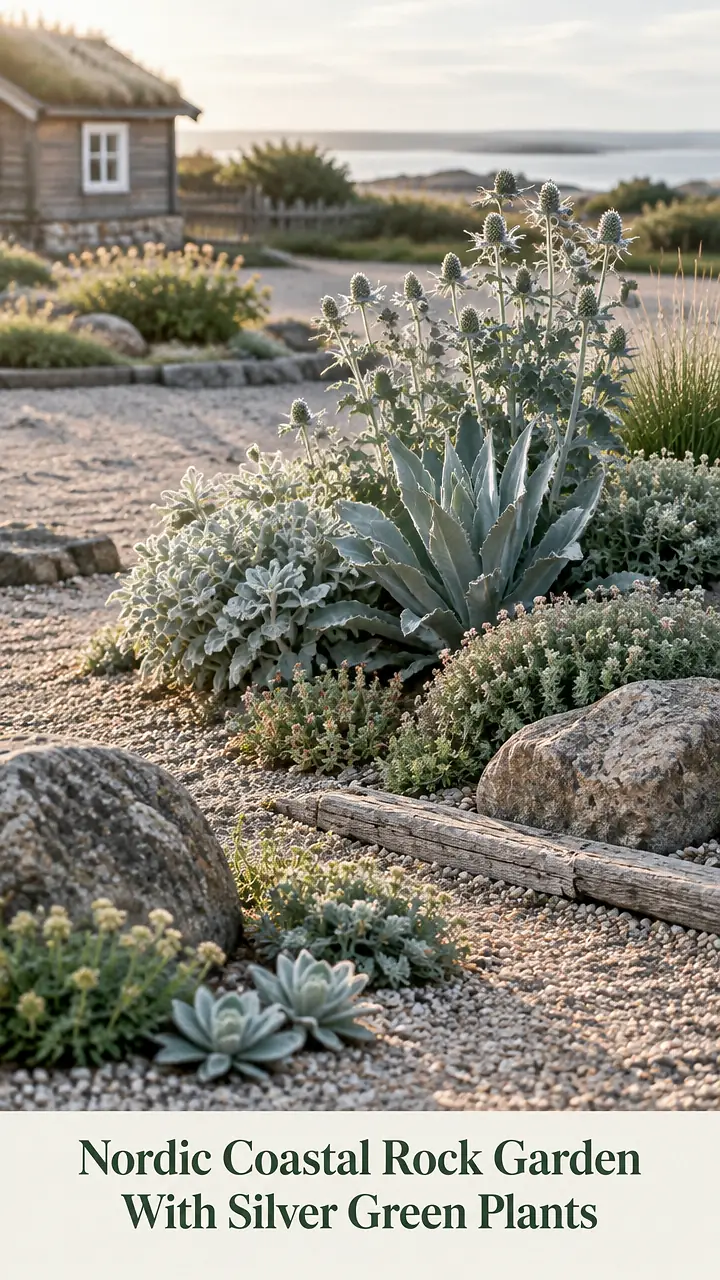
Nordic Coastal Rock Garden With Silver Green Plants
Overview
Inspired by rugged Scandinavian shorelines, this rock garden combines pale gravel, weathered stones, and hardy plants that enjoy excellent drainage. Cushions of sea thrift, aromatic thyme, and sculptural sedums soften the rough mineral textures. Its restrained palette creates a calm, windswept appearance. The design fits sunny slopes, dry front gardens, and small spaces where conventional lawns struggle.
Materials & Plants
- Locally sourced gravel and rounded stones
- Sea thrift where climate and drainage permit
- Creeping thyme and low-growing sedums
- Compact ornamental grasses suited to dry soil
- Free-draining planting mix
- Garden spade and hand trowel
How to Create It
- Select a sunny location and assess drainage before planting.
- Arrange larger stones naturally, burying their bases slightly for stability.
- Improve heavy soil with an appropriate free-draining raised planting mix.
- Position compact plants in pockets between rocks, allowing room for mature growth.
- Remove weeds and avoid excessive watering once plants are established.
This approach is particularly helpful in landscapes where drought-tolerant planting is appropriate.
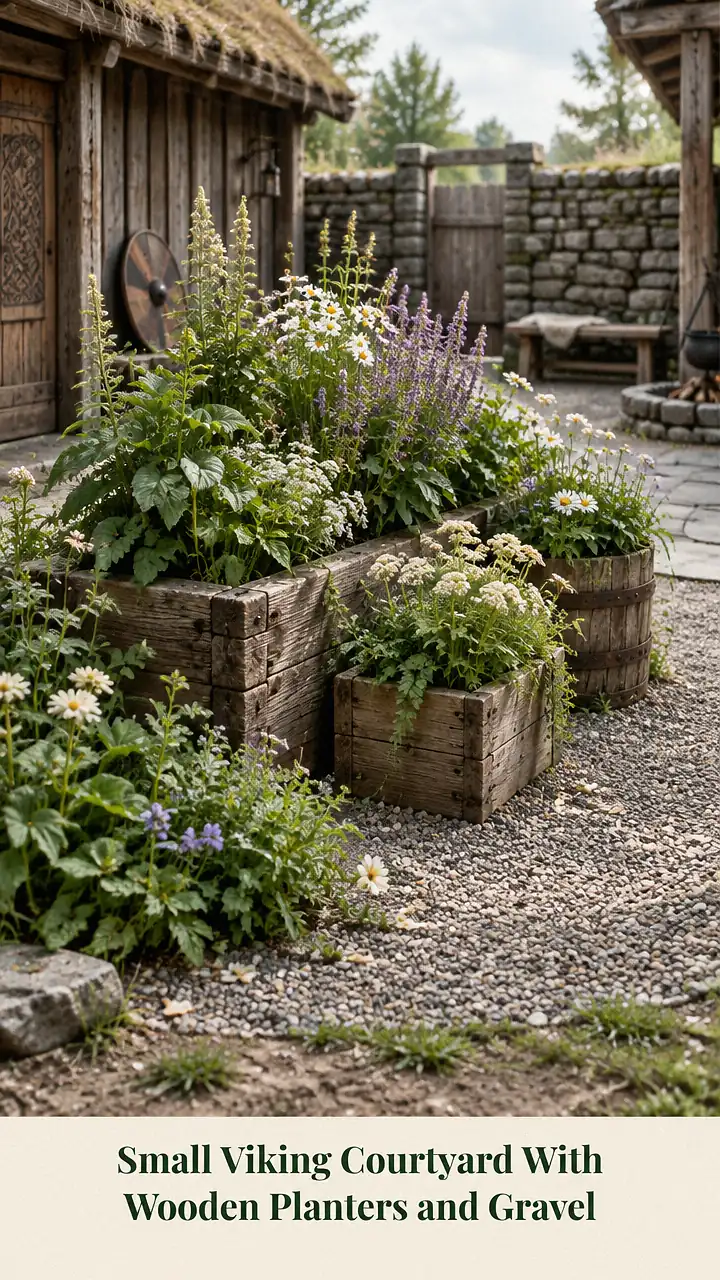
Small Viking Courtyard With Wooden Planters and Gravel
Overview
Even a compact courtyard can capture the character of a Nordic homestead. Dark wooden planters, pale gravel, and simple greenery create a tidy outdoor room with rustic personality. A small wooden bench adds a welcoming place to sit, while a few carefully chosen plants prevent the layout from feeling overcrowded. This design suits narrow side yards, townhouse gardens, and enclosed patios.
Materials & Plants
- Compact wooden or wood-look planters
- Dwarf conifers suitable for containers
- Chives, parsley, and seasonal flowers
- Decorative gravel or permeable pavers
- Small weather-resistant wooden bench
- Solar-powered lanterns
How to Create It
- Measure the courtyard and maintain clear access to doors and walkways.
- Install a stable, well-draining surface suited to local rainfall.
- Position larger planters against walls, allowing airflow around plants.
- Arrange smaller herbs and flowers near seating areas.
- Add lanterns and simple decorations without cluttering the space.
Use rolling plant stands where appropriate if you enjoy changing the arrangement seasonally.
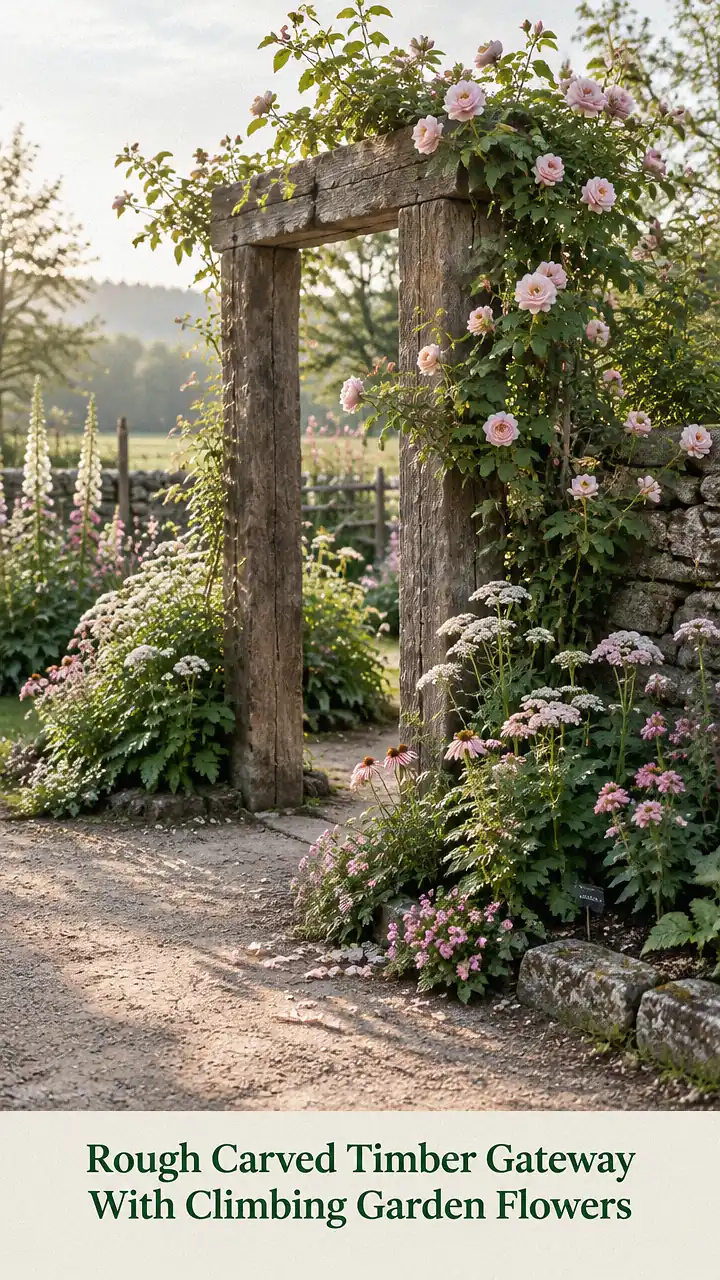
Rough Carved Timber Gateway With Climbing Garden Flowers
Overview
A weathered timber gateway creates a strong architectural entrance reminiscent of traditional northern craftsmanship. Thick upright posts, a simple crossbeam, and restrained carved patterns add character without overwhelming the surrounding landscape. Climbing flowers soften the wood with leaves and seasonal color. The design works best between garden sections, along a backyard path, or at the entrance to a vegetable patch.
Materials & Plants
- Durable outdoor timber posts and crossbeam
- Galvanized structural hardware
- Climbing rose or suitable clematis variety
- Compost and organic mulch
- Simple wooden carving or decorative plaques
- Strong plant ties and trellis wire
How to Create It
- Select a gateway design proportionate to the garden and walking path.
- Set posts securely using foundations appropriate to the structure and local conditions.
- Add the crossbeam and verify that the entire assembly is stable.
- Plant climbers beside the posts, respecting their sunlight and root-space requirements.
- Tie in new growth and prune according to the chosen flowering variety.
Choose subtle geometric carvings for a Nordic-inspired finish.
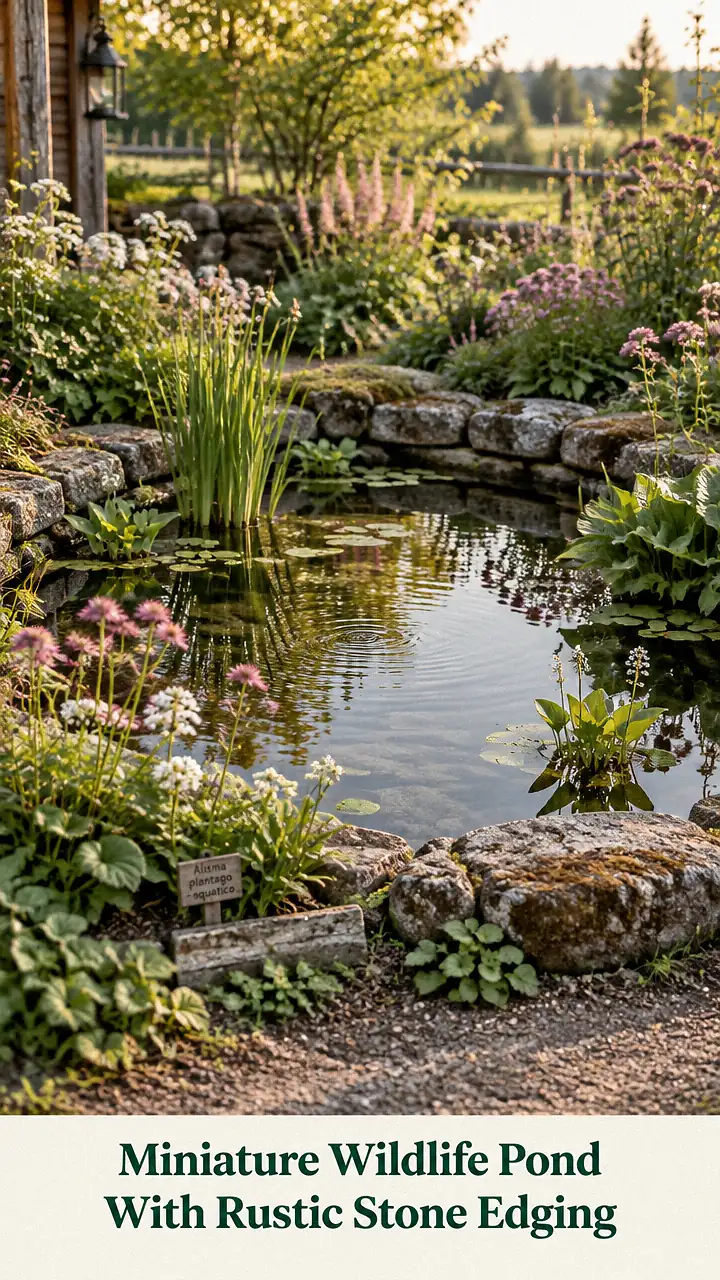
Miniature Wildlife Pond With Rustic Stone Edging
Overview
A small pond bordered by natural stones brings a peaceful waterside feeling to a Viking-themed garden. Reflective water, aquatic greenery, and mossy-looking rock textures create an inviting scene reminiscent of northern lakeshores. Even a modest container pond can add visual interest and support visiting wildlife. This idea works especially well in quiet backyard corners with partial sunlight.
Materials & Plants
- Sturdy watertight pond container or suitable pond liner
- Smooth natural stones
- Small native aquatic plants approved for your region
- Aquatic planting baskets and appropriate substrate
- Wildlife escape ramp
- Small hand net for maintenance
How to Create It
- Choose a secure location with some sunlight and protection from excessive afternoon heat.
- Install a level pond container or properly lined basin.
- Provide shallow access or a stable ramp so small animals can escape.
- Add appropriately sized aquatic plants without overcrowding the surface.
- Monitor water quality, remove debris, and manage mosquito breeding safely.
Where young children have access, use a securely covered water feature or a dry decorative stone basin instead.
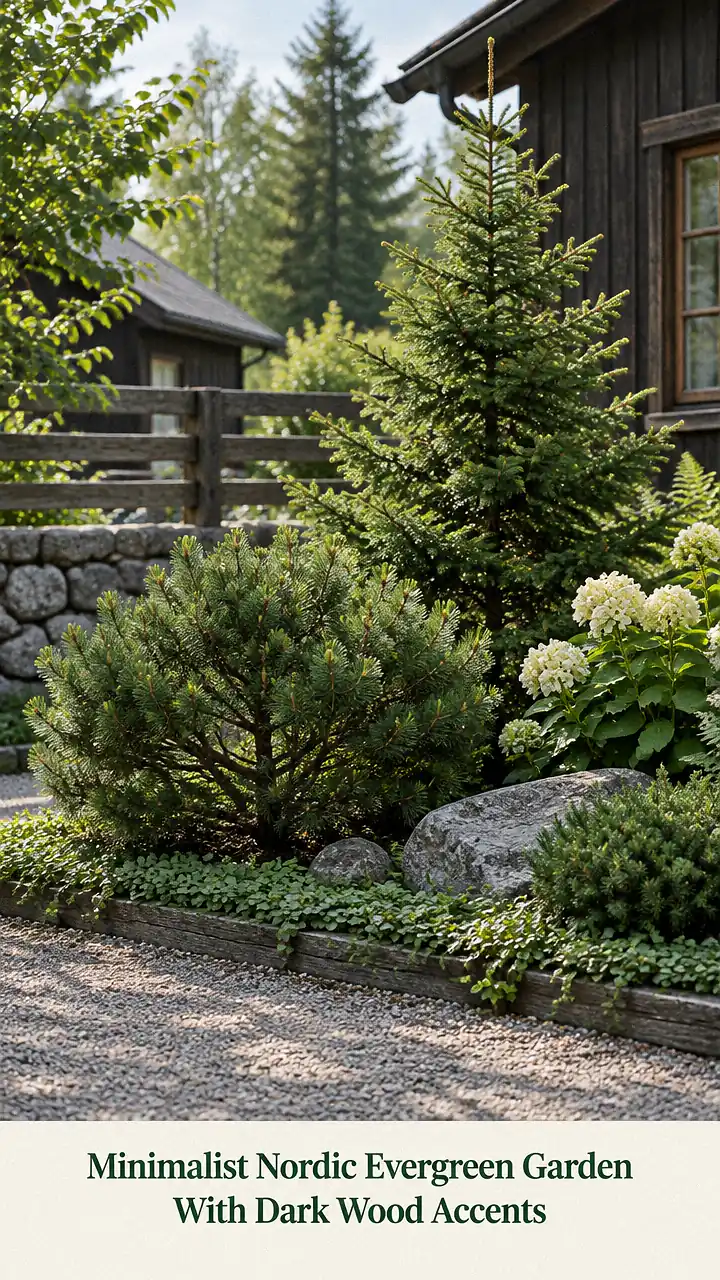
Minimalist Nordic Evergreen Garden With Dark Wood Accents
Overview
For a modern interpretation of Viking garden ideas, combine architectural evergreens with charcoal-stained wood and pale stone. Compact conifers, low groundcovers, and carefully spaced boulders create a strong design without excessive ornamentation. The dark-and-light contrast looks striking throughout the year. This low-maintenance approach is ideal for contemporary front gardens, townhouse landscapes, and small yards in suitable climates.
Materials & Plants
- Dwarf junipers or locally suitable compact evergreens
- Hardy sedges or low-growing groundcovers
- Charcoal-stained wooden screens or planters
- Pale gravel and large natural stones
- Mulch and suitable planting soil
- Drip irrigation supplies if needed
How to Create It
- Sketch a simple layout using asymmetrical groups of plants and stones.
- Choose evergreens based on mature size, sunlight exposure, and regional hardiness.
- Install wooden accents and position heavy stones on stable ground.
- Plant shrubs with adequate spacing and apply mulch around their root zones.
- Water during establishment and prune lightly only when necessary.
Choose locally adapted plants to reduce long-term watering and maintenance demands.
Create Your Own Viking Inspired Garden Sanctuary
The most appealing Viking garden ideas share a few simple qualities: natural materials, useful plants, handcrafted details, and a strong connection to the surrounding landscape. You don’t need to recreate an entire historical settlement to achieve the atmosphere. A small herb circle, a weathered wooden planter, or a carefully arranged stone border can make a meaningful difference.
Start by considering your available space, budget, sunlight, soil conditions, and local climate. Sunny backyards may suit productive vegetable beds, meadow flowers, and rock gardens, while shaded areas offer opportunities for woodland plants and rustic seating. Patios and balconies can capture the same character through compact containers and thoughtful decorative accents.
There’s also no requirement to complete everything at once. Begin with one feature, observe how the plants develop, and gradually introduce additional elements that complement your surroundings.
Above all, allow the finished garden to feel comfortable and lived in. The combination of rugged stone, natural wood, flourishing greenery, and a little creative craftsmanship can transform an ordinary outdoor space into a distinctive Nordic-inspired retreat.